Which contaminant should the factory remove first?
For mining and metals wastewater in 2026, choose a clarifier for heavy, readily settleable solids and a dissolved air flotation (DAF) unit for oils, emulsions, conditioned colloids, or flocculable metal-bearing solids. Mixed streams may require clarification followed by DAF polishing, but that train should be justified by wastewater testing rather than assumed. DAF uses 30–50 micron microbubbles to float conditioned solids, while lamella clarification improves gravity settling within a compact tank. Chemical dosage must be established by jar testing: a Utah State University study found an optimum aluminum sulfate dose of 30 mg/L for a specific Logan lagoon effluent, not for mining water generally.
Start by separating the waste stream into the fraction that must be removed and the mechanism that can remove it. Mining and metals wastewater may contain dense mineral fines, colloidal clays, oils and greases, residual flotation reagents, and metals in both dissolved and particulate forms. A total suspended-solids concentration is not enough to select equipment. The decision also depends on particle density, size distribution, settleability, floatability, and the presence of oils or surfactants.
Use three questions:
- Will the material settle rapidly under gravity? If the stream contains sand, heavy mineral fines, or metallurgical sludge with a specific gravity above water, test a clarifier first.
- Will the material float or attach to bubbles after conditioning? If the target is free oil, emulsified oil, reagents, colloids, or flocculable precipitates, screen DAF with the required chemical treatment.
- Is the target dissolved? Dissolved metal is not directly captured by a mechanical separator; chemical precipitation, filtration, ion exchange, membranes, or another downstream process may be required.
Fluence states that DAF can remove metals, but reliable capture depends on conditioning and separating the resulting material rather than on metal identity alone. Require total and dissolved metal results from representative samples. The industrial DAF system for mining wastewater should be evaluated against the floatable or flocculable fraction, not against the entire dissolved-metal concentration.
The working rule is straightforward: favor DAF for floatable or flocculable loads, favor clarification for heavy settleable solids, and test mixed streams before committing to a combined train. A detailed mining and metals DAF versus clarifier comparison can support the stream-by-stream screening.
How DAF and clarification remove different fractions
DAF and gravity clarification separate solids by different physical mechanisms, even when a supplier uses the word “clarifier” for both.
In DAF, wastewater is pressurized with air and returned to the treatment tank, where microbubbles nucleate as pressure is released. The bubbles attach to conditioned solids, which rise and are removed by a skimmer. Clearwater Industries identifies 30–50 micron microbubbles as the bubble range used in its equipment description, as reported in the supplied 2026 research. Coagulant, pH adjustment, and polymer may be introduced through flocculation tubes providing 15–45 seconds of flash mixing, or through impeller mix tanks where longer contact is required. Jar testing establishes the applicable dose.
Flotation therefore depends on successful bubble-to-floc attachment. It is not an inherently effective way to lift heavy silt and clay that do not float. Fluence specifically identifies high levels of heavier non-floating particles, such as silt and clay, as a condition to which DAF is not well suited.
Clarification uses gravity. Settleable particles move downward into a collection zone and are withdrawn as sludge, while clarified water overflows the tank. A lamella plate clarifier adds inclined plates to increase effective settling area within a compact footprint; it does not change the gravity-separation principle. Performance depends on surface overflow rate, particle settleability, flow distribution, and sludge withdrawal. Colloidal fines, oils, surfactants, and dissolved metals are not removed simply because lamella plates are present.
| Design factor | Dissolved air flotation | Gravity or lamella clarification |
|---|---|---|
| Separation mechanism | Microbubbles attach to conditioned solids; floc rises and is skimmed | Dense solids settle by gravity and are withdrawn from the bottom |
| Best-fit fractions | Oils, emulsions, floatable reagents, conditioned colloids, and flocculable metal-bearing solids | Dense mineral fines, tailings solids, and metallurgical sludge |
| Critical design inputs | Peak flow, solids loading, recycle rate, flotation loading basis, air-to-solids ratio, skimmer capacity, and chemical dose | Peak flow, effective settling area, surface loading rate, particle settleability, sludge inventory, and withdrawal method |
| Solids route | Floated sludge to collection, storage, and dewatering | Underflow to storage, thickening, dewatering, and disposal |
| Common limitation | Heavy non-floating silt and clay can overload the flotation mechanism | Colloidal, buoyant, and dissolved fractions can pass through |
Procurement documents should therefore specify the tank arrangement, recycle system, flocculation method, separation mechanism, and solids-handling route. Do not compare equipment by product name alone. The lamella clarifier for dense mineral solids and a DAF package should be evaluated against the same characterization and performance targets.
Match each factory stream to a treatment route
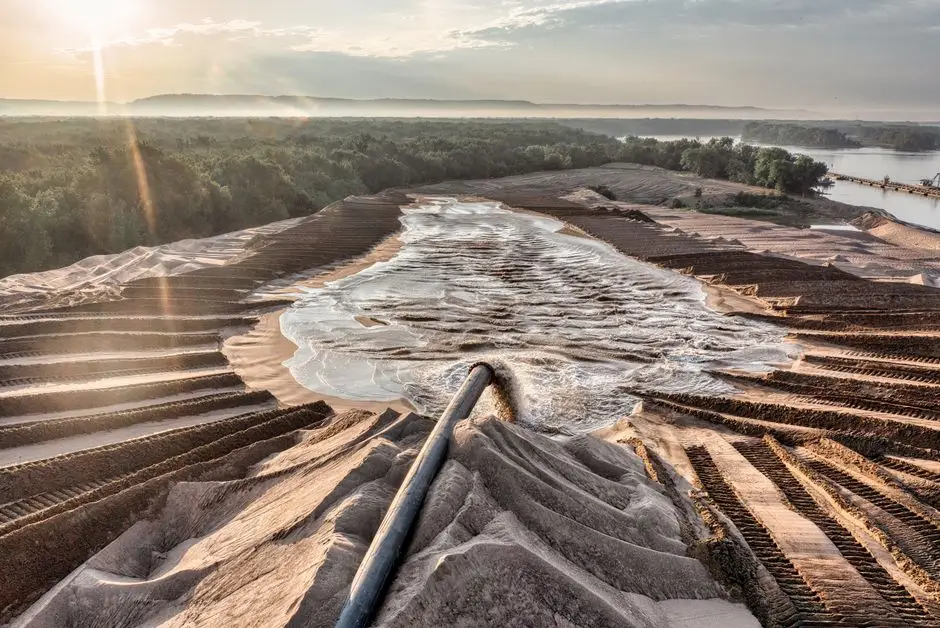
Different factory sources can require different treatment routes, and combining them before characterization can make both hydraulic and chemical sizing unreliable.
For tailings-thickener overflow or mill discharge dominated by dense mineral fines, screen a conventional clarifier or lamella settler as the primary unit. Confirm particle density, size distribution, settleability, and hydraulic performance before final selection. If gross sand or grit is present, evaluate whether source control or solids removal should precede the main separator.
For washdown or equipment-cleaning streams containing free oil, emulsified oil, or floatable reagents, screen DAF with pH control and coagulant or flocculant conditioning. Free oil, emulsified oil, and flotation-reagent carryover should not be bundled with a heavy-solids design basis merely because the flows ultimately enter one plant header.
For metal-bearing streams, establish whether the permit or reuse target concerns dissolved metal or particulate-bound metal. Test pH, alkalinity, precipitation chemistry, and variability across production cycles. If DAF is used, integrate the automatic chemical dosing system with the flow, pH, level, and equipment-control strategy. A separator cannot meet a dissolved-metal limit that was never included in its treatment chemistry.
For mixed streams containing substantial sand and significant oil, separate source control or pretreatment may be more defensible than forcing both fractions into one separator. A two-stage clarifier-to-DAF train is justified when the clarifier can remove the heavy bulk fraction and the DAF can polish floatable or conditioned residuals. Define that intermediate target in the bid, along with both sludge routes.
- Equalize and, where necessary, screen or remove gross solids.
- Adjust pH and apply the condition established by representative-water testing.
- Separate the target fraction by gravity or flotation.
- Withdraw and route sludge to storage and sludge dewatering.
- Include filtration, membranes, or another polishing step when required for reuse or discharge.
| Factory stream | Primary screening decision | Required evidence before selection |
|---|---|---|
| Tailings-thickener overflow or mill discharge | Clarifier or lamella settler if dense fines dominate | Settleability, particle size, density, peak flow, solids mass loading, and underflow rate |
| Vehicle or equipment washdown | DAF if oil, grease, surfactants, or floatable reagents dominate | Free versus emulsified oil characterization, pH range, temperature, flow profile, and jar-test results |
| Metal-bearing precipitation overflow | Clarification plus DAF only if the clarified overflow remains floatable or flocculable | Total and dissolved metals, pH, alkalinity, precipitation chemistry, and intermediate effluent target |
| Mixed plant wastewater | Source segregation or pretreatment may be preferable | Source-by-source flow and quality data, batch-discharge profile, stormwater contribution, and combined peak load |
| Water-reuse application | Separator plus specified final polishing | Reuse-water quality target, residual solids requirement, membrane or filtration criteria, and recycle-loop balance |
The selected route should appear as a written process flow in every proposal. Equalization, pH control, conditioning, separation, sludge withdrawal, dewatering, and final polishing are part of the treatment train—not optional details.
Size from peak flow and solids loading, not tank name
A separator must be selected from the plant’s peak hydraulic and solids-loading basis, not from an average flow and a catalog model name.
Collect flow by source, peak flow, batch-discharge profiles, stormwater contribution, equalization volume, peak TSS, and solids mass loading. Average daily flow can hide a washdown release or storm event that determines tank size and skimmer or sludge-withdrawal capacity. Require TSS, particle-size distribution, settleability, oils and greases, pH, alkalinity, temperature, total and dissolved metals, and seasonal or production-cycle variability.
For DAF, request the proposed recycle rate, saturation method, flotation surface-loading basis, air-to-solids design, skimmer capacity, chemical-contact arrangement, and expected floated-solids rate. For clarification, request effective settling area, surface loading rate, sludge inventory, withdrawal method, and design peak solids flux. The requested DAF unit specifications and selection guide provides the appropriate categories for checking these parameters.
HydropureWater’s supplied catalog information lists 13 DAF models from 4–300 m³/h and lamella clarification surface-loading rates of 20–40 m/h. These are catalog ranges, not evidence that a particular model fits a mine. The selected DAF configuration and any lamella clarifier for dense mineral solids must be justified against the site’s own hydraulic and solids data.
Chemical conditioning must also be established with representative mining wastewater. Elder’s Utah State University study, published in 2011, found an optimum aluminum sulfate dose of 30 mg/L for algae and phosphorus removal from Logan lagoon effluent. That result demonstrates site-specific optimization; it is not a mining-water dosing default. For the industrial DAF system for mining wastewater, require the proposed dose to trace to a documented test series.
| Bid item | Information the owner must provide | Information the bidder must state |
|---|---|---|
| Hydraulic basis | Source flows, peak flow, batch events, stormwater, equalization | Selected configuration and duty at the specified peak condition |
| Solids basis | Peak TSS, particle distribution, settleability, density, mass loading | Loading calculation, removal mechanism, and expected solids rate |
| Chemistry | pH, alkalinity, temperature, oils, total and dissolved metals | Conditioning approach, dose basis, materials rationale, and controls |
| Sludge | Storage constraints, disposal route, required moisture content | Solids characteristics, withdrawal rate, collection, and dewatering interface |
| Operations | Power, chemical supply, service access, staffing, freeze protection | Utility demand, maintenance tasks, spare parts, training, and manufacturer support |
If any of those inputs is missing, the bidder should state the assumption or qualify the price. A model selected from average flow alone is not a defensible design basis.
Compare installed cost, operating cost, and sludge handling
The lowest separator quotation is rarely the lowest treatment cost because equalization, conditioning, controls, sludge handling, utilities, and final polishing can change the commercial result.
Require separate pricing or stated assumptions for pretreatment, equalization, pH control, chemical dosing, separator, controls, sludge removal, dewatering, utilities, installation, and disposal. The supplied research does not establish a universal 2026 unit price for DAF or clarification. Obtain budgetary quotations tied to flow, TSS, contaminant fraction, materials of construction, site conditions, and the required performance basis.
DAF introduces recycle-pump and air-compressor requirements. The Westech Water sludge-thickening case provides a disclosed example: a 40-foot DAF with a 1,200 gpm recycle thickened waste activated sludge from 0.5% (5,000 mg/L) to 4% (40,000 mg/L), reducing the flow to digestion from 1,000 gpm to 125 gpm. The same case listed a $600,000 total installed DAF cost and electrical loads of 55 kW for the recycle pump, 5 kW for the air compressor, and 1 kW for the drive motor. Those figures apply to that sludge-thickening application and are not mining wastewater pricing or operating guarantees.
Clarification can reduce civil footprint when lamella plates are used, but it still produces concentrated underflow. Compare each route’s sludge moisture content, expected volume, storage time, dewatering method, chemical demand, disposal frequency, and reuse potential. Include the sludge dewatering equipment in the bid rather than leaving it as an undefined consequence.
| Cost scope | DAF quotation must address | Clarifier quotation must address |
|---|---|---|
| Capital installation | Tank, recycle system, air saturation, skimmer, controls, foundations, utilities, and installation | Tank or lamella modules, sludge collection, drive, controls, foundations, utilities, and installation |
| Chemical and operating cost | Coagulant, pH adjustment, polymer, recycle power, compressed air, maintenance, and operator labor | Conditioning chemicals where used, sludge withdrawal, maintenance, and operator labor |
| Downstream cost | Floated-sludge storage, moisture content, dewatering, transport, and disposal | Underflow storage, thickening, moisture content, dewatering, transport, and disposal |
| Performance risk | Skimmer capacity at peak solids rate and sensitivity to floatability | Peak surface loading, settling capacity, and solids flux |
Ask each bidder to state what is excluded. A comparison is defensible only when the same treatment boundaries and operating assumptions appear in every offer.
Turn the comparison into an RFQ and acceptance test
A defensible RFQ converts wastewater facts and acceptance criteria into a common basis for every bidder.
Give every bidder the same wastewater characterization, peak-flow basis, chemical assumptions, performance targets, sampling locations, and analytical methods. Ask each bidder to identify the separation mechanism and specify the proposed tank, effective area, recycle system, skimmer or sludge-withdrawal arrangement, controls, utilities, materials, and service scope. The word “clarifier” is not a sufficient scope description.
Require pilot data or comparable references with the wastewater source, flow, chemistry, dose, temperature, test method, sampling point, and acceptance criterion stated. A generic percentage without test conditions is not evidence of equivalent performance. The owner must identify the applicable permit, sewer-pretreatment requirement, or reuse specification and translate it into measurable acceptance criteria. Unverified claims that a unit will “meet all limits” should not be accepted.
For a rural site, include service access, spare-parts logistics, operator training, chemical-storage constraints, power reliability, freeze protection, and the effects of variable production or stormwater flows. Confirm how automatic chemical dosing, sludge dewatering, and controls connect to the separator. These items belong in the commercial and process scope, not in a list of optional accessories.
- Issue a common wastewater and hydraulic design basis.
- Require the bidder to disclose the separation mechanism and design calculations.
- Require site-specific or comparably conditioned performance evidence.
- Define sampling methods, locations, operating conditions, and acceptance criteria.
- Price the complete train, including pretreatment, chemicals, sludge, utilities, controls, and service.
Ask bidders to screen the alternative process rather than excluding it by product preference. The selected automatic chemical dosing system should respond to measured flow and chemistry, while the mining wastewater pretreatment compliance guide can help frame the applicable owner-defined requirement before acceptance testing is drafted.
Frequently Asked Questions
What does a DAF or clarifier for mining and metals wastewater cost in 2026?
No universal 2026 unit price can be inferred from the supplied research. Request comparable quotations based on the same peak flow, TSS, contaminant fraction, chemical-conditioning assumptions, materials of construction, utilities, controls, sludge handling, and installation conditions. Do not accept a separator-only price as the project price. The Westech Water $600,000 installed DAF example concerns a specific waste-activated-sludge thickening duty and is not a mining quotation.
How should the factory size the equipment for batch discharges and stormwater?
Size from source-by-source flow, peak discharge, solids mass loading, equalization behavior, and the treatment unit’s duty at that peak—not average daily flow. Require each bidder to demonstrate how its recycle rate, flotation or surface-loading basis, skimmer or sludge-withdrawal capacity, and controls accommodate the specified event. If source data does not support a firm selection, make additional sampling and equalization analysis an explicit condition of the bid or acceptance test.
Which supplier qualifications reduce technical and compliance risk?
Require comparable operating or pilot evidence with the contaminant fraction, wastewater source, chemistry, dose, flow, test method, and acceptance criterion disclosed. Also check service access, spare-parts availability, operator training, controls capability, materials rationale, and willingness to guarantee a measurable result. A supplier’s product category or certification alone does not demonstrate suitability for the site’s metals and solids loads.
Can DAF or clarification remove dissolved metals to meet the discharge limit?
Neither mechanism directly removes metal dissolved in water. A separator can remove metals attached to settleable or flocculable solids, and conditioning can convert some dissolved species into removable precipitates. The permit or reuse target must therefore be separated into dissolved and particulate requirements. If the dissolved fraction remains controlling, include chemical precipitation and subsequent filtration, ion exchange, membranes, or another specified process in the complete train.
What should the factory choose when the stream contains both sand and oil?
Test and segregate the sources where practical. Heavy sand generally favors clarification, while floatable oil and emulsions favor DAF, so a combined stream can justify pretreatment followed by one or both separation mechanisms. State the intermediate target, sludge routes, and downstream polishing requirements in the process flow. Choose by contaminant behavior under the actual chemical and hydraulic conditions, then verify the complete train through site-specific testing.