What BYD’s expansion changes for wastewater treatment
BYD needs an expansion-ready ETP designed around the wastewater chemistry and reuse destination of each production area, not merely a larger treatment tank. The critical scope is source segregation, adequate equalisation, DAF pretreatment for suspended heavy metals, a biological treatment stage, and advanced polishing where water reuse requires it. The exact flow and treatment train cannot be specified without current and post-expansion wastewater data. For battery-material operations, testing must include nickel, cobalt, manganese and lithium, alongside COD, BOD5, SS, nutrients, fluoride and other regulated parameters.
BYD Brazil’s Sustainability Report 2023 confirms manufacturing activity at Campinas facilities for 100% electric bus-chassis assembly and photovoltaic-module production. It also reports 3,024,417 electrified vehicles sold globally in 2023, up 61.8%. Neither figure establishes the wastewater flow, ETP capacity or effluent limits of the plant under review. They provide expansion context, not a basis for sizing treatment equipment.
An expansion can alter wastewater quantity, composition, discharge route and reuse demand at the same time. A production increase may add runoff from new buildings, process losses, cleaning activities and changed shifts. New battery-material or electroplating operations could introduce a different pollutant profile rather than merely more wastewater of the same composition. The ETP should therefore be matched to the post-expansion production plan, not copied from an unrelated automotive factory.
Before equipment selection, BYD’s engineering team should establish four inputs: current and future design flows; wastewater chemistry by source; applicable permit and local discharge limits; and the intended destination of treated water. The battery gigafactory wastewater treatment guide provides a practical framework for separating confirmed operating context from assumptions that still require verification.
This follows the S4 treatment principle: there is no universal ETP design suitable for every industry. The relevant architecture depends on pollutant chemistry, variability, flow, discharge destination and reuse quality. Selecting the largest available vessel or a familiar treatment train before resolving those inputs creates hydraulic and compliance risk that polishing equipment cannot correct.
Build the wastewater map before choosing the ETP
Every process drain must be mapped to a defined wastewater stream because the treatment train must match the pollutants carried by each stream rather than the plant’s total flow alone. S4’s ETP guide requires the plant layout to follow wastewater characteristics, and its process diagram must show the main flow, recycle streams, sludge lines, chemical-dosing points, bypasses and treated-water route. A single inlet composite sample cannot establish whether a drain is dilute but consistently contaminated, intermittently loaded, or unsuitable for biological treatment.
For each drain, record production origin, flow, pollutant load, variability and intended treatment route. Include screening, segregation and representative sampling locations alongside flow measurements. Facilities connected to battery materials, cathode precursors or catalyst production should screen the drainage map for Ni, Co, Mn and Li even if operations are described generally as chemicals or electroplating. S2 ties this parameter set to BYD’s CN214829589U catalyst-effluent treatment patent.
The desk review should begin with the discharge permit, ETP design flow, O&M manual, chemical-dosing records, instrument-calibration certificates, sludge-disposal manifests, emergency response plan, process flow diagram and design influent and effluent parameters. The industrial acquisition wastewater compliance guide also directs buyers to obtain at least 36 months of water bills, inlet and outlet analytical records, sludge manifests and environmental penalty notices.
Missing records or gaps exceeding 30 days in any 12-month window should trigger deeper investigation rather than an assumed operating profile. The design flow must be checked against both the stated ETP design capacity and the 12-month inlet and outlet record. A discrepancy between nominal capacity and demonstrated flow can change equalisation, biological, pumping and hydraulic-retention requirements.
| Information to obtain | Engineering or procurement use |
|---|---|
| Process-drain register and process flow diagram | Segregates wastewater streams and identifies sampling, treatment and reuse routes. |
| Current and post-expansion flow data | Supports equalisation tank sizing, hydraulic verification and downstream unit selection. |
| Source-specific analytical results | Defines whether suspended metals, biodegradable organics, dissolved salts or other contaminants control the treatment train. |
| Permit, local limits and treated-water destination | Converts pollutant targets into a defensible outlet and reuse specification. |
| At least 36 months of operating and compliance records | Exposes seasonal changes, reporting gaps, permit exceedances and discrepancies in stated capacity. |
Select the treatment train by contaminant and discharge route
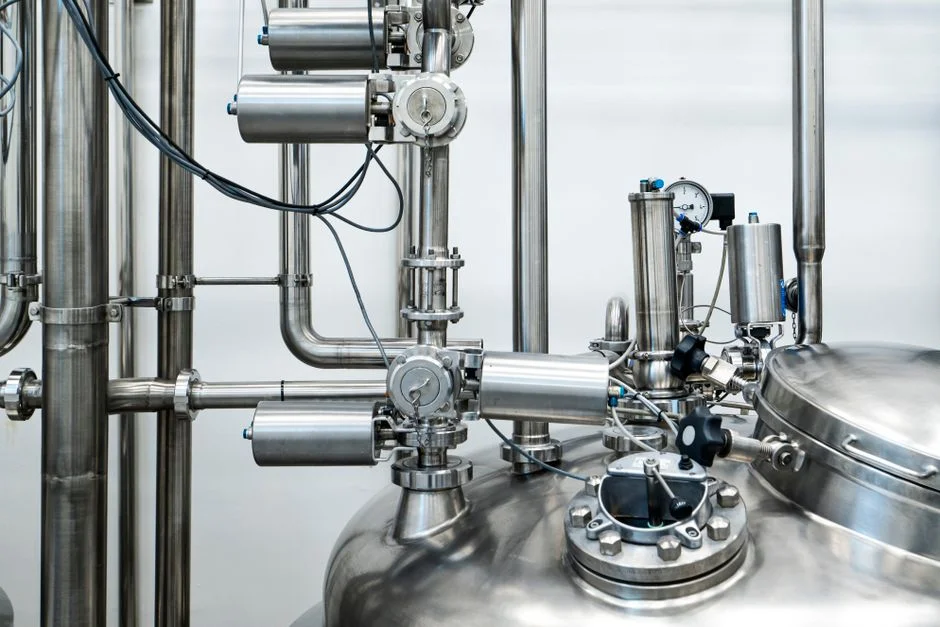
Equalisation must come first because S4 identifies it as one of the most important practical ETP components for controlling changes in flow and pollutant concentration before biological and chemical treatment. Its duty is to buffer production and discharge variation, support controlled chemical addition and prevent shock loads from propagating through the downstream process. The required detention time and usable working volume must follow from the verified flow and concentration profile, not a generic tank rule.
Use dissolved air flotation when characterization shows suspended metal or particulate loading beyond the existing chemical-precipitation stage. S2 identifies DAF ahead of the biological stage as the typical retrofit for this condition because removing suspended solids and precipitated metals before they reach biological treatment reduces sludge and biomass loading. The selected industrial DAF pretreatment system should be matched to the relevant stream, not installed as an unverified flow-based addition.
MBR becomes relevant where compact biological treatment and high-quality separation are required or where reuse is part of the project objective. HydropureWater describes its integrated MBR wastewater treatment system as suitable for industrial process-water and reuse projects from 10 to 2,000 m³/day. That range identifies supplier equipment capability; it does not establish BYD’s required capacity, which remains site-specific.
| Verified condition | Treatment response | Decision evidence required |
|---|---|---|
| Flow or concentration varies sharply | Expand or reconfigure equalisation before downstream treatment | Source flow, operating pattern, concentration range and usable working volume. |
| Suspended metal or particulate loading exceeds precipitation performance | DAF pretreatment ahead of biological treatment | Source-specific suspended-solids and metal data; existing precipitation performance. |
| Compact biological separation or defined reuse is required | MBR train | Organic loading, flow profile, effluent target and reuse destination. |
| Dissolved contaminants must be removed for a defined reuse application | Add RO after suitable upstream treatment | Reuse specification, dissolved-solids profile, pretreatment and membrane operating basis. |
| Lithium-bearing or otherwise non-removable wastewater requires zero discharge | Evaluate ZLD | Full ionic profile, final disposal route and technically supported recovery or polishing train. |
RO and ZLD should not be added automatically. RO is justified by a defined reuse application requiring dissolved-contaminant removal. ZLD should be considered where lithium-bearing or otherwise non-removable wastewater prevents the required discharge outcome; S2 states that no legacy treatment removes Li, making an advanced treatment route necessary. PLC-controlled dosing should be included for pH correction and treatment chemicals. HydropureWater describes its automatic dosing skid as factory-tested for coagulants, flocculants, pH adjusters and specialty chemicals.
The final arrangement must be confirmed through an as-built process flow diagram showing equalisation, treatment units, sludge lines, dosing points, bypasses and the treated-water destination. Retrofit cost is driven by design flow, influent loading and discharge destination. A quote missing those inputs is not a defensible budget, as the heavy-metal wastewater engineering guide explains.
Prove performance through sampling and compliance testing
Performance evidence should be generated under chain of custody and tied to the expanded operating condition. For an intrusive Phase II program, S2 specifies a qualified Chinese environmental consulting firm with CMA certification so the analytical results can support permit, procurement and indemnity decisions. Sampling then converts the desktop assessment into verified contaminant loads and retrofit requirements.
Collect 24-hour composite influent and effluent samples across at least three operating days, according to S2. Sampling locations should include the ETP inlet, each biological-stage outlet and the final discharge. The analytical panel is pH, COD, BOD5, SS, NH3-N, total nitrogen, total phosphorus, total heavy metals, fluoride, petroleum hydrocarbons and colour. Ni, Co, Mn and Li must be added to the heavy-metal panel for facilities connected to the battery-material supply chain.
Where China is the governing jurisdiction, compare results with GB 8978-1996, GB 30485 for the battery industry, GB 21900 for electroplating and any stricter local requirements. A national standard is a compliance floor, not evidence that the site-specific discharge route is acceptable. The Texas battery factory wastewater compliance guide sets out the relevant sampling and analytical approach, including the battery-chain metal panel.
Require an ETP performance test based on both the designed capacity and the 12-month inlet and outlet record. The test should demonstrate flow handling, treatment performance, sludge management, automatic dosing, control response and the final outlet or reuse route. Current calibration certificates for pH, flow and COD instruments should be included. This distinguishes a system that can treat an average laboratory sample from one that can operate reliably at the expanded plant’s actual loading.
Soil and shallow-groundwater sampling should also extend from 0–6 m beneath current or former sludge-storage areas, chemical-dosing skids and lagoons. S2 requires the same relevant heavy-metal panel plus TPH and BTEX. Where contamination is confirmed, it changes the scope and commercial risk of an otherwise water-side ETP expansion.
- Complete source drainage mapping and a desktop records review.
- Verify flow, chemistry, permit limits and reuse requirements through representative sampling.
- Issue the final process flow diagram and hydraulic design basis.
- Test the expanded ETP at design capacity and against the operating record.
- Document compliance evidence, calibration status and residual operating risks.
Sequence implementation and control investment risk
The expansion programme should use two decision gates: first complete desktop characterization and identify missing information; then authorize intrusive sampling and a project-specific retrofit estimate. S2 states that Phase I alone is never sufficient to support a binding bid. The first gate defines what must be learned; the second releases investigation and budgeting against verified inputs.
For a relevant China-based acquisition or transfer scenario, the source allows 30–90 days for discharge-permit transfer and requires the filings to be completed before closing to avoid an unauthorized-discharge gap. The Mexico gigafactory wastewater handling guide provides the implementation sequence used for a larger expansion context.
Where the transaction structure makes it relevant, S2 recommends a 1.5x contingency-loaded escrow held for 36 months, with releases tied to verified permit renewal and 12 consecutive months of compliant self-monitoring data. The mechanism addresses uncertainty that cannot be eliminated by a desktop review. It does not replace technical characterization or permit documentation.
Soil and groundwater remediation remains a separate capital risk. S2 describes a separate 30–100% multiplier on water-side retrofit capex when contamination is confirmed beneath sludge lagoons or dosing skids. That exposure should remain outside the ETP equipment quote until intrusive evidence supports it.
Do not publish or rely on a generic ETP price. S4 states that cost varies with treatment scope and that preliminary budgets must remain project-specific. A defensible estimate requires verified design flow, influent loading, discharge destination, reuse requirements, civil works, automation, sludge handling, controls and performance guarantees.
Tie final purchase to a signed process flow diagram, verified design flow, characterization results, applicable permit limits, equipment guarantees and a documented performance test. This approval sequence prevents a quote based on incomplete flows or an assumed pollutant profile from becoming the plant’s treatment baseline.
Frequently Asked Questions
How should BYD size an ETP after expanding its EV manufacturing plant?
BYD should size the ETP from verified post-expansion source flows and loads, not current average flow or a supplier’s generic capacity range. The design basis must include equalisation requirements, source-specific contaminant data, the 12-month inlet and outlet record, applicable limits and the reuse destination. HydropureWater states that its MBR equipment covers 10 to 2,000 m³/day, but this is equipment capability—not proof of BYD’s required size.
Which treatment train should an EV assembly plant wastewater ETP use?
The defensible sequence begins with source segregation and equalisation. DAF is then justified where suspended metals or particulates exceed existing precipitation performance; biological treatment follows, with MBR considered for compact separation or reuse. RO should be added only for a defined reuse application requiring dissolved-contaminant removal, while ZLD requires a technically supported final route for non-removable contaminants such as lithium.
What testing should BYD require before accepting the expanded ETP?
Require 24-hour composite influent and effluent samples across at least three operating days, with sampling at the inlet, biological-stage outlets and final discharge. Test pH, COD, BOD5, SS, nutrients, heavy metals, fluoride, petroleum hydrocarbons and colour; add Ni, Co, Mn and Li for battery-material operations. Require a capacity performance test, current instrument calibration certificates and chain-of-custody documentation.
How should BYD compare ETP suppliers without relying on a generic price?
Request a project-specific quotation with the treatment objective, design flow, influent loads, discharge destination, reuse requirements, civil scope, sludge handling, automation and performance guarantees. A supplier should also demonstrate that its proposed process matches the characterized streams rather than offering a standard package. The industrial ETP and DAF selection guide explains why equipment price alone is an inadequate comparison basis.
What is the main compliance risk when expanding BYD wastewater treatment?
The main risk is releasing equipment before confirming the applicable permit limits and demonstrating performance at the expanded flow and loading. National or sector standards must be checked against stricter local requirements, and the treated-water destination must be defined. Historical gaps, missing analytical records or inconsistent design-flow records should trigger deeper investigation rather than an assumed compliance basis.