
Start with the Wastewater and Discharge Destination
A San Diego factory cannot select a DAF unit, an effluent treatment plant, or a combined train from its location or industry name alone. The equipment scope begins with representative wastewater characterization and the final discharge or reuse route. One grab sample will not support equipment sizing when flow, pH, organic loading, temperature, and contaminants can change with production and cleaning cycles.
Build a sampling program around normal production, peak production, cleaning-in-place cycles, batch dumps, storm periods, and every significant discharge stream. Document average flow, peak flow, hydraulic surges, operating schedule, pH, temperature, oil and grease, suspended solids, BOD₅, COD, nutrients, dissolved salts, and contaminants specific to the factory. Food-processing wastewater is an illustrative warning: Hixson reports that production changes, CIP cycles, and seasonal peaks cause hourly swings in flow, organic load, pH, and temperature.
Identify whether the stream contains free oil, emulsified oil, FOG, grit, fibers, metals, high-solids slurry, or soluble organics. That inventory determines the preliminary unit operations. An industrial wastewater rotary bar screen may be needed before pumps; an PLC-controlled chemical dosing system may be necessary for pH control or flocculation.
Map the destination before selecting equipment: sanitary sewer, stormwater conveyance, surface water, land application, or reuse within the factory. Each route carries different limits and objectives. Sewer discharge may require pretreatment approval; surface-water discharge requires an authorization and facility-specific limits; reuse requires a final-water specification tied to its use.
Decide Between DAF, ETP, and a Combined Treatment Train
The selection rule is based on treatment objectives, not equipment names. DAF is the candidate when the primary objective is removing suspended solids, oil, FOG, or colloidal material before discharge, reuse, or biological processing. A full ETP is appropriate when treatment must include preliminary and primary separation, biological removal of dissolved organics, secondary clarification, and any required tertiary polishing or disinfection.
A combined DAF-to-ETP train is warranted when emulsified oil or fine solids could overload biological systems. Hixson describes DAF as a secondary clarifier and protective barrier in refinery ETPs: emulsified oil can inhibit biological oxygen transfer, so removing it before the biological stage protects the treatment train.
| Wastewater objective | Likely treatment scope | Selection evidence required |
|---|---|---|
| Remove buoyant oil, FOG, or suspended solids before discharge or reuse | DAF with screening, equalization, and chemical conditioning as required | Representative pollutant and flow data, destination limits, skimmings route |
| Remove heavier settleable solids | Clarification or sedimentation | Settling characteristics, solids loading, downstream requirements |
| Remove dissolved organics and meet a discharge specification | Full ETP with biological treatment and clarification | BOD₅, COD, nutrients, treatment objective, final destination |
| Protect biological treatment from emulsified oil or fine solids | DAF followed by ETP | Oil emulsion characteristics, biological loading, chemical program |
| Produce reusable water or a tightly specified effluent | DAF and/or ETP with membranes, filtration, and disinfection | End-use quality attributes, pilot data, residuals and disposal route |
Clarification remains appropriate where the target solids settle readily. DAF is more relevant for buoyant, finely suspended, or difficult-to-settle material. The lamella clarifier and an industrial DAF system therefore solve different separation problems.
Add advanced treatment only when the authorization or reuse specification requires it. Hixson identifies membrane bioreactors as a combination of activated sludge and membrane filtration for industrial process-water and reuse applications; the S3 catalog also identifies MBR systems for these duties. The commercial sequence is: characterize the wastewater, establish destination and limits, select unit operations, size for peak flow and pollutant loading, then confirm management routes for solids, chemicals, odor, and reuse residuals.
How DAF Performs in Industrial Wastewater
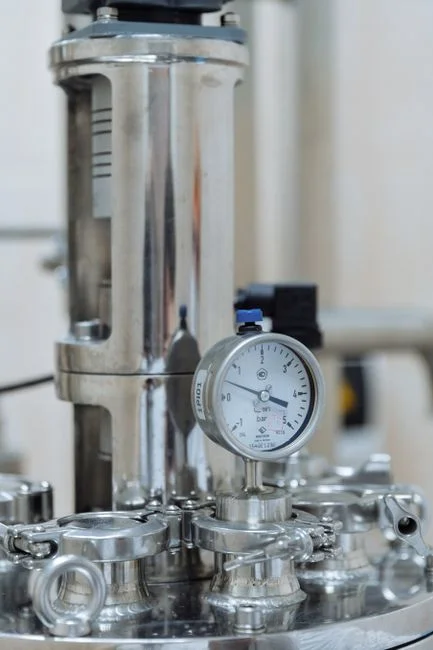
DAF is a physicochemical separation process: clarified effluent is pressurized and saturated with air, returned to the flotation tank, and released as micro-bubbles at atmospheric pressure. According to Hixson, the bubbles are generally 10–100 microns in diameter. They attach to suspended solids and small oil droplets, lifting the floatable material into a froth layer removed by a mechanical skimmer.
| Application evidence | Reported result | Required interpretation |
|---|---|---|
| Poultry slaughterhouse field studies reported by Hixson | 74% suspended-solids removal and 99% oil-and-grease removal under optimized conditions | Application-specific field evidence, not a universal guarantee |
| More recent poultry-operation data reported by Hixson | Up to 99% TSS removal, 85% BOD₅ reduction, and 98% phosphate removal | Requires appropriate coagulant selection and operating parameters |
The evidence supports DAF as a strong candidate for oil, FOG, and suspended-solids separation, but it does not establish performance for an unrelated factory stream. A quotation should identify the design wastewater, chemical program, recycle ratio, contaminant-loading basis, operating parameters, and performance-test method. The 2026 industrial DAF unit selection framework provides a useful basis for comparing those inputs.
Downstream protection is part of the value proposition. Removing solids and organic material before biological treatment can reduce shock loading to aeration and clarification equipment and make downstream sludge handling more predictable. That benefit should be evaluated with the factory’s wastewater data, not inferred from DAF hardware alone.
Build the ETP Around the Wastewater Treatment Objective
A defensible ETP is a treatment train assembled around the required effluent quality. Equalization and preliminary treatment protect pumps and downstream processes from hydraulic and concentration surges. Screening removes material capable of clogging equipment, while equalization stabilizes flow and strength before chemical, physical, or biological treatment.
Primary treatment removes suspended solids and FOG. Hixson identifies sedimentation and flotation as the principal physical-treatment options and describes DAF as widely used in food processing. Physical separation should be followed by biological wastewater treatment where dissolved organics must be removed; aerobic processes include activated sludge and sequencing batch reactors, while anaerobic digestion can suit high-strength organic streams and potentially recover biogas.
| ETP stage | Engineering role | Evidence or design input |
|---|---|---|
| Screening and equalization | Remove debris and buffer flow and concentration surges | Peak flow, batch dumps, CIP events, overflow consequences |
| DAF or clarification | Remove suspended solids, oil, FOG, or readily settleable material | Oil loading, emulsion characteristics, solids loading, chemical demand |
| Biological treatment | Remove dissolved organic matter and, where needed, nutrients | BOD₅, COD, nutrients, biodegradability, treatment objective |
| Secondary clarification or MBR | Separate biological solids or combine biological treatment with membrane filtration | Effluent solids requirement, footprint, controls, residuals |
| Advanced polishing | Meet stricter discharge or reuse specifications | Filtration, reverse osmosis, UV, disinfection, and disposal requirements |
For high-strength food-processing streams, Hixson reports anaerobic-digestion COD removal of 89.8–96.5%, methane yields of 0.27–0.33 liters CH₄ per gram of COD removed, and a documented biogas offset of up to 57.6% of plant energy demand. Those figures apply to the cited food-processing applications, not automatically to every industrial stream.
Add nutrient removal where nitrogen or phosphorus limits apply. For reuse, Hixson reports a beverage-facility MBR pilot with effluent COD of 16.9 mg/L, TSS of 3.8 mg/L, and 92.6% COD removal. Treat this as pilot evidence. An MBR membrane bioreactor system may be justified by the reuse specification; industrial reverse osmosis water purification and multimedia filtration address different polishing duties and should not be assumed interchangeable.
Match the System to San Diego Permitting and Reuse Conditions
For a direct surface-water discharge, Hixson identifies the US NPDES framework and notes that facility-specific permits commonly address BOD, COD, pH, suspended solids, nutrients, and other parameters. The applicable San Diego-area permit and receiving-water requirements must therefore define the final treatment objectives; a generic “compliant ETP” statement is not an authorization.
For discharge to a municipal treatment system, Hixson identifies pretreatment standards under 40 CFR Part 403. The industrial pollutants must not interfere with the municipal plant or pass through untreated. Hixson cites 250 mg/L as a general threshold for both BOD and suspended solids, but the project must verify current sewer-authority limits and local permit conditions rather than treating that reference as a San Diego approval.
Do not assume that a package DAF or ETP establishes compliance. The selected process, capacity, monitoring, controls, operating envelope, and residuals management must fit the facility’s authorization. The industrial DAF supplier selection criteria should therefore be paired with the applicable permit documents rather than used as a substitute for them.
For water reuse, define the intended non-contact or process use and its required quality attributes. Hixson lists equipment cleaning, cooling towers, and landscape irrigation as reuse applications for ultrafiltration, reverse osmosis, and UV disinfection. The project team should identify which requirements come from the industrial permit, sewer authority, reuse plan, and internal production specification. Keeping those sources distinct prevents a treatment bid from promising compliance it cannot demonstrate.
Size the Equipment from Loads, Not Just Average Flow
Hydraulic capacity and contaminant loading are separate sizing checks. Average and peak flow determine vessel and piping scale, while retention time, solids loading, oil loading, recycle requirements, and operating redundancy determine process capability. Sizing only from daily flow can leave a unit unable to handle a production surge, washdown, or batch dump.
Treat batch dumps, washdown, and CIP spikes as design events where they can exceed normal flows. Establish what happens during an untreated bypass or equalization-tank overflow. If the consequences are unacceptable, the equalization volume, pumping arrangement, pretreatment capacity, and emergency operating response need to be engineered rather than left to vendor assumptions.
| Sizing input | Bid requirement | Why it matters |
|---|---|---|
| Average and peak flow | State both values, operating schedule, and surge assumptions | Confirms hydraulic capacity and equalization need |
| Pollutant loads | Provide design concentrations and mass-loading basis | Prevents equipment from being selected on flow alone |
| Chemical conditioning | Identify coagulants, flocculants, pH control, dosing basis, and control method | Separates process chemistry from hardware selection |
| Residuals route | Describe collection, conditioning, dewatering, storage, transport, and disposal | Prevents an unresolved sludge obligation |
| Site and operating conditions | State footprint, utilities, access, odor, noise, controls, staffing, maintenance, and expansion provisions | Tests whether the quoted system is operable at the plant |
Specify chemical conditioning rather than assuming removal from DAF hardware alone. The S3 catalog identifies automatic dosing for coagulants, flocculants, pH adjusters, and specialty chemicals. It also lists equipment-selection ranges: DAF models from 4–300 m³/h, MBR systems from 10–2,000 m³/day, and plate-and-frame filter presses from 1–500 m² of filtration area. These are catalog ranges, not universal design answers.
Evaluate the solids route early. Flotation skimmings and biological sludge require a valid destination. An industrial sludge dewatering filter press addresses dewatering, but it does not resolve disposal, transport, storage, or odor obligations.
Compare Quotes on Total Ownership and Supply Risk
A comparable bid must state the design wastewater, average and peak flow, pollutant loading, treatment objective, duty cycle, and performance-test conditions. Without those assumptions, equipment prices and removal claims are not comparable.
Compare the complete scope: screening, equalization, chemical dosing, mixing and flocculation, DAF or clarifier, biological equipment, pumping, aeration, controls, odor control, sludge handling, and final polishing. Require suppliers to separate equipment price from installation, civil and electrical work, commissioning, startup chemicals, operator training, maintenance spares, and consumables.
| Evaluation area | Evidence to request before award |
|---|---|
| Process suitability | Design basis, process narrative, sizing calculations, chemical strategy, and applicable drawings |
| Performance | Guarantees tied to stated feed quality, test methods, operating conditions, and acceptance criteria |
| Compliance support | Permit-application inputs, monitoring scope, controls, alarms, and operating limits |
| Lifecycle cost | Installation, utilities, chemicals, sludge handling, maintenance, spares, and consumables |
| Supply and support | Comparable references, warranty boundaries, technical support, spare-parts policy, and delivery schedule |
The S3 catalog supports initial comparison because it exposes functional scope and equipment ranges, but catalog ranges cannot replace project-specific wastewater testing and drawings. For cost structure, use the DAF versus IAF cost comparison as a prompt to request capex and operating-cost line items; no project price should be inferred without a defined basis.
Use a weighted decision matrix covering process suitability, guaranteed performance, compliance support, lifecycle cost, footprint, maintainability, controls, delivery schedule, and supplier support. Weight the matrix before receiving bids, then document why the selected offer meets the wastewater objective and site constraints.
Qualify the Project in Four Steps
- Characterize: conduct representative sampling and quantify variability in flow, pH, temperature, oil and grease, suspended solids, BOD₅, COD, nutrients, metals, and other relevant contaminants.
- Define: confirm the discharge destination, permit or sewer requirements, reuse target, production schedule, available footprint, operating constraints, and residuals management route.
- Engineer: compare DAF, ETP, and combined trains using peak hydraulic and pollutant loads. Include equalization, chemical dosing, solids handling, controls, utilities, and acceptance testing.
- Procure: issue a performance-based specification, require comparable references, compare lifecycle costs, and pilot-test the selected process when wastewater variability or application novelty makes scale-up uncertain.
This sequence turns the DAF machine process and selection guide into a qualification process rather than an equipment-first exercise.
Frequently Asked Questions
How much does an industrial DAF or ETP system cost in San Diego?
There is no defensible project price without a wastewater basis, flow profile, treatment objective, site scope, and residuals plan. Ask each supplier for itemized equipment, installation, civil work, electrical work, commissioning, startup chemicals, training, maintenance, and consumables. Compare those bids using the same design basis; do not use a generic DAF or ETP price as a San Diego budget.
How should a factory size a DAF or ETP system?
Size from both peak hydraulics and contaminant loading. Give bidders average flow, peak flow, batch-dump and CIP conditions, operating schedule, pollutant concentrations, and required effluent quality. Require a statement of how batch dumps, equalization overflow, redundancy, and upset loads affect the selected design.
What should a buyer request before selecting a wastewater treatment supplier?
Request the supplier’s design basis, process drawings, sizing calculations, chemical requirements, comparable references, performance guarantees, acceptance-test method, warranty boundaries, controls and alarm scope, spare-parts policy, technical support, and delivery schedule. Verify that the evidence comes from comparable wastewater rather than only from food-processing or refinery examples.
Does installing a DAF or ETP automatically satisfy San Diego discharge requirements?
No. Treatment performance is not regulatory authorization. For a direct surface-water discharge, obtain the applicable NPDES requirements; for a municipal sewer discharge, confirm pretreatment requirements with the sewer authority. The buyer should identify the controlling permit, discharge destination, monitoring obligations, and residual-disposal conditions in writing before award.
How much treatment is needed for factory water reuse?
Define the intended reuse and its quality specification first. Hixson identifies ultrafiltration, reverse osmosis, and UV disinfection for applications including equipment cleaning, cooling towers, and landscape irrigation, but the required train depends on the source wastewater and end use. A DAF or biological stage may provide necessary pretreatment; membranes and disinfection may still be required to meet the reuse objective.
Related Equipment
- industrial DAF system — specifications, capacity range, and technical data