What the Pontianak Data Center Must Treat Separately
A Pontianak data center generally needs separate treatment paths for cooling-tower blowdown, sanitary sewage, process wastewater, storm water and any liquid-cooling effluent. Cooling blowdown normally contains concentrated dissolved solids plus residual biocides, corrosion inhibitors and anti-scalants, so treatment should begin with measurement and stream segregation. A practical sequence is to optimize the cooling system, remove suspended solids, reduce the contaminants that limit reuse, and then reuse treated water for suitable applications or discharge it only after confirming the applicable Indonesian and Pontianak requirements. If cooling towers operate at 4 cycles of concentration, the theoretical blowdown ratio is 25%; at 6 cycles it is 20%, but actual blowdown may exceed theory by 15–30%.
Cooling-tower blowdown must not be combined with sanitary sewage or process wastewater before their flow and chemistry are characterized. Commercial Water Lab identifies cooling blowdown, sanitary wastewater, process wastewater, storm water and direct liquid- or immersion-cooling effluent as distinct streams with different contaminant profiles. A regional wastewater and cooling-blowdown treatment framework provides a useful comparison, while a data-center wastewater treatment planning guide illustrates why the discharge route must be established early.
Blowdown is chemically conditioned water, not clean water. North Carolina State University’s September 2026 account identifies warm water, concentrated minerals, residual biocides and anti-scalants as receiving-water concerns. Direct liquid or immersion cooling may introduce a different coolant profile, potentially including refrigerants or PFAS compounds, and therefore needs a separate compatibility and disposal assessment under Commercial Water Lab’s June 2026 discussion.
| Stream | Typical design basis to establish | Decision before treatment selection |
|---|---|---|
| Cooling-tower blowdown | Makeup, blowdown, evaporation, conductivity, cycles of concentration, temperature, suspended solids, hardness, silica and chemical inventory | Optimize the cooling loop; identify reuse or discharge destination |
| Sanitary sewage | Flow, wastewater load, fixtures and collection method | Confirm sewer-acceptance and separate-treatment requirements |
| Process wastewater | Batch or continuous flow, constituent inventory, cleaning chemicals and episodic discharges | Determine whether batch segregation or dedicated pretreatment is needed |
| Storm water | Drainage areas, rainfall pathway and likely contaminants | Define controls under the site’s confirmed drainage regime |
| Liquid- or immersion-cooling effluent | Coolant chemistry, refrigerant or PFAS status, temperature and contamination controls | Establish dedicated handling and specialist verification |
Design inputs should include monthly makeup-water and blowdown volumes, evaporation, measured conductivity, operating cycles, chemical inventory, cooling configuration, anticipated load changes and the intended destination for every recovered stream. No supplied research establishes numerical Pontianak permit limits, sewer-acceptance criteria, water tariffs or reuse rules. Those items must be confirmed with the relevant Indonesian and Pontianak authorities rather than inferred from another jurisdiction.
Build the Cooling-Water Balance Before Selecting Equipment
Vendor sizing should begin with measured site data, not a theoretical blowdown percentage. Genesis Water Technologies identifies measurement and baseline establishment as the first stage of a sustainable water program: monitor makeup water, blowdown, evaporation, conductivity, pH and suspended solids, then distinguish consumption from water returned after use. The water-treatment parts and media reference can support the metering and control scope, but it does not replace site data.
The initial check is the relationship blowdown ratio = 1/(cycles of concentration − 1). Genesis gives 25% of makeup-water volume at 4 cycles and 20% at 6 cycles. Moving from 4 to 6 cycles therefore reduces blowdown by 5 percentage points of makeup volume, or 20% relative to the 4-cycle blowdown volume—not 50%.
| Water-balance input | How to establish it | Engineering use |
|---|---|---|
| Makeup water | Measure at the utility or cooling-system boundary across normal and peak conditions | Sets the absolute flow and concentration basis |
| Blowdown | Measure continuously or reconcile meter readings against the complete balance | Sets the treatment-train flow |
| Evaporation | Calculate from the measured balance and cooling configuration | Separates true consumption from recoverable discharge |
| Conductivity and cycles of concentration | Measure circulating and makeup conductivity and compare with the operating target | Checks whether control and chemical programs support the theoretical ratio |
| pH and suspended solids | Monitor baseline, chemical-cycle peaks and normal operations | Indicates treatment and reuse constraints |
Genesis also warns that actual blowdown can exceed theory by 15–30% because of unmeasured losses and emergency dumps. Final sizing should therefore use measured flow data and the operating envelope, not the formula alone. Require vendors to reconcile their proposed recovery and water-savings claims with the measured balance, including leakage, control-driven dumps and changes in cooling load.
Perform an independent mass-balance and chemistry review before accepting a guaranteed recovery figure. Check whether the stated cycles reflect the circulating system or only a treatment skid; whether chemical additions increase dissolved solids; whether feed flow includes dilution or contaminated returns; and whether the proposed system remains stable through makeup changes and peak demand. A credible proposal identifies measurement points, uncertainty and any conditions that invalidate its guarantee.
Choose a Reuse Route Before Buying a Treatment System
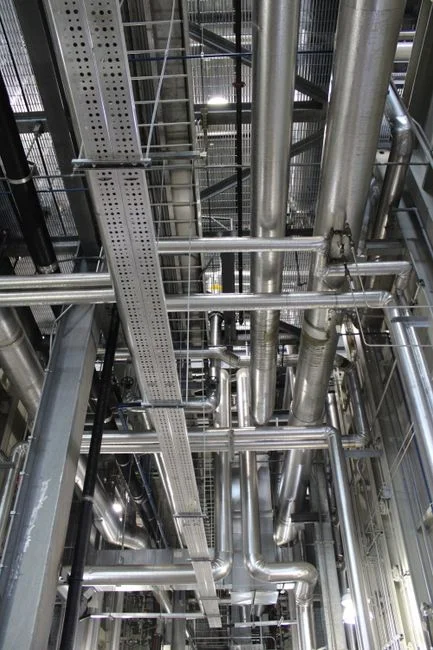
The required product quality is determined by the reuse destination, so a blowdown-recovery train should not be specified before the destination is agreed. Genesis identifies irrigation, toilet flushing and outdoor equipment washing as possible lower-demand, non-critical applications, while cooling-tower makeup requires advanced treatment. A data-center water-treatment framework for Agadir can inform the same source-to-use decision sequence, but Pontianak’s site conditions remain controlling.
| Reuse destination | Required evidence | Procurement consequence |
|---|---|---|
| Equipment washing or other non-critical service | Internal quality specification, seasonal demand and cross-connection controls | Physical treatment may be sufficient if contaminants and exposure risk are controlled |
| Irrigation or toilet flushing | Demand, public-health and downstream-process requirements | Specify the necessary removal and disinfection without assuming a drinking-water-grade train |
| Cooling-tower makeup | Hardness, silica, conductivity, alkalinity, biocide residuals, temperature and scaling assessment | Evaluate membrane treatment and chemical control against the circulating loop |
| Closed-loop cooling reuse | Coolant compatibility, heat-transfer requirements, scaling, fouling and reliability criteria | Treat as an engineered process change, not a generic water-reuse application |
Water Usage Effectiveness should not be the sole decision metric. Genesis explains that WUE does not distinguish consumed water from water returned after treatment and does not account for discharge quality or reuse potential. A low intake-based metric can therefore conceal a large contaminated blowdown stream.
North Carolina State University’s September 2026 recommendation is to consider recycled or non-potable sources, closed-loop cooling and dry cooling where technically and commercially suitable. The same source notes the energy trade-off: water-saving dry systems generally require more energy. Each destination therefore needs an internal water-quality specification, confirmation of equipment compatibility, and a cross-contamination and public-health assessment. An industrial water softener may address hardness in a defined application, but it does not by itself solve silica, suspended solids, biocide residues, microbial control or discharge requirements.
Select the Treatment Train by Contaminant and Scale
Treatment selection should follow the contaminant profile rather than a generic reverse-osmosis package. IDE identifies silica, calcium carbonate and calcium sulfate as key scaling constraints in cooling-tower blowdown, and reports that conventional brackish-water reverse osmosis generally reaches 75–80% recovery before scaling becomes unmanageable. It also identifies calcium sulfate among the compounds that must be assessed. These are feed-specific constraints, not automatic Pontianak limits.
Where suspended solids, colloids, oil and grease are present, start with physical separation. A DAF system for cooling-blowdown pretreatment is one physical option. HydropureWater reports DAF capacity from 4–300 m³/h and identifies micro-bubble flotation with automatic skimming for suspended solids, FOG, oil and grease, and colloidal matter. Those are supplier specifications, not evidence of performance on an unspecified Pontianak feed.
Where fine solids and colloids must be removed before a sensitive downstream process, evaluate UF pretreatment for industrial blowdown reuse. HydropureWater reports UF capacities from 2,000–40,000 L/h, 0.03 μm PVDF membranes, automatic backwash and air scour. Require a membrane-compatibility and cleaning-chemistry review rather than assuming the stated pore size resolves every fouling risk.
| Problem | Potential process | Evidence required before selection |
|---|---|---|
| Suspended solids, colloids, oil and grease | DAF or another physical separator, followed by clarification or filtration as needed | Representative feed analysis, particle characteristics and residual oil tests |
| Fine solids before membranes | UF or validated filtration | Turbidity or solids data, recovery, cleaning frequency and concentrate route |
| Dissolved salts and scaling ions | Brackish-water RO after pretreatment | Silica, hardness, alkalinity, sulfate, temperature, recovery and concentrate disposal route |
| Biocide, corrosion inhibitor or anti-scalant residuals | Targeted removal or destruction after compatibility review | Active ingredients, residual concentrations, downstream fate and reuse specification |
| Microbial risk | Disinfection where monitoring and the reuse assessment support it | Target organism, dose, contact conditions, residual and by-product route |
Evaluate industrial RO only after feed characterization and pretreatment selection. HydropureWater reports recovery rates up to 95% for its industrial RO systems, while IDE reports the 75–80% conventional BWRO ceiling. These figures describe different configurations and should not be presented as interchangeable performance guarantees.
Silica scaling control requires more than average feed analysis. Review saturation behavior across temperature, concentration and chemical conditions, then evaluate whether the proposed RO can remain within a stable operating window. The concentrate route is part of the equipment decision, not an afterthought.
Use automatic chemical dosing only where the chemistry program requires it. Require the vendor to identify active ingredients, residual concentrations, downstream fate and compatibility with the reuse destination. HydropureWater offers an automatic chemical-dosing system, while its chlorine dioxide generator is reported as covering industrial cooling loops and process wastewater at capacities from 50 g/h to 20,000 g/h. Disinfection should not be required by assumption: monitoring, the reuse specification and the site risk assessment must support it.
Prove the Proposal with a Pilot and Acceptance Tests
A pilot should demonstrate stable treatment of representative cooling-blowdown chemistry across normal operating variation, not merely process one clean laboratory sample. Include makeup changes, chemical additions, drift and peak cooling demand. The ultrafiltration guide for wastewater pretreatment illustrates why the feed condition and operating envelope belong in the test protocol.
| Test or observation | Minimum evidence to request |
|---|---|
| Feed characterization | Conductivity, pH, suspended solids, hardness, silica, calcium, residual biocide and anti-scalant measurements across representative conditions |
| Treated-water quality | Results for every constituent required by the reuse specification or confirmed discharge route |
| Process performance | Sustained flow, measured recovery, pressure and control response, cleaning frequency and chemical consumption |
| Residual handling | Measured concentrate generation and documented sludge or concentrate route |
| Operating burden | Energy use, operator interventions, automatic-control verification and local service support |
During the trial, measure treated flow, concentrate generation, chemical consumption, cleaning frequency, energy use and recovery. Recalculate the full-scale water balance using the measured results rather than preserving the original theoretical assumptions.
Make commercial or operational acceptance contingent on sustained flow, the agreed reuse quality, functioning automatic controls, safe operator access, local service capability and a documented residual route. The 2026 UF maintenance and operator protocol provides a practical reference for defining cleaning and operator responsibilities.
IDE’s industrial brine-desalter example provides a useful reference configuration, not a Pontianak guarantee. IDE reports operation at around 95% recovery with permeate containing about 1 mg/L silica in an application combining cooling-tower blowdown and other saline streams. The feed composition, precipitation controls, blend arrangement and residual route must be reproduced or independently justified before transferring that result to Pontianak.
Build the Business Case Without Inflating the Savings
The investment case should calculate avoided utility, water, wastewater-discharge, chemical and equipment costs using measured site data. A 2025 wastewater-treatment cost breakdown and ROI framework can structure the calculation, but Brisbane costs must not be imported as Pontianak prices.
Include operating costs for wastewater pretreatment, membrane replacement or cleaning, chemicals, energy, sludge or concentrate handling, monitoring and trained operators. Separate capital expenditure from lifecycle cost and avoid presenting theoretical blowdown reduction or WUE improvement as financial savings by themselves.
Use the measured water balance and pilot recovery as the financial basis. Do not apply Genesis’s reported 3–5-year payback range: that figure related to a 15 MW facility in a water-stressed region and is not a Pontianak forecast. Present low-, base- and high-flow scenarios, with the base case tied to measured makeup and blowdown. Test sensitivity to local discharge cost, the actual value of recovered water, reuse demand, chemical consumption and concentrate handling.
Frequently Asked Questions
Does a Pontianak data center need a DAF, UF or reverse-osmosis system?
DAF, UF and reverse osmosis solve different problems. Use physical separation where suspended solids, colloids, oil and grease interfere with recovery; evaluate UF where fine solids must be removed before a sensitive process; and evaluate industrial reverse osmosis when the reuse destination requires dissolved-solids reduction. The decision depends on measured flow and chemistry, required water quality, recovery, concentrate disposal and operating staff capability—not on a preferred product.
What data should a supplier request before sizing and pricing the system?
Request makeup and blowdown flow by operating condition, evaporation, conductivity, pH, suspended solids, hardness, silica, calcium, the complete cooling chemical inventory, reuse quality specifications, site utilities, control requirements and local service expectations. Also request each proposed discharge or reuse assumption in writing. Without this package, a price would omit the inputs needed to establish a defensible treatment rate or recovery guarantee.
How should competing bids be compared for cost and supplier capability?
Separate each bid into equipment, wastewater pretreatment, chemicals, energy, membrane or media life, sludge or concentrate handling, monitoring, warranty and commissioning support. Check whether recovery and service assumptions are conditional on feed chemistry, site utilities or operator intervention. A lower equipment price can be misleading if it excludes pretreatment, residual handling or specialist maintenance.
How can compliance risk be managed without relying on an unknown Pontianak limit?
Confirm the receiving route, responsible Indonesian and Pontianak authority, sewer-acceptance conditions and any site-specific environmental requirements before treating or reusing a stream. Commercial Water Lab explains that discharge controls vary by site and jurisdiction. The permit or authority decision should therefore be an explicit design input, supported by the stream characterization and proposed treatment train—not an assumption copied from another location.
Should cooling cycles of concentration be increased before installing treatment?
Increasing cycles can reduce blowdown, but Genesis notes that biological and scaling risks rise above 5–6 cycles without advanced treatment. Make any change only with a reviewed chemical program, conductivity control, suspended-solids management, scaling assessment and microbiological monitoring. Operating changes can be cheaper than capital equipment, but they must not shift the problem into fouling, corrosion or unreliable reuse.
Related Equipment
- DAF system for cooling-blowdown pretreatment — specifications, capacity range, and technical data