

Which Rules Control Sewer Discharge Near Brownfield?
Sewer discharge near Brownfield is controlled primarily by the serving POTW’s sewer-use ordinance and any industrial discharge or significant industrial user (SIU) permit, not by an NPDES permit alone. The facility should establish whether it is a categorical industrial user, identify the applicable categorical subpart, and obtain the controlling local limits before selecting equipment. NPDES governs point-source discharges to waters of the United States; industrial sewer discharge is enforced through Clean Water Act Section 307(b), 40 CFR Part 403, and the POTW’s local pretreatment program (US EPA, Industrial Wastewater overview, 19january2017snapshot.epa.gov). A typical compliance sequence is:
- Identify the regulated wastewater stream and its point of connection.
- Obtain the current sewer-use ordinance, SIU permit, local limits, monitoring frequency, slug-control provisions, reporting forms, and fee schedule.
- Confirm the categorical subpart and subcategory against the facility’s actual process.
- Use those requirements as the design basis.
There is a source inconsistency that should not be reproduced as settled law. HydropureWater articles refer both to 40 CFR Part 437 for Ore Mining and Dressing and Part 430 in another article; the 2026 pretreatment guide also identifies Part 433 for metal finishing. Verify the current eCFR subpart and subcategory against the wastewater source and the POTW permit before design.
HydropureWater identifies Part 433 Metal Finishing for plating, pickling, anodizing, and related operations. Its supplied Part 433.15 values are 3.38 mg/L daily maximum and 2.07 mg/L monthly average for copper, and 2.77 mg/L daily maximum and 1.71 mg/L monthly average for total chromium (HydropureWater, 2026 pretreatment guide). These values are not substitutes for the serving POTW’s local limits. HydropureWater also reports civil penalties under Clean Water Act Section 309 can reach $25,000 per day per violation, making slug control and traceable operating records material compliance controls.
| Document or source | What it establishes | Design implication |
|---|---|---|
| NPDES permit | Requirements for direct point-source discharge to waters of the United States | Do not use it as the controlling sewer-discharge limit without confirming the discharge pathway |
| Sewer-use ordinance | Local pretreatment requirements, local limits, fees, monitoring, and enforcement conditions | Use as the controlling local design basis |
| Industrial discharge or SIU permit | Site-specific monitoring, reporting, slug controls, BMPs, and other conditions | Map each equipment requirement to a permit condition |
| 40 CFR Part 403 and applicable categorical subpart | Federal pretreatment framework and categorical requirements where applicable | Verify the current subpart, subcategory, and concentration- or mass-based limits |
For a related site-oriented overview, see the mining and metals pretreatment guide for Richmond-area plants and the Brownfield-area mining sewer-limits guide. The legal threshold is not “the equipment can meet a catalog number”; it is a documented, permit-backed operating envelope.
Build the Wastewater Characterization and Sampling Basis
Mining and metals wastewater should be characterized stream by stream, because design averages conceal the batch, storm, and clean-out conditions that control treatment performance. Separate pit dewatering, concentrator slurry water, contact stormwater, acid mine drainage, and metal-finishing rinsate before deciding whether they can share a treatment train. HydropureWater reports raw acid mine drainage and spent process solutions at pH 2–4, with suspended solids from hundreds to several thousand mg/L and regulated contaminants including Pb, Cu, Zn, Cd, Ni, and As (HydropureWater, mining pretreatment guide). Those figures are characterization evidence, not Brownfield permit limits.
The sampling program should cover operating modes rather than rely on one daytime grab. Include mill clean-outs, batch dumps, leach cycles, storm inflows, shutdowns, and normal production periods. HydropureWater identifies a 24-hour composite sampler plus on-line pH and conductivity monitoring at the headworks as the minimum design basis, expanded with site-specific flow and load monitoring (HydropureWater, 2026 pretreatment guide). For each stream, request:
- Total and dissolved metals, with the metals list tied to the permit and process inventory.
- TSS, pH, sulfate, and TDS.
- Oil and grease where flotation reagents, lubricants, or finishing operations are present.
- Flotation-reagent characteristics and any cyanide, fluoride, ammonia, or PFAS parameters required by the POTW.
- Flow, rainfall, batch-volume, and clean-out records for the mass balance.
The POTW and local control authority determine the applicable analytical suite. Do not copy one analyte list to every Brownfield site. Ask the control authority for the required sample point, sample type, analytical method, averaging period, monitoring frequency, and reporting format. Then build a worst-case mass balance rather than treating the plant’s average daily flow as the only hydraulic case.
| Design input | Evidence to request | Reason it matters |
|---|---|---|
| Stream segregation | Separate flow and pollutant data for pit, process, stormwater, drainage, and finishing streams | Prevents a clean dilute stream from masking a high-load discharge |
| Operating variability | Batch dumps, clean-outs, storm and leach-cycle records | Defines equalization, chemical-feed, and solids-handling peaks |
| Mass and loading | Flow, pH, TSS, total/dissolved metals, and permit-required analytes | Links chemical demand and solids production to equipment duty |
| Control basis | 24-hour composite sampler and online pH/conductivity at the headworks, plus site flow/load monitoring | Provides continuous process indicators around permit sampling |
Before procurement, freeze the characterization basis with the EHS, process, and operations teams. If the data is incomplete, obtain another campaign rather than assigning an assumed concentration or flow to the missing case.
Equalize and Control pH Before the Separator
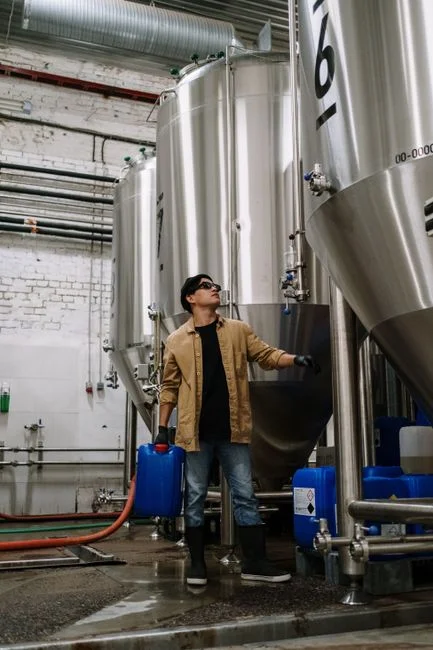
Equalization must be sized for batch discharges and changing metal loads, not merely for average daily flow. HydropureWater recommends 8–24 hours of average daily flow to damp shift changes, dump-leach cycles, and mill clean-outs (HydropureWater, mining pretreatment guide). Equalization stabilizes pH, suspended solids, metal loading, and chemical demand before precipitation, which protects the downstream separator from hydraulic and chemical shocks.
pH adjustment is the active control point. Lime is cheaper per ton but produces 3–5 times more sludge; NaOH can be advantageous for high-TDS streams despite higher reagent cost (HydropureWater, mining pretreatment guide). The choice should therefore be made on reagent consumption, sludge volume, chemical handling, downstream capacity, and disposal cost—not chemical price alone.
Where influent pH swings exceed 2 pH units, use staged dosing. The supplied ±0.2 pH band is an equipment-control objective reported by HydropureWater, not a permit limit (HydropureWater, mining pretreatment guide). A PLC-controlled chemical dosing skid can coordinate pH adjustment and coagulant or flocculant feed using flow-paced dosing, interlocks, alarms, and controlled reagent inventory. The permit still determines the allowable discharge range and monitoring method.
Hydroxide precipitation should not be judged by feed pH alone. HydropureWater reports 85–95% total-metals removal for properly controlled precipitation systems, but that result depends on chemistry control (HydropureWater, mining pretreatment guide). Validate the actual water matrix through jar testing and, where the risk or cost is material, a pilot. The design should show the chemical dose, reactor response, pH trajectory, residual metals, and sludge settleability at worst-case flow and load.
Control logic should also define what happens during a power failure, reagent depletion, high flow, or abnormal pH. Those interlocks belong in the control narrative because an automatic skid is only as reliable as its fail-safe logic and the operating record behind it.
Select Hydroxide Precipitation or Sulfide Polishing
Hydroxide precipitation with lime or NaOH is the default primary process for many mining streams because it is established, comparatively less costly, and suitable for broad metal-removal duty. The required pH is parameter-specific: copper begins precipitating near pH 6.5 and is fully removed by pH 8.5; zinc follows between pH 7 and 9; amphoteric metals such as Cr(III) and aluminum can resolubilize above approximately pH 10.5 (HydropureWater, 2026 pretreatment guide). A single pH setpoint should not be used without checking the metal inventory.
Sulfide chemistry is a polishing option when hydroxide cannot reliably meet the controlling local limit. HydropureWater reports residual metals of 0.5–2.0 mg/L for hydroxide systems and 0.01–0.05 mg/L for sulfide systems for Cu, Zn, Cd, and Ni (HydropureWater, mining pretreatment guide). It also reports sulfide reagent cost at 2–4 times hydroxide cost and identifies sealed reactors and controlled H₂S off-gas handling as operational requirements. The site-specific trigger is a local limit for Pb, Hg, or Cd at or below 0.1 mg/L when hydroxide performance is inadequate.
That decision should be made with jar tests on the actual matrix. Establish, at minimum:
- The pH window for each target metal and the corresponding residual concentration.
- Hydroxide versus sulfide reagent consumption at the required dose.
- Floc formation, settleability, and carryover into clarification.
- Sludge volume and dewatering implications.
- H₂S generation, worker exposure controls, and off-gas treatment needs for sulfide.
| Decision point | Hydroxide route | Sulfide route |
|---|---|---|
| Primary role | Bulk metals precipitation | Selective polishing when the local limit requires lower residuals |
| Reported residual metals for Cu, Zn, Cd, and Ni | 0.5–2.0 mg/L | 0.01–0.05 mg/L |
| Reported reagent cost relative to hydroxide | Baseline | 2–4 times hydroxide |
| Key operating concern | pH window and amphoteric-metal resolubilization | H₂S generation, sealed reactors, and off-gas control |
| Purchase decision | Default primary chemistry subject to jar or pilot validation | Add only when hydroxide cannot meet the permit basis |
The values above are reported process-performance ranges, not universal limits or guarantees (HydropureWater, 2026 pretreatment guide). Final selection must reconcile the actual permit, chemical safety requirements, and waste-disposal pathway.
Choose DAF or Lamella Clarification for the Solids Load
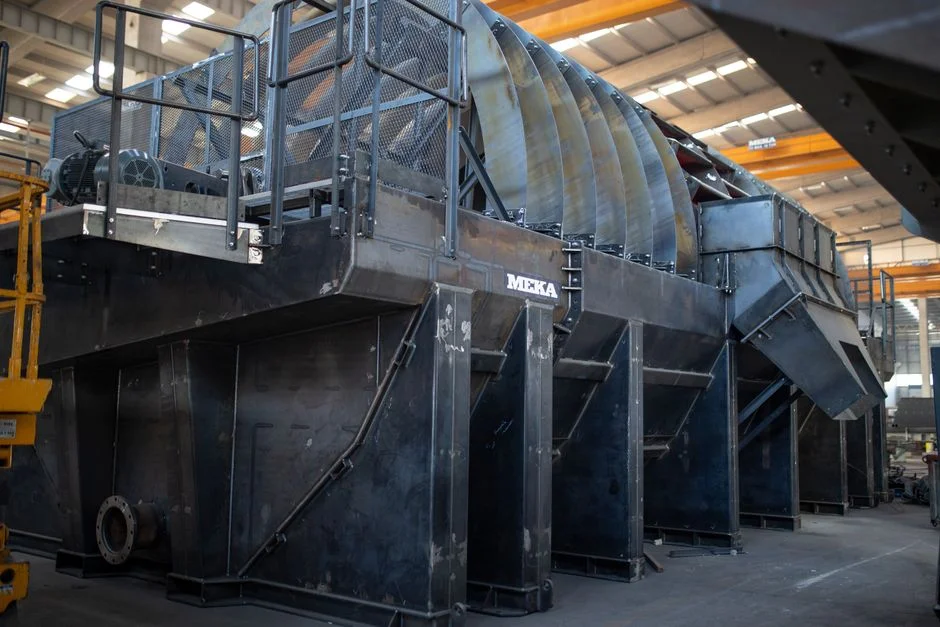
DAF is the better starting point when the wastewater contains oil, grease, or fine colloidal metals; lamella clarification is the stronger starting point for dense metal-hydroxide sludge, high flow, and a constrained footprint. HydropureWater reports DAF hydraulic loading of 5–25 m/h, TSS removal of 90–98%, and oil-and-grease removal of 85–95% in mining and metal-finishing service (HydropureWater, mining pretreatment guide). It reports lamella surface loading of 20–40 m/h and a footprint roughly one-third that of a conventional clarifier.
Polymer and floc condition are part of the separator selection, not an accessory decision. HydropureWater reports that a coagulant-aid dose of 0.5–3 mg/L can support 20–40 m/h clarifier loading and reduce colloidal carryover (HydropureWater, mining pretreatment guide). The selected chemical dose must be verified against the real water because high-TDS matrices and variable ore chemistry can change floc behavior.
For Brownfield procurement, compare the complete hydraulic scope rather than the separator tank price. Include recycle pumps, compressor or saturated-water supply, controls, sludge withdrawal, odor control, maintenance access, utilities, and future turndown. The industrial DAF system for mining solids separation should be evaluated with its recycle and compressed-air requirements; the high-efficiency lamella sedimentation tank should be evaluated with the complete flocculation and sludge-withdrawal arrangement.
| Selection criterion | Prefer DAF | Prefer lamella clarification |
|---|---|---|
| Primary contaminant character | Oil, grease, floatable reagents, fine colloids | Metal-hydroxide flocs and dense precipitation sludge |
| Reported hydraulic or surface loading | 5–25 m/h | 20–40 m/h |
| Reported performance scope | 90–98% TSS; 85–95% oil and grease | Approximately one-third the footprint of a conventional clarifier |
| Main utility requirement | Recycle plus compressed or saturated water | Mixing, flocculation, sludge withdrawal, and sludge handling |
| Required confirmation | Jar or pilot test for flotation and carryover | Jar or pilot test for floc density, settling, and sludge handling |
Neither separator compensates for incorrect feed pH, reagent dose, or floc condition. Keep chemistry, hydraulic loading, and sludge characteristics in the same design model; otherwise a nominal loading rate can conceal an equipment-selection error.
Filter, Disinfect, and Manage the Sludge
Multi-media filtration provides a final physical barrier against residual suspended solids and colloids before discharge. HydropureWater reports a 1–2 m/h filtration rate, residual TSS below 10 mg/L, and backwash triggered by differential pressure (HydropureWater, mining pretreatment guide). The filter should be sized around its backwash cycle, not average forward flow, because an undersized backwash system can become the next hydraulic bottleneck. A multi-media filtration system should be specified with the media arrangement, backwash trigger, waste handling, and controls required by the site.
Disinfection should be included only where the sewer-use ordinance, collection-system conditions, or pathogen risk requires it. HydropureWater identifies long force mains, siphons, and sensitive co-tenants as situations in which the POTW may require additional control, and reports chlorine dioxide dosing of 1–5 mg/L (HydropureWater, mining pretreatment guide). If that route is selected, evaluate the chlorine dioxide generator against the actual residual requirement, chemical feed, safety system, and collection-system condition.
Metals-bearing sludge belongs in the initial design basis. Hydroxide or sulfide precipitation sludge can require a hazardous-waste determination if TCLP detects regulated metals such as Pb, Cd, Hg, or As (HydropureWater, 2026 pretreatment guide). Site-specific waste characterization is required; do not label the sludge hazardous or nonhazardous from process origin alone.
HydropureWater reports plate-and-frame filter-press performance of 25–35% dry solids. Its 2026 mining pretreatment article gives an alternate 30–45% range where supported by the POTW or disposal facility (HydropureWater, mining pretreatment guide). These are separate reported ranges, not a guaranteed specification or permission to merge them. Include sludge thickening, chemical conditioning, filtrate return to the headworks, cake testing, and receiving-facility acceptance. A plate-frame filter press for metals-bearing sludge should be evaluated with feed-solids variability, polymer conditioning, filtrate return capacity, and cake-disposal requirements.
Disposal cost can dominate operating cost even when the sewer permit is satisfied. Confirm the receiving facility’s acceptance criteria and paint-filter requirements where applicable, and retain chain-of-custody and waste-determination records.
Verify Compliance During Startup and Routine Operation
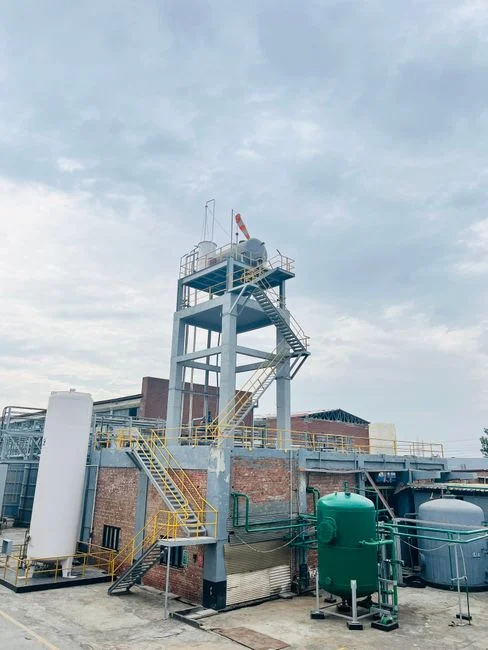
Startup testing should progress from individual unit operations to the integrated train, with each result tied to a permit condition or operating control. Verify chemical delivery, pH control, precipitation dose, polymer feed, recycle flow, solids capture, filtrate return, and backwash operation. Do not accept a successful clarified-water sample without confirming that the complete train operated at the required flow and chemistry.
HydropureWater recommends designing for the peak 2-hour flow with 20–30% turndown capacity (HydropureWater, mining pretreatment guide). Confirm operation across that turndown range rather than testing only at nominal flow. Online pH and conductivity provide continuous process indicators, but compliance evidence must also include flow records, composite samples, laboratory results, calibration records, chemical-use logs, sludge-volume records, and corrective-action documentation.
Build a permit-compliance matrix before startup. Each local limit needs a sampling point, analytical method, averaging basis, frequency, responsible operator, alarm or control response, and escalation action. Test worst-case modes before relying on average performance: mill clean-outs, storm inflows, leach cycles, reagent batch dumps, clarifier upset, filter breakthrough, power loss, and compressor failure.
| Verification stage | Evidence to retain | Acceptance question |
|---|---|---|
| Individual equipment | Chemical feed, pH, recycle, polymer, solids withdrawal, and backwash records | Does each unit operate at its stated design duty? |
| Integrated train | Flow, pH, conductivity, composite sample, and laboratory results | Does the complete train meet each mapped permit condition? |
| Turndown and upset testing | Peak 2-hour flow, specified turndown, and worst-case event tests | Does performance remain controlled when normal averages do not apply? |
| Operational compliance | Calibrations, chemical logs, sludge records, and corrective actions | Can the plant demonstrate control and response over time? |
The SIU permit may require more frequent monitoring, reporting, slug controls, or BMPs than the federal categorical standards. Turn the permit matrix into the operating procedure, then reconcile the MBR versus conventional activated sludge for mining wastewater comparison only if biological polishing is actually required by the permit or process objectives.
Brownfield Project Decision Checklist
A defensible Brownfield equipment scope begins with documents and data, not a treatment catalogue. Require a permit-basis document naming the serving POTW, sewer-use ordinance version, SIU permit, applicable categorical subpart and subcategory, local limits, monitoring, fees, and reporting requirements. Next require a signed wastewater characterization, worst-case mass balance, hydraulic profile, treatment calculations, chemical-consumption estimate, and metals-bearing sludge pathway.
Use HydropureWater’s values as preliminary screening inputs, not final design: 8–24 hours of average daily flow for equalization, 20–40 m/h lamella surface loading, 5–25 m/h DAF hydraulic loading, and 1–2 m/h multi-media filtration rate (HydropureWater, mining pretreatment guide). The vendor’s final design must use site flow, load, chemistry, permit limits, and worst-case operating data.
| Procurement gate | Required evidence | Decision released |
|---|---|---|
| Regulatory basis | POTW ordinance, SIU permit, categorical classification, and local limits | Treatment objectives and monitoring scope |
| Process basis | Signed characterization, mass balance, hydraulic profile, and chemical demand | Unit sizing and reagent system scope |
| Residuals | Sludge volume, dewatering basis, characterization, and receiving-facility acceptance | Sludge-handling and disposal scope |
| Commercial comparison | Installed and lifecycle cost, utilities, maintenance, monitoring, and compliance consequences of excursions | Final vendor and delivery-package selection |
Compare total installed and lifecycle cost, not chemical cost alone. Equalization civil work, clarifier equipment, filtration, dewatering, disposal, power, labor, monitoring, and maintenance all affect cost, as do the consequences of an excursion. For projects where chemistry or solids separation is uncertain, require representative jar testing or a site pilot before finalizing hydroxide or sulfide chemistry and DAF versus lamella selection. No supplier can replace the site permit and wastewater data.
Frequently Asked Questions
How should an equalization basin be sized for a Brownfield mining pretreatment plant?
Use 8–24 hours of average daily flow as the preliminary basis recommended by HydropureWater, then refine it using batch-discharge peaks, storm flows, mill clean-outs, and the POTW’s slug limits (HydropureWater, mining pretreatment guide). The final hydraulic design must demonstrate that the basin can damp the actual discharge profile, not merely store a daily average.
What should a wastewater-equipment supplier demonstrate before selection?
Require demonstrated performance on the actual wastewater matrix, a complete hydraulic and chemical balance, controls integration, sludge-handling details, and permit-compliance documentation. Confirm how the proposed train maps each local limit to an operating result and who owns performance testing, calibration, startup support, and corrective-action documentation.
What drives the budget for meeting Brownfield-area sewer pretreatment limits?
Request a project-specific cost breakdown rather than a generic equipment price. The principal drivers will include equalization civil work, precipitation reagents, DAF or lamella equipment, filtration, disinfection if required, sludge dewatering, disposal, monitoring, power, operator labor, and maintenance. Ask the bidder to state assumptions for sludge volume, chemical consumption, disposal acceptance, and permit-driven monitoring.
Does an NPDES permit establish the sewer-discharge limit?
No. NPDES addresses direct point-source discharges to waters of the United States. Sewer discharge is controlled through Clean Water Act Section 307(b), 40 CFR Part 403, the applicable categorical standards, and the serving POTW’s sewer-use ordinance and SIU permit (US EPA, Industrial Wastewater overview, 19january2017snapshot.epa.gov). A separate surface-water permit may coexist with the sewer authorization.
Should the project use DAF or lamella clarification?
Compare DAF when oil, grease, or fine colloidal metals dominate with lamella when the objective is dense metal-hydroxide sludge, high flow, and a constrained footprint. Do not finalize the choice from catalog loading ranges alone: use jar or pilot validation on the actual matrix, then compare recycle and air supply, sludge withdrawal, controls, utilities, maintenance, and turndown.