Which Rules Control a Sewer Discharge Near Judsonia?
Mining and metals plants near Judsonia meet sewer pretreatment limits by combining 40 CFR Part 403, applicable categorical standards such as 40 CFR Part 437 or Part 433, state authorization, and the receiving POTW’s current sewer-use requirements. A defensible train generally separates mine drainage, process water, tailings effluent, and dewatering; equalizes peak flows; corrects pH; precipitates metals; removes solids by DAF or lamella clarification; filters the residual solids; and dewaterers the sludge. No specific Judsonia permit, POTW, or numeric limit can be inferred without obtaining the controlling documents and representative wastewater data.
The controlling hierarchy must be established before equipment is selected. Clean Water Act §307(b) and 40 CFR Part 403 establish the federal pretreatment framework; categorical standards apply when the activity falls within the relevant industry category; state authorization may add conditions; and the receiving POTW’s sewer-use ordinance and industrial user permit control discharge to that collection system. The HydropureWater mining and metals pretreatment compliance guide, published in 2026, explains this layered approach and why federal categorical standards should not be treated as the final numerical target.
NPDES and pretreatment are different pathways. The US EPA’s Industrial Wastewater guidance explains that NPDES permits regulate qualifying point-source discharges to waters of the United States, while industrial discharges to a POTW are evaluated under the pretreatment framework and the POTW’s requirements. A mine may also hold NPDES coverage for separate surface-water or stormwater outfalls, but that permit does not establish the sewer discharge limit.
| Document or authority | What it controls | Evidence needed before design |
|---|---|---|
| Clean Water Act §307(b) and 40 CFR Part 403 | Federal pretreatment framework and industrial-user oversight | Industrial-user permit and applicable subpart |
| 40 CFR Part 437 or Part 433 | Categorical requirements, where applicable to ore mining and dressing or metal finishing | Correct industry classification and subcategory |
| State authorization | State-specific discharge or pretreatment conditions | Current authorization and agency correspondence |
| POTW sewer-use ordinance and industrial user permit | Local limits, prohibitions, monitoring, fees, and discharge conditions | Written current documents and any approved alternatives |
No supplied source identifies the POTW serving a particular facility near Judsonia, its industrial-user permit, state authorization, or numerical limits. Obtain each controlling document in writing and ask the POTW to confirm which pretreatment limits apply. A categorical standard may establish a regulatory floor, while local requirements can be stricter because they protect the POTW’s biological process, sludge handling, and workers. The same metal concentration can therefore have different significance under a surface-water permit and a sewer permit.
The mining and metals pretreatment compliance guide provides the broader permit hierarchy. For the site near Judsonia, use that framework only after replacing generic assumptions with the receiving authority’s written requirements.
Map Every Wastewater Stream Before Choosing Equipment
Mine drainage, mineral-processing water, tailings-pond effluent, and dewatering discharge must be characterized separately because their flow patterns, pollutant profiles, and treatment objectives differ. AMPAC USA, in its 2025-09 mining wastewater guidance, states that acid mine drainage can carry iron, manganese, copper, zinc, arsenic, and cadmium, while mineral-processing water may contain cyanide, ammonia, or chloramines depending on the process. Tailings-pond effluent can add fine solids, process chemicals, and leached metals; dewatering composition depends on local geology.
Segregation prevents dilution from hiding the stream that controls metals loading, chemical demand, or peak treatment flow. It also prevents incompatible chemistry from being sent through a single treatment train. For example, a process stream containing cyanide or ammonia cannot be evaluated only by its pH and metals concentration. It may require a different control strategy or separate treatment before any decision to combine it with drainage.
| Stream | Characterization required | Design question |
|---|---|---|
| Mine drainage | pH, dissolved metals, acidity, flow, rainfall response | What precipitation and solids load occur during the controlling flow? |
| Mineral-processing water | Ore constituents, reagent residuals, conductivity or TDS, relevant metals, pH | Does the stream require precipitation, polishing, or process-specific treatment? |
| Tailings-pond effluent | TSS, fine solids, metals, and residual process chemicals | What solids capture and sludge-handling capacity are required? |
| Dewatering discharge | Flow variation, pH, metals, TSS, and geology-dependent composition | Should it be treated separately or combined after equalization? |
The monitoring program should include flow, pH, TSS, dissolved lead, copper, zinc, cadmium, nickel, and arsenic, sulfate, TDS or conductivity, oil and grease, and process-reagent residuals. Sampling must represent normal production, peak discharge, startup, shutdown, rainfall, and other material operating conditions, as AMPAC USA specified in 2025-09. The resulting record must establish average and peak flow, maximum contaminant mass loading, seasonal variation, chemical demand, and whether equalization should occur before streams are combined.
Do not replace sampling with dilution calculations. The DAF versus clarifier selection for mining wastewater depends on the measured feed: oil and floatable matter favor flotation, while dense metal-hydroxide flocs may favor compact settling. A provisional average flow is therefore an insufficient basis for equipment selection.
Build a Treatment Train with a Compliance Barrier for Each Pollutant
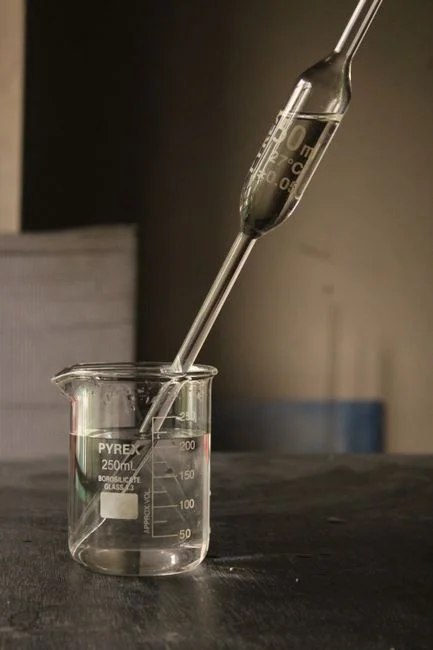
The defensible treatment sequence is equalization, controlled pH correction, precipitation with coagulation and flocculation, DAF or lamella clarification, filtration or membrane polishing, final monitoring, and controlled sludge dewatering. Each stage needs a measurable purpose, control point, sampling location, and acceptance record. The sequence should not include UF or RO unless representative testing shows that the clarified effluent still requires that barrier.
Equalization comes first because it buffers batch discharges, peak flows, and chemical demand. HydropureWater’s 2026 pretreatment research recommends an equalization basin sized at 8–24 hours of average daily flow to absorb shift changes, dump-leach cycles, and mill clean-outs. The final basin volume must be checked against measured peak flow, prohibited storage constraints, and the available footprint. Its control objective is to prevent a hydraulic or chemical surge from reaching the treatment barriers.
Next, controlled pH correction prepares the water for metal hydroxide precipitation. HydropureWater’s 2026 research gives a working pH range of 6.5–9.0, but the final setpoint must come from jar testing and the controlling POTW limit. Lime or sodium hydroxide may be used; reagent selection should reflect reagent consumption, sludge yield, handling, and the chemistry of the actual wastewater. Coagulation and flocculation then make the precipitated particles and other solids separable.
Hydroxide precipitation is the default barrier because it is widely understood and relatively straightforward. Sulfide polishing is an option when residual metals must fall below 0.1 mg/L: HydropureWater’s 2026 research reports sulfide residuals of 0.01–0.05 mg/L for copper, zinc, cadmium, and nickel, compared with 0.5–2.0 mg/L for hydroxide precipitation. The same source reports that properly controlled precipitation systems can achieve 85–95% total-metals removal, but that is an expected result under controlled conditions—not a guarantee of permit compliance. Sulfide use also requires evaluation of reagent cost, sealed equipment, hydrogen sulfide off-gas, and scrubbed vents.
| Barrier | Supplied technical value or scope | Acceptance evidence |
|---|---|---|
| Equalization | 8–24 hours of average daily flow in HydropureWater’s 2026 research | Peak-flow model, level records, batch-discharge response |
| pH correction | 6.5–9.0 working range in HydropureWater’s 2026 research | Jar tests, calibrated pH records, dosing trends |
| Metal precipitation | 85–95% total-metals removal reported for properly controlled systems | Influent and effluent metals, pH, dose, sludge generation |
| Sulfide polishing | 0.01–0.05 mg/L residual metals reported for sulfide precipitation | Metal results, sulfide control, off-gas and operator records |
| Multimedia filtration | 1–2 m/h filtration and residual TSS below 10 mg/L in HydropureWater’s 2026 research | Confirmed permit target, differential pressure, run time, TSS results |
| UF | 0.03-micron PVDF membranes; feed turbidity up to 300 ppm; automatic backwash and air scour | Feed limit, recovery, cleaning records, turbidity and integrity results |
| Plate-and-frame dewatering | 25–35% dry solids reported in HydropureWater’s 2026 research | Measured cake properties and receiving-site acceptance |
Filtration protects the discharge barrier. A multi-media filtration system can remove residual suspended solids and colloids, while an ultrafiltration system is appropriate where fine colloids remain or reverse osmosis requires pretreatment. HydropureWater’s 2026 research reports multimedia filtration at 1–2 m/h with residual TSS below 10 mg/L; that value must be checked against the actual permit rather than treated as automatic compliance.
Sludge is a regulated stream. A plate-and-frame filter press can dewater chemical-precipitation residues, but the route must be selected from measured cake volume, dryness, cycle time, contaminant profile, and receiving-site acceptance—not from a generic disposal label.
Choose DAF or Lamella Clarification from the Wastewater Profile
DAF is the better candidate when oil, grease, floatable material, or fine colloidal metals are present; lamella clarification is the better candidate when metal-hydroxide sludge and high flow dominate and footprint is constrained. This decision should follow measured wastewater characteristics, not a preferred equipment type. The DAF versus clarifier selection for mining wastewater provides a more detailed comparison of the mechanical choices.
DAF uses microbubbles to float oil-coated and colloidal particles. HydropureWater’s 2026 research gives a hydraulic-loading range of 5–25 m/h and reports 90–98% TSS removal and 85–95% oil and grease removal in mining and metal-finishing service. Its supplied catalog covers 4–300 m³/h across 13 models. An industrial DAF system therefore requires verification at the actual peak wastewater flow, solids load, and flotation characteristics.
Lamella clarification is suited to settling compactable sludge at high flow. HydropureWater’s 2026 research gives a surface-loading range of 20–40 m/h and describes a footprint approximately one-third that of conventional clarification. Its product catalog also claims chemical-consumption reductions of up to 30%, but that is an equipment-selection value rather than guaranteed site performance. A lamella clarifier for metal-hydroxide sludge should be evaluated against measured settling behavior, chemical demand, underflow characteristics, and available floor area.
| Decision factor | DAF | Lamella clarification |
|---|---|---|
| Best-fit contaminant profile | Oil, grease, floatable material, and suitable colloidal matter | Metal-bearing hydroxide floc and high-volume settled sludge |
| Hydraulic basis in supplied research | 5–25 m/h | 20–40 m/h surface loading |
| Footprint and sludge | Requires floatable-sludge collection and handling | Compact installation; dense sludge blanket |
| Bidder inputs | Peak flow, oil and grease, TSS, flotation tests, chemical demand, sludge volume | Peak flow, settling rate, underflow solids, chemical demand, sludge volume, footprint |
| Acceptance requirement | Effluent TSS and floatables under the controlling discharge condition | Effluent TSS and metals under the controlling discharge condition |
DAF does not remove free oil as effectively as lamella clarification in this application, while lamella does not remove free oil as effectively as DAF. DAF may also be less suitable when the principal objective is handling dense, high-volume metal-hydroxide sludge. Ask every bidder to state feed TSS, oil and grease, settling or flotation characteristics, peak flow, chemical consumption, sludge volume, and available footprint. Equipment-selection values cannot establish compliance until performance is demonstrated at the permit condition.
Set the Procurement Basis for Peak Loads and Compliance Risk
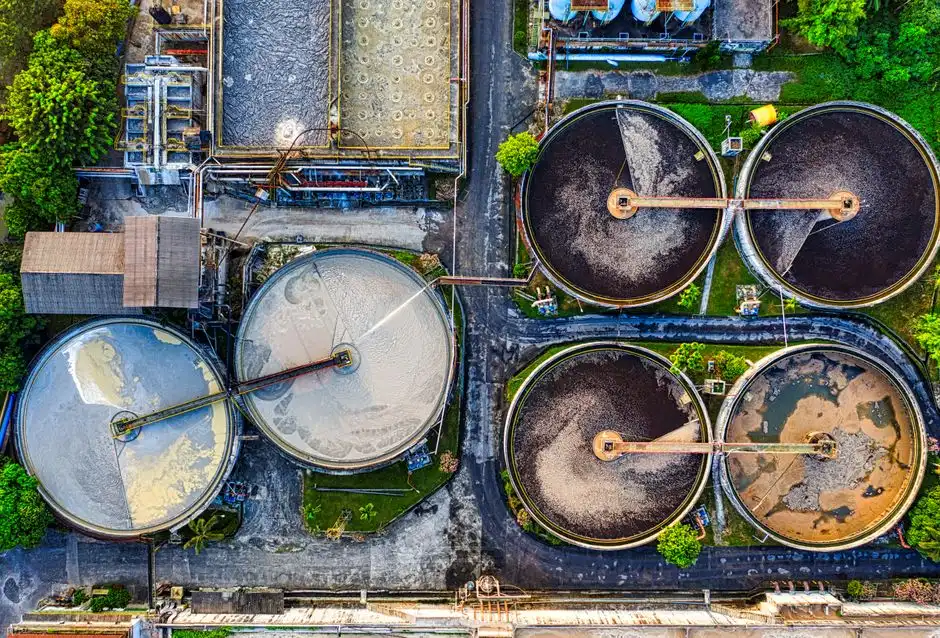
Treatment capacity must be based on the controlling peak load, not the average discharge. HydropureWater’s 2026 research instructs engineers to calculate peak flow and, where site records do not support a more defensible value, use a preliminary peaking factor of 1.5–2.0. Chemical equipment must also be checked against maximum contaminant mass loading: concentration multiplied by flow at the controlling production or storm event.
A quotation package should state peak and average flow in m³/h, representative influent pH and metals results, POTW limits for pH, metals, and TSS, and the desired recovery percentage when reuse is in scope, as specified in HydropureWater’s 2026 research. The bidder should then provide an equipment-sizing calculation rather than quote nameplate flow alone.
| Required procurement input or deliverable | Check before award |
|---|---|
| Hydraulic basis | Average flow, measured peak flow, selected peaking basis, equalization volume, and turndown |
| Contaminant basis | Representative pH, TSS, metals, process-reagent residuals, and maximum mass loading |
| Chemical demand | Reagent consumption at representative and worst-case loads, storage, handling, and control response |
| Sludge | Projected volume, solids concentration, dewatering duty, filtrate destination, and disposal acceptance |
| Mechanical and controls | Electrical load, footprint, redundancy, PLC/HMI logic, alarms, bypass provisions, and permitted storage |
| Membranes, if proposed | Recovery, concentrate management, feed quality, cleaning, and validation method |
| Commercial commitment | Process flow diagram, mass balance, sizing basis, monitoring plan, sludge route, and acceptance criteria |
Budget screening also needs a documented basis. HydropureWater’s 2026 research states that a complete industrial-scale mining or metals wastewater system may range from $250,000 to over $2 million, with annual operating costs potentially adding 15–25% of initial capital expenditure. Those are broad market-context figures, not a Judsonia quotation. A comparable bid should separate chemical consumption, sludge disposal, maintenance, utilities, instrumentation, and any membrane concentrate route.
Ask the supplier to model chemical consumption, sludge generation, electrical load, footprint, redundancy, and membrane recovery where relevant. An automatic chemical dosing system should be evaluated within that complete package: controlled pH and reagent feed matter only if tanks, clarifiers, filters, sludge handling, and final monitoring are sized for the same peak condition.
Convert Monitoring and Operating Records into Compliance Evidence
Compliance evidence must trace each discharge result back to a stream, treatment barrier, control point, and operating record. Sampling locations should therefore cover untreated streams, equalization, chemical treatment, clarification, filtrate, and final discharge. That arrangement lets an operator determine whether a failure originated in source chemistry, dosing, solids separation, filtration, or membrane treatment rather than relying on a single final-sample result.
Continuous records for flow, pH, and conductivity should feed PLC/HMI trending and link each measurement to the applicable permit condition, following HydropureWater’s 2026 monitoring guidance. Operators must also be able to verify pH setpoints, dosing trends, TSS-removal performance, filter differential pressure, membrane recovery where applicable, and sludge generation. These are operating records: they show that each barrier performed as designed rather than merely showing that equipment was installed.
HydropureWater’s 2026 research describes PLC-controlled sodium hydroxide or lime dosing to hold pH within a ±0.2 band. That is a control concept, not a site acceptance value. The setpoint must follow the POTW requirement, jar-test results, and actual metal-removal performance. Chemical-feed alarms should identify loss of flow, tank level, reagent exhaustion, high pH, low pH, and off-normal demand.
Written procedures are necessary for equipment failure and off-normal conditions. Alarm, bypass, upset, high-flow, notification, restart, and permitted-storage procedures should identify isolation points, sampling requirements, responsible personnel, communication steps, and restart criteria. Final sampling frequencies, numerical compliance triggers, and notification requirements must come from the current permit and POTW requirements; no defensible numerical schedule can be assigned without those documents.
The final acceptance package should reconcile each permit condition with the operating evidence. That means the operator can show which record demonstrates flow compliance, pH control, solids removal, metals performance, and controlled discharge at the designated sampling point. It is also the basis for rejecting an installation that relies only on equipment nameplate data.
Frequently Asked Questions
Which rules apply to a mining or metals discharge to a sewer near Judsonia?
The discharge is evaluated under Clean Water Act §307(b), 40 CFR Part 403, any applicable categorical standard, state authorization, and the receiving POTW’s current sewer-use ordinance and industrial user permit. NPDES covers applicable point-source discharges to surface waters, not the sewer-discharge authorization itself. No specific Judsonia POTW, permit, or numerical limit can be supplied without obtaining the controlling documents from the sewer authority and relevant state agency in writing.
What information is needed to size a mine-wastewater treatment train?
Obtain average and peak flow, equalization requirements, representative and worst-case pH, TSS and metals concentrations, maximum contaminant mass loading, seasonal and storm-event variation, chemical consumption, sludge volume, and any reuse target. Use site records to justify the peak basis; HydropureWater’s 2026 research gives 1.5–2.0 only as a preliminary peaking factor where better site data are unavailable. Then require each bidder to demonstrate its equipment sizing against that controlling load.
When should a mining plant use DAF instead of lamella clarification?
Use DAF when representative testing shows oil, grease, floatable material, or suitable colloidal fines; use lamella when metal-hydroxide solids dominate, flow is high, and footprint or sludge volume is the principal constraint. Bidder acceptance criteria should include peak flow, feed solids, flotation or settling tests, chemical demand, sludge volume, and effluent results at the controlling condition. Neither hydraulic-loading range nor catalog removal performance guarantees permit compliance by itself.
What should the budget for a complete pretreatment system include?
Request a capital and operating-cost breakdown covering treatment equipment, tanks, controls, chemical storage, sludge dewatering and disposal, utilities, maintenance, monitoring, and any membrane concentrate route. HydropureWater’s 2026 research provides broad screening figures of $250,000 to over $2 million for a complete industrial-scale system and annual operating costs equal to 15–25% of initial capital expenditure, but these are not a Judsonia quotation. A defensible budget requires the site flow, chemistry, permit limits, and sludge route.
How should a supplier be selected without assuming unverified Judsonia limits?
Do not award on nameplate capacity alone. Require a process flow diagram, mass balance, equipment-sizing basis, control narrative, sampling and monitoring plan, sludge destination, redundancy, and measurable acceptance criteria linked to the written permit and industrial user permit. Verify that the proposed train addresses the controlling pollutant and peak load and that any performance claim is supported by comparable operating evidence or an agreed acceptance test. This also distinguishes a compliant proposal from one built around generic limits.