Determine Which Limits Actually Govern a Liberal-Area Plant
Food and beverage plants near Liberal, Kansas, meet pretreatment limits by identifying the controlling POTW, matching each production stream to the applicable categorical subpart, and treating to the strictest enforceable requirement. The EPA National Pretreatment Program under 40 CFR 403 establishes the federal framework, while the local POTW administers permits, oversees compliance and enforces applicable state and local requirements. A defensible 2026 train generally starts with screening and equalization, uses DAF for FOG-heavy food-processing streams, follows with biological treatment and adds chemical precipitation or polishing where required. Equipment must be sized from verified flow, BOD, FOG, TSS, pH and temperature data, then demonstrated through permit-required sampling and electronic monitoring records.
The supplied research does not identify the POTW serving a particular Liberal-area plant, the governing sewer-use ordinance or numeric local limits. Do not size equipment from a generic federal value or another city’s permit. Request the current POTW discharge permit, sewer-use ordinance, applicable categorical subpart, prior monitoring reports, enforcement correspondence and any local FOG, phosphorus, temperature or surcharge provisions.
The hierarchy matters: categorical standards provide the federal framework, state and local requirements may be stricter, and the site-specific POTW permit establishes the operating design envelope. HydropureWater’s national guide identifies 40 CFR Parts 405–409 for specified food-processing categories, while its Summit guide identifies 40 CFR 432 subparts for meat, dairy, grain mills, fruits and vegetables and beverages. The lists should not be combined without confirming the plant’s actual subsector and the current EPA and POTW references.
| Document or authority | What it establishes | Buyer action |
|---|---|---|
| EPA National Pretreatment Program, 40 CFR 403 | National pretreatment framework administered by delegated authorities | Confirm how the local control authority implements it |
| Applicable categorical subpart | Pollutant-specific federal framework for the actual production process | Map product and process lines to the correct subpart |
| Sewer-use ordinance and POTW discharge permit | Locally enforceable limits, monitoring, reporting and operating conditions | Obtain the current signed permit and complete permit file |
| Prior reports and enforcement correspondence | Observed performance, exceedances and unresolved agency expectations | Include them in the basis-of-design review |
The regional food and beverage pretreatment compliance guide provides useful context for assembling this permit hierarchy, while MBR versus activated sludge for food wastewater supports the downstream biological selection. Neither source substitutes for the controlling Liberal-area documents.
Characterize Each Wastewater Stream Before Selecting Equipment
Food-processing wastewater cannot be sized as one homogeneous flow because the production, washdown, CIP and cooling streams carry different pollutant loads and require different routing. A buyer should characterize each stream across production, cleanup and batch-discharge cycles, then use verified results—not a single grab sample—to establish average and peak design conditions.
Start by separating process water, floor wash, food-processing CIP wastewater and cooling-water blowdown. Process water generally carries the principal soluble organic and suspended-solids load. Floor wash can concentrate FOG and settleable material. CIP streams introduce detergents, sanitizers and pH swings. Cooling blowdown may have a separate route if it qualifies under the applicable non-contact permit.
HydropureWater’s national guide, current in 2026, gives preliminary design context rather than Liberal limits: dairy and meat raw wastewater can contain 1,000–10,000 mg/L BOD; FOG can reach several thousand mg/L in fryer, rendering and stickwater streams; and total phosphorus can be 10–100 mg/L as P in cereal, dairy and meat wastewater. These figures establish why segregation and equalization matter, but they cannot substitute for plant sampling.
| Stream | Dominant concern | Required design information |
|---|---|---|
| Process water | BOD, TSS and batch organic loading | Forward flow, production-cycle flow, BOD, TSS and peak-to-average ratio |
| Floor wash | FOG, floatable solids and grit | FOG, TSS, settleable solids and discharge frequency |
| Food-processing CIP wastewater | pH, temperature, detergent and chemical load | pH, temperature, flow duration, chemical constituents and batch volume |
| Cooling-water blowdown | Heat and possible lubricants or metals | Temperature, flow, chemistry and non-contact permit status |
Require equalization and pH control where CIP batches can overwhelm the downstream process. The national guide notes CIP and cooking excursions above 40°C and emphasizes temperature among six common pretreatment parameters; that is a design condition, not a Liberal permit limit. If cooling blowdown qualifies under a non-contact permit, document that route instead of automatically increasing the biological reactor.
Before issuing an equipment specification, obtain verified flow, peak-to-average ratio, raw BOD, raw FOG, TSS, total phosphorus, pH, temperature and chemical constituents. The integrated food-processing wastewater treatment plant guide explains how those inputs connect to system sizing. For a solids-sensitive operation, also review the confectionery wastewater ultrafiltration guide as a polishing reference.
Build a Treatment Train That Removes Pollutants in the Right Order
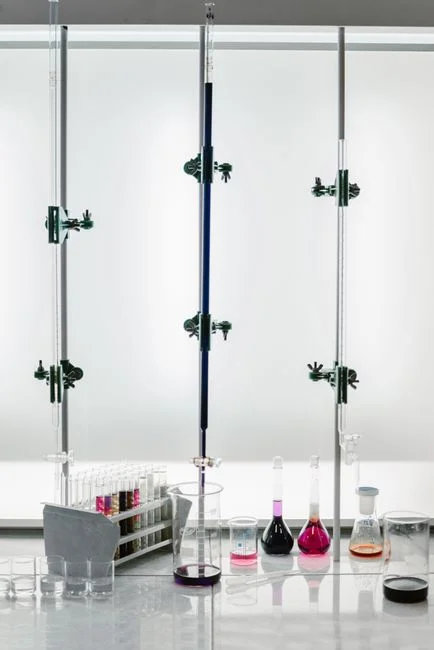
HydropureWater’s 2026 national guide defines a defensible food and beverage pretreatment sequence as screening, equalization, DAF, biological treatment, chemical precipitation and final polishing. Each stage has a separate compliance function, and removing one weak stage from the sequence shifts its failure to the next unit.
- Screening: protect pumps and downstream equipment from grit, packaging solids and other coarse material.
- Equalization: blend CIP, wash and production flows so pH, temperature and hydraulic loading do not pass directly to biological treatment.
- DAF: recover FOG and floatable solids before they impose an avoidable organic or solids load on the biological stage.
- Biological treatment: reduce soluble biodegradable organics and support the required BOD performance.
- Chemical precipitation: polish phosphorus where the permit requires it.
- Final clarification or filtration: reduce residual solids before discharge.
Failure diagnosis becomes more direct when each observed problem is assigned to a stage. FOG pass-through indicates DAF conditioning or hydraulic overload. A pH excursion points to equalization or trim failure. A batch that exceeds downstream capacity indicates an undersized equalization basin. Solids breakthrough during phosphorus removal points to flocculation control.
| Potential failure | Likely stage to investigate | Evidence required |
|---|---|---|
| FOG pass-through | DAF conditioning or hydraulic loading | Influent and effluent FOG results, flow and recycle trends |
| pH excursion | Equalization or pH trim | Continuous pH record and batch-event log |
| CIP-related hydraulic overload | Equalization capacity | Batch flow, basin level and biological operating trends |
| Solids breakthrough | Flocculation or clarification | Polymer or coagulant records, mixed liquor and effluent TSS |
For biological sizing, HydropureWater’s 2026 national guide gives conventional activated-slash design ranges of 8–24 hours HRT and 3,000–5,000 mg/L MLSS, compared with 4–10 hours HRT and 8,000–12,000 mg/L MLSS for an MBR. It also gives a 1.5–2.5 mg/L DO setpoint where nitrification is required. These are national design ranges—not Liberal permit limits—and must be checked against verified organic loading, temperature and the actual permit.
Use the mechanical bar screen for inlet protection and the integrated MBR treatment system as equipment references while preserving the process sequence. The permit determines which biological configuration is necessary; a longer list of technologies does not establish compliance.
Choose DAF or Lamella Clarification From the Dominant Pollutant
DAF is the stronger primary choice when FOG or emulsified oil is dominant, while lamella clarification is most useful when TSS is dominant or as a solids-polishing stage after biological treatment. HydropureWater’s Summit guide gives a specific preliminary rule: specify DAF when FOG or emulsified oils exceed about 200 mg/L or when the line is poultry, meat or dairy; specify lamella clarification when TSS is dominant and lower chemical operating cost is the priority.
| Decision factor | DAF | Lamella clarification |
|---|---|---|
| Dominant pollutant | FOG, emulsified oils and floatable solids | Suspended solids |
| National 2026 design context | 4–25 m/h surface loading; 0.005–0.02 air-to-solids ratio; 20–40% recycle of forward flow | 20–40 m/h surface loading; up to 30% lower chemical consumption than conventional clarifiers |
| Catalog scale | HydropureWater catalog: 4–300 m³/h across 13 DAF models | Application-specific sizing from verified TSS and flow |
| Typical role | Primary FOG removal before biological treatment | Primary clarification for solids-dominant flow or post-biological polishing |
The DAF catalog scale is equipment context, not a recommended Liberal flow. The same applies to the lamella surface-loading range: neither should be selected until the plant’s flow, FOG, TSS and permit are verified.
Chemical control directly affects both separation performance and operating cost. The national guide reports phosphorus precipitation doses of 50–250 mg/L alum or 30–150 mg/L ferric chloride, with PLC-controlled dosing reducing chemical consumption by 10–20% versus manual feed through flow-proportional trim. Compare the industrial DAF system for food-processing FOG removal, high-efficiency lamella sedimentation tank and PLC-controlled chemical dosing skid on the same wastewater sample and feed-control basis.
The practical test is not which unit has the higher nameplate rating. It is which consistently produces compliant effluent at the verified dominant load, with acceptable chemical consumption, recoverable float or sludge and a control strategy that can be documented.
Convert Treatment Performance into Permit Evidence
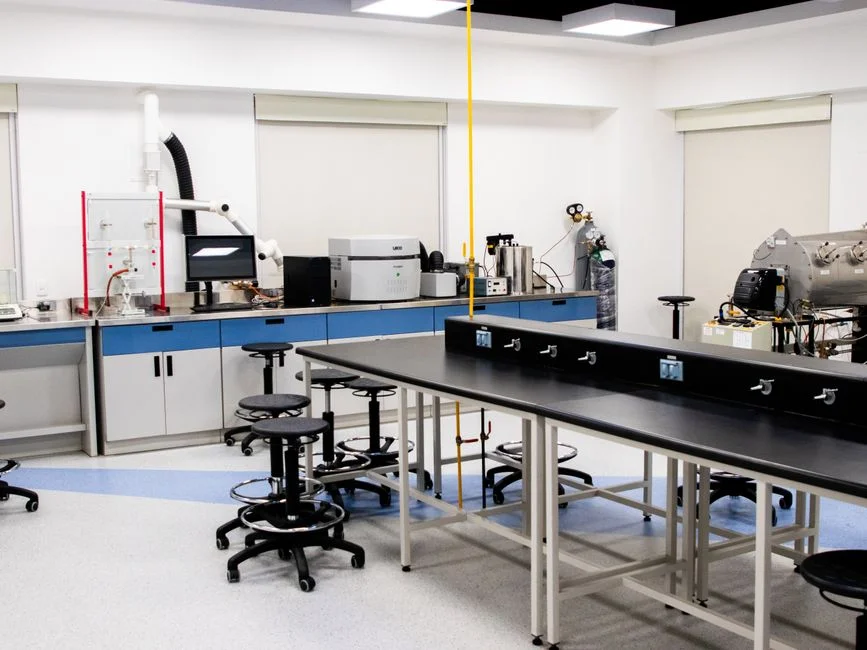
HydropureWater’s 2026 national guide reports that most food and beverage categorical permits require 24-hour composite sampling for BOD, TSS, FOG and total phosphorus at frequencies from monthly to quarterly, with continuous pH and flow monitoring for significant industrial users. Those are general patterns; the controlling Liberal-area permit must replace them with the exact method, frequency, averaging period and reporting channel.
Build one compliance file that connects each requirement to objective evidence:
- Current permit limits and applicable averaging periods
- Laboratory results and associated sampling methods
- Flow and continuous pH trends
- Instrument calibration and control-system records
- Chemical-use and dose-adjustment records
- DAF float, sludge quantity and destination records
- Noncompliance notifications, corrective actions and closure evidence
The national guide discusses electronic reporting and cites Connecticut’s requirement for electronic noncompliance notices. That is Connecticut-specific evidence, not a Liberal-area rule. The Kansas and controlling POTW reporting portals must be confirmed directly. Do not assume that the SCADA event log alone satisfies a reporting obligation.
Equipment acceptance and legal compliance are separate tests. A treatment train can meet a manufacturer’s performance target and still violate permit conditions because sampling, averaging, notification or operating records are incomplete. Use the beverage wastewater ultrafiltration guide to understand how advanced treatment still depends on the governing monitoring and reporting framework.
Plan Sludge Handling and Final Equipment Selection
DAF skimmings and waste activated sludge must be included in the project scope because they remain after the liquid stream meets its performance target. HydropureWater’s national guide describes plate-and-frame dewatering at 22–28% dry matter, while its Summit guide reports 20–25% cake solids and a 75–80% reduction in disposal volume relative to lagooned float. These are design-context values, not guaranteed results for a Liberal plant.
The national guide gives a 1–500 m² plate-and-frame filter-press range as HydropureWater product context. That range is not a plant recommendation; the selected area must reflect actual solids production, cake characteristics, operating cycle and disposal route. Compare the plate-and-frame filter press against the integrated food-processing treatment plant guide using the complete residual-handling train.
| Bid item | What each bidder must state |
|---|---|
| Design basis | Verified flow, peak factor, pollutants, temperature and applicable permit conditions |
| Performance | Guaranteed removal performance, test protocol and acceptance conditions |
| Controls | Instrumentation, dosing control, alarms, data export and operator interface |
| Residuals | Sludge yield, dewatering basis, destination and operating assumptions |
| Commercial and delivery | Scope boundaries, schedule, installation requirements, O&M assumptions and permit deliverables |
Pilot testing is justified when variability, emulsified FOG or an unresolved permit parameter could change DAF, clarification or biological sizing. It provides evidence about the actual wastewater rather than relying only on catalog capacity.
Make final acceptance conditional on two comparisons: monitored plant performance against the permit, and monitored plant performance against the manufacturer’s guaranteed criteria. For permits without a numeric value for an unresolved parameter, obtain written direction from the control authority before acceptance.
Frequently Asked Questions
What inputs are needed to size food and beverage wastewater treatment equipment near Liberal?
Request verified forward flow, peak-to-average ratio, BOD, FOG, TSS, total phosphorus, pH, temperature and chemical constituents across production and cleanup cycles. Use the 2026 national design ranges only as preliminary context; final sizing must use site data and the current POTW permit.
Should a food processor choose DAF or lamella clarification?
Use DAF when verified FOG or emulsified oil exceeds about 200 mg/L or the process is poultry, meat or dairy, following HydropureWater’s 2026 Summit decision rule. Consider lamella clarification when TSS dominates or for post-biological polishing, then confirm selection with wastewater testing and the permit.
How should a buyer qualify an industrial wastewater treatment supplier?
Require comparable bids using the same design basis, performance guarantees, sampling protocol, controls, chemical assumptions, sludge yield, schedule and permit-compliance deliverables. A comparison with MBR versus activated sludge for food wastewater can help identify where the proposed guarantees are measurable.
What is the main compliance risk when selecting pretreatment equipment?
The main risk is designing to an unverified generic limit. Obtain the current POTW identity, permit, sewer-use ordinance and categorical subpart before sizing, then require sampling, continuous monitoring and reporting methods that match the permit. Equipment performance alone does not establish legal compliance.