What UF Removes from Beverage Wastewater
An ultrafiltration system for beverage wastewater uses a semipermeable membrane to retain suspended solids, colloids, microorganisms, and larger organic components while allowing water and smaller solutes to pass. Best Amen Membrane lists beverage-industry operating pressure at 1–7 bar and membrane pore sizes of 0.1–0.01 microns. In wastewater service, UF is commonly used for polishing or as pretreatment for reverse osmosis, which then removes dissolved salts. A suitable train should address the specific source stream—such as bottle washing, equipment cleaning, or product losses—and preserve membrane performance through appropriate pretreatment, monitoring, backwash, and cleaning.
UF is a size-based membrane separation process rather than a universal contaminant-removal tool. Water and smaller molecules pass through the membrane while larger molecules, including proteins, polysaccharides, and microorganisms, are retained. This distinction determines whether UF addresses the principal wastewater load or merely protects a downstream desalination step.
Genesis Water Technologies identifies fine suspended solids, proteins, complex sugars, microbial pathogens, and trace fats, oils, and grease as contaminants relevant to beverage wastewater. UF removes fine solids and microbial contaminants while serving as a complement to RO: RO is suited to dissolved-solids removal, while upstream UF protects RO membranes from fouling. For the broader treatment context, see the food-processing wastewater treatment guide.
A commercial food and beverage case study from Digested Organics documents a two-stage arrangement combining UF with Two-Step Reverse Osmosis. That case supports UF-plus-RO as an implemented reference architecture rather than a universal design for every plant. The wastewater source, required recovery, dissolved-salt objective, and fouling potential must determine whether RO belongs in the selected train. An RO system for water purification addresses a different separation duty from UF.
Match the Treatment Train to the Wastewater Stream
Source separation is the first design decision because bottle-wash wastewater, equipment-rinse water, and concentrated product losses do not present the same contaminant load. Genesis Water Technologies reports that a majority of wastewater produced by beverage companies comes from bottle washing, so bottle-wash flow should be characterized separately from high-strength product-loss or ingredient-recovery streams before a common treatment train is selected.
For bottle and equipment-rinse streams, analyze fine solids, colloids, microbial contaminants, and residual fats, oils, and grease. Where these contaminants are significant, evaluate solids removal and DAF or another suitable pretreatment before UF. Equipment selection should follow the measured wastewater composition, rather than the assumption that a hollow-fiber membrane can absorb the variability of the entire plant.
Product-loss streams containing proteins or complex sugars require a different qualification. Pilot testing should establish whether the selected UF configuration retains the relevant material without unacceptable membrane fouling, concentrate management problems, or loss of recoverable product. Clean-water membrane data do not provide these answers.
| Wastewater source | Primary contaminants to verify | Practical treatment sequence | Key design decision |
|---|---|---|---|
| Bottle washing | Fine solids, colloids, microorganisms, residual fats, oils, and grease | Characterization; solids removal where required; DAF or other suitable pretreatment if fats are significant; UF polishing | Whether RO is required by the reuse or discharge target |
| Equipment and product rinsing | Residual solids, microorganisms, and attached fats, oils, and grease | Separate collection; appropriate pretreatment; UF | Cleaning strategy and permeate-quality objective |
| Product loss or ingredient recovery | Proteins, complex sugars, and other retained organics | Application-specific pilot testing; membrane selection; UF | Retention versus fouling and product-recovery balance |
| Treated wastewater requiring desalination | Dissolved salts plus residual particulates | UF polishing; optional RO | Permeate quality and RO-protection requirements |
Designers must align hardware capabilities with specific feed profiles to ensure system longevity. For a high-flow polishing application, compare the hollow-fiber ultrafiltration system against the feed profile and required control sequence. For streams with significant fats, oils, and grease, assess DAF pretreatment for beverage wastewater before final UF selection.
Academic evidence supports sequential membrane treatment as a concept. A study in Acta Periodica Technologica, “Sequential micro and ultrafiltration of distillery wastewater,” examined membrane processes for removing suspended solids and a fraction of dissolved solids to determine their potential for water recovery. Distillery effluent is not interchangeable with every beverage stream, so the result supports the sequence rather than a transfer of performance without site-specific testing.
Choose UF Pore Size, Pressure, and Membrane Configuration
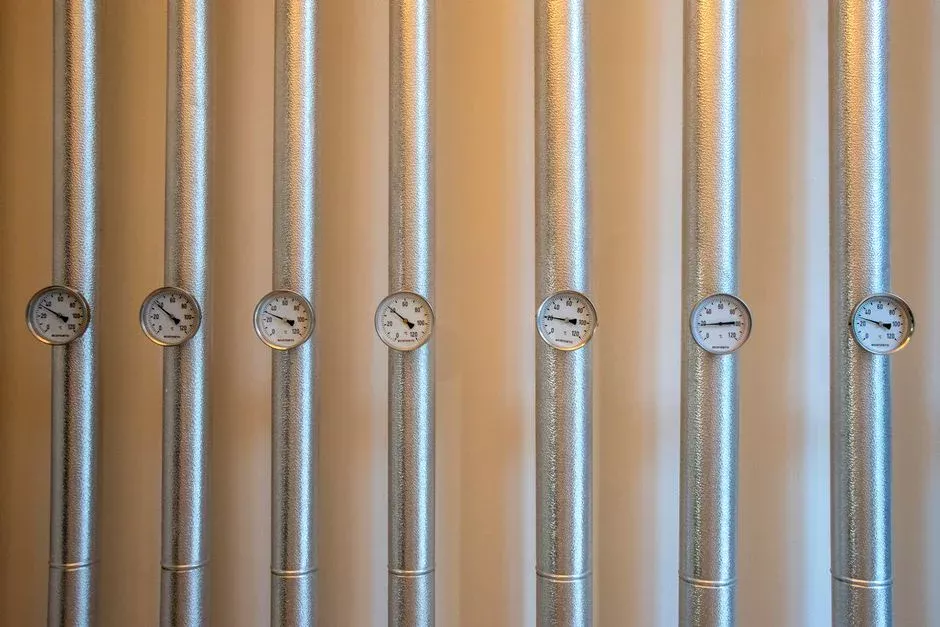
Pore size provides an initial separation reference, but it does not qualify a UF system by itself. Best Amen Membrane cites 1–7 bar for beverage-industry operation and membrane pore sizes of 0.1–0.01 microns, depending on the application. These are comparison references, not universal operating specifications; the selected pressure and configuration must be established with the actual wastewater mixture.
The cataloged hollow-fiber PVDF configuration is rated at 0.03 micron. That specification should be checked against the required separation objective, feed characteristics, wetted-material requirements, and cleaning regime. A membrane capable of meeting a permeate target may still be unsuitable if proteins, fats, oils, grease, or colloids create excessive cleaning demand.
| Parameter | Published or catalog reference | Information required before selection |
|---|---|---|
| Operating pressure | 1–7 bar for beverage-industry UF, according to Best Amen Membrane | Available pressure envelope, required flow, transmembrane-pressure behavior, and cleaning operating mode |
| Membrane pore size | 0.1–0.01 micron beverage-industry range, according to Best Amen Membrane; 0.03 micron cataloged PVDF configuration | Separation objective, contaminant distribution, retained material, and pilot-derived performance |
| Flux basis | No qualified project value supplied | Normalized flow, design feed flow, operating hours, feed turbidity, solids profile, and recovery objective |
| Recovery | No universal value supplied | Mass balance covering feed, permeate, concentrate, backwash, and cleaning flows |
| Controls | No general pressure or cleaning interval established by the research | Control philosophy, instrumentation, backwash method, cleaning method, and alarm strategy |
Transmembrane pressure, cross-flow conditions, and cleaning frequency must be established for the selected configuration rather than inferred from nominal pore size. Require every proposal to state normalized flow, design feed flow, feed turbidity, solids profile, target removal, permeate quality, recovery objective, operating hours, available pressure, cleaning chemistry, and control philosophy. That information creates a common basis for comparing suppliers; without it, peak-flow claims lack an engineering basis.
Site-specific data are necessary to validate these technical parameters. For a hardware comparison, review the hollow-fiber ultrafiltration system alongside the specified feed and operating data. A catalog configuration can serve as a reference point, but the wastewater pilot remains the decision gate.
Protect Membrane Performance and Recovery
Contaminant characterization determines whether pretreatment is optional or essential. Genesis Water Technologies identifies fine solids, proteins, complex sugars, microbial pathogens, and trace fats, oils, and grease in beverage-related wastewater. These constituents affect membrane condition and cleaning demand differently, so a generic pretreatment recommendation should be replaced with a stream-specific solids and organic profile.
Cataloged hollow-fiber systems include automatic backwash and air scour. Those features support membrane maintenance, but they do not remove the need for feed-specific operating limits, chemical compatibility checks, or cleaning validation. The operating sequence should define what triggers backwash, how feed conditions affect membrane condition, and how cleaning chemistry is selected and verified.
Request trend data rather than accepting only peak-flow claims. The operating record should include normalized flow, differential or transmembrane pressure, turbidity, backwash frequency, and cleaning frequency. Sustained behavior matters more than a single clean-water result because beverage wastewater varies with production, cleaning cycles, product changeovers, and collection practices.
Pilot testing should challenge the actual wastewater mixture and operating profile. The published beverage-industry pressure and pore-size ranges describe general UF practice, not guaranteed duty for every plant. A credible trial should reproduce representative contamination, operating hours, recovery demand, backwash requirements, and cleaning events, then demonstrate whether flow and pressure recover as specified.
For maintenance and retrofit planning, specify membrane elements, replacement provisions, valves, and media through the RO and UF membrane filter elements and water-treatment parts, valves, and media requirements. This prevents the selected treatment sequence from depending on unspecified or mismatched consumables.
Build a Supplier Comparison and Acceptance Checklist
A credible proposal is a complete, auditable treatment basis rather than a membrane quotation. Require a written mass balance covering feed flow, permeate flow, concentrate flow, operating hours, backwash cycles, cleaning frequency, and the proposed recovery basis. If a supplier cannot support recovery or cost with the project-specific inputs, request the calculation and assumptions instead of accepting an unsupported figure.
Every supplier should identify membrane material, pore size, module or cartridge format, wetted materials, controls, instrumentation, backwash method, cleaning method, spare-parts strategy, and membrane replacement provisions. Application evidence should use wastewater with comparable solids, colloids, organics, and fats, oils, and grease. Product-water or clean-water membrane data can support equipment identity, but they do not qualify the wastewater duty.
| Evaluation gate | Evidence required | Commercial risk if omitted |
|---|---|---|
| Source characterization | Separate feed flows and contaminant profiles for bottle washing, rinsing, product loss, and other streams | Oversized equipment, missed pretreatment, or unsuitable common collection system |
| Process design | Unit-operation sequence, mass balance, recovery basis, permeate target, and downstream RO criteria | Unverifiable flow, pressure, and cost claims |
| Equipment definition | Membrane, module format, wetted materials, controls, instrumentation, backwash, cleaning, and spares | Operational and maintenance uncertainty |
| Application qualification | Comparable wastewater evidence or pilot test with the actual feed | Unproven fouling behavior and cleaning demand |
| Commercial acceptance | Defined criteria for permeate quality, sustained normalized flow, pressure behavior, cleaning recovery, and operability | Disputed commissioning performance |
Standardized documentation ensures that all stakeholders understand the operational limits of the proposed system. Use the Digested Organics commercial food and beverage case study as a reference architecture: its documented two-stage UF and Two-Step Reverse Osmosis arrangement shows that UF and RO can be combined for a defined wastewater problem, but it is not evidence that the same performance applies to another facility.
Make pilot testing a decision gate before awarding the full project. Define acceptance criteria for permeate quality, sustained normalized flow, pressure behavior, recovery after cleaning, and operability against the actual wastewater. Review the proposed hollow-fiber ultrafiltration system within that qualification framework rather than selecting it from catalog specifications alone.
Frequently Asked Questions
How should an ultrafiltration system for beverage wastewater be sized?
Size it around the qualified feed flow and operating profile, feed turbidity and solids profile, target removal, recovery objective, available pressure, and cleaning duty. Do not size it from peak flow or nominal pore size alone. Require the supplier to document design feed flow, normalized flow, operating hours, permeate and concentrate flows, backwash cycles, and cleaning frequency. For adjacent stream-specific design context, compare the brewery wastewater treatment design with the winery wastewater treatment design.
Is UF enough for beverage wastewater, or is RO also required?
UF addresses suspended solids, colloids, microorganisms, and larger retained organic material; RO addresses dissolved solids. Genesis Water Technologies describes UF as a complement to RO and notes that RO benefits from upstream pretreatment. Choose UF alone where its qualified permeate meets the reuse or discharge requirement. Add RO when the target requires dissolved-solids removal, and require the UF proposal to demonstrate the intended RO-protection duty.
What should a beverage-wastewater UF supplier demonstrate?
Require comparable application or pilot data, the complete process