What an Anaerobic Digester Does for Brewery Wastewater
Anaerobic digestion can remove about 80% to 90% of brewery wastewater COD, according to Environmental Systems Research study S3, but that benchmark is not a design guarantee. The reactor converts biodegradable organic matter into biogas and stabilized solids under oxygen-free conditions. For a brewery, the first decision is whether the project treats liquid brewery effluent alone or also accepts solid residues such as spent grain, residual yeast, hot and cold break, and filter cake. The liquid and solids streams have different feeding, mixing, residence-time, and equipment requirements. IEA Bioenergy’s Gösser Brewery case study S4, published in December 2018, demonstrates that distinction: brewery wastewater was treated in a UASB reactor, while brewers’ spent grains entered a separate two-stage digester.
That separation is not academic. Adding spent grain or other solids can improve the energy balance, but it also introduces feedstock preparation, solids handling, mixing requirements, and digestate-management issues. The anaerobic digester design guide for food-processing wastewater provides a broader reference for comparing reactor formats, but the brewery’s wastewater and residue streams must still be evaluated separately before equipment is specified.
Brewery Wastewater Characteristics That Drive the Design
Representative production-period data—not an annual average—must define the hydraulic and organic loading basis for an anaerobic reactor. The brewery should provide flow, COD, biochemical oxygen demand, suspended solids, pH, temperature, nutrient concentrations, contaminant information, and a production schedule that shows how those values change through brewing, cleaning, packaging, and downtime. Recycle streams, cleanup water, product losses, and variable brewing schedules can change both the organic load and the solids entering the reactor. Suppliers should state their design influent, reactor-temperature basis, assumed COD biodegradability, and expected effluent quality. The published COD-removal range is a screening benchmark, not a substitute for a design-specific guarantee.
Residual nutrient concentrations are also important because anaerobic treatment is not a complete nutrient-removal stage. Environmental Systems Research study S3 reports anaerobically digested brewery effluent at 100–275 mg/L COD, 50–75 mg/L total nitrogen, and 10–55 mg/L total phosphorus. Those concentrations are evidence for evaluating downstream nutrient management, not universal design values for every brewery.
| Design input | Evidence or data required | Why it affects the decision |
|---|---|---|
| Flow and production variability | Representative flow series, recycling, cleanup-water contribution, and production schedule | Sets hydraulic loading, equalization, and peak-load behavior |
| Organic load | COD and biochemical oxygen demand across representative operating periods | Sets organic loading and the basis for the performance guarantee |
| Solids | Total suspended solids and the origin of solids in the wastewater stream | Influences pretreatment, biomass retention, mixing, and downstream separation |
| Temperature and pH | Operating temperature, seasonal variation, pH range, and alkalinity data | Influences reactor selection, heating, buffering, and stability control |
| Nutrients and contaminants | Total nitrogen, total phosphorus, and relevant contaminant information | Defines post-treatment and reuse or discharge constraints |
| Effluent objective | Permit or reuse criteria, including solids, nutrients, and disinfection requirements | Determines whether additional treatment is required |
Choosing UASB, EGSB, or a Liquid-Phase Digester
UASB, EGSB, and liquid-phase stirred digestion should be compared against the brewery’s actual wastewater characteristics rather than selected by generic performance claims. IEA Bioenergy’s Gösser Brewery case study S4 identifies UASB and EGSB as technologies used for on-site anaerobic treatment of brewery wastewater. It also documents a separate two-stage, solids-capable digestion system: a 450 m³ acidification reactor feeds a 2,560 m³ methane reactor. Those reactor volumes belong to Gösser and must not be transferred to another brewery as universal sizing factors.
The selection logic is conditional. If the wastewater is predominantly soluble and the project can manage suspended solids upstream, a high-rate granular-sludge configuration may deserve evaluation. If solids are material, or if the process must retain and mix a solids-bearing feed, stirred liquid-phase equipment may fit the feedstock better. Footprint, load variability, odor constraints, temperature, nutrient objectives, and operator capability then determine which arrangement is practical. No supplied study supports a general ranking of these technologies, so bids should be evaluated on documented design assumptions and demonstrated operating logic.
| Selection question | What the buyer should request | Decision consequence |
|---|---|---|
| How is biomass retained? | Granular sludge, sludge blanket, or another documented retention method | Determines solids behavior and operating control requirements |
| How is the feed mixed or recirculated? | Mixing arrangement, recirculation basis, and treatment of variable solids | Indicates suitability for the actual wastewater and residue balance |
| What residence-time basis is used? | Design flow, organic loading, temperature basis, and stated hydraulic assumptions | Allows bidders to be compared on a common engineering basis |
| What is included in gas handling? | Gas collection, drying, treatment, safety equipment, and utilization interfaces | Separates treatment performance from downstream energy-recovery scope |
| Is the scope wastewater, co-digestion, or both? | Explicit feed list, receiving equipment, and feedstock-preparation description | Prevents a liquid-wastewater proposal from being priced as a solids-capable installation |
The UASB reactor guide for yeast wastewater is useful for understanding reactor-format questions, but the brewery should require each bidder to explain reactor geometry, biomass retention, hydraulic residence-time basis, mixing or recirculation, gas handling, and the performance guarantee.
How the Anaerobic Treatment Process Should Run
Screening and solids control should precede anaerobic treatment because excessive suspended solids can increase reactor loading and interfere with biomass retention. A DAF system for brewery wastewater pretreatment is one possible upstream solids-removal option; it is not automatically a required part of every anaerobic installation. The decision depends on the solids profile and the selected reactor’s solids-handling capability.
Where staged digestion is used, the first stage performs hydrolysis and acidogenesis. IEA Bioenergy’s Gösser Brewery case study S4 states that the acidification reactor typically operates below pH 6.5. During hydrolysis, polymers such as starch, cellulose, proteins, and fats are converted into sugars, amino acids, and short-chain fatty acids. Acidogenesis then forms volatile fatty acids, including acetic, propionic, and butyric acids. In the methane reactor, those volatile fatty acids are converted further, producing biogas dominated by methane and carbon dioxide.
- Prepare the liquid feed through screening and justified solids control.
- Use hydrolysis and acidogenesis where staged digestion or a solids-capable feed requires it.
- Convert volatile fatty acids in the methane-producing reactor.
- Separate downstream solids and manage nutrients according to the final effluent objective.
- Add disinfection only where the discharge or reuse specification requires it.
The Gösser configuration included a 2,560 m³ methane reactor followed by a 3,680 m³ covered post-reactor for digestate storage. Its system received brewers’ spent grains and was separate from the brewery’s wastewater UASB reactor. These volumes and flows document that case; they do not establish a universal hydraulic design factor for another site.
Monitoring and Controlling Digester Stability

IWA Publishing study S1 validated software sensors using inexpensive online inputs: conductivity, temperature, pH, redox potential, total suspended solids concentration, and digester inflow and outflow. The validated estimator reproduced trends in volatile fatty acid, carbonate, and alkalinity concentrations and estimated methane and carbon dioxide in biogas. This supports a practical control strategy in which basic measurements are continuously available and more expensive or labor-intensive variables are estimated, with verification where process decisions depend on them.
Measured and estimated data must remain distinguishable in the SCADA architecture. Rising volatile fatty acids alongside falling alkalinity or adverse pH behavior is a warning requiring operator investigation, not an automatic load-change instruction. The control-room specification should also cover biogas flow and composition, liquid level, temperature, feed and effluent flow, and downstream digestate condition.
| Variable | Role in operation | Specification issue |
|---|---|---|
| pH, temperature, and redox potential | Indicate acid-base conditions and process environment | Define online measurement, calibration, and alarm strategy |
| Conductivity and total suspended solids | Support estimation of alkalinity, carbonate, and volatile fatty acids | State whether values are measured or software-estimated |
| Inflow and outflow | Provide hydraulic balance for monitoring | Confirm instruments cover variable production periods |
| Biogas flow and composition | Track methane and carbon dioxide and identify gas-balance changes | Define sampling, analysis, and safety interfaces |
| Alkalinity and volatile fatty acids | Support assessment of buffering and stability | Set laboratory or inline verification frequency |
Gas treatment is part of the process design, not an accessory to be added later. In the Gösser case study S4, iron hydroxide was added to bind hydrogen sulfide in the liquid, followed by a biological process for further removal. The proposed gas system should define the required treatment train and its relationship to compression, heating, or utilization equipment.
Post-Treatment, Digestate, and Resource-Recovery Options
Anaerobic digestion reduces COD, but it does not establish compliance with a discharge or reuse specification. The final treatment train must be selected from the permit and reuse criteria, including residual COD, suspended solids, nutrients, and any disinfection requirement. Environmental Systems Research study S3 reports anaerobically digested brewery effluent at 100–275 mg/L COD, 50–75 mg/L total nitrogen, and 10–55 mg/L total phosphorus. These published values show why nutrient evaluation is needed, although they are not a substitute for site-specific effluent characterization.
Digestate management is a separate design decision from energy recovery. At Gösser, digestate was stored in a covered post-reactor, transported to surrounding farmers, and applied as fertilizer. IEA Bioenergy’s Gösser Brewery case study S4 reports that odor emissions and local acceptance constrained treatment at the brewery site and drove minimum handling there. A buyer should therefore ask for a complete digestate destination, including transport, storage, odor control, and acceptance by the receiving party.
Horticulturae study S2 investigated anaerobically digested brewery wastewater as a nutrient solution for mustard greens, basil, and lettuce. That research supports a potential reuse route, but it is not automatic permission for discharge or a substitute for a reuse specification. A viable digester may also produce useful biogas while still requiring a deliberate nutrient and residue-management plan. If the selected process generates a sludge stream, the food-processing wastewater sludge treatment process provides a useful reference for downstream separation and handling.
What to Require Before Purchasing a Brewery Digester
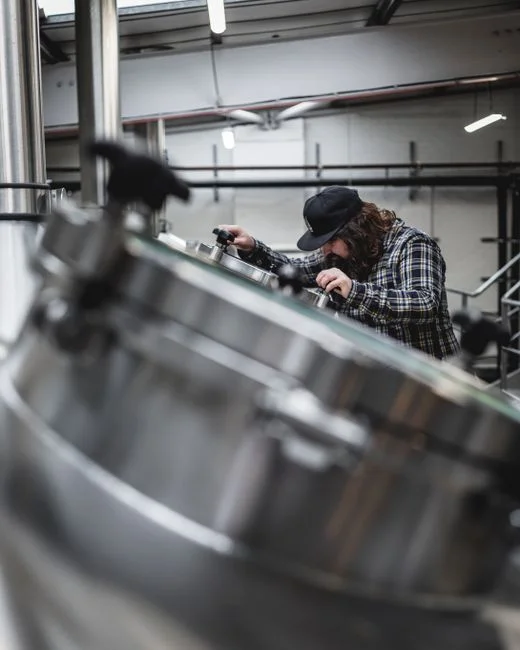
A defensible brewery digester proposal should start with a representative design basis and a clearly defined treatment boundary. The buyer should require the bidder to state whether it covers wastewater only, co-digestion with solid residues, or both, because the Gösser case study shows that these functions can be installed separately. Reactor geometry, active volume, treatment objectives, heating, mixing, gas-system scope, desulphurization, controls, access points, commissioning tests, and performance guarantees should all be defined. A generic COD-removal claim is not enough: the guarantee must be tied to the agreed influent envelope and an agreed protocol for load variation.
| Procurement package | Required content | Buyer check |
|---|---|---|
| Design basis | Representative flow, COD, suspended solids, pH, temperature, variability, and final effluent objective | Does the basis match the brewery’s actual production and cleaning pattern? |
| Reactor and feed scope | Wastewater-only or co-digestion boundary, reactor format, active volume, mixing, heating, and solids handling | Are liquid wastewater and solid residues clearly separated? |
| Monitoring and controls | Measured and estimated variables, alarms, sampling, verification, SCADA interface, and operator access | Can the operator distinguish direct measurements from software estimates? |
| Gas and safety scope | Gas collection, treatment, drying, compression, utilization interface, safety controls, and explosion-protection requirements | Are site-specific hazards and utility interfaces identified? |
| Commissioning and guarantees | Acceptance tests, influent envelope, load-variation protocol, performance guarantee, and remedy | Is the guarantee tied to measurable operating conditions? |
| Operations and handover | Training, maintenance schedule, spare-parts recommendations, remote support, and included versus excluded civil work | Are odors, drainage, access, permits, and utilities clearly allocated? |
Finally, have the proposal checked for siting, gas safety, explosion protection, drainage, maintenance access, and permit interfaces. Those requirements must be confirmed for the proposed location; they cannot be inferred from reactor capacity or from another brewery’s case study. The domestic sewage treatment equipment guide can provide a broader checklist for reviewing treatment-package documentation, but the brewery design basis remains the controlling document.
Frequently Asked Questions
What COD removal can an anaerobic digester achieve for brewery wastewater?
Environmental Systems Research study S3 gives a general anaerobic-digestion removal range of approximately 80% to 90% COD for brewery wastewater. That is a screening benchmark, not a project guarantee. A brewery should require a performance guarantee tied to its representative influent flow, COD, suspended solids, temperature, and load-variation conditions.
Should brewery wastewater and spent grain be treated in the same system?
Not necessarily. IEA Bioenergy’s Gösser Brewery case study S4 shows a wastewater UASB reactor operating separately from a solids-capable digester receiving brewers’ spent grains. Co-digestion may improve the energy balance, but it changes feedstock handling, mixing, residence time, gas treatment, and digestate management. Decide whether the project is a wastewater treatment purchase, a residue digester, or an integrated facility.
How should a brewery size an anaerobic digester?
Request representative flow, COD, suspended solids, pH, temperature, production variability, and the required effluent quality before sizing. The Gösser reactor volumes describe that installation only; they are not generic sizing factors. Ask each bidder to show its hydraulic and organic loading basis and to state how the design responds to peak and low-load periods.
When is additional post-treatment required?
Additional treatment is required when anaerobic treatment alone cannot meet the applicable discharge or reuse criteria. Assess residual COD, nutrients, suspended solids, and disinfection needs. Environmental Systems Research study S3 reports anaerobically digested brewery effluent at 100–275 mg/L COD, 50–75 mg/L total nitrogen, and 10–55 mg/L total phosphorus, illustrating why post-treatment must be evaluated rather than assumed unnecessary.
Related Equipment
- DAF system for brewery wastewater pretreatment — specifications, capacity range, and technical data
- sludge dewatering for brewery wastewater residuals — specifications, capacity range, and technical data