What an RO System for Electroplating Wastewater Does
An RO system for electroplating wastewater recovers water from segregated rinse or process streams, removes dissolved metals and other contaminants into a concentrate, and supplies low-solids permeate for reuse. Research published in Desalination reported 75–95% water recovery and nearly total metal removal in the permeate for global electroplating effluent, while a 2024 electrocoagulation–integrated membrane study reported more than 99% removal of Zn²⁺, Cu²⁺, Ni²⁺ and total chromium under specified conditions. RO is not stand-alone treatment: dependable performance depends on source control, solids and oil removal, pH adjustment, scale prevention and a defined concentrate-disposal route.
Reverse osmosis is the membrane-separation stage within the overall treatment train. Feed water is pressurized across a semipermeable membrane; water passes into low-solids permeate, while dissolved salts, metals and much of the retained organic material are rejected into the concentrate. An industrial reverse osmosis system can therefore support electroplating rinse water reuse, provided the recovered water meets the quality requirements of its intended service.
Feed chemistry matters because electroplating streams may contain copper, nickel, zinc and chromium, together with organics, suspended solids, oils and treatment chemicals. The 2002 Desalination pilot study reported 75–95% water recovery and nearly total metal removal in the permeate for global electroplating effluent. Those results establish the technology’s treatment potential, but they do not guarantee permeate quality at another plant. Membrane selection, recovery, scaling control, pretreatment and project-specific acceptance testing determine what a system can sustain in service.
Choose the Right Wastewater Stream for RO
Dilute rinse-water candidates are generally more suitable starting points for an RO reuse train than concentrated plating baths, spent cleaning solutions, sludges or hazardous concentrates. The first design decision is therefore source segregation, not membrane selection.
Map each discharge by operation, flow pattern and chemistry. Dilute rinsing water may support electroplating rinse water reuse after suitable treatment, while bath dumps and cleaning solutions can require separate recovery, treatment or disposal. Do not infer performance from a plant-wide average: the Aries commercial case used a segregated plating-rinse stream, and it does not demonstrate that every plating wastewater has the same chemistry or recovery.
| Decision input | Information required | Engineering consequence |
|---|---|---|
| Stream identity | Source operation, segregation boundary, batch or continuous discharge | Determines which streams enter the RO train and which require separate treatment |
| Flow | Average, peak, operating hours and diurnal variation | Sets hydraulic basis and membrane sizing |
| Water chemistry | pH, temperature, conductivity/TDS, suspended solids, oil and grease, COD, hardness, silica, chloride and sulfate | Defines pretreatment, scaling risk and chemical compatibility |
| Contaminants | Target metals and relevant process chemicals | Sets monitoring and permeate-quality requirements |
| PFAS screening | Chromium mist suppressants, precursor use and site-specific risk | Supports compound-specific testing and concentrate review |
| Reuse or discharge destination | Process sensitivity, discharge point and governing requirements | Controls permeate specification and concentrate route |
Characterization should reflect normal operations and relevant upset conditions. Sampling only clean production water can conceal the dirty rinse dumps, cleaning carryover or metal spikes that determine fouling and membrane compatibility.
Build the Pretreatment Train Before the RO Membranes
RO performance depends on preventing suspended solids, oil and scale-forming species from reaching the membranes. Source control and equalization come first; clarification, flotation, UF/MF and chemical conditioning then address the contaminants identified in the feed analysis.
The 2024 Water Science and Technology study used electrocoagulation followed by integrated membrane treatment for electroplating wastewater. Its electrocoagulation conditions were pH 8, current density 5 A/dm², electrode-plate spacing 2 cm and electrolysis time of 35 minutes; the integrated-membrane stage operated at influent pH 10. Under those specified conditions, removal exceeded 99% for Zn²⁺, Cu²⁺, Ni²⁺ and total chromium, while COD, suspended solids, total phosphorus, total nitrogen and petroleum removal exceeded 97%.
- Control the source: prevent concentrated baths, cleaning solutions and unnecessary dumps from entering the recovery train.
- Equalize flow and chemistry: reduce shock loads and establish stable feed conditions.
- Remove oil and solids: use DAF or clarification where the feed analysis supports it.
- Apply a membrane barrier: use UF pretreatment for electroplating wastewater to reduce solids entering RO.
- Condition chemically: adjust pH or add antiscalant only where required and compatible with the membrane warranty.
| Pretreatment stage | Primary function | Design evidence required |
|---|---|---|
| Source control and equalization | Prevents concentrated contaminants and flow shocks from reaching treatment equipment | Segregated stream inventory, batch-discharge controls, flow record and equalization volume |
| DAF or clarification | Removes recoverable oil and suspended solids | Oil, solids and solids-loading tests; review of DAF versus clarifier for metalworking wastewater |
| UF or MF | Provides a low-solids barrier before RO; it does not remove dissolved metals | Particle-size basis, flux expectation, backwash requirements and ultrafiltration membrane fouling and CIP troubleshooting provisions |
| Chemical dosing | pH control, coagulation or antiscalant | Feed chemistry, dosing range, membrane compatibility data and automatic chemical dosing system scope |
PFAS screening changes how pretreatment is specified. The Toxics review published 27 July 2026 found that coagulation/flocculation showed very poor PFAS removal efficiency. It also reported flotation achieving up to 88% removal of perfluoroalkane sulfonic acids, although process integration constrained application. DAF can therefore be justified for solids or oil removal, but it should not be presented as a standalone PFAS solution.
Match RO Recovery and Membrane Performance to the Project
Published recovery figures are reference points, not design guarantees: the 2002 Desalination pilot study reported 75–95% recovery for global electroplating effluent, while actual project recovery depends on feed salinity, scaling potential, membrane type and reuse quality.
The Aries commercial case provides a useful project-specific reference. Its MF/RO system treated 140 gpm of plating rinse water and produced 112 gpm of permeate for reuse as rinse water, corresponding to 80% recovery. The same case shows why feed flow, recovered flow and concentrate management must be evaluated together; it does not establish a universal recovery rate for electroplating plants.
| Evidence | Reported result | Correct use in a buyer’s evaluation |
|---|---|---|
| Desalination, March 2002 | 75–95% recovery and nearly total metal removal in the permeate for global electroplating effluent | Evidence of RO treatment potential; not a project guarantee |
| Aries commercial case | 140 gpm rinse-water feed; 112 gpm MF/RO permeate; 80% recovery; permeate reused as rinse water | Commercial reference for MF/RO configuration, reuse flow and concentrate routing |
| Toxics, 27 July 2026 | Nearly 100% removal of long-chain PFAS by membrane technology, with fouling and concentrate disposal identified as challenges | Requires compound-specific evaluation and a complete concentrate plan |
| Toxics, 27 July 2026 | 98% PFOS removal by ion-exchange resin; short-chain PFAS were ineffective because of low affinity and rapid breakthrough | Supports targeted treatment rather than a generic PFAS claim |
Membrane selection should reflect the feed envelope and the required recovery. The industrial reverse osmosis system must be paired with compatible RO and UF membrane elements whose rejection, pressure and fouling characteristics suit the design flow.
Define permeate quality by its reuse function and the pretreatment or discharge requirements applicable to that stream. The supplied research does not establish universal TDS or permeate limits for electroplating reuse. Specify measurable acceptance criteria, then verify them against the actual feed-water envelope.
Treat and Route the RO Concentrate
Increasing RO recovery reduces concentrate volume but concentrates rejected salts, metals and organics, so a technically viable reuse system must include a permitted route for the reject stream.
The Aries case provides a clear commercial precedent: 112 gpm of permeate was reused as rinse water, while the RO concentrate was discharged to the local wastewater treatment plant. This was not a zero-liquid-discharge configuration. It demonstrates that a complete project can combine reuse with a defined downstream discharge route.
The Toxics review published 27 July 2026 identified concentrate disposal as a challenge even when membrane PFAS removal was nearly 100% for long-chain compounds. The same review documented 29 detected PFAS in electroplating wastewater, with long-chain compounds dominating; chrome plating was identified as the primary PFAS source because some chromium mist suppressants contain PFOS, 6:2 FTS and 6:2 Cl-PFESA.
Request the following from every bidder:
- Concentrate flow at the design operating point.
- Projected constituent concentrations, including metals and relevant PFAS.
- Applicable local discharge or sewer limits.
- Any required concentrate treatment train.
- Monitoring and sampling plan.
- Clear allocation of responsibility for downstream disposal.
Where treatment is needed, define the solids-handling objective as part of the membrane project rather than treating it as an accessory. A plate-frame filter press may be relevant where solids must be dewatered, but its selection depends on the solids characteristics and disposal route.
Specify, Size and Procure the RO System
Size the RO from each segregated stream’s measured flow and complete water-quality analysis, not from a plant-wide average or a published rejection percentage.
Ask bidders to state the design feed flow, recovery rate, membrane type and quantity, pretreatment stages, control philosophy, permeate targets, concentrate route, cleaning strategy and acceptance criteria. The quotation should identify the design feed-water envelope because performance outside that envelope is not a meaningful guarantee.
| Procurement item | Evidence to request before award | Reason for the check |
|---|---|---|
| Design basis | Measured stream flow and complete water-quality analysis | Prevents inappropriate averaging or copied sizing |
| RO configuration | Membrane type and quantity, design recovery and pressure basis | Allows technical comparison of alternatives |
| Pretreatment | Stages, controls, chemicals, membrane compatibility and fouling margin | Protects the RO and defines operating cost |
| Automation | PLC control, interlocks, operating mode and continuous-operation requirements | Converts technical performance into operable plant behavior |
| Performance | Guaranteed permeate and recovery under the stated feed envelope | Creates an enforceable project criterion |
| Service scope | Membranes, spares, instrumentation, installation, commissioning, training, cleaning chemicals and monitoring | Prevents omissions during handover |
| Concentrate | Flow, projected chemistry, treatment, discharge route and responsibility | Addresses a critical permit and lifecycle risk |
| Exclusions | Civil and electrical work, pretreatment upgrades, external laboratory testing, disposal fees and concentrate treatment | Makes quotations commercially comparable |
Operational requirements should be explicit. The supplier’s industrial RO equipment should use automated PLC-controlled operation where required, and the offered recovery range must be reconciled with the project calculation. Current industrial RO systems may specify recovery rates up to 95%, but that equipment capability does not replace site-specific recovery design.
Also define availability of water-treatment parts, valves and media, membrane warranty terms, spare-element strategy and O&M support. Compare suppliers on the complete treatment envelope rather than headline recovery.
Measure Performance Before Full Reuse
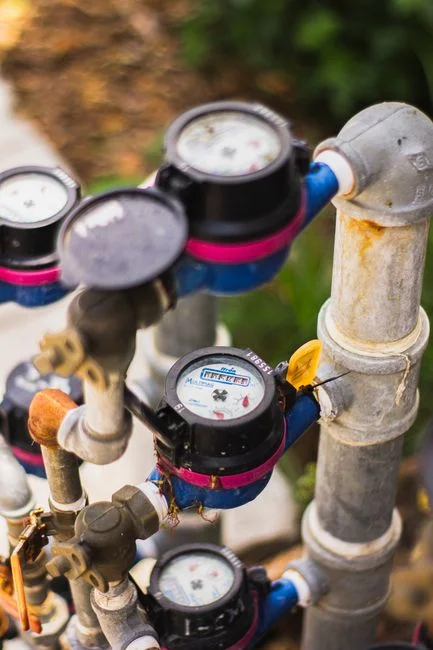
Commissioning should establish whether actual feed conditions produce the agreed recovered flow, recovery rate and permeate quality before full reuse begins.
Monitor flow, recovery, permeate and concentrate pressure, conductivity/TDS, pH and the metals relevant to the selected stream. Add COD, suspended solids, hardness, silica and scaling indicators where they affect membrane performance or reuse. The monitoring package should also track normalized operating data used to identify fouling or changing membrane performance.
PFAS or precursor testing is warranted when chrome-plating inputs, chromium mist suppressants or the site risk assessment indicate relevance. The 2026 Toxics review reported PFOS, 6:2 FTS and 6:2 Cl-PFESA in some chromium mist suppressants, and detected 29 PFAS across monitored electroplating wastewater. Screening should therefore be compound-specific rather than reduced to a single generic PFAS result.
Use chemical dosing controls and operating records to confirm that pH and antiscalant remain within the agreed envelope. Schedule membrane cleaning from normalized operating data rather than a fixed calendar alone, and retain cleaning chemistry, recovery, normalized permeate-flow and salt-passing trends.
The commissioning report should document actual feed conditions, recovered flow, recovery rate and permeate results against agreed acceptance criteria. Any unresolved deviation should be closed before the stream is returned to production reuse.
Frequently Asked Questions
What does an RO system for electroplating wastewater cost?
The supplied research does not provide a universal price. Request an itemized quotation covering membrane vessels and elements, pretreatment, pumps, controls, pretreatment chemicals, cleaning, concentrate treatment and installation. The Aries case treated 140 gpm and produced 112 gpm of permeate, illustrating why feed flow and recovery materially change the equipment scope.
How should an RO system be sized for electroplating rinse water reuse?
Size each segregated stream from measured flow and complete water-quality data. The design must reconcile peak demand, operating hours, selected recovery, reuse targets and fouling margin. Do not size from a plant-wide average or use the 75–95% range from the 2002 Desalination pilot study as a design assumption.
Which supplier qualifications should a buyer verify?
Ask for electroplating or metal-finishing references, membrane warranty terms, guaranteed permeate and recovery performance under the stated feed envelope, installation scope, O&M support and a documented concentrate route. These checks test whether the supplier can deliver an operating treatment train rather than only an RO skid.
Does nearly 100% PFAS removal mean every PFAS will be removed?
No. The Toxics review published 27 July 2026 reported nearly 100% membrane removal for long-chain PFAS, while identifying fouling and concentrate disposal as challenges. It also reported 98% PFOS removal by ion exchange but ineffectiveness for short-chain PFAS because of low affinity and rapid breakthrough. Use compound-specific testing and evaluate the concentrate route.
What recovery rate should the buyer specify?
Distinguish research evidence from project design: the 2002 Desalination study reported 75–95% recovery, while the Aries commercial case operated at 80% recovery. Set actual recovery from feed chemistry, pretreatment, reuse objectives and the permitted concentrate route, then guarantee it under the project’s feed envelope.