When an Anaerobic Digester Fits Hotel Wastewater
An anaerobic digester for hotel wastewater is suitable only after kitchen solids, fats, oils and grease are segregated and the remaining liquid is characterized for COD, suspended solids, pH, temperature and biodegradability. Hotel food waste is a separate pretreatment and logistics decision, especially where odour near guests is a concern. The digester must maintain a controlled pH and hydraulic retention time, remove biogas safely, and connect to downstream solids separation, polishing and disinfection. Scale is decisive: the American Biogas Council reported in September 2026 that adoption exceeded 75% at U.S. wastewater facilities treating over 30 MGD, compared with below 30% below 5 MGD.
The candidate stream is a biologically degradable liquid with sufficient organic loading, a controlled flow regime and operating conditions that can be maintained without inhibitory pH or temperature excursions. It is not a substitute for a complete sewage-treatment train. Biogas capture does not remove the need for equalization, solids separation, polishing, disinfection and an authorized discharge or reuse route.
Scale does not determine feasibility by itself, but it materially affects commercial viability. The American Biogas Council’s September 2026 survey found adoption in about half of facilities treating 5–30 MGD and below 30% below 5 MGD. It also identified 103 surveyed adopters below 1 MGD, demonstrating that smaller installations are possible where local conditions support them. These municipal findings provide context, not a universal hotel design threshold.
Before procurement, request a seasonal wastewater characterization covering flow, COD, BOD, suspended solids, FOG, pH, temperature, nutrient balance, discharge or reuse requirements, footprint, energy demand and applicable discharge rules. A broader comparison of hotel resort wastewater treatment options can help separate treatment routes before equipment selection. A research-backed anaerobic digester design guide provides a useful reference for industrial wastewater, but the process basis must still reflect the hotel stream.
| Decision input | Evidence required before design | Consequence if missing |
|---|---|---|
| Wastewater stream | Source-separated flow and seasonal load profile | Unreliable reactor loading and treatment train |
| Organic and inhibitory characteristics | COD, BOD, suspended solids, FOG, pH, temperature and biodegradability | Cannot establish suitability, hydraulic retention time or inhibition controls |
| End use | Discharge or reuse target and local acceptance criteria | Downstream treatment may be underdefined |
| Energy and siting | Hot-water demand, electricity demand, available footprint and odour constraints | Biogas value and installation feasibility remain unproven |
Separate the Wastewater Before Designing the Digester
Resort wastewater must be separated by source before the digester design load is calculated. Guestroom sewage, kitchen discharge, laundry wastewater, spa water, pool water, surface runoff and externally hauled waste have different contaminant profiles and permitted destinations. Combining them by assumption can produce a reactor basis that is neither biologically stable nor compliant.
Kitchen food preparation solids and high-FOG discharge should normally remain outside the wastewater digester unless the selected reactor and pretreatment train have been specifically designed and validated for them. Food waste also requires a separate collection and contamination-control decision. The commercial hotel-food-waste source published by blog.anaerobic-digestion.com favours off-site anaerobic digestion where an odour-producing activity near guests is operationally risky. That is a food-waste conclusion, not evidence that the entire resort sewer flow should be digested.
- Map and segregate sources. Record each discharge, its flow pattern, seasonal variability and destination.
- Protect the reactor. Assess a GX rotary mechanical bar screen where rags, plastics or fibrous debris could enter the biological process.
- Remove recoverable oils and solids where justified. Consider DAF pretreatment for oil, grease and suspended solids only after characterization supports that duty. DAF is a pretreatment option, not a universal digester substitute.
- Establish the loading basis. Use a waste audit and seasonal sampling plan covering occupancy, conferences, laundry turnover and food-service activity.
Laundry flows require particular attention because they can differ sharply from guestroom sewage and may contain substances that affect treatment. Pool and spa discharges should not enter the reactor merely because they are part of the resort’s water balance; their chemistry and local reuse or discharge rules need separate review.
| Stream | Separate assessment | Possible integration |
|---|---|---|
| Guestroom and public sewage | Flow, COD, BOD, solids, pH and seasonal variation | Potentially the principal digester feed after equalization |
| Kitchen wastewater | FOG, food solids, cleansers and flow variability | Segregate or pretreat; do not add by default |
| Laundry wastewater | Organic load, pH and residual treatment chemicals | Include only after compatibility review |
| Pool, spa and runoff | Water chemistry, disinfectant residual and authorization | Generally assess separately from sewage digestion |
Match Reactor Performance to Organic Loading
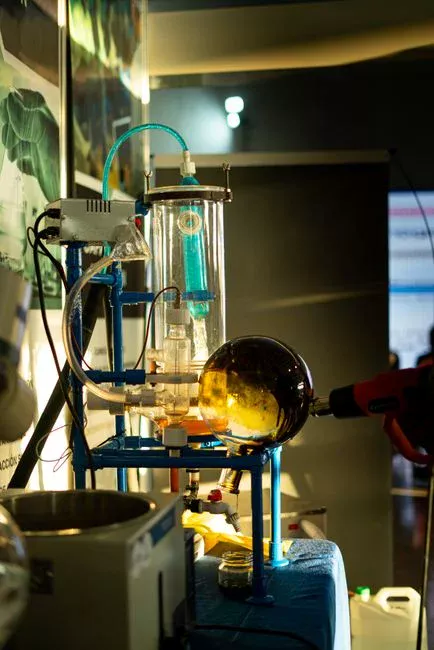
Higher organic concentration does not guarantee better treatment. In Durban University of Technology research on industrial wastewater, increasing COD from 4,320 mg/L to 18,770 mg/L increased biogas production by 30% but reduced contaminant removal by more than 40% as pH fell and inhibitory long-chain fatty acids accumulated. The engineering implication is direct: organic loading, alkalinity and removal performance must be controlled together.
That study’s optimized 50 L reactor operated at a hydraulic retention time of 21 days, pH of 7.01 and magnetite load of 0.42 g/L. These are research results for the tested streams and apparatus, not hotel design standards. The study reported an optimum HRT between 18 and 22 days during sequential testing and validated the 50 L system against low-organic industrial sewage and high-organic sugar-refinery wastewater.
Magnetite was an optional enhancement in that research, not a default reactor component. Loads of 0.4–0.6 g/L produced biogas rates of 23 mL/d and 20 mL/d during the reported operating period, while 0.8 g/L overloaded the catalyst and reduced biogas production to 2 mL/d after 9 days. Any additive therefore requires stream-specific validation and an assessment of solids separation, mixing and downstream impacts.
Reactor selection should follow the wastewater rather than a preferred configuration. High-rate systems may suit a stable, soluble biodegradable feed, while low-rate systems provide greater operational resilience where loading varies. Batch systems can simplify control, and staged systems separate hydrolysis and methane-producing stages. Footprint, operator capability, feeding consistency, mixing, gas removal and downstream treatment remain the deciding criteria. Reactor-selection lessons from anaerobic digester reactor sizing and operation must therefore be adapted to resort wastewater rather than copied as fixed criteria.
| Parameter | Why the supplier must define it | Buyer acceptance check |
|---|---|---|
| pH and alkalinity | Protect methanogenic activity and control inhibition | Operating range, control method and alarm response |
| Hydraulic retention time | Allows treatment to complete and solids to separate | Design basis tied to measured flow and loading |
| Temperature | Controls biological activity and process stability | Operating condition, heating method and upset response |
| Mixing and feeding | Limits stratification, scum and local overload | Equipment arrangement, duty and maintenance access |
| Biogas removal | Controls pressure and captures usable gas | Gas balance, seal arrangement and loss assumptions |
The mandatory supplier data request should include pH, alkalinity, temperature, HRT, mixing, feeding, recirculation and biogas removal. Also request the sensitivity of the design to peak occupancy, dilute flow periods, FOG excursions and the maximum acceptable loading rate. A reactor selected from guest-room count alone has no defensible process basis.
Build a Complete Treatment and Resource-Recovery Train
A hotel digester must be evaluated as a complete treatment train rather than as a reactor with a gas outlet. The process flow begins with source characterization and segregation, followed by screening or solids removal, equalization, pH control, anaerobic digestion, gas handling, solids separation, polishing, disinfection and authorized discharge or reuse.
Equalization protects the reactor from wet-weather dilution and short organic-load peaks. Chemical dosing should be linked to measured pH and alkalinity rather than applied as a fixed recipe. An automatic chemical dosing system can support controlled pH adjustment or coagulation where the process design requires it, but the supplier must address chemical compatibility, inhibition risks, storage, dosing limits and operator intervention.
Digestion does not eliminate the solids-management problem. Where a dewatering route is required, a plate and frame filter press can dewater sludge or digestate. Specify expected cake characteristics, filtrate quality, polymer requirements, operating cycle, plate-cleaning provisions, odour controls and the authorized disposal route. None of those items should remain an unpriced exclusion.
Downstream treatment depends on the reuse or discharge specification. MBR downstream wastewater polishing is one option when the required reuse quality justifies membrane treatment; the stated product capacity is 10–2,000 m³/day and its filtration is below 1 μm. For smaller hotel flows, the WSZ underground integrated sewage treatment plant handles 1–80 m³/h and combines A/O contact oxidation, sedimentation and disinfection. It may avoid a separate digester and polishing train, but that alternative adds its own footprint, controls and maintenance burden.
| Train stage | Required scope | Key buyer question |
|---|---|---|
| Pre-treatment | Screening, solids removal, equalization and any justified FOG control | Which contaminants reach the reactor? |
| Digestion | Reactor, mixing, heating, feeding, pH control, instrumentation and gas handling | What performance is guaranteed at the measured loads? |
| Solids handling | Separation, thickening or dewatering and authorized destination | Who owns the final residue route? |
| Polishing and disinfection | Technology selected against the reuse or discharge target | Which final-quality parameters are tested? |
Make the Biogas Business Case Without Overestimating Value

Biogas value depends first on the hotel’s usable energy demand and second on the quantity and quality of gas the selected wastewater stream can produce. Hot-water or laundry heat may provide a direct thermal sink. Combined heat and power becomes more credible where both electricity and heat are required. If neither use exists, gas cleanup and safe flaring remain necessary costs even when no energy revenue is claimed.
The American Biogas Council’s September 2026 survey provides useful market context: 55% of surveyed wastewater facilities primarily used biogas for electricity or CHP, 26% for heat, and 89% of the electricity generated from biogas was used onsite. These municipal figures demonstrate common end-use patterns, but they do not establish the output or economics of a hotel installation.
The economic case must include the full gas system. Capital and operating comparisons should address capture, storage, pressure regulation, flame arrestors, hydrogen sulfide management, odour control, safety systems, maintenance and residual-gas handling. Excluding flare, cleanup or servicing from the quote can make an otherwise unviable project appear attractive.
The Durban University of Technology 50 L system is a useful warning against generic payback claims. Its cost-benefit analysis recorded a benefit-cost ratio of 0.4, net present value of -R121 016 and annual operating costs above annual revenue. The paper concluded that the tested system was not economically viable because of high capital requirements. Those results belong to a laboratory-scale research system and should not be presented as a hotel forecast; they demonstrate why generic payback claims are indefensible.
Require a site-specific model based on characterized wastewater. It should show measured or credibly calculated biogas potential, usable energy after losses, operator labour, maintenance, replacements, gas-value assumptions and the cost of residual-gas handling. Test the model against lower occupancy, seasonal loading, downtime and changes in the avoided energy price. The anaerobic digester reactor sizing and operation reference provides useful operating context, but energy credit still belongs in the hotel’s own model.
| Business-case line | Required input | Decision treatment |
|---|---|---|
| Gas production | Stream-specific test data and conservative operating assumptions | Do not use supplier maximum yield alone |
| Useful energy | Hotel heat and electricity demand plus equipment losses | Value only gas actually consumed onsite |
| Capital cost | Complete installed treatment and gas-safety scope | Exclude no civil, building or safety work |
| Operating cost | Labour, chemicals, maintenance, replacements and disposal | Include downtime and residual-gas handling |
Use a Supplier Qualification and Risk-Control Framework
A defensible bid should begin with a signed process basis covering flow, COD, BOD, solids, FOG, pH, temperature, required HRT, expected gas yield, treated-effluent criteria and digestate destinations. If the supplier cannot identify the wastewater characteristics behind its sizing and guarantees, the bid is not ready for technical comparison.
Require a performance schedule tied to the actual wastewater characterization. It should define test methods, sampling points, startup criteria, monitoring duties, acceptance tests and remedies for failure. Clarify who corrects deficiencies, supplies replacement consumables, trains operators and remains accountable during commissioning and seasonal operation.
Compare scope completeness across screens, equalization, pH and nutrient control, reactor and mixing, gas safety, sludge separation, polishing, disinfection, controls, buildings, commissioning, training and O&M support. A low reactor price can be offset by omitted pretreatment, gas cleanup, foundations or downstream treatment.
Lifecycle risk requires the same attention as capital cost. Assess odour near guest areas, explosion-protected equipment, hydrogen sulfide management, flare availability, digestate handling, operator competence and spare-parts support. Local permitting and sewer-discharge conditions are project gates, not post-order details. The supplied research does not establish a universal hotel-specific regulatory limit, so obtain the applicable local standard and written acceptance criteria before ordering.
Compare total installed cost and ten-year operating assumptions. Require a sensitivity case for lower occupancy, seasonal loading, downtime and changes in gas value. Packaged-plant procurement can provide a useful comparison for the non-digester route, as discussed in the London packaged sewage treatment plant guide and Birmingham packaged sewage treatment plant guide.
| Gate | Required supplier response | Reject if |
|---|---|---|
| Process basis | Signed characterization and design assumptions | Sizing relies only on guest-room count |
| Performance | Testable acceptance criteria and remedies | No sampling method or accountable party |
| Safety and siting | Gas, hydrogen sulfide, flame and odour controls | Critical systems are excluded from price |
| Residues and reuse | Sludge, digestate, filtrate and final-effluent destinations | No authorized disposal route |
| Commercial | Installed cost, ten-year assumptions and sensitivity cases | Only equipment price or maximum gas yield is shown |
Frequently Asked Questions
Should a hotel install an anaerobic digester?
Install one only if a segregated wastewater stream has demonstrated biodegradability and sufficient organic loading; pretreatment can control solids and FOG; pH, temperature and hydraulic retention time can be maintained; biogas can be handled safely; and downstream treatment, sludge or digestate handling, odour control, discharge and reuse routes are defined. Hotel food-waste digestion should be evaluated separately because it is a solids-logistics decision rather than evidence that the whole resort sewer flow is suitable.
How should a buyer size an anaerobic digester for hotel wastewater?
Size from the measured flow and organic loading, not guest-room count alone. The supplier’s basis should include hydraulic retention time, pH, alkalinity, temperature, peak and seasonal loading, mixing, feeding and downstream solids removal. Ask for a sensitivity case showing how the selected reactor responds to occupancy changes, dilute flows, FOG excursions and wastewater variability.
What should a buyer budget for an anaerobic digester?
Budget for the complete installed scope: characterization, pretreatment, reactor, heating and mixing, gas capture and safety, solids handling, polishing, disinfection, buildings, commissioning, training, chemicals, maintenance and final-waste disposal. No defensible hotel quotation can be produced without the wastewater basis, treatment target, footprint and energy demand. As a warning rather than a forecast, the Durban University of Technology 50 L study recorded a benefit-cost ratio of 0.4 and net present value of -R121 016.
How should suppliers be evaluated and selected?
Compare signed process bases, testable performance guarantees, startup support, monitoring duties, safety systems, local service, O&M costs and responsibility for performance gaps. Require complete-scope pricing and a ten-year sensitivity analysis. A supplier should also demonstrate how odour, hydrogen sulfide, digestate handling and downtime will be managed; hotel resort wastewater treatment options should be used to frame the comparison, not replace project-specific screening.
Can hotel food waste be added to the wastewater digester?
Only after separate FOG, solids and contaminant characterization confirms compatibility with the reactor and pretreatment train. Co-digestion may change loading, mixing, gas yield, contamination risk and digestate quality, so it cannot be included by assumption. Where odour near guests or collection logistics dominate, off-site food-waste digestion remains a distinct option to evaluate alongside, rather than inside, the wastewater-treatment decision.