Which Limits Control a Sewer Discharge Near Dupont?
A mining or metals facility near Dupont should design to the stricter applicable categorical pretreatment standard and the receiving POTW’s enforceable local limit, not to a generic NPDES limit. NPDES authorization applies to point-source discharges to surface water; a discharge to a municipal sewer is governed through Clean Water Act §307(b), 40 CFR Part 403, the applicable categorical subcategory, and the POTW’s industrial-user permit. Federal categorical standards establish a minimum level of protection, while the local control authority may impose tighter requirements to protect its collection system, biological process, sludge, and workers.
For ore mining and dressing, verify the applicable subcategory under 40 CFR Part 437. For metal finishing, verify Part 433. Do not assume Part 440 applies to metal mining; that reference must be corrected during regulatory review. EPA’s Local Limits Development Guidance states that an indirect discharger’s obligations are determined by POTW industrial-user permits, equivalent control mechanisms, or regulatory requirements, and that a conflicting permit or regulation controls. This is the legal basis for treating the Dupont-area sewer permit and ordinance as the design envelope.
| Requirement source | What it controls | Use in equipment sizing |
|---|---|---|
| 40 CFR Part 403 | Federal pretreatment framework | Establishes the indirect-discharger framework; does not replace the local permit. |
| 40 CFR Part 437 or Part 433 | Applicable categorical pretreatment standards | Identify the correct subcategory and its concentration and mass-loading limits. |
| POTW sewer-use ordinance and industrial-user permit | Local limits, monitoring, prohibitions, and enforcement | Use the controlling enforceable values and sampling conditions as the guaranteed discharge envelope. |
| Local limit example | Commercial 2026 pretreatment source reports zinc of 0.3–1.0 mg/L monthly average and copper of 0.3–0.5 mg/L monthly average | Treat these as indicative examples only; obtain the receiving authority’s current ordinance before designing. |
The local limit may include concentration and maximum allowable industrial loading, so a concentration-only design can be incomplete. A mining-plant sewer pretreatment guide also explains why surface-water NPDES requirements and sewer pretreatment requirements must remain separate when a facility has different outfalls.
Build a Dupont-Area Compliance Verification File
A defensible pretreatment design starts with a five-step verification chain, not a generic mining wastewater train.
- Identify the receiving authority. Confirm the POTW, sewer authority or control authority and whether the proposed point of discharge is an industrial sewer connection rather than a surface-water outfall.
- Obtain the controlling documents. Request the current sewer-use ordinance, industrial-user permit or equivalent control mechanism, local limits, monitoring obligations, prohibited discharges, fees, enforcement provisions and discharge-point drawing.
- Verify the categorical classification. Establish whether the facility is an ore mining and dressing operation, a metal-finishing operation, or both. Record the exact subcategory rather than accepting a vendor’s assumption.
- Build the wastewater data file. Collect at least 12 months of influent and discharge-monitoring data, including flow variability, pH, TSS, oil and grease, total recoverable metals, sulfate, TDS, applicable ammonia and process-batch events.
- Convert limits into design and procurement inputs. Obtain a signed-off mass-loading calculation, identify peak and batch conditions, and confirm analytical methods, sample locations, averaging periods and reporting forms.
EPA’s 2021 Local Limits Development Guidance explains that maximum allowable headworks loading is developed from pollutant data and criteria addressing treatment works, collection-system, sludge, air-quality and inhibition concerns. For an industrial user, the resulting allocation may be expressed as a concentration limit, an industrial loading limit, or both. Therefore, ask the permit writer how allowable industrial loading applies to the proposed facility and batch releases.
Before issuing an equipment request, also request confirmation of discharge fees and capacity charges. These are inputs to the life-cycle comparison, not substitute limits. A permit application without representative batch data may produce treatment capacity that works on paper but fails during a mill clean-out or shift discharge.
Map Wastewater Chemistry to the Treatment Train
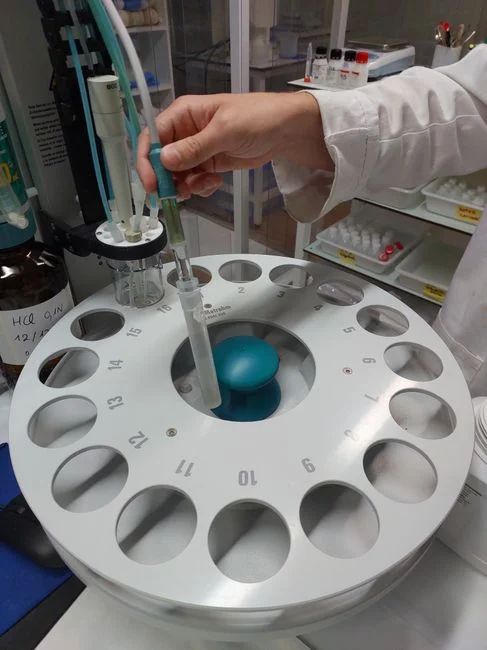
Equalization and pH control protect every downstream removal step from the batch conditions that define mining wastewater.
The commercial mining and metals pretreatment source identifies equalization as a frequent retrofit bottleneck and recommends 8–24 hours of average daily flow to buffer dump-leach cycles, shift changes, mill clean-outs and other batch discharges. Place a PLC-controlled pH and precipitation chemical dosing system immediately downstream. The source identifies 6.5–9.0 as a target range intended to satisfy virtually every POTW instantaneous range, with staged dosing when influent pH varies by more than 2 units.
Precise pH control is a metals-removal requirement, not merely an ordinance checkbox. The source reports that moving 1 pH unit away from the metals-precipitation optimum can reduce removal efficiency by an order of magnitude, with zinc rising from less than 1 mg/L to more than 10 mg/L without another chemistry change. Jar testing must establish the optimum for each metal and waste stream.
| Process step | Design basis from supplied sources | Equipment-selection consequence |
|---|---|---|
| Batch discharge equalization | 8–24 hours of average daily flow, per the commercial mining pretreatment source | Size for documented peak batch volume and mixing requirements, not annual average flow. |
| pH adjustment | Target 6.5–9.0; staged dosing if influent varies by more than 2 pH units, per the same source | Provide PLC control, reagent storage, alarms and verified fail-safe actions. |
| Hydroxide precipitation | Default treatment for the main metal load; parameter-specific pH determined by jar testing, per the source | Define lime or caustic consumption, mixing and sludge production from actual chemistry. |
| Sulfide treatment | Slipstream polishing is appropriate when hydroxide treatment cannot reliably reach the controlling residual-metal limit | Provide sealed reactors and hydrogen-sulfide ventilation controls. |
| Coagulation and flocculation | Polymer coagulant aid of 0.5–3 mg/L, per the commercial source | Set feed from jar tests and verify floc carryover at the selected clarifier. |
| Polishing filtration | 1–2 m/h filtration rate and residual TSS below 10 mg/L, per the source | Size vessels for backwash hydraulics and maximum treated flow. |
| Disinfection | Chlorine dioxide at 1–5 mg/L where residual disinfectant is required, per the source; UV where acceptable | Add only after confirming the POTW requirement and treatment compatibility. |
Hydroxide precipitation should normally handle the main dissolved-metal load. Coagulation then converts metal-hydroxide particles into flocs that can be separated. Reserve sulfide precipitation or a sulfide-polishing slipstream for a residual limit that hydroxide cannot reliably meet, because the commercial source reports sulfide reagent costs of 2–4 times hydroxide cost and identifies sealed reactors and scrubbed vents as necessary for hydrogen-sulfide control.
Choose DAF or Lamella Clarification by Stream Character
DAF is the stronger choice for oily or very fine suspended material; lamella clarification is generally more appropriate for dense metal-hydroxide flocs at higher flow or where footprint is limited.
| Selection criterion | DAF | Lamella clarification |
|---|---|---|
| Preferred contaminant character | Oil, grease, fine colloids and low-density metal-bearing solids | Dense metal-hydroxide flocs |
| Commercial-source hydraulic or surface loading | 5–25 m/h hydraulic loading | 20–40 m/h surface loading |
| Reported mining and metal-finishing performance | 90–98% TSS removal and 85–95% oil and grease removal | Dense sludge blanket and strong handling of metal-bearing sludge, per the commercial source |
| Commercial-source flow heuristic | Generally below 200 m³/h, with overlap around lower flows | Generally above 100 m³/h, with overlap around higher flows |
| Installation constraint | Evaluate skids, recycle saturation and float-sludge withdrawal | Evaluate inclined plates, sludge withdrawal and available settling area |
These are selection heuristics, not universal applicability boundaries. An industrial DAF system for metal wastewater should be sized after jar testing establishes contaminant capture, polymer demand and floatability. For lamella, request the projected surface loading and sludge blanket behavior under the actual peak metal-hydroxide loading.
The commercial source recommends evaluating the peak 2-hour flow with 20–30% turndown capacity. That statement does not establish that every project requires the same reserve; the buyer should reconcile it with the documented batch-discharge profile and the POTW’s discharge timing restrictions. A mill campaign, washdown or hauled-waste dump can defeat equipment sized only from daily average flow.
Neither DAF nor lamella is the final metals guarantee. Continue with filtration, compliance sampling and a defined residual-metal polishing strategy where needed. The 2026 DAF versus clarifier selection guide provides a related engineering comparison.
Design the Polishing and Sludge-Handling Steps
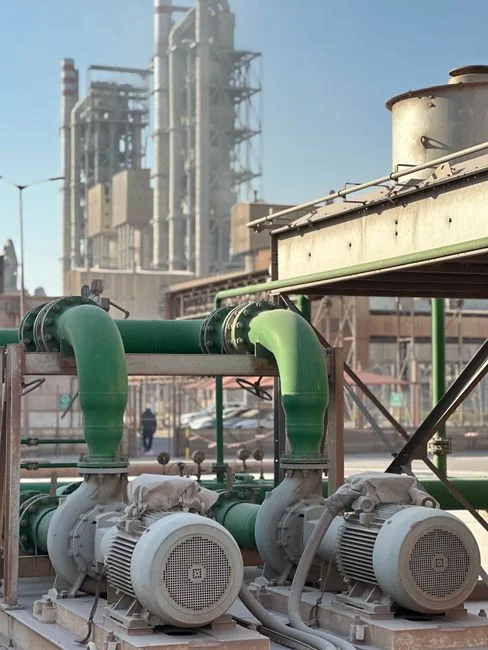
A compliant liquid discharge does not close the design until the metal-bearing solids have a lawful destination and the filtrate has a controlled return point.
Use a multimedia filter containing anthracite, sand and garnet after clarification, sized for the backwash cycle and peak treated flow rather than average filtration flow. The commercial source reports a 1–2 m/h filtration rate and residual TSS below 10 mg/L. A multimedia polishing filter should include differential-pressure monitoring, validated backwash triggers and sufficient dirty-filter capacity.
If the project continues to reuse or reverse osmosis, the supplied product literature specifies hollow-fiber ultrafiltration with 0.03-micron PVDF membranes, capacity from 2,000–40,000 L/h and automatic backwash with air scour. The hollow-fiber UF system should be sized against confirmed feed chemistry and the reuse design rather than added as an unverified polishing claim.
Characterize sludge generated at the selected pH and reagent strategy. Hydroxide and sulfide treatment create different solids compositions and handling requirements. Jar testing and pilot work should establish chemical consumption, settleability, sludge yield and residual-metal content.
Where a dewaterable cake is required, a plate-and-frame sludge dewatering system can use manual, hydraulic or PLC-controlled configurations. The supplied source reports filtration areas from 1 to 500 m² and cake dry solids of 25–35%. Before purchase, obtain the receiving facility’s analytical acceptance criteria, permitted disposal pathway, transport requirements and whether stabilization or metals recovery is allowed. Return filtrate only to an approved upstream point after checking its chemistry and the overall hydraulic balance.
Turn the Design into a Compliance-Ready Purchase
A defensible purchase order links every guaranteed result to the controlling permit, representative wastewater and an acceptance test the operator can repeat.
| Procurement item | Required content | Acceptance evidence |
|---|---|---|
| Design basis | Current POTW requirements, verified categorical subcategory, 12-month influent characterization, jar tests and identified peak batch conditions | Engineer-approved mass balance and sizing calculation. |
| Performance guarantee | Stricter applicable requirement, including daily maximum, monthly average, instantaneous limit, mass loading and sampling condition | Representative performance test with raw laboratory data. |
| Controls and safeguards | Automatic pH and chemical control, operator alarms, high-flow and high-pH safeguards, data logging and fail-safe actions | Witnessed alarm, excursion, power-loss and restart tests. |
| Operating commitments | Chemical consumption, sludge yield and dewatering results | Mass-balance calculation tied to measured chemical use and recovered cake. |
| Commissioning and support | Calibration, operator training, sampling instructions, spare parts and media, resin and reagent replacement schedules | Signed commissioning record and completed training package. |
Require the supplier to identify which requirement governs each guarantee. For example, a monthly-average concentration guarantee does not by itself demonstrate compliance with an instantaneous limit or a mass-loading restriction. The plate-and-frame filter press selection specifications remain useful for comparing dewatering scope, but sludge acceptance and cake performance must be tied to the site’s disposal route.
Make regulatory review a design checkpoint rather than an assumption. The commercial source flags changing PFAS monitoring expectations, revisions to lead and copper local limits, and 2025 ore-mining BAT developments as 2026 permit-cycle risks. None should be treated as directly controlling a sewer connection without confirmation from the POTW or applicable authority. The practical sequence is: obtain controlling documents, characterize wastewater, perform jar tests, size the train, define sludge handling, procure with measurable guarantees, then commission against the permit’s monitoring protocol.
Frequently Asked Questions
What numeric sewer limit should a mining plant near Dupont use for equipment design?
Use the final limit in the receiving POTW’s controlling sewer-use ordinance and industrial-user permit, together with the limits for the verified categorical subcategory. The commercial 2026 source’s example zinc range of 0.3–1.0 mg/L monthly average and copper range of 0.3–0.5 mg/L monthly average are not substitutes for local requirements. Request the current enforceable values, averaging periods and mass-loading provisions before requesting bids.
When is sulfide polishing justified, and what should a buyer check about cost?
Use sulfide treatment or polishing when jar-tested hydroxide treatment cannot reliably achieve the controlling residual-metal limit. The commercial source reports residuals of 0.01–0.05 mg/L for copper, zinc, cadmium and nickel with sulfide, versus 0.5–2.0 mg/L with hydroxide, and sulfide reagent costs of 2–4 times hydroxide cost. These are reported comparison values, not universal guarantees; request a reagent-consumption estimate, sealed-reactor scope and hydrogen-sulfide control plan.
Should a mining wastewater train use DAF or a lamella clarifier?
Choose DAF when oil, grease, fine colloids or low-density solids are important removal targets; choose lamella for dense metal-hydroxide flocs, higher flow or a constrained footprint. The commercial source reports DAF loading of 5–25 m/h and lamella surface loading of 20–40 m/h, with overlapping flow heuristics. Neither device alone proves compliance with every POTW parameter, so include filtration, sampling and residual-metal polishing where required.
What information should be supplied to a pretreatment supplier before pricing?
Provide the POTW permit and ordinance, verified categorical subcategory, 12-month wastewater analyses, batch-flow records, sampling requirements, jar-test results and sludge-disposal constraints. Ask each supplier to state its sizing assumptions, guarantee conditions, controls, acceptance tests, commissioning deliverables and schedule for consumables. For a dual-outfall facility, map NPDES requirements and pretreatment requirements to their actual outfalls; the mining-plant sewer pretreatment guide explains that distinction.
Related Equipment
- industrial DAF system for metal wastewater — specifications, capacity range, and technical data