How to choose DAF or a clarifier for a South Gate chemical plant
Most chemical factories in South Gate should choose DAF when emulsified oil, FOG or fine solids are important and wastewater arrives in variable batch slugs; a clarifier is more economical when the stream is dominated by settleable solids with little emulsified oil. A DAF-plus-lamella-clarifier train provides the strongest default for mixed chemical process wastewater, while a stand-alone clarifier fits sediment-heavy streams. The best 2026 decision still depends on site-specific wastewater tests, current permit limits and jar-test results—not generic refinery data.
Begin with the contaminant inventory rather than the equipment catalog. Separate separable pollutants—free oil, emulsified oil, FOG and suspended solids—from dissolved contaminants such as soluble COD, salts and many dissolved metals. Also characterize pH, toxicity, surfactants and the timing and concentration of batch discharges. A unit that captures floating material cannot, by itself, establish compliance for soluble constituents.
The clearest commercial benchmark is contextual rather than universal: Ecologix's 2026 comparison reports 95% oil and grease removal for DAF versus 70% for a clarifier on the same high-FOG stream. The equipment choice should follow the dominant physical contaminant, not that percentage applied to an unrelated chemical stream.
| Plant condition | Primary equipment | Required evidence |
|---|---|---|
| Emulsified oil, FOG or fine solids are material | DAF, normally with chemical conditioning | Representative oil-and-grease, emulsified-oil, TSS and jar-test results |
| Settleable solids dominate; emulsified oil is minimal | Gravity clarifier | TSS characterization, settling tests and sludge-yield estimate |
| Both floating contaminants and residual solids are present | DAF followed by lamella clarification | Peak-flow review, pilot results and end-use-specific treatment needs |
| Soluble COD, dissolved metals or toxicity controls the result | Physical treatment plus additional process | Current permit, receiving-system limits and relevant bench or pilot testing |
Equalization should precede primary separation. Chemical production can send wash-water dumps, cleaning cycles and concentrated product losses into the same sewer as routine effluent. Without an equalization and controlled chemical-dosing strategy, a nominally adequate unit can be overwhelmed by a batch slug or receive a dose designed for the wrong stream.
Before sizing, obtain current industrial and sewer discharge permits, sample normal production and upset conditions, and run jar tests. Generic petroleum benchmarks—including the 95% versus 70% result—are screening references, not chemical-plant specifications.
Why chemical wastewater changes the equipment decision
DAF and gravity clarifiers remove material that can be floated or settled; neither inherently removes the dissolved fraction of a wastewater. Soluble COD, dissolved salts and many dissolved metals therefore require an additional treatment step if the discharge or reuse objective controls them. This distinction is especially important in chemical manufacturing because a batch can contain both emulsified products and soluble process chemistry.
Emulsified products and surfactants are the first screening issue. Small oil droplets remain dispersed instead of coalescing and rising, and particles near water density settle slowly. Chemical conditioning can destabilize the emulsion and enlarge flocs before flotation. A DAF with a reproducible chemical-conditioning program therefore addresses a different separation problem from a plain gravity basin.
The commercial chemical-plant treatment context in the HydropureWater South Gate source follows a sequence of rotary bar screening, equalization, DAF, lamella clarification and downstream disinfection or reverse osmosis when discharge or reuse objectives require it. A rotary mechanical bar screen protects downstream equipment from larger debris, but it does not replace equalization, oil removal or solids separation.
pH and toxicity must be measured at the plant. They influence chemical selection, materials, biological treatment feasibility and permit compliance. Surfactants, metals and variable pH can also change the dose required for conditioning, so equipment selection should not be frozen before representative wastewater testing.
The source lists free oil of 50–500 mg/L, emulsified oil of 100–1,000 mg/L, TSS of 100–800 mg/L, COD of 300–2,000 mg/L and sulfides of 1–20 mg/L. These are explicitly petroleum bulk-terminal and refinery characterization values from the Ecologix oil and gas wastewater source dated 2026—not chemical-plant limits, design criteria or permit thresholds.
This is why a chemical-specific review is needed. A separate comparison for polymer manufacturing wastewater can help identify the questions to ask, but its waste profile should not replace samples from the South Gate facility.
DAF versus clarifier: mechanisms, limits and treatment performance
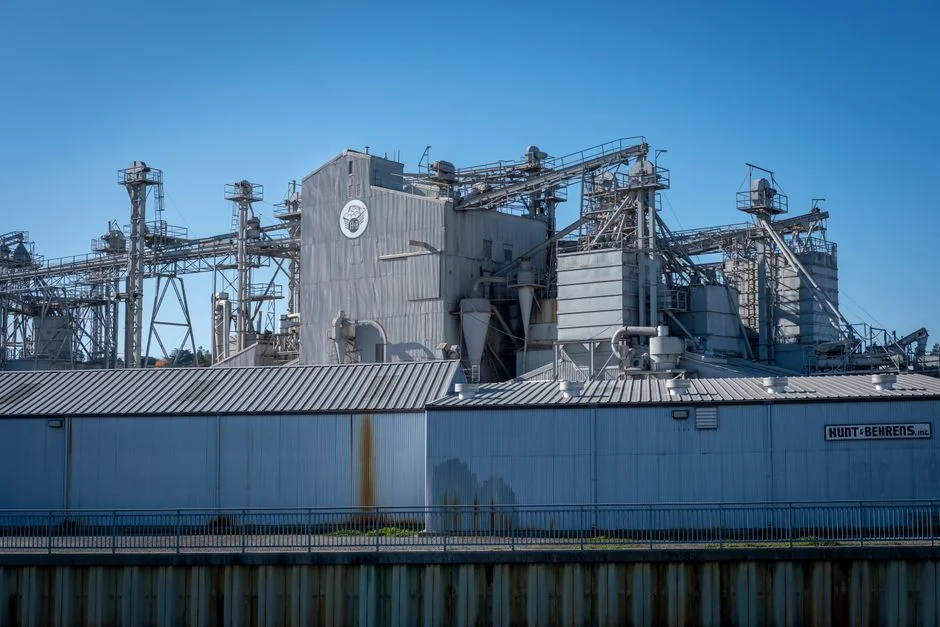
DAF uses pressurized recycle water to form bubbles that attach to oil droplets and floatable solids before a surface skimmer removes the accumulated material. The mechanism described in the HydropureWater South Gate source produces microbubbles typically 10–100 µm in size. The advantage is capture of dispersed oil and light solids that would otherwise remain suspended.
A gravity clarifier relies on the formation of a bottom sludge blanket as denser material settles. The same source notes limited capture of oil droplets below roughly 60 µm or particles with a specific gravity close to water. Its economic advantage is generally stronger where the stream contains heavy, readily settled solids and little emulsified oil.
| Criterion | DAF | Gravity clarifier | Lamella clarification |
|---|---|---|---|
| Primary separation mechanism | Microbubble attachment and flotation | Gravity settling to a sludge blanket | Short-path settling on inclined plates |
| Best-fit contaminants | Free and emulsified oil, FOG, light or fine solids | Heavy settleable solids | Residual TSS and pin floc |
| Supplied performance context | 95% oil-and-grease removal on one high-FOG stream | 70% oil-and-grease removal on the same stream; 90% TSS reduction on a heavy-sediment mining stream | Polishing role rather than a substitute for primary oil flotation |
| Principal operating additions | Air compressor, recycle pump and potentially polymer | Sludge removal, basin maintenance and hauling | Chemical conditioning may remain necessary upstream |
Those performance examples describe different applications. Ecologix's 2026 high-FOG comparison shows the advantage of flotation for oil capture, while its heavy-sediment mining example favors clarifier economics. Neither result guarantees an outlet concentration at a chemical plant without matching wastewater and pilot data.
DAF operating cost includes electrical demand for air compression and recycle pumping, plus chemical expense where conditioning is needed. A clarifier generally uses less chemical, but sludge handling can become a material operating burden. A lamella unit can polish residual solids after DAF, yet it cannot replace the flotation stage where emulsified oil is the contaminant.
The mechanism distinction also prevents an equipment substitution error. A high-efficiency lamella sedimentation tank may be appropriate downstream of DAF, but fitting it in front of an emulsified-oil load does not make it an equivalent primary flotation unit.
Compare footprint, installation and operating economics
A lower equipment price does not necessarily produce a lower installed cost. The HydropureWater South Gate source reports that packaged DAF systems in 2026 run roughly $80,000–$300,000 for 10–50 m³/h of hydraulic capacity, with price affected by stainless versus carbon-steel construction and whether coagulation and flocculation are integrated. Equivalent-capacity clarifier units are approximately 20–40% less expensive on the unit itself, although civil work narrows the difference.
The source also reports that DAF operating expense is approximately 20–35% higher than a clarifier at the same hydraulic load, attributing the difference to power and polymer use. Clarifiers generally consume less chemical, while sludge hauling and basin maintenance become more important.
| Cost or space item | DAF basis | Clarifier basis |
|---|---|---|
| Equipment | Approximately $80,000–$300,000 for 10–50 m³/h packaged capacity in the 2026 source | Approximately 20–40% lower unit cost in the same comparison |
| Illustrative footprint | Approximately 4 m × 8 m rectangular pad with integral conditioning for about 25 m³/h | Approximately 10–12 m diameter concrete tank for the cited alternative |
| Utilities and consumables | Air compression, recycle pumping and potentially polymer | Less chemical use; greater attention to sludge removal |
| Site works | Foundation, local piping, electrical service and access | Basin construction, sludge hopper, scraper and civil works |
Compare the project as an installed system: civil work, foundations, electrical service, polymer preparation, controls, sludge dewatering, disposal and maintenance access belong in separate line items. A plate-and-frame filter press, where sludge dewatering is required, should be priced as an operating consequence of the chosen separation process rather than omitted from the comparison.
These figures are contextual 2026 source values, not universal quotations. Request a site-specific proposal based on flow, batch variation, construction material, corrosion requirements, sludge yield and the complete mechanical scope. A comparison with the plate-and-frame filter-press option should distinguish base equipment from installation and disposal.
Choose the treatment train for your discharge or reuse objective
The appropriate treatment train depends on what the plant must remove and where the water must go. For mixed chemical process wastewater, physical separation can remove floating material and suspended solids, but soluble constituents may still need biological, membrane or reverse-osmosis treatment.
| Configuration | Recommended train | Application and qualification |
|---|---|---|
| A — Mixed chemical process wastewater | Equalization → chemical conditioning → DAF → lamella clarification | Add disinfection, membrane treatment or reverse osmosis when the discharge or reuse objective requires it |
| B — Heavy sediment with low emulsion | Clarifier as primary unit | Add DAF only if testing shows persistent sheen or floatable contaminants |
| C — Space-constrained retrofit | Shop-assembled rectangular DAF with integral conditioning, followed by polishing | Retain or repurpose an existing basin where hydraulically and structurally suitable |
The source offers a useful screening prompt: when free oil and emulsified oil are both above 100 mg/L and TSS is below 500 mg/L, specify DAF primary treatment with lamella polishing. When TSS exceeds 800 mg/L and emulsified oil is low, a clarifier can be economical as the primary unit. These thresholds are contextual prompts from the petroleum-focused South Gate source, not chemical-factory guarantees.
For a space-constrained retrofit, compare a rectangular shop-assembled industrial dissolved air flotation system with construction of a new concrete basin. Existing-basin reuse may reduce civil work, but hydraulic capacity, structural condition, sludge removal and future access still require engineering review.
For reuse, the source identifies DAF followed by MMBBR as a research direction for synthetic oily wastewater in the 2024 Elsevier/SSRN study. That supports further investigation, but it is not a universal chemical-plant specification. If the reuse target also restricts dissolved COD, salts or metals, the train must include an appropriate biological or membrane process.
The supplied 2026 lamella data gives a surface-loading range of 20–40 m/h and chemical reduction of up to 30% compared with a conventional basin. These are equipment-selection inputs, not guarantees for the plant’s mixed effluent.
Build a permit-ready procurement and pilot-testing plan
A defensible equipment order begins with a permit-to-pilot sequence: characterize the wastewater, test treatment performance, define the operating envelope, compare suppliers on a common scope, then make the purchase. Petroleum-category values cannot substitute for site-specific requirements.
- Characterize production and upset conditions. Collect representative samples during normal production, batch dumps, cleaning cycles and upset events. Test oil and grease, emulsified oil, TSS, COD, pH, toxicity and contaminants named in the permit.
- Establish peak flow and batch variation. Include average flow, peak flow, slug duration and expected future production changes in the equalization and hydraulic assessment.
- Run jar tests on actual wastewater. Compare coagulants, flocculants and emulsion-breaking polymers. Select the chemistry from measured performance, including residual oil, TSS and dose consumption.
- Review the applicable requirements. Examine the current industrial permit, sewer discharge permit and local pretreatment requirements for the chemical facility. Do not substitute the petroleum-refining-category values of 100 mg/L oil and grease and 30 mg/L TSS from 40 CFR Part 419 for chemical-plant limits; the HydropureWater source notes that subcategory limits vary and local requirements may be stricter.
- Issue a common vendor specification. Require hydraulic capacity, turndown, equalization assumptions, solids-capture method, sludge yield, electrical load, controls, materials, chemical compatibility and a site-wastewater test protocol. This structure can also support the documentation approach described in its chemical-plant pretreatment compliance guide.
- Plan monitoring, commissioning and construction. Include continuous or composite monitoring where required, start-up procedures and operator training. For an operating plant, compare a staged retrofit with full replacement so construction does not unnecessarily interrupt permitted operations.
Supplier proposals should also state which performance data are laboratory results, which are supplier claims and which were demonstrated on representative site wastewater. A PLC-controlled chemical dosing skid can improve dosing repeatability, but the selected chemical program must come from the jar-test results rather than a default recipe.
Frequently Asked Questions
How much does DAF cost compared with a clarifier?
The supplied 2026 source places packaged DAF equipment at roughly $80,000–$300,000 for 10–50 m³/h. An equivalent-capacity clarifier unit is approximately 20–40% less expensive before civil work. Request installed-cost proposals that separately identify basin construction, electrical service, polymer equipment, sludge dewatering and disposal.
What DAF capacity should a chemical factory specify?
The source identifies a DAF range of 4–300 m³/h across 13 HydropureWater models, but that range is not a sizing recommendation. Select capacity from peak flow, batch variation, equalization performance, turndown and jar-test results. Ask each supplier to document how its selected unit handles the plant’s shortest and highest loading conditions.
How should procurement compare DAF and clarifier suppliers?
Require guarantees tied to representative site wastewater, along with controls, chemical compatibility, sludge handling, service support and commissioning evidence. Give bidders the same flow, wastewater and test protocol so their claims are comparable. A performance claim based only on generic high-FOG or refinery wastewater should not determine award.
Can petroleum pretreatment limits be used for a South Gate chemical plant?
No automatic substitution is defensible. The cited 40 CFR Part 419 values apply to the petroleum-refining point-source category and vary by subcategory; the source also notes local requirements. Current site-specific permits and the applicable sewer or pretreatment requirements control the selection and compliance test.
Will DAF and lamella clarification make wastewater suitable for reuse?
Not by themselves in every case. DAF captures floatable contaminants, and lamella clarification polishes residual solids, but dissolved COD, salts and some metals may remain. A reuse target determines whether biological, membrane or reverse-osmosis treatment must follow; the 2024 DAF-plus-MMBBR study is a research direction, not a universal specification.