What is confirmed—and what still needs site evidence
Wastewater obligations for a Microsoft acquisition of an Indian plant depend on the target’s site-specific consent, discharge route, wastewater profile and post-closing operating plan—not automatically on the change in ownership. The buyer must verify the current Consent to Operate or Consent to Establish, municipal sewer or industrial-user requirements, compliance history and treatment capacity, then determine whether each authorization can continue, requires a change-of-control filing or modification, or must be replaced. HydropureWater reports that an India CPCB Consent-to-Operate transfer typically involves a 90–180 day pre-signing process and State Pollution Control Board site inspection. No universal India transfer rule can be stated without the named plant, legal transaction structure, consent holder, receiving sewer authority and operating plan.
Microsoft has signed a wastewater-based carbon-removal offtake with CREW Carbon covering up to 23,602 metric tons, according to ESG News. CREW’s mechanism is wastewater alkalinity enhancement: dosing minerals changes wastewater pH and alkalinity, allowing atmospheric biogenic CO₂ to react and be converted into stable dissolved bicarbonate ions. ESG Dive separately reported in 2026 that Microsoft accounted for 43% of first-quarter carbon-removal purchases.
Neither report establishes that Microsoft has acquired an industrial plant in India, and neither carbon-removal metric determines an Indian plant’s consent status. The acquisition remains an unverified premise unless the transaction document identifies the target, legal buyer, seller, site and operating plan.
Before selecting an approval path, obtain:
- The seller and buyer legal entities and whether the transaction is an asset or share acquisition.
- The exact plant location, current consent holder and State Pollution Control Board jurisdiction.
- The receiving sewer authority and each proposed discharge, reuse or zero-liquid-discharge route.
- Current and planned production, chemical use, process changes and whether operations will expand, contract, transfer or cease.
The acquisition wastewater comparison illustrates why corporate transaction facts and site-specific compliance evidence must remain separate.
Build one wastewater authorization register for the target
An environmental consent does not contain every obligation that follows an acquisition. Create one register row for each consent, sewer approval, pretreatment agreement, waste-disposal route and operating authorization. The row must identify the authorization type, issuing authority, holder, site, receiving sewer authority, conditions, current status, transfer mechanism, reporting party, sampling responsibility, reporting deadlines, financial assurance and evidence of approval.
| Pathway | Decision condition | Required evidence |
|---|---|---|
| Unchanged continuation | Same holder, site, permitted activity, discharge route and operating envelope; confirmation is required where the consent or authority requires it. | Current authorization, confirmation of reporting continuity, updated contacts and compliance calendar. |
| Change-of-control filing or transfer | The legal permit holder changes and the applicable rule or consent requires notice, transfer or another ownership filing. | Filed application and agency acknowledgment or approval. |
| Modification | Production, chemicals, wastewater characteristics, treatment, monitoring or discharge route changes within the regulated activity. | Issued modification stating the effective technical, monitoring and operating conditions. |
| New authorization | The activity, discharge route or receiving system is not covered by the existing consent. | Issued authorization and associated monitoring plan before the regulated activity begins. |
Keep municipal sewer approval separate because the receiving authority may impose separate prerequisites, local limits, monitoring duties and prohibited-discharge controls. Keep off-site waste, sludge and contaminated-residue disposal separate as well: sewer permission does not establish an approved destination or legal custody route for residues.
Assign each unresolved item to one named owner and one dated evidence requirement. A purchase order, management representation, seller forecast or acquisition plan is not proof of authorization. The register should eventually hold issued approvals, filed applications, written authority confirmations where needed, a verified compliance calendar and evidence supporting every disposal route.
Verify consent transfer, modification and renewal risk
The first question is not whether ownership changed; it is whether the site’s legal permit holder remains valid under the chosen transaction structure. Obtain the current Consent to Operate or Consent to Establish with every attachment, discharge-point map, effluent limit, monitoring frequency, reporting requirement, renewal status and special condition. Also obtain inspection findings, exceedances, corrective-action records, enforcement correspondence and pending amendments.
HydropureWater’s 2026 India acquisition guide reports a typical 90–180 day pre-signing process for an India CPCB Consent-to-Operate transfer, including a successful State Pollution Control Board site inspection. Treat this as planning guidance, not a guaranteed statutory timetable or a substitute for confirmation from the competent authority. The buyer’s counsel must determine whether the rule or consent requires notice, transfer, modification, renewal or fresh authorization.
Test the proposed post-closing operating plan against the consent’s permitted production capacity, restricted or prohibited substances, monitoring, recordkeeping, emergency controls, sludge or residual disposal and financial assurance. A share purchase that leaves the operating entity unchanged may require a different response from an asset purchase that places the plant under a new legal holder. Counsel should document that distinction rather than assume that all ownership structures produce the same filing.
Compare the current permit envelope with the buyer’s product mix, chemical substitutions and expansion or contraction plan. A consent may continue while the proposed operation still requires a technical modification. Where continued operation depends on an agency decision, make written authority confirmation a pre-closing condition.
The detailed India plant acquisition wastewater requirements provide the document sequence for this review.
Confirm sewer acceptance and industrial-user obligations
A valid environmental consent does not establish that a municipal sewer will accept the plant’s wastewater. First identify the actual route: municipal sewer, authorized outfall, reuse, a zero-liquid-discharge system or another arrangement. Then obtain the industrial-user or pretreatment authorization, local discharge limits, sewer-use requirements, sampling procedures, reporting duties, financial assurance and the process for modifying the authorization.
Review prohibited discharges, pretreatment monitoring, sampling responsibilities, reporting periods and slug-loading controls separately from the environmental consent. The receiving authority should also assess added wastes, changed production and changed discharge characteristics. A material change may require further sewer review even when the Consent to Operate remains valid and the legal permit holder has not changed.
For each affected stream, reconcile its characteristic and flow with the industrial-user classification, applicable local limits and the receiving system’s treatment capability. Obtain written confirmation of acceptance where the environmental consent does not resolve the issue. If the plant plans to discharge to a sewer after closing, the industrial-user arrangement and its evidence should be treated as separate closing items rather than bundled into the environmental approval.
The industrial-user pretreatment review offers a transferable method for structuring that authority inquiry. Foreign benchmark values must not be imported into India: the current consent, competent regulator and local sewer rules control the applicable conditions.
Characterize wastewater by source and operating condition

A defensible baseline comes from at least the previous 12 months of flow and self-monitoring records, discharge-monitoring reports, raw wastewater characterization, laboratory reports and chain-of-custody records, as specified by HydropureWater’s 2026 India acquisition guide. A plant-wide average is insufficient when different streams impose different treatment, reuse or disposal constraints.
| Baseline component | Required evidence | Transaction decision supported |
|---|---|---|
| Source and destination inventory | Generation point, destination, treatment unit, chemical use, flow and representative analytical result. | Defines stream segregation and the treatment train each stream enters. |
| Pollutant profile | Representative samples linked to sample date, laboratory method, production campaign and operating condition. | Identifies constituents that control treatment and permit compliance. |
| Flow and loading | Flow-meter data, batch dumps, peak flow, variability and pollutant mass loading. | Separates hydraulic demand from contaminant capacity. |
| Forward operating case | Post-closing product mix, production forecast, chemical substitutions and expansion or contraction. | Tests whether the existing permit and treatment train remain adequate. |
| Residual route | Waste characterization, approved destination, contracts, manifests and legal custody. | Confirms that sewer authority does not determine off-site waste acceptance. |
Sample relevant production campaigns and operating conditions, not merely a convenient quiet period. Reconcile laboratory results with meter records and operating logs so that unusual batch dumps or campaign peaks are visible. Segregate streams where they differ materially in chemistry, flow, treatment response or final destination.
Separate sewer-discharge streams from off-site waste streams and verify each disposal route through contracts, manifests and custody records. Then reconcile the historical baseline with the planned Microsoft operating case. A chemical substitution can change toxicity, biodegradability or residual generation even if production volume remains unchanged. The stream-by-stream wastewater characterization method explains why source identity and destination must remain traceable.
Audit installed treatment capacity before selecting new equipment
The installed plant should be judged against verified future duty, not the seller’s nameplate or historical throughput. Review equipment condition, hydraulic capacity, contaminant capacity, redundancy, controls integration, utility requirements, operator capability, maintenance history and compatibility with the post-closing wastewater profile. Check tie-ins, retained equipment and commissioning requirements against the operating plan.
| Equipment option | Source-scoped boundary | Evidence required before selection |
|---|---|---|
| Industrial DAF pretreatment system | The supplied DAF catalog lists 4–300 m³/h across 13 models; this is not an approved site design. | Verified flow, batch variation, settleability, emulsions, oil content, solids loading, pilot evidence and guaranteed site performance. |
| MBR wastewater treatment and reuse system | The supplied MBR range is 10–2,000 m³/day, with submerged PVDF membranes and filtration below 1 μm. | Biodegradability, toxicity, nutrients, solids, effluent specification, reuse need, footprint, utilities, pilot evidence and controls integration. |
| Industrial reverse osmosis | The supplied industrial RO product states recovery rates up to 95%; that product claim is not proof of site performance. | Feed chemistry, permeate specification, recovery target, pretreatment, guarantees, residual handling and integration with upstream treatment and final discharge. |
Use DAF only where verified wastewater data supports removal of suspended solids, FOG, oil and grease or colloidal matter. Evaluate MBR only after biodegradability, toxicity, nutrients, solids and the required effluent or reuse specification are known. For reuse, integrate treatment, water recovery and final disposal in one mass-and-energy balance.
Reconcile verified contaminant loading, peak and batch flow, permit conditions, future production and installed capacity. Give each gap a trigger, owner, decision date and treatment in the purchase agreement or capital plan. Equipment selection should follow the verified-duty treatment review, while supplier proposals must address site performance, permit compatibility, residual routes, controls, utilities, footprint, operator requirements, commissioning and lifecycle costs.
Convert unresolved wastewater issues into transaction protections
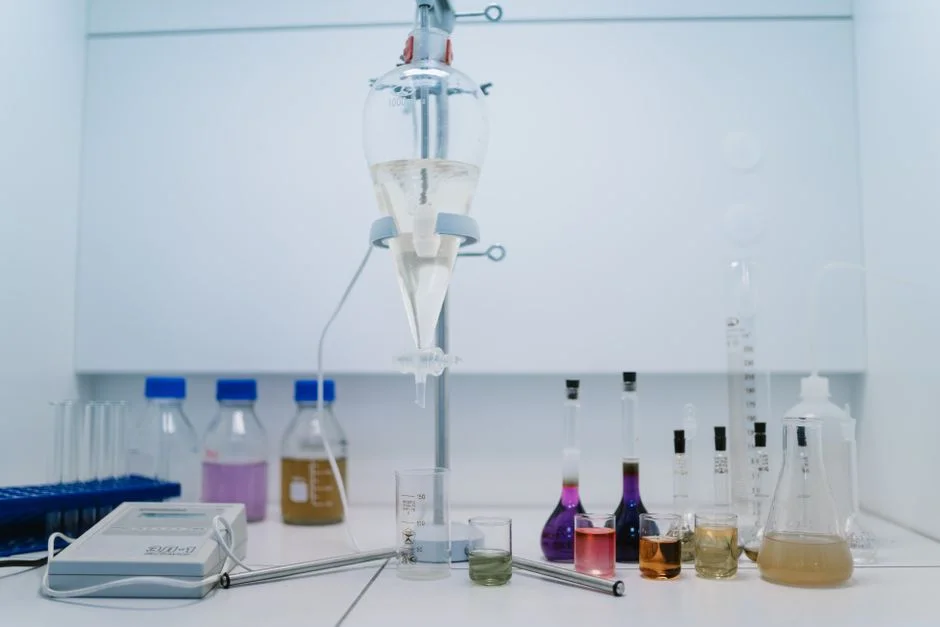
Wastewater diligence becomes transaction risk when every unresolved issue receives an owner, decision point and financial consequence. Escalate disputed sampling results, exceedances, corrective actions, pending amendments and treatment constraints immediately because they can affect legal exposure, operating continuity, capital expenditure and valuation.
Allocate each gap according to its enforceability and timing:
- Make a necessary consent, transfer, modification, sewer approval or written authority confirmation a pre-closing condition where operations cannot continue without it.
- Use a post-closing covenant for bounded actions that can occur after closing without interrupting lawful operation.
- Use an indemnity for retained liabilities, known exceedances, remediation or third-party claims.
- Use a holdback or priced capital risk for an identified treatment upgrade whose necessity is supported by verified evidence.
The benchmark’s optional 90-day diligence cadence can schedule document requests, sampling, authority meetings and engineering studies, but it is not a statutory deadline. Counsel should separate the responsibilities of legal, environmental, operations, procurement, EHS and the plant manager. Each authorization should have one accountable owner and one dated evidence requirement.
The required closing outputs are filed or issued approvals, written authority confirmation where required, a verified compliance calendar and a disposition of every material technical gap. The transaction protection framework helps structure that allocation without importing another jurisdiction’s legal standard.
Frequently Asked Questions
Does a wastewater consent automatically transfer when Microsoft acquires an Indian plant?
No automatic transfer should be assumed. Counsel must test the legal permit holder, site identity, transaction structure, permitted activity and proposed operating change against the current site-specific consent. The resulting path may be unchanged continuation, change-of-control filing or transfer, modification or new authorization; the competent authority must confirm the conclusion.
How much time should the transaction team allow for consent work?
Use HydropureWater’s reported 90–180 day pre-signing process for an India CPCB Consent-to-Operate transfer, including a State Pollution Control Board site inspection, as planning guidance rather than a guaranteed statutory period. The benchmark’s separate 90-day diligence cadence is optional and not statutory. Build the closing timetable around the actual filing path, authority confirmation and any sewer review.
How should treatment equipment be sized for the acquired plant?
Reconcile verified contaminant loading, peak and batch flow, permit conditions, future production and installed capacity before selecting equipment. The source-scoped boundaries are 4–300 m³/h for the listed DAF models, 10–2,000 m³/day for the listed MBR and recovery up to 95% for the stated industrial RO product. These are equipment-selection boundaries, not an approved design or a site-performance guarantee.
What should a buyer check before selecting a wastewater supplier?
Request site-specific performance guarantees, permit compatibility, residual-waste routes, controls scope, utility demand, footprint, operator requirements, commissioning evidence and lifecycle-cost disclosure. Obtain pilot or treatability evidence where the duty is variable or outside demonstrated operating history. For pricing and budget approval, require the supplier to price the verified duty, installation scope, utilities, residuals, commissioning and compliance deliverables rather than provide an unqualified equipment quotation.