Start With the Vancouver POTW Permit
Mining and metals plants near Vancouver meet sewer pretreatment limits by treating wastewater as a controlled sequence: characterize each discharge; equalize variable flows; adjust pH; precipitate dissolved metals; remove solids, oil and residual flotation reagents; filter or polish the effluent; and demonstrate compliance against the applicable permit. The controlling sewer requirement is the local POTW’s industrial-user permit and local limits, not a generic equipment specification. EPA guidance confirms that indirect dischargers are governed by POTW industrial-user permits or equivalent control mechanisms. A defensible design therefore begins with the permit, validates the worst-case composite wastewater, and uses DAF or a lamella clarifier as one part of the solids-removal barrier—not as the entire metals-compliance system.
For a Vancouver-area US operation, “the permit” may include several instruments. Obtain the POTW pretreatment ordinance, the industrial discharge permit, applicable local limits, monitoring conditions, prohibited discharges, sampling point and slug-control requirements. Confirm whether the site is a significant industrial user, and whether federal categorical pretreatment standards, state requirements or a separate stormwater permit also apply. The US mining wastewater sewer pretreatment compliance guide identifies 40 CFR Part 430 for ore mining and dressing and 40 CFR Part 433 for metal finishing, but those categories do not replace the site permit.
EPA’s Local Limits Development Guidance states that indirect dischargers are controlled by permits or equivalent mechanisms issued to POTW industrial users. It also states that the guidance is not a regulation and that its general descriptions may not apply to a particular situation. In a conflict, the permit or regulation controls.
| Permit source | What it controls | Engineering action |
|---|---|---|
| Local POTW ordinance and industrial discharge permit | Local limits, monitoring, prohibited discharges, reporting, sampling point and slug controls | Build the compliance matrix and treatment objectives from these conditions |
| 40 CFR Part 430 or Part 433, where applicable | Federal categorical pretreatment standards for the covered process | Determine applicability; do not assume federal limits replace local limits |
| State requirements | State implementation and related discharge or residual controls | Confirm applicable state conditions with the regulatory authority |
| EPA Local Limits Development Guidance | Non-binding framework for developing local limits | Use as technical context only; defer to the permit and regulation |
Characterize Every Wastewater Stream
The permit defines the acceptance criteria; representative wastewater defines the equipment duty. Separate pit dewatering, concentrator slurry water, contact stormwater, acid mine drainage and metals-finishing rinsate before assigning a design flow or treatment performance. Their pH, solids, dissolved metals, cyanide, fluoride, oil and grease and organic loads are different, and dilution in a common channel does not erase those distinctions.
The supplied 2026 mining pretreatment guide identifies Hg, Cr, Ni, Cd, Cu, Pb, Zn, free cyanide, WAD cyanide, fluoride, TSS, COD and oil and grease as constituents to screen. Test across ore grade, mill throughput, campaign conditions, storms and seasonal changes. Use a 24-hour composite sampler and online pH and conductivity at the headworks as the minimum design basis described by that guide, then size treatment equipment against the worst-case composite rather than an average discharge.
A composite is only useful if its construction matches the POTW’s method. Ask the Control Authority for the sampling frequency, composite definition, flow-proportional method, analytical methods and compliance averaging period. Also determine whether slug loads require separate control. The mining pretreatment permit and sampling checklist provides a practical starting point for that request.
| Stream | Characteristic risk | Data needed for sizing |
|---|---|---|
| Pit dewatering | Acidity, dissolved metals and groundwater-derived flow variation | Flow duration, pH, metals, TSS and conductivity under seasonal conditions |
| Concentrator slurry water | High suspended solids, residual flotation reagents and varying ore-feed conditions | Composite TSS, oil and grease, COD, metals, reagent indicators and flow |
| Contact stormwater | Storm-driven solids and metal loads | Event flows and constituent concentrations across wet-weather operations |
| Acid mine drainage | Low pH and dissolved-metal load | Acidity, pH, metals, sulfate, TDS and flow variability |
| Metal-finishing rinsate | Metals, cyanide and process chemicals | Stream-specific concentrations, batch pattern, slug characteristics and discharge frequency |
Build a Treatment Train Around Each Pollutant
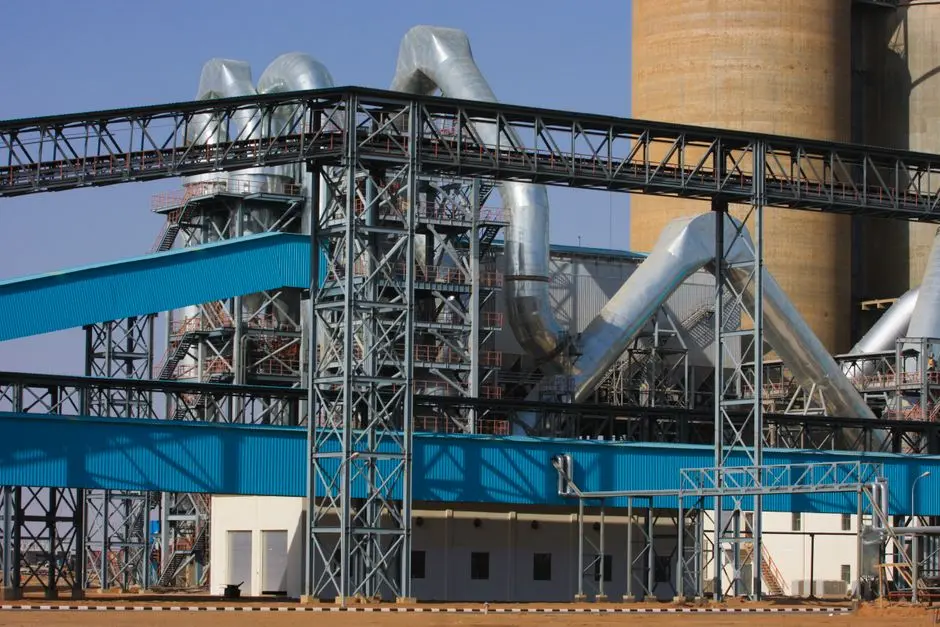
Each permit constituent needs a treatment barrier, a verification method and a decision gate before sewer connection. The 2026 mining guide presents a seven-stage sequence: equalization; pH adjustment and hydroxide precipitation; sulfide precipitation; DAF or clarification; multi-media filtration; biological treatment; and disinfection. Not every site needs every stage, but every regulated constituent needs a defined barrier.
Equalization controls hydraulic and pollutant-load variation, yet it does not remove dissolved metals or colloidal solids. Hydroxide precipitation is the primary metals-removal barrier in the supplied guide, where Cu, Pb and Zn are reported below 1–2 mg/L each under the cited application. That result is chemistry-dependent, not a discharge guarantee. Reserve sulfide precipitation for cases where hydroxide alone cannot reliably meet the controlling limit; the same guide reports Pb below 0.1 mg/L and Hg below 0.01 mg/L in its cited sulfide application.
DAF addresses suspended solids, oil, grease and floatable or colloidal material. The H2Flow commercial source cited by the 2026 Vancouver DAF-versus-clarifier guide reports 90–95% removal of TSS, FOG and particulate BOD under optimized conditions. A DAF system for mining wastewater solids removal can therefore strengthen the solids barrier, but it cannot remove dissolved metals unless they have first been converted to particles.
Lamella clarification is the alternative solids barrier when particles have been coagulated and flocculated into settleable floc. Filtration should follow either flotation or clarification to remove residual suspended material and protect downstream polishing. Add biological treatment and disinfection only when the permit, pollutant profile or reuse objective requires them. The supplied guide reports more than 95% COD removal and MBR effluent below 1 μm filtration in its cited application, but biological treatment is not a substitute for dissolved-metals removal.
| Pollutant or risk | Primary barrier | Verification | Decision gate |
|---|---|---|---|
| Hydraulic and load variability | Equalization | Online flow, pH and conductivity; composite load | Confirm tank duty against measured peak and campaign conditions |
| Dissolved Cu, Pb, Zn and other metals | pH adjustment and hydroxide precipitation | Composite metals analysis and pH record | Proceed only if site chemistry meets the permit with margin |
| Residual Pb, Hg or Cd requiring tighter removal | Sulfide precipitation | Metals analysis, sulfide residual and pH/ORP record | Use only after hydroxide performance is demonstrated inadequate |
| TSS, oil, grease and floatable reagents | DAF or clarification | TSS and oil and grease analysis; float or underflow observation | Select equipment from pilot results and sludge handling |
| Residual suspended solids | Multi-media filtration or required polishing | TSS analysis and differential-pressure or filter-operation trend | Confirm polishing protects downstream equipment |
| COD and microbiological requirements | Biological treatment and disinfection, if required | COD and permit-specified microbiological monitoring | Include only where required by permit or process objective |
Choose DAF or Lamella for the Solids Barrier
DAF is the stronger candidate when floatable material, oils, residual flotation reagents or a constrained footprint control the decision. The 2026 Vancouver DAF-versus-clarifier guide recommends a 1–3 month mobile or rental DAF pilot to validate TSS removal, polymer dose and sludge dry solids before a long-term equipment commitment. That pilot also exposes whether precipitation chemistry produces floatable metal hydroxide particles or merely dispersed solids.
Lamella is more defensible when flow is steady and coagulation and flocculation consistently produce dense, settleable floc. HydropureWater product data, 2026, reports 20–40 m/h surface loading and up to 30% lower chemical consumption than the comparison cited in the supplied article. A compact lamella clarifier for metals wastewater reduces footprint, but its performance still depends on upstream chemistry and floc quality.
Sludge characteristics can reverse an equipment-price decision. The H2Flow commercial source cited in the 2026 guide reports DAF skimmings at 4–12% dry solids, compared with 1–3% for clarifier underflow. Evaluate thickening, conditioning, dewatering, storage, transport and disposal acceptance with the equipment. Chemical consumption and residual volume are both recurring costs that belong in the lifecycle comparison.
| Selection factor | DAF | Lamella clarification |
|---|---|---|
| Best fit | Floatable oils, reagents and solids; constrained footprint | Steady flow with reliably conditioned, settleable floc |
| Performance basis | 90–95% removal of TSS, FOG and particulate BOD under optimized conditions, H2Flow commercial source cited in 2026 | 20–40 m/h surface loading, HydropureWater product data, 2026 |
| Chemical use | Requires coagulant and polymer dosing | Up to 30% lower chemical consumption than the comparison cited in the 2026 article |
| Residual concentration | 4–12% dry solids, H2Flow commercial source cited in 2026 | 1–3% dry solids, H2Flow commercial source cited in 2026 |
| Key risk | Dissolved metals remain dissolved without precipitation | Poor floc settleability can defeat nominal surface loading |
| Required evidence | 1–3 month mobile or rental pilot recommended by the 2026 commercial guide | Site chemistry and settleability testing before final sizing |
Both options require upstream pH control, coagulant and polymer dosing, sludge recirculation and automatic controls. Evaluate them as parts of a treatment system, not stand-alone tanks.
Control Chemistry and Protect Downstream Equipment
Compliance depends on stable chemistry between laboratory sampling intervals. Use online pH instrumentation and PLC-controlled chemical feed rather than relying entirely on manual batch adjustment. Pair flow-paced dosing with interlocks that stop or redirect chemical feed during pump failure, high flow and abnormal pH.
The supplied 2026 mining guide reports copper precipitation beginning near pH 6.5 and full removal by pH 8.5 in its cited application. It also identifies approximately pH 10.5 as the point above which amphoteric metals in that application may redissolve. These values are application-specific, not Vancouver limits. Confirm the operating window through site-specific jar and pilot testing, particularly where Cr(III), Al or other amphoteric metals are present.
Use the guide’s flow basis—24-hour composite sampling plus online pH and conductivity—to verify stable operation. Laboratory results establish compliance; online instruments expose the excursions that could produce a failed composite. Keep filtration and other fouling-sensitive polishing downstream of DAF or clarification. The supplied guide warns that ion exchange fouls quickly when exposed to oil, grease and hardness.
Automatic chemical dosing should be evaluated around control logic, feed range, storage, containment, calibration and fail-safe response. The multi-media filtration step should be assessed for media selection, backwash recovery and residual solids capture. All pH, dose and removal values remain subject to site testing and the current permit; vendor performance bands are not discharge guarantees.
Manage the Metals-Bearing Residual
Sewer permission does not establish that the treatment residual is acceptable for disposal. Characterize hydroxide or sulfide precipitates for the applicable waste-disposal pathway, including any required leaching test. Do not assume that a permit allowing wastewater discharge also approves the resulting metals-bearing sludge for landfill placement.
The supplied 2026 mining guide identifies a plate-and-frame filter press after sludge thickening and polymer conditioning as the standard dewatering approach for this residual stream. It reports cake at 30–45% dry solids in the cited application. A plate-and-frame filter press should therefore be evaluated together with feed pumps, plate capacity, cake discharge, wash-down, polymer preparation and containment.
Return filter-press filtrate to the treatment headworks for re-treatment. It may contain residual metals, coagulants and polymers, so discharging it directly would move the compliance problem rather than solve it. Include sludge concentration, storage, transport, disposal acceptance and dewatering in both capital and operating comparisons.
Sludge chemistry is also linked to dewatering performance. The supplied guide identifies PLC-controlled polymer dosing tied to feed solids as a key operating variable. Confirm cake dry solids, filtrate quality and chemical demand during pilot testing, and obtain written acceptance criteria from the proposed disposal facility before making the capital decision.
Prove Compliance Before and After Startup
A permit becomes manageable only when every condition has an owner, instrument, sample method and response action. Create a permit-to-measurement matrix before procurement, then update it through commissioning. Assign each limit to the responsible unit operation, online instrument, laboratory sample and operator.
Trend flow, pH, conductivity, TSS and metals indicators against production, rainfall and reagent-dosing events. Use deviations to trigger defined actions: inspect reagent inventory, verify probes, adjust dose within validated operating limits, increase sampling or isolate nonconforming flow. EPA’s Local Limits Development Guidance describes review of actual loadings, pass-through or interference risk, and collection-system conditions; it also notes that sampling frequencies and local limits should be reconsidered as program data develop.
Commission the system across representative operating conditions rather than a single acceptance run. For each reported result, retain the sampling-point identification, composite method, analytical method, flow record and calculation. Confirm that samples represent the period and averaging basis required by the industrial discharge permit.
Reconfirm the current POTW ordinance, permit, sampling instructions and residual-disposal requirements before ordering equipment. Permits and local limits can change, and a supplier’s treatment guarantee cannot amend the Control Authority’s requirements.
| Verification item | Before startup | During operation |
|---|---|---|
| Permit compliance matrix | Limit, averaging period, sample type, analytical method and owner assigned | Current records reconciled to each reported result |
| Composite sampling | Sampler calibrated and sample point representative | Completeness checked against flow and production records |
| Online pH and conductivity | Probes calibrated and control interlocks tested | Excursions reviewed against dosing and production events |
| Treatment performance | Representative commissioning conditions completed | TSS, metals and other permit analytes tested at required frequency |
| Residual handling | Sludge characterization and disposal acceptance confirmed | Cake dry solids, filtrate return and chain of custody recorded |
| Change management | Current permit and local limits reconfirmed | Monitoring frequency and control actions revised after operating review |
Frequently Asked Questions
Why should a mining plant not buy DAF or lamella equipment before obtaining the POTW permit and representative wastewater data?
Equipment selection depends on pollutants, flow, chemistry and the residual-handling objective. Without the permit, the buyer cannot define the required removal or sampling basis; without representative wastewater, the buyer cannot establish floc behavior, chemical demand or peak treatment duty. A supplier’s generic performance band does not establish compliance at the site.
How should a buyer compare supplier proposals for a mining DAF or lamella system?
Require each proposal to state the treatment guarantee and the conditions attached to it, design and peak duty, chemical consumption, expected residual dry solids, control philosophy, chemical-storage scope, service coverage and validation plan. Ask how the supplier will demonstrate the claimed result with the site’s wastewater. Compare the same duty and performance boundary rather than comparing equipment prices alone.
What is the cost and budget check before committing to a treatment train?
Request a lifecycle cost broken into equipment, installation, chemical supply, power, sludge dewatering, transport, disposal acceptance, monitoring and contingency. The supplied research does not provide a defensible site-specific quotation, so a buyer should obtain written inputs for wastewater flow, constituent loading, reagent consumption, cake volume, disposal terms and POTW fees. Require the supplier to state exclusions and the basis for every estimate.
When is ultrafiltration appropriate, and can it replace metals precipitation?
UF is appropriate as a downstream barrier when the permit or process objective requires very low residual suspended solids and the feed has been conditioned to limit membrane fouling. It cannot remove dissolved metals that remain in solution; precipitation or another dissolved-metals treatment must occur first. Evaluate UF against the required outlet quality, pretreatment, backwash, energy and residual handling rather than as a stand-alone sewer-compliance unit.