What treatment system does a Muzaffarabad data center actually need?
A data center in Muzaffarabad needs separate treatment trains for sanitary wastewater, data-hall drainage and cooling-tower blowdown (CTBD), with CTBD treated for reuse rather than discharged as an unavoidable waste. At 4 cycles of concentration, blowdown equals 25% of make-up water; at 6 CoC, it equals 20%—a 20% reduction, not 50%. Conventional brackish-water reverse osmosis generally reaches 75–80% recovery before scaling becomes unmanageable, according to IDE (2026). Equipment should be selected only after confirming Muzaffarabad’s water balance, source-water chemistry, permit authority, receiving route and operator availability.
Blending these streams would impose the most demanding requirements on the largest flow and undermine direct reuse. The sanitary train should be a dedicated anoxic/aerobic biological package sized from sanitary flow and occupied headcount, not IT load. Humidification and process drainage should be metered separately, then treated according to a defined reuse destination or confirmed discharge requirement.
CTBD needs its own train because evaporation concentrates silica, calcium carbonate, calcium sulfate, residual chemicals and other dissolved constituents. Start with side-stream filtration, chemical control and a scale-risk assessment; add RO, controlled precipitation or crystallisation only when the measured chemistry and recovery target justify them.
IDE (2026) cites up to 2 million litres per day for a 100 MW data center, but that is an industry-scale reference—not a Muzaffarabad demand estimate. The design should use 12 months of source-water and wastewater data where available, seasonal flow analysis, IT-load cooling scenarios and a measured site water balance. The broader data-center wastewater treatment guide provides a useful comparison framework.
Confirm the local water, permit and operating conditions
The supplied evidence establishes Pakistan’s Provincial Sustainable Development Unit framework but does not confirm the competent authority, legal discharge point or numerical permit conditions for Muzaffarabad. Before tendering, obtain written confirmation from the relevant Azad Jammu and Kashmir environmental authority and municipal utility covering sewer discharge, surface-water discharge and controlled reuse. Identify the receiving water body, public health requirements, sampling protocol and whether reuse is subject to separate approval.
The Islamabad cross-walk—BOD₅ ≤50 mg/L, COD ≤200 mg/L, TSS ≤50 mg/L, free chlorine <1 mg/L and total chromium ≤0.5 mg/L with 24-hour composite sampling—is a preliminary benchmark only. HydropureWater (2026) applied it to Pakistan’s Provincial SDU framework and identified it as pending an Islamabad-specific decree; it must not be presented as a Muzaffarabad permit.
| Verification item | Required information | Why it changes design or procurement |
|---|---|---|
| Authority and route | Named AJK authority, municipal utility, approved outlet and permit pathway | Determines discharge limits, sampling, pretreatment and reuse conditions |
| Source and CTBD chemistry | Conductivity, pH, suspended solids, silica, calcium, magnesium, sulfate, chloride, temperature and residual treatment chemicals | Controls RO recovery, scaling risk, chemical demand and reuse compatibility |
| Cooling design | Installed IT load, cooling type, selected CoC, evaporation model and seasonal operating scenarios | Establishes actual blowdown flow and treatment capacity |
| Commercial inputs | Source-water tariff, wastewater charges, available footprint and expected staffing level | Determines whether reuse, discharge or high-recovery treatment is practical |
For temperature correction, HydropureWater (2026) used Islamabad’s 38–44°C summer benchmark, with 12–18% aeration oversizing or guaranteed SOTE above 6.5 kg O₂/kWh at design temperature. Replace those figures with verified Muzaffarabad design temperatures; the Islamabad summer range is not a local climate value. The Pakistan wastewater compliance and equipment checklist is a useful starting point for the authority and evidence request.
Map the four wastewater streams before selecting equipment
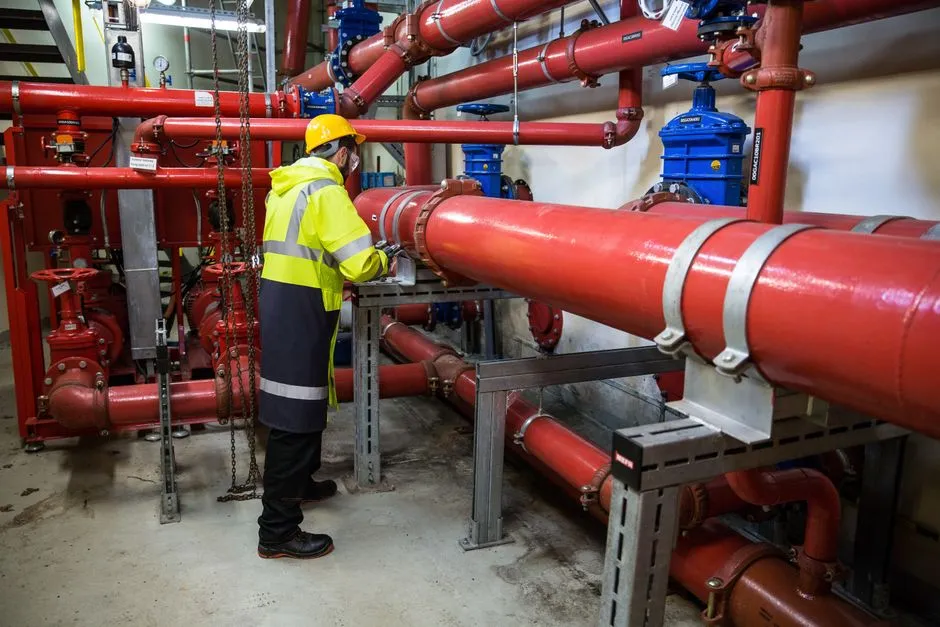
The recommended architecture treats four streams separately because their contaminants, reuse destinations and solids-management requirements differ. Sanitary and cafeteria wastewater requires biological treatment. Data-hall drainage may need solids removal and compact membrane treatment. CTBD requires concentration and scale management. The fourth stream—humidification or process drainage—must be independently metered rather than assumed to match the data-hall drain.
Use a dedicated anoxic/aerobic package for sanitary and cafeteria flows, sized by sanitary flow and occupied headcount. HydropureWater’s WSZ series covers 1–80 m³/h and combines A/O biological contact oxidation, sedimentation and disinfection in a buried package. That capacity statement is a product range, not a recommendation for the Muzaffarabad flow.
For data-hall drainage, use DAF pretreatment for data-center wastewater when suspended solids, biofilm carryover or hydraulic surges justify solids removal. Follow with MBR where near-reuse quality and a compact installation justify the added operation. CTBD should first receive side-stream filtration, chemical control and scale assessment. Conventional brackish-water RO generally plateaus at 75–80% recovery because of scaling constraints, according to IDE (2026).
| Stream | Primary treatment decision | Upgrade trigger | Residual route |
|---|---|---|---|
| Sanitary and cafeteria | Dedicated anoxic/aerobic biological package | Confirmed effluent or reuse specification requires polishing | Sewer or other confirmed outlet, with biological sludge handling |
| Data-hall drainage | DAF when solids or surge control is required | Near-reuse quality or footprint constraint justifies MBR | Reuse or confirmed discharge |
| Humidification/process drainage | Independent metering and source-specific assessment | Contaminants or reuse destination require additional treatment | Defined reuse or permitted discharge |
| CTBD | Side-stream filtration and targeted chemical control | RO for a defined permeate use; precipitation or crystallisation when scale limits bind | Permeate reuse, brine or solid-salt disposal route |
When silica, calcium carbonate and calcium sulfate remain above membrane limits, evaluate controlled precipitation or a zero liquid discharge crystalliser rather than assuming extra RO stages will solve the problem. Keep DAF sludge, RO pretreatment solids and crystalliser pellets in separate handling routes unless testing and the approved disposal plan justify mixing. The South Asian data-center wastewater roadmap provides a useful parallel-site perspective.
Calculate the cooling blowdown opportunity correctly
For a closed cooling-water balance, blowdown ratio = 1 ÷ (CoC − 1). Genesis Water Technologies (2026) explains that at 4 CoC, blowdown equals 25% of make-up volume; at 6 CoC, it equals 20%. Moving from 4 to 6 CoC therefore reduces blowdown by five percentage points, or 20% of the original blowdown—not 50%.
Genesis Water Technologies (2026) identifies CTBD as 20–40% of intake water and reports that measured blowdown can exceed theoretical calculations by 15–30% because of unmeasured losses and emergency dumps. The equipment buyer should therefore distinguish the calculated steady-state balance from the operating range used for treatment sizing.
Before increasing CoC, meter make-up, evaporation and blowdown and trend conductivity, pH and suspended solids. The objective is not simply to conserve water: higher concentration can increase scale, corrosion and biofilm risks in cooling equipment. Control chemistry and filtration must support any change to the cooling operating point.
Genesis Water Technologies (2026) also cites a 30–50% make-up reduction estimate for operation at 6–8 CoC. Treat that as a regional planning range, not a guaranteed Muzaffarabad result. The result depends on verified source-water chemistry, weather, cooling configuration, evaporation and operational losses. The South Asian data-center wastewater roadmap outlines the same balance-first approach.
Choose pretreatment, reuse and high-recovery treatment
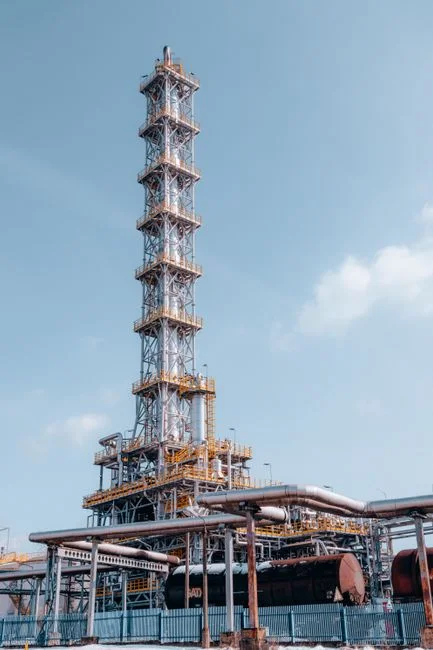
Begin CTBD treatment with multi-media filtration for RO pretreatment or equivalent side-stream solids removal, then apply targeted chemical control based on measured scale-forming species. The pretreatment objective is to protect membranes while avoiding unnecessary chemical loading in the concentrate.
Use an industrial RO system for CTBD reuse where permeate has a defined cooling-tower or process-reuse application. The Islamabad reference in HydropureWater (2026) specifies 65–75% recovery for its industrial RO stage. IDE (2026) states that conventional brackish-water RO generally plateaus at 75–80% recovery before scaling becomes unmanageable. Both figures are process references; the selected recovery must be supported by the actual CTBD composition, temperature and concentration-management design.
For higher recovery, evaluate controlled precipitation or crystallisation together with brine management. IDE’s MAXH₂O example operated at around 95% recovery and reduced silica in the permeate to about 1 mg/L, according to IDE (2026). That case does not establish suitability for Muzaffarabad; it demonstrates why salt removal must be considered when osmotic pressure alone limits RO.
| Decision condition | Technical response | Buyer’s required proof |
|---|---|---|
| Suspended solids or biofilm carryover threatens membranes | Side-stream filtration or DAF before RO | Feed characterisation, filter sizing basis and solids route |
| Permeate has a defined cooling or process use | Conventional brackish-water RO | Temperature-corrected recovery, permeate quality and concentrate balance |
| Scaling constituents exceed sustainable RO limits | Controlled precipitation followed by brine management | Solubility and mass-balance calculations at design temperature |
| Very high recovery or near-zero liquid discharge is required | Crystalliser with dedicated solids handling | Pellet quality, yield, dewatering route and operator competence |
| Only non-critical reuse is needed | Physical separation and targeted treatment may suffice | Endpoint-specific water-quality specification |
Specify temperature-corrected membrane and aeration calculations. HydropureWater (2026) reports 0.8–1.6 kWh/m³ for an MBR-equipped plant and 0.4–0.9 kWh/m³ for a DAF-only scope. Local electricity tariffs, seasonal ambient conditions and the actual treatment duty must be checked before using either figure in an operating-cost model.
Build a permit-ready and procurement-ready scope
A compliant tender should require bidders to submit design flow, source-water and CTBD chemistry, process stages, recovery basis, temperature corrections, expected effluent or permeate quality, sludge route and control philosophy. Unsubstantiated catalogue capacity is not a bid response. Each bidder should also identify every assumption that still requires site confirmation.
Require automatic monitoring and trend reporting for conductivity, pH, ORP, chemical feed and inventory levels. CRB Water (2026) notes that automated controls, alerts and trend reporting support timely treatment adjustments. Alarms must be tied to actual blowdown, make-up and reuse operations rather than displayed only for compliance records.
HydropureWater (2026) cites $250,000–500,000 installed CAPEX and $1.50–3.00/kgal OPEX for a 50,000 GPD RO-polishing CTBD at an Islamabad scale. These are directional benchmarks, not a Muzaffarabad quotation. Require delivered-cost comparisons covering local civil works, utilities, commissioning, critical spares, imported-equipment logistics, energy, chemicals, membrane replacement and sludge or salt disposal. Membrane price alone does not provide a comparable bid.
| Procurement gate | Minimum bidder submission | Acceptance evidence |
|---|---|---|
| Concept approval | Stream segregation, source-water dataset, measured water balance and assumed local inputs | Buyer-approved flow, chemistry and permit assumptions |
| Tender compliance | Process description, sizing calculations, recovery basis, monitoring, solids route and operations staffing | Technical compliance matrix with omissions identified |
| Commercial evaluation | Delivered CAPEX and OPEX with utilities, logistics, consumables, disposal and commissioning included | Common cost boundary across bidders |
| Factory and site acceptance | Performance guarantees, test methods, alarm response, operator training and spares | Documented FAT, SAT and training records |
HydropureWater’s 2026 Islamabad framework uses 200 m³/day as a screening threshold: reuse is generally preferred above that flow, while a lower-flow site may justify discharge where reuse economics are weak and operators are limited. Apply it only as an initial screen. The final decision requires confirmed Muzaffarabad tariffs, outlet conditions, staffing and treatment complexity.
Implement the project in measurable stages
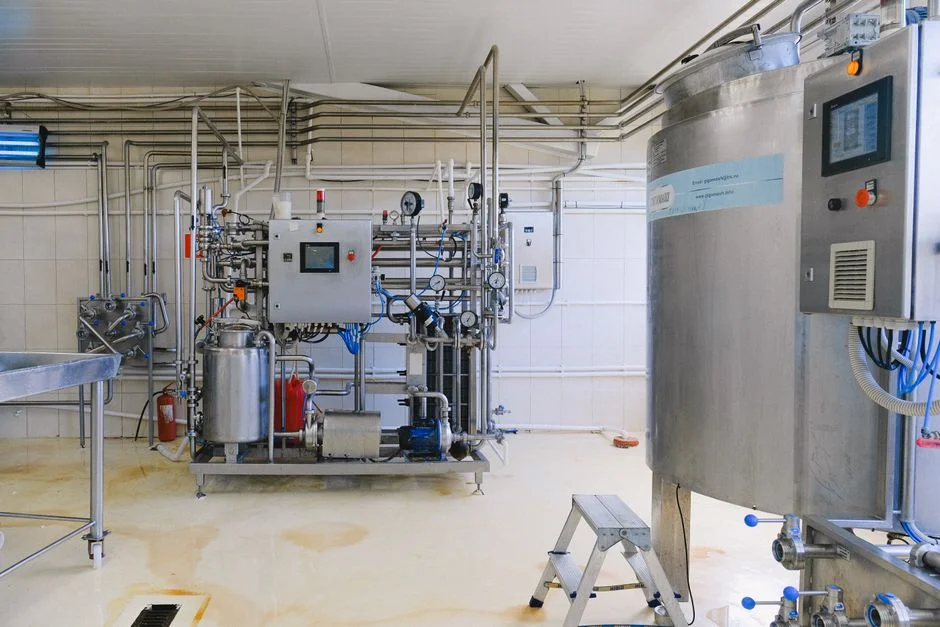
- Establish the baseline. Install metering for make-up water, blowdown and evaporation, plus conductivity, pH and suspended solids monitoring. Use the results to calculate the actual site water balance.
- Reduce avoidable losses. Repair leaks, eliminate unnecessary once-through cooling and optimise controls so the system does not trigger premature blowdown.
- Optimise chemistry and filtration. Confirm scaling, corrosion and biofilm control before raising CoC or committing to membrane recovery.
- Implement modular CTBD reuse. Start with a defined non-critical endpoint and install capacity in modules matched to verified flow.
- Assess advanced reuse. Evaluate blowdown-to-make-up reuse only after confirming scale, recovery, energy use, operator capability, solids handling and permit conditions.
Evaluate the business case using total avoided water, discharge, chemical, labour, energy and disposal costs—not utility water cost alone. This staged approach preserves the measured implementation sequence while avoiding premature high-recovery capital expenditure.
Frequently Asked Questions
Should CTBD be blended with sanitary wastewater in a Muzaffarabad data center?
No. CTBD contains concentrated cooling chemicals and scale-forming dissolved solids, while sanitary wastewater requires biological treatment. Their reuse destinations and compliance limits differ, so blending would complicate both treatment and recovery. Keep the streams separate and size each train from its own measured flow and chemistry.
Can the 100 MW and 2 million litres-per-day figure size the local plant?
No. IDE (2026) cites up to 2 million litres per day for a 100 MW facility as an industry-scale reference. Local sizing requires installed IT load, cooling technology, selected CoC, seasonal conditions, measured make-up, evaporation and blowdown. Ask each bidder to reconcile its capacity with that measured balance.
What should be checked before selecting a wastewater-treatment supplier?
Check whether the supplier has made explicit assumptions about site-water chemistry, seasonal temperature, discharge route, operator competence, solids handling and local permit conditions. Require temperature-corrected recovery calculations and a complete balance from CTBD feed through permeate, concentrate and residual solids. Generic equipment capacity does not demonstrate compliance or operability.
When are DAF, MBR, UF and RO justified?
Use DAF where suspended solids, biofilm carryover or hydraulic surges require solids removal. Use MBR where biological treatment, near-reuse quality or a compact installation justifies it. Use UF where it is needed to protect downstream membrane or polishing equipment. Use RO only where a defined permeate reuse destination and scaling analysis support it. The equipment choice follows from the stream and required endpoint, not from a standard equipment list.
What should a Muzaffarabad cost estimate include?
Request a delivered-cost estimate covering civil works, utilities, energy, chemicals, membranes, commissioning, operator labour, critical spares, imported-equipment logistics, sludge or salt disposal and monitoring. No site-specific quotation is supported by the supplied research. Ask bidders to state exclusions and use the same flow, chemistry and recovery assumptions so the comparison remains valid.