Is an EGSB Reactor Suitable for Distillery Wastewater?
An EGSB reactor can treat high-strength, soluble distillery wastewater by retaining anaerobic granular sludge and recirculating effluent to improve mixing and contact. Published evidence supports feasibility but not a universal design: a 2023 laboratory LBR-EGSB study achieved 96% EGSB COD removal and produced biogas with 75% vol methane, while a 2012 molasses-wastewater study operated at 35 °C, pH 7.0 and 4.8 kg COD/(m³ d). Because EGSB is less effective at retaining coarse solids, distillery projects generally need solids removal, equalization, pH control and a defined post-treatment stage before sizing can be finalized.
The expanded granular sludge bed is a UASB variant that operates with granular sludge, slight bed expansion and effluent recirculation. The recirculation increases hydraulic mixing and contact between soluble substrate and active biomass, while the expanded bed supports high-rate treatment without relying on a conventional floc blanket. UASB treatment options for distillery wastewater remain relevant when comparing reactor configurations, but they do not substitute for an EGSB-specific design basis.
The strongest direct whiskey-distillery evidence is concept validation at laboratory scale: ACS Engineering Au reported 96% EGSB COD removal, 10.3 g VFAs L⁻¹ leachate and methane-rich biogas containing 75% vol methane in 2023. These results support technical credibility, not a commercial guarantee. Full-scale suitability depends on the actual feed envelope, reactor configuration, start-up method, loading control, granule retention and downstream treatment.
The initial go/no-go screen is therefore straightforward. Soluble, biodegradable organics favor EGSB. Coarse solids, obstructive oils, severe pH imbalance, nutrient deficiency, sulfate and inhibitory constituents require resolution before reactor volume is fixed. A bidder that cannot state these pretreatment assumptions has not supplied a defensible design basis.
How EGSB Treatment Works for Soluble Distillery Waste
EGSB is most credible as the anaerobic core of a complete treatment train rather than as a stand-alone discharge-compliance unit. The process should trace from screening and equalization through characterization and conditioning, solids or oil removal where required, EGSB treatment, gas–liquid–solid separation, post-treatment and sludge handling.
Equalization protects the biological reactor from flow and concentration peaks, while conditioning establishes the required pH, alkalinity and nutrient balance. An DAF pretreatment for distillery wastewater may be necessary when suspended solids, colloids, oil and grease would interfere with granule retention or hydraulic performance.
Inside the EGSB, wastewater flows upward through retained anaerobic granular sludge. Effluent recirculation maintains bed expansion, improves hydraulic mixing and reduces dead volume while increasing contact between the soluble substrate and granules. The ScienceDirect granular-sludge blanket reactor overview identifies a characteristic EGSB upflow velocity of 4–10 m/h. That value must still be reconciled with reactor geometry, wastewater characteristics, recycle arrangement and granule retention; it is not an acceptance guarantee.
Biogas recovery is an integral design function. The 2023 ACS Engineering Au laboratory LBR-EGSB study used an external gas–liquid–solid separator to capture residual gases associated with the effluent and stated that the arrangement may reduce methane slippage and biomass washout. Gas capture, conditioning, monitoring and safe handling must therefore be included in the supplier’s design boundary.
COD removal and methane production are related outcomes, but they are different measurements. Neither establishes compliance with the site’s discharge or reuse requirement. The final treatment stage and its performance obligation must be defined separately.
What Published Distillery Studies Actually Demonstrate
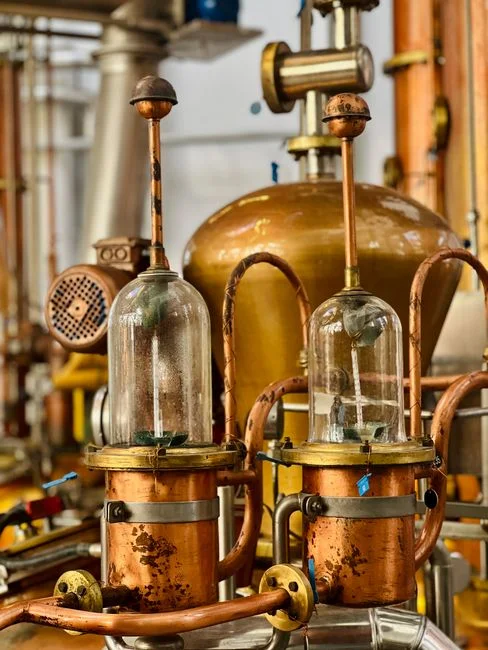
The two direct EGSB studies support feasibility under different feed and operating conditions, and neither establishes a universal commercial loading rate. The whiskey study tested a laboratory LBR-EGSB configuration, while the molasses study evaluated a different reactor objective under micro-aerobic conditions.
| Evidence | Scale and scope | Reported conditions or results | Procurement interpretation |
|---|---|---|---|
| ACS Engineering Au, 2023 | Laboratory LBR-EGSB treating whiskey distillery by-products | 96% EGSB COD removal; biogas at 75% vol methane; 10.3 g VFAs L⁻¹ leachate | Direct concept evidence for whiskey by-products; not a full-scale guarantee |
| Water Science & Technology, 2012 | EGSB treating molasses distillery wastewater under micro-aerobic conditions | 175 days; 35 °C; pH 7.0; 4.8 kg COD/(m³ d); sulfate loading of 0.384 kg SO₄²⁻/(m³ d) | Direct evidence under the stated conditions, including sulfate-management relevance |
| ScienceDirect granular-sludge blanket overview | General EGSB technology context | EGSB loadings stated as reaching up to 35 kg COD m⁻³ d⁻¹ | Technology context only; no supplied source establishes that rate for distillery wastewater generally |
The 2023 ACS Engineering Au results should remain labelled as laboratory-scale. The reactor generated VFAs and methane-rich biogas while removing COD, but the feed was a by-product valorization context rather than an unrestricted, full-scale distillery wastewater envelope.
The 2012 Water Science & Technology study was not a simple COD-removal trial. It investigated simultaneous sulfate reduction and sulfur production, with operation for 175 days at 35 °C and pH 7.0. The reported COD and sulfate loading rates therefore belong to that experimental scope and cannot be transferred directly to another feed.
Four metrics must not be conflated: COD-removal efficiency, volumetric COD loading, methane content and final effluent quality. A high removal percentage does not establish hydraulic capacity; a methane-rich gas composition does not establish gas yield; and neither establishes discharge or reuse compliance.
Recent UASB distillery material can inform feed conditioning and acceptance-test planning, but it does not establish EGSB performance. Suppliers must identify which reactor type, feed, scale and operating conditions support each claimed result.
Distillery Wastewater Characterization Before Reactor Selection
Characterization is the decision gate between a feasible EGSB project and a reactor offered without an enforceable feed basis. Request a campaign covering flow and diurnal variation, COD, BOD, suspended solids, colloids, pH, alkalinity, temperature, nutrients, sulfate and components associated with spent wash, stillage, wash water and cleaning operations.
Do not characterize only an averaged sample. Distillery flows can include spent caustic and other highly alkaline streams, while dilution from wash water can conceal the concentration and load peak entering the reactor. Each material stream should be sampled and the combined envelope, including coincident peaks, should be reconciled with the proposed feed balance.
| Parameter or stream | Buyer must establish | Decision consequence |
|---|---|---|
| Flow and diurnal load | Average, peak and coincident hydraulic and COD loads | Defines equalization, reactor volume and downstream capacity |
| COD and BOD | Soluble and particulate fractions | Determines whether EGSB is appropriate and how much solids removal is needed |
| Suspended solids and colloids | Concentration, settleability and likely washout risk | Sets the pretreatment boundary |
| pH and alkalinity | Stream-specific values and combined-feed range | Defines equalization and chemical-conditioning duty |
| Temperature | Normal and low-temperature operating conditions | Influences biological capacity and winter operation |
| Nutrients | Availability relative to feed demand | May require controlled nutrient addition |
| Sulfate and sulfur compounds | Loading and likely sulfide generation | Affects gas quality, corrosion and sulfur-management options |
| Oils, fats and inhibitory compounds | Presence, concentration and proposed removal method | May prevent entry to EGSB unless pretreatment resolves the issue |
The supplier must explain how the proposal treats soluble versus particulate COD and where solids, oil and grease removal occurs. Where solids-bearing streams require screening, an mechanical bar screen for distillery pretreatment may form part of the train; it does not replace removal of dissolved oils, colloids or finer solids.
Sulfur and nutrient data also affect downstream decisions. The 2012 molasses study operated at a sulfate loading rate of 0.384 kg SO₄²⁻/(m³ d), while the 2023 study produced methane-rich biogas. Gas reuse or combustion therefore requires attention to sulfur and gas conditioning, not simply a methane headline.
Use a firm entry rule: if material solids, oils or inhibitory constituents remain after the proposed pretreatment, return the design for revision. Increasing reactor volume does not by itself solve a feed-quality problem.
Pretreatment and Post-Treatment Boundaries
The pretreatment boundary follows from the wastewater characterization, while the post-treatment boundary follows from the permit or reuse specification. Neither should be buried inside an EGSB performance guarantee.
Use DAF pretreatment for distillery wastewater where suspended solids, colloids, oil and grease or FOG removal is required. HydropureWater’s DAF catalogue covers capacities from 4–300 m³/h across 13 standard models, but equipment capacity does not establish suitability; feed characteristics and solids loading must be checked.
Use an automatic chemical dosing system for pH and nutrient conditioning where controlled addition is justified. Dosing does not replace equalization, biological monitoring, reactor capacity or removal of solids and oils.
Solids removal is a core pretreatment consideration because the ScienceDirect overview states that higher upflow velocity in an EGSB does not ensure efficient entrapment and hydrolysis of coarse suspended particles and colloids. The expanded granular sludge bed is therefore principally suited to essentially soluble wastewater.
| Process stage | Required scope | Acceptance question |
|---|---|---|
| Screening and equalization | Remove coarse material and buffer flow, strength and pH peaks | Does the combined feed entering EGSB remain within the stated design envelope? |
| Solids and oil removal | Provide the pretreatment identified by characterization | Are particulate COD, colloids, oil and grease controlled sufficiently for granule retention? |
| pH and nutrient conditioning | Provide controlled chemical addition where justified | Are chemical demand, storage, dosing response and operating controls defined? |
| EGSB and gas separation | Anaerobic treatment, biogas capture and biomass separation | Are loading, recycle, bed condition and gas-handling functions defined? |
| Post-treatment | Meet the applicable final discharge or reuse specification | Which equipment and contractor carry the compliance obligation? |
| Sludge handling | Thicken or dewater only solids generated by the selected route | Is there a complete solids balance? |
Use a high-efficiency sedimentation tank or plate-frame filter press only where the selected process route creates solids requiring thickening or dewatering. Adding solids equipment without a mass balance can create an unfunded downstream duty.
EGSB Reactor Sizing and Commissioning Basis
Reactor sizing requires a defined wastewater envelope and mass balance, not a quoted volumetric loading rate applied without qualification. Require bidders to state the design flow, hourly and daily load profile, COD concentration, temperature, pH, alkalinity, solids, nutrients, sulfate and recycle ratio used in their calculations.
Ask for a mass balance that distinguishes hydraulic retention, organic loading, recirculation, reactor volume, gas production and downstream treatment. The general EGSB loading range cited in the ScienceDirect overview—up to 35 kg COD m⁻³ d⁻¹—cannot replace this site-specific calculation. No supplied source establishes that rate as universally applicable to distillery wastewater.
| Bid item | Information required | Review test |
|---|---|---|
| Design envelope | Flow, load profile, COD, temperature, pH, alkalinity, solids, nutrients and sulfate | Does the bid use the buyer’s characterized feed rather than a generic distillery assumption? |
| Reactor basis | Reactor volume, hydraulic retention, organic loading and recycle ratio | Is the calculation reproducible from stated inputs? |
| Mass and gas balance | COD destination, biogas production, gas quality and downstream flows | Are destruction, capture and residual loads reconciled? |
| Start-up | Staged loading sequence, monitoring and hold points | Does organic loading increase only as the granular bed establishes? |
| Performance monitoring | COD, pH, alkalinity, methane fraction, biogas flow, bed expansion, granule condition, washout indicators and effluent solids | Are methods, frequencies and response actions defined? |
| Acceptance | Mutually agreed test conditions, sampling, duration and abnormal-event treatment | Can compliance be tested objectively? |
Commissioning should increase organic loading in stages as the granular bed establishes, recording the response after each change. Monitoring must cover liquid chemistry, gas composition and flow, bed expansion, granule condition, biomass loss and treated-water solids.
The supplied research provides no universal alarm limits and no single guaranteed loading rate for distillery wastewater. Final alarm values must come from the supplier’s design, feed characterization and commissioning plan. Comparisons with anaerobic reactor treatment for yeast wastewater are useful for identifying monitoring disciplines, not for importing EGSB guarantees.
Supplier Selection and Acceptance-Test Checklist
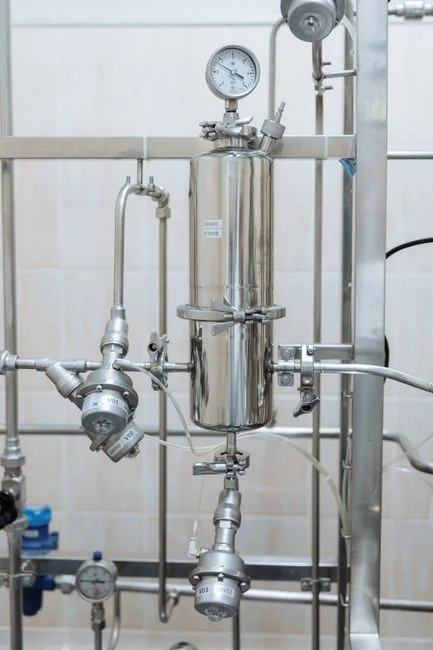
Comparable quotations must identify the same wastewater envelope, reactor configuration and downstream obligations. A headline COD-removal percentage is not a comparable offer unless its test conditions, scale and exclusions are explicit.
Ask each supplier to state the exact feed, pretreatment assumptions, operating temperature, design loading, reactor configuration, start-up method and post-treatment duty to which its performance applies. The 2023 laboratory LBR-EGSB result is useful concept evidence, but it cannot substitute for evidence at the proposed scale or for a commercial guarantee.
| Review area | Information to request before award | Commercial risk controlled |
|---|---|---|
| Evidence | Published or project evidence for the reactor type, feed and operating basis | Prevents laboratory or unrelated-feed claims becoming guarantees |
| Scope | Civil, mechanical, electrical, controls, chemicals, operators, gas use and downstream duty | Exposes exclusions and unfunded interfaces |
| Gas system | Capture, separation, conditioning, methane monitoring and loss-control provisions | Links methane-rich gas claims to safe and usable gas infrastructure |
| Performance | Influent and effluent sampling methods, test duration, loading conditions and remedy | Creates an objective acceptance mechanism |
| Abnormal events | Treatment of pH excursions, high loads, washout indicators and downtime | Prevents selective acceptance of favourable conditions |
| Operations | Chemical demand, maintenance access, training, spares and monitoring duties | Defines operating cost and ownership requirements |
Require a mutually agreed acceptance protocol covering influent and effluent sampling, test duration, operating loads and abnormal-event treatment. Define what happens if the result is conditional, missing or disputed.
Also obtain each bidder’s exclusions, utility and civil interfaces, operator requirements and performance remedy. The commercial comparison should follow the evidence review, not precede it. The broader distillery UASB guide can support that review, while high-strength organic wastewater reactor design provides useful process context.
Frequently Asked Questions
What loading rate should be used to size an EGSB reactor for distillery wastewater?
Do not select a loading rate from a generic headline. Ask each bidder to show the design flow, COD profile, hydraulic retention, organic loading, recycle ratio, reactor volume and downstream mass balance. The general EGSB range of up to 35 kg COD m⁻³ d⁻¹ cannot replace a site-specific calculation, particularly where the feed contains particulate COD or inhibitory compounds.
Is the 96% COD-removal result a full-scale performance guarantee?
No. ACS Engineering Au reported the 96% EGSB COD-removal result in a laboratory LBR-EGSB study in 2023. Treat it as direct concept evidence for whiskey distillery by-products. Require commercial evidence at a relevant scale and feed, then define acceptance conditions, sampling and remedies separately.
Does distillery wastewater need DAF or solids removal before EGSB?
It may, depending on the characterization. If suspended solids, colloids, oil, grease or FOG could impair the reactor, specify the required removal duty before EGSB. DAF is one possible pretreatment, but the selected equipment must follow the measured feed rather than a generic assumption.
What should a buyer request when comparing EGSB supplier cost and scope?
Request itemized pricing covering reactor, gas separation, pretreatment, post-treatment, controls, civil works, installation, chemicals, training and maintenance. Also request exclusions, utilities, operator requirements and performance remedies. No quotation can be evaluated defensibly until the bidder identifies the wastewater envelope and guarantees attached to that price.
Related Equipment
- DAF pretreatment for distillery wastewater — specifications, capacity range, and technical data