
Why Tijuana Needs a Resilient Domestic Sewage Strategy
The Tijuana River watershed is transboundary: nearly three-quarters of it is in Mexico, but it drains through the 8-square-mile Tijuana River Valley in the United States into the Pacific Ocean, according to the California State Lands Commission. Untreated wastewater, contaminated sediment, trash, and wet-weather overload are documented pollution pressures, not generic concerns. Wastewater and debris regularly enter U.S. waters through the Main Channel, Canyon Collectors, and coastal discharge pathways. A proposal based only on average daily flow therefore leaves the principal failure condition unaddressed.
Interim and permanent infrastructure must also be separated when assessing project risk. San Diego Coastkeeper reported in 2026 that a temporary 10 MGD primary-treatment expansion at the South Bay International Wastewater Treatment Plant was completed in just over 100 days while the permanent expansion proceeded. The temporary capacity treats at a lesser standard than the plant’s secondary-treatment output, so it should not be interpreted as an unrestricted permanent solution. San Diego Coastkeeper also reported that the permanent expansion target is 50 MGD by December 2027.
Rainfall affects both flow and wastewater composition. A PeerJ study of sewage in Hongta District, Yuxi, found that microbial community composition differed significantly among rainfall groups at family, genus, and species levels, with reported significance values of P = 0.038, P = 0.019, and P = 0.005, respectively. Although that study was not conducted in Tijuana, it supports evaluating wet-weather peaks, equalization, redundancy, and process resilience rather than assuming average-flow performance is sufficient. Compare buried A/O, MBR, and biofilm package plants only after establishing those project conditions.
Define the Wastewater Before Selecting Equipment
A defensible equipment selection starts with a measured wastewater design basis, not a nominal package size. Request average daily flow, peak-hour flow, seasonal variation, rainfall response, and records of overflows, surcharge, or bypass events. Use the step-by-step wastewater treatment capacity calculation as a methodological reference, then verify which assumptions and local factors apply to the site.
Keep domestic sewage separate from industrial process water, wash water, stormwater, and hauled waste entering the same collection system. Screening, grit removal, oil and grease control, solids separation, and chemical characterization may determine whether biological treatment or disinfection needs additional protection. A mechanical GX Series rotary mechanical bar screen may be relevant where rags, plastics, and fibrous material could damage downstream equipment.
| Design-basis item | Evidence to obtain | Why it changes selection |
|---|---|---|
| Hydraulic load | Average daily flow, peak-hour flow, seasonal data, rainfall response, and documented surcharge or overflow events | Determines biological capacity, equalization, standby provisions, and whether peak flow should pass through treatment or a controlled equalization system |
| Wastewater source | Separation of domestic sewage from industrial process water, wash water, stormwater, and hauled waste | Prevents an equipment supplier from rating a biological unit for wastewater characteristics outside its design basis |
| Protectives and contaminants | Screening, grit, oil and grease, solids, pH, toxicity, and chemical inputs | May require additional pretreatment or dedicated process units |
| Treatment objective | Sanitary discharge, reuse, further treatment, or another defined endpoint | Controls the required separation, disinfection, monitoring, and receiving-location constraints |
Define the receiving location and required treatment objective before comparing technologies. “Discharge to sewer” and “surface-water discharge” create different hydraulic, pretreatment, disinfection, and monitoring requirements. The supplied research does not establish one universal domestic-sewage permit limit for every Tijuana installation, so the discharge route and applicable regulator must be confirmed for the specific site.
Compare A/O Package Plants, MBR Systems, and Decentralized Treatment
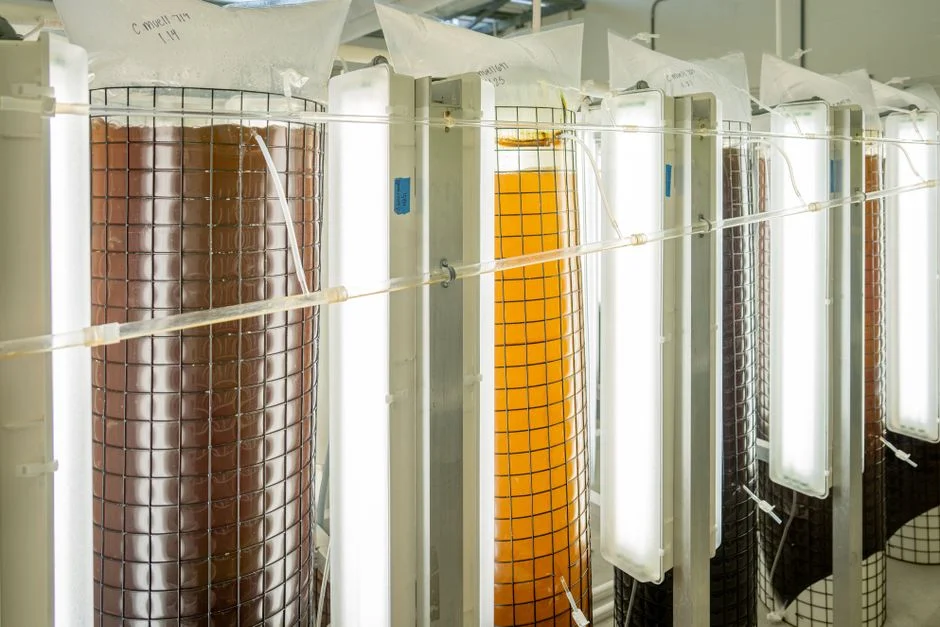
The WSZ process combines anoxic and aerobic biological treatment with sedimentation and disinfection in one package; MBR adds membrane separation to activated-sludge treatment, while decentralized alternatives distribute treatment closer to the source. Selection should follow effluent objectives, footprint, sludge production, operator involvement, wet-weather response, and receiving-site constraints.
| Option | Stated configuration or evidence | Where it is a credible fit | Items requiring project confirmation |
|---|---|---|---|
| A/O packaged system | The WSZ underground A/O package sewage treatment plant combines anoxic/aerobic contact oxidation, sedimentation, and disinfection. HydropureWater’s catalog states 1–80 m³/h capacity, automated operation without an on-site operator, below-grade installation, or trailer mounting. | Compact or buried domestic-sewage installations where the stated capacity range and automated operation fit the project. | Verified design flow, influent characteristics, treatment guarantees, civil works, burial conditions, and applicable discharge requirements. |
| MBR | HydropureWater’s MBR membrane bioreactor wastewater treatment system combines activated sludge with submerged PVDF membrane filtration. Its catalog lists municipal sewage and reuse projects from 10–2,000 m³/day. | Projects requiring compact membrane separation or considering reuse, where process complexity and maintenance resources are justified. | Flux conditions, membrane cleaning, reject handling, lifecycle cost, redundancy, and reuse quality requirements. |
| Vermifiltration | An IntechOpen study describes vermifiltration for domestic sewage as viable, decentralizable, and less expertise-intensive. | Context-specific decentralized applications after local validation. | Site climate, loading, sludge or worm-handling needs, odor control, and acceptance under the actual permit. |
| Constructed wetland with microbial fuel cell | An IntechOpen chapter presents treatment and electricity production as an integrated research concept. | A study or pilot alternative where land, treatment objective, and energy recovery are all justified. | Performance at local hydraulic and organic loads, power balance, land area, and regulatory acceptance. |
Do not treat the alternatives as interchangeable. A package unit may simplify installation and operation; an MBR may provide a higher degree of solids separation but add membrane maintenance; vermifiltration and constructed wetlands require site-specific validation rather than being assumed Tijuana defaults. The comparison should test each option against the same measured flow, treatment objective, footprint, and permit conditions.
Build a Capacity Plan for Dry Weather and Wet Weather
Capacity planning must represent dry-weather flow and wet-weather response separately, then document how excess flow is stored, equalized, treated, or prevented from bypassing. Use the capacity-sizing method for packaged sewage treatment plants to structure average daily flow, peak factor, and design flow, but require the project designer to establish the applicable local assumptions.
Regional infrastructure capacities do not allocate capacity to a private project. San Diego Coastkeeper reports that the permanent South Bay expansion target is 50 MGD by December 2027; that is an infrastructure-program figure, not an available allocation for a Tijuana treatment unit. The same source reports an 18 MGD operating capacity for the San Antonio de los Buenos plant, again a municipal-system datum rather than a packaged-plant recommendation.
- Establish average daily flow from monitored data and reconcile it with meter records.
- Identify peak-hour and wet-weather flows from operating and overflow records.
- Apply project-specific peak and storage assumptions approved by the responsible engineer.
- Define equalization, standby, and power-interruption responses.
- Specify bypass prevention and the permitted response to excess inflow.
Require each bidder to state whether its quoted capacity is average flow, peak flow, or hydraulic-loading capacity; identify the wastewater characteristics included or excluded from the rating; and state what happens when flow exceeds the guaranteed basis. Without that declaration, nominal capacity is not a procurement-grade performance metric.
Assemble the Treatment and Supporting Equipment
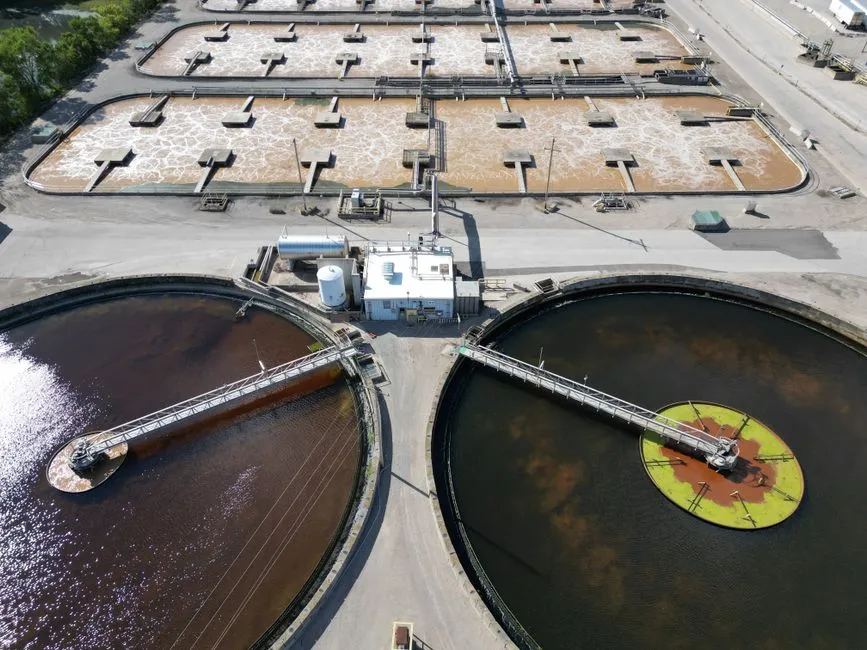
A complete bid includes the treatment train, pretreatment, solids handling, disinfection, controls, utilities, access, and maintainability—not only a treatment tank. Scope must match the wastewater characteristics and receiving objective established earlier.
| Equipment or system | Selection basis | Procurement requirement |
|---|---|---|
| Headworks | Rags, plastics, fibrous debris, grit, oil and grease, and solids that could damage pumps or biological processes. | Define duty basis, solids handling, discharge route, maintenance access, and included installation boundary. |
| Sludge separation and dewatering | Expected sludge production, solids characteristics, moisture content, hauling frequency, and disposal route. | HydropureWater’s plate and frame filter press is listed with filtration areas from 1 m² to 500 m²; request the specific area, chamber configuration, and performance basis for the project. |
| Disinfection | Treatment objective, receiving environment, pathogen requirements, and permit conditions. | Do not assume that a configuration automatically satisfies an unnamed standard. HydropureWater’s UV sterilizer should be evaluated against validated dose and flow requirements. |
| Controls and monitoring | Automation, alarms, local/remote visibility, power-loss response, and permit reporting. | Define the I/O list, data retention, communications protocol, alarm response, and cybersecurity boundary. |
| Site and maintenance provisions | Odor, access covers, lifting equipment, drainage, landscaping, weather exposure, and safe maintenance. | Include civil works, access routes, lifting points, spare parts, consumables, training, and long-term support in the bid. |
Compare WSZ and MBR routes only against the same objective. Membrane separation may be relevant for a more demanding effluent or reuse application, while the A/O package may meet the specified objective with a simpler equipment scope. Neither selection removes the need for sludge characterization, sampling, transport documentation, or an approved residue destination.
Navigate Permits, Procurement, and Supplier Due Diligence
The supplied research establishes a binational regulatory context but not a universal permit for every Tijuana domestic-sewage installation. Confirm the receiving route and competent Mexican authority for the project. If the route involves cross-border water or discharge infrastructure, determine the applicable coordination path with U.S. agencies. The California State Lands Commission identifies the International Boundary and Water Commission, San Diego Water Board, U.S. EPA border office, and local agencies as participants in the transboundary context.
Obtain written requirements for permitted flow, effluent characteristics, sampling, reporting, odor, operating controls, monitoring, and emergency response. The California State Lands Commission states that the San Diego Water Board regulates U.S. International Boundary and Water Commission discharges under a National Pollutant Discharge Elimination System permit, but that regional permit does not establish a blanket requirement for an unrelated private installation.
- Require disclosure of process, rated-flow basis, influent limits, guarantees, materials, controls, installation boundary, commissioning tests, training, spare parts, and consumables.
- Define acceptance tests and sampling methods for hydraulic performance and treatment guarantees.
- Require sludge quantity estimates, sampling methods, transport or disposal routes, and applicable documentation.
- Separate equipment supply, civil construction, electrical work, commissioning, training, permit support, and maintenance in the commercial schedule.
- Use regional schedule risk in contingency planning: San Diego Coastkeeper reported in 2026 that the permanent South Bay expansion target is 50 MGD by December 2027.
Do not accept “reusable” sludge without a defined process and destination. A treatment claim is not a permit decision, and an equipment warranty is not evidence that the receiving authority will accept the proposed discharge route. Supplier credentials should be checked against the engineering specifications used to evaluate sewage treatment equipment suppliers.
Make the Final Equipment Decision
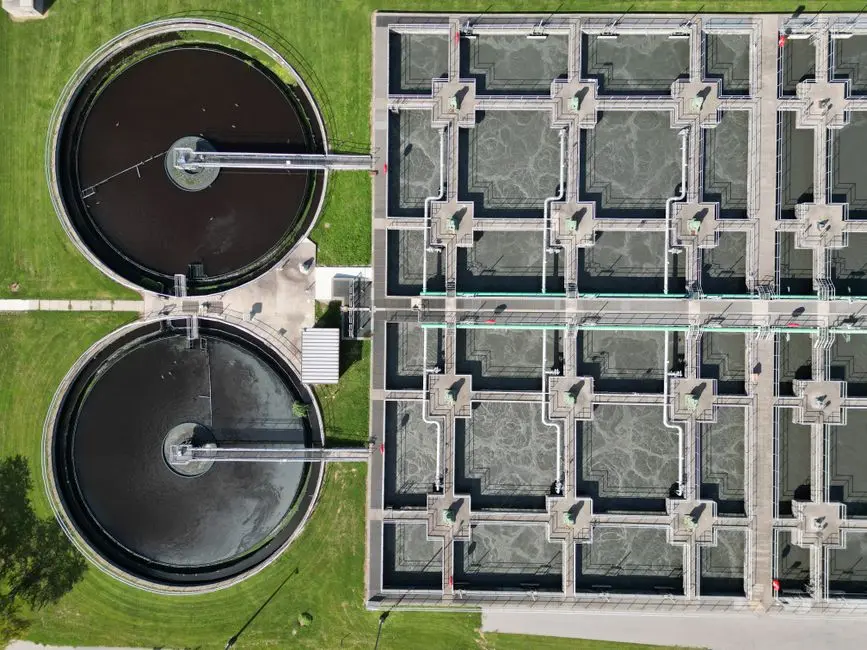
Shortlist the WSZ A/O package where a compact or underground installation, automated operation without an on-site operator, and the catalog’s stated 1–80 m³/h capacity match the measured project basis. Shortlist the MBR where submerged PVDF filtration, the stated 10–2,000 m³/day range, and a reuse-oriented application justify the additional process requirements. These are screening criteria, not automatic selections.
| Acceptance criterion | Required evidence before award | Decision consequence |
|---|---|---|
| Hydraulic fit | Measured flow basis, peak-flow method, equalization design, and stated rating conditions | Reject a bid whose capacity is undefined or unsupported by project flow evidence. |
| Process performance | Effluent objective, influent envelope, guarantee conditions, and acceptance-test method | Align the treatment architecture with the required outcome. |
| Delivered scope | Process, civil works, controls, pretreatment, sludge handling, commissioning, training, and support | Compare complete scopes rather than unit prices. |
| Permit and route risk | Written regulatory interface, discharge route, monitoring, sampling, and reporting deliverables | Treat unresolved route or permit questions as award risks. |
| Wet-weather resilience | Peak response, equalization, standby provisions, bypass prevention, and power-loss response | Include performance under adverse conditions in acceptance criteria. |
Request a project-specific hydraulic and process basis from a licensed design professional before ordering. The final comparison should show how each proposal addresses the same flow data, treatment objective, discharge route, sludge route, regulatory requirements, and operating risks. Unit purchase price alone cannot resolve those differences.
Frequently Asked Questions
How much does a domestic sewage treatment system cost in Tijuana?
The supplied research provides no defensible project price for a domestic sewage treatment system in Tijuana. Require quotations against the same measured design flow, treatment objective, civil works, controls, pretreatment, sludge handling, permitting, site conditions, and commissioning scope. Do not compare prices until each supplier states whether its capacity is average, peak, or hydraulic-loading capacity.
Should I choose an A/O package plant or an MBR system in Tijuana?
An A/O package is a candidate for compact or underground applications where its treatment objective fits; an MBR is relevant where membrane separation or reuse requirements justify the added process and maintenance demands. Decide from measured hydraulic loading, required effluent quality, footprint, sludge production, operator resources, and permit conditions rather than architecture alone.
How long does it take to procure and install domestic sewage treatment equipment?
The research provides no universal Tijuana manufacturing, freight, installation, or commissioning period. Require separate contractual milestones for design approval, manufacturing, permits, shipment, civil construction, mechanical and electrical installation, testing, and regulatory acceptance. Identify which party owns each delay and what operating documentation must be delivered before handover.
What should a sewage treatment supplier provide to reduce compliance risk?
Require the process basis, rated-flow conditions, influent and effluent limits, guarantee test methods, controls scope, monitoring provisions, sludge-management details, commissioning evidence, maintenance plan, training, spare parts, and permit-support documentation. Treat unsupported claims of compliance as incomplete deliverables.
Does heavy rain change domestic sewage treatment requirements?
Yes. Wet-weather overload is a documented transboundary pollution pressure in the Tijuana River watershed, and the PeerJ study found significant rainfall-related differences in sewage microbial communities at family, genus, and species levels. Evaluate wet-weather peaks, equalization, redundancy, bypass prevention, and monitoring. The wastewater engineering playbook can support planning, but the project designer must establish the local flow and permit basis.