Define the discharge objective before selecting equipment
An industrial effluent treatment plant in Monterrey should be defined by its discharge route, final-use requirements and source wastewater—not by a catalogued machine. Four inputs establish the design basis: the industrial process and wash-water streams, average and peak flow, the sewer or surface-water receiving destination, and whether the treated water will be reused. DAF suits floatable contaminants, MBR combines biological treatment with membrane separation below 1 μm, and UF provides chemical-free membrane polishing using 0.03 μm PVDF membranes. RevenueBase recorded 12 Monterrey company records as of September 19, 2026, indicating an active local supplier base, not a substitute for technical qualification.
For sewer discharge, define the applicable local pretreatment and discharge conditions before selecting equipment. For surface-water discharge, evaluate the receiving-water requirements and whether additional polishing or disinfection is needed. For industrial reuse, establish the final process-water quality: a discharge objective and a reuse specification are different design bases. The University of Twente research assessed direct nanofiltration for polishing wastewater-treatment-plant effluent to EU Water Framework Directive standards and examined effluent reclamation for agricultural or direct and indirect potable uses; it does not establish approval or performance for a Monterrey installation. This is especially relevant when reviewing pharmaceutical wastewater treatment in Mexico.
An effluent treatment plant is the complete treatment train receiving wastewater at its headworks and producing treated effluent, biosolids and other residuals that require management. No single catalogued unit is a defensible substitute for site-specific wastewater characterization. The correct sequence begins with the contaminants that must be removed and ends with the destination and quality obligation.
Characterize the wastewater and secure the design inputs
Representative sampling across production cycles is required before an industrial wastewater pretreatment train can be sized. A single composite or clean-water sample may conceal batch discharges, cleaning events and variable contaminant concentrations. Sampling should cover normal production, seasonal changes, production expansion, batch releases and cleaning cycles because each can change hydraulic loading and water quality.
For each stream and combined flow, investigate suspended solids, oil and grease, FOG, colloids, pH, organics, nutrients, color and any industry-specific contaminants. Record average and peak flow, available footprint, utilities, installation constraints, automation requirements, solids-handling route and maintenance access. The objective is to identify the controlling contaminant, hydraulic variation and receiving requirement—not to accumulate a long parameter list without design relevance.
| Design input | Information required | Why it changes the equipment decision |
|---|---|---|
| Wastewater characterization | Representative samples across production, batch and cleaning cycles | Identifies contaminant peaks and the required removal duty |
| Hydraulic basis | Average flow, peak flow and flow-duration behavior | Sets equalization, pumping and treatment capacity |
| Discharge objective | Sewer, surface-water or reuse destination and applicable requirements | Defines the required final quality and compliance test |
| Site constraints | Footprint, utilities, access, controls, civil interface and solids route | Determines feasibility, installation sequence and operating access |
Reuse and potable applications require particular care. The University of Twente study is reclamation research evaluated against European standards; local legal approval, site-specific quality validation and confirmation of the intended reuse remain necessary. The industrial pretreatment limits for sewer discharge discussion illustrates why the discharge route must be established before equipment selection, while the IFAS design guide for ceramic-tile wastewater highlights the need to connect process conditions with biological treatment.
Do not release a sizing request for quotation until these inputs are documented. Missing flow records, unrepresentative samples or an undefined final-water quality will shift risk into fabrication, installation and acceptance.
Build the treatment train around the contaminants
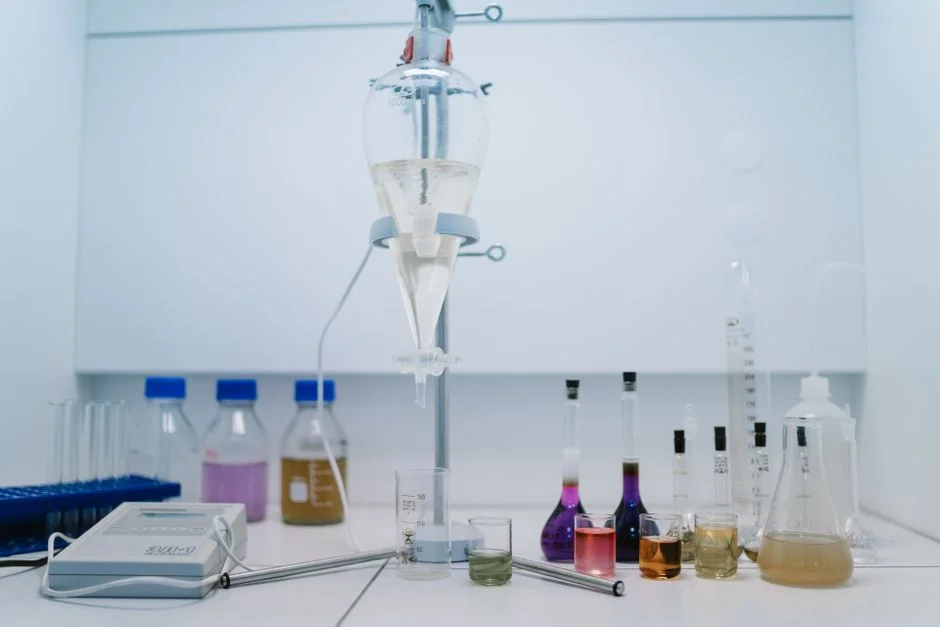
A defensible industrial treatment train normally progresses from screening and pretreatment through equalization, contaminant removal, biological treatment where required, solids separation, disinfection, advanced polishing and final discharge or reuse. Every stage should have a defined contaminant duty and an outlet that can feed the next stage.
At the headworks, a GX rotary mechanical bar screen protects downstream pumps, valves and biological processes from suspended solids, rags, plastics and fibrous debris. Equalization follows where flow or concentration variation requires it. DAF then becomes appropriate where suspended solids, FOG, oil and grease and colloidal matter are the principal pretreatment targets. The catalogued DAF system for industrial wastewater pretreatment covers 4–300 m³/h across 13 standard models.
Where biological treatment and fine solids separation are both required, the integrated MBR wastewater treatment system provides membrane filtration below 1 μm and has a catalogued range of 10–2,000 m³/day. UF occupies a different role: the UF polishing and RO pretreatment system is catalogued from 2,000–40,000 L/h, accepts turbidity up to 300 ppm and uses 0.03 μm PVDF membranes with automatic backwash and air scour. It is presented as a chemical-free option for bacteria, colloid and suspended-solid removal; it should not automatically be treated as a substitute for biological treatment.
Disinfection remains a separate design decision when pathogen control is required. The catalogued chlorine dioxide generator spans 50 g/h manual units to 20,000 g/h automated industrial systems for municipal water, hospital effluent, industrial cooling loops and process wastewater. For advanced contaminants, Wageningen University’s thesis, published September 23, 2022, addresses micropollutant removal from wastewater-treatment-plant effluent through constructed wetlands. That work supports advanced-treatment awareness but does not establish Monterrey site performance.
| Stage | Primary duty | Catalogued scope |
|---|---|---|
| Rotary bar screen | Remove rags, plastics, fibrous debris and suspended material at headworks | Equipment basis must be matched to flow and debris loading |
| DAF | Remove suspended solids, oil and grease, FOG and colloidal material | 4–300 m³/h across 13 standard models |
| MBR | Combine biological treatment with membrane separation | 10–2,000 m³/day; filtration below 1 μm |
| UF | Polish for bacteria, colloids and suspended solids or prepare feed for RO | 2,000–40,000 L/h; turbidity up to 300 ppm |
| Chlorine dioxide generation | Separate pathogen-control duty where required | 50 g/h manual to 20,000 g/h automated systems |
Compare DAF, MBR and UF by application
DAF, MBR and UF should be compared by contaminant duty and position in the treatment train, not by capacity or purchase price alone. DAF is the pretreatment choice when floatable contaminants govern the design; MBR is the integrated biological and solids-separation choice; UF is the polishing or RO-pretreatment choice. A process can contain more than one of them when the wastewater and reuse objective justify it.
| Criterion | DAF | MBR | UF |
|---|---|---|---|
| Primary contaminant duty | Oil, FOG, floatable solids and colloidal material | Biodegradable organics plus fine solids separation | Bacteria, colloids and suspended-solid polishing |
| Typical process position | After screening and suitable equalization | After required pretreatment and biological stage | After the main biological or solids-separation stage |
| Catalogued capacity | 4–300 m³/h | 10–2,000 m³/day | 2,000–40,000 L/h |
| Treatment objective | Remove floatable material and reduce solids load | Integrate biological treatment with membrane filtration below 1 μm | Chemical-free polishing with 0.03 μm PVDF membranes |
| Residual stream | Separated floatable solids require management | Separated solids require management | Concentrated reject or backwash stream requires management |
For MBR module evaluation, the catalogued DF flat-sheet module uses 0.1 μm PVDF, offers 80–225 m² configurations, produces 32–135 m³/day and states energy consumption of 10–20 times lower than external cross-flow systems. Those limits describe the catalog scope, not guaranteed project performance; feed quality, hydraulic loading and configuration still require engineering review. The DF flat-sheet MBR module specification should be checked against the selected treatment train.
DAF and MBR both generate separated solids. The plate and frame filter press has a catalogued filtration area from 1 m² to 500 m² and supports manual, hydraulic or fully automatic PLC-controlled operation. The solids route must therefore be included in the project before comparing treatment alternatives.
Do not rank DAF, MBR or UF without site water analysis, hydraulic data, permit requirements, reuse targets, footprint and lifecycle cost. For projects where suspended solids and floatable material dominate, the DAF versus clarifier selection provides a useful pretreatment decision structure.
Verify local implementation and supplier capability
Monterrey’s supplier density provides market context but not evidence of technical performance. RevenueBase recorded 12 Monterrey company records as of September 19, 2026, with descriptions covering industrial water treatment and design, construction, operation and maintenance. The directory also recommends checking each company’s website for current services and locations. Use the list to build a sourcing pool, then verify each bidder against project-specific evidence.
Every bid should state its treatment basis, guaranteed duty, design flow, test protocol, included ancillaries, civil-work boundaries, controls, installation scope, commissioning criteria and warranty. Require a clear explanation of how the proposed train handles changing industrial batches, peak flows, abnormal loads, sludge removal, chemical storage and equipment access. A nameplate capacity is not a performance guarantee.
Ask for evidence through a site visit, installed reference or verifiable project documentation. Specify whether the supplier is only manufacturing equipment or will also provide process engineering, permitting support, installation, commissioning and long-term operation. Unclear boundaries become change orders after award.
For operating support, define the data that must be available locally, how alarms will be escalated, which instruments operators can access and what response time the supplier is prepared to commit. The remote monitoring cost guide for wastewater plants can support a broader review of monitoring and service scope, but monitoring does not replace process responsibility.
Qualification should answer five practical questions: What is the guaranteed duty? Which wastewater data supports the design? What is included in the installed scope? How will performance be tested? Who owns maintenance, sludge handling and compliance evidence after handover?
Move from equipment selection to implementation
Implementation should proceed through desktop definition, wastewater characterization, process selection, pilot or bench confirmation where needed, detailed design, fabrication, installation, commissioning and operating verification. Skipping characterization or confirmation can lock equipment into an unsuitable treatment basis.
Create a responsibility matrix before purchase. It should identify who owns incoming wastewater characterization, process guarantees, civil works, utilities, sludge handling, sampling, operator training, maintenance and spare parts. Acceptance testing should use the agreed flow, operating condition and compliance or reuse objective—not a generic equipment demonstration.
| Project stage | Required deliverable | Procurement check |
|---|---|---|
| Definition | Discharge route, reuse objective and stakeholder requirements | Is the final use legally and technically defined? |
| Characterization | Representative sampling and hydraulic records | Do samples cover batch, cleaning and seasonal conditions? |
| Process selection | Design basis, process flow and mass-balance concept | Does each unit have a defined contaminant duty? |
| Confirmation | Pilot or bench evidence where required | Were the tested feed and operating conditions representative? |
| Detailed design | Civil, mechanical, electrical, controls and safety scope | Are interfaces and exclusions explicit? |
| Installation and commissioning | Installed inspection, training and agreed performance tests | Are acceptance criteria linked to project conditions? |
| Operation and review | Operating records, maintenance plan, sludge route and expansion review | Are operator access and future peak-load provisions included? |
Do not size from average flow alone. Establish the initial treatment basis, then reserve physical or hydraulic scope for future expansion and peak-load resilience. The final layout should provide operator controls, local instrument access, safe chemical handling, sludge removal and maintenance access. Lessons on packaged treatment integration can inform the packaged wastewater treatment plant fit, while the industrial zero-liquid-discharge technical review provides context for evaluating reuse and residual-management implications.
Frequently Asked Questions
How should an industrial effluent treatment plant in Monterrey be sized?
The minimum design brief includes representative wastewater characterization, average and peak flow, the discharge or reuse objective, site constraints and solids-handling requirements. No universal capacity can be selected from the location or keyword alone. Require each bidder to show how its proposed flow basis follows from the documented wastewater data.
How should a wastewater treatment plant supplier in Monterrey be selected?
Evaluate the process design basis, performance guarantee, scope boundaries, commissioning evidence and service capability. Local directory presence is only a sourcing lead. Ask for installed references or verifiable project documentation and require the bid to identify who is responsible for civil works, controls, utilities, sludge handling, training and maintenance.
What should a comparable budget request include?
Require separate prices for equipment, civil works, installation, controls, initial chemicals, sludge handling, commissioning and long-term operating costs. Also request the energy, membrane or media replacement, consumables, maintenance and disposal assumptions behind those figures. No supported market quotation was provided for this project, so a valid total-budget comparison requires supplier-specific pricing against the same design basis.
Are UF, MBR and nanofiltration interchangeable for wastewater reuse?
No. UF can provide membrane polishing or RO pretreatment, MBR integrates biological treatment with fine solids separation, and the University of Twente research assessed nanofiltration for polishing treatment-plant effluent to EU Water Framework Directive standards. The contaminant profile and required final-water quality determine each technology’s role, and local legal and quality validation remains necessary for the intended reuse.