Rhode Island Wastewater Treatment Plants: Capacity, Specs, and Costs
Rhode Island operates 19 major municipal sewage treatment plants treating about 100 million gallons per day under DEM RIPDES permits. Capital costs range from $5M for small package plants to $120M for large upgrades. Fields Point runs MBR at 60 MGD; Bucklin Point uses activated sludge with tertiary filtration at 50 MGD. Design review typically spans 9 to 18 months.
Rhode Island wastewater treatment plants form a regional network shaped by public-health failures and bay protection goals. The 1854 cholera epidemic in Providence remains the foundational technical driver for the state’s modern standards. According to Dr. Edwin Snow’s 1854 report, three out of every five deaths during the outbreak were linked directly to pollution of the Moshassuck River, where household and industrial waste were discharged without treatment. That crisis triggered a century of infrastructure evolution, from 65 direct sewer outfalls in 1870 to today’s centralized 19-plant system.
The Narragansett Bay Commission (NBC) takeover of Bucklin Point marked the shift toward regionalized, high-capacity treatment for Narragansett Bay. Fields Point now serves about 350,000 residents and anchors state hydraulic capacity. DEM uses a dual-oversight model: Planning & Design checks hydraulic modeling and redundancy, while Operation & Maintenance enforces 250-RICR-150-10-4 for daily performance and 250-RICR-150-10-3 for sewage sludge handling and disposal.
Technical Specs of Rhode Island’s Top 5 Municipal Sewage Treatment Plants
Fields Point WWTF in Providence uses a Membrane Bioreactor (MBR) train rated at 60 MGD to meet the state’s tightest effluent targets. By integrating MBR membrane bioreactor systems for Rhode Island’s stringent effluent limits, the plant holds BOD below 10 mg/L and TSS below 5 mg/L, with about 99% pathogen removal. Energy use for this duty is about 0.8 kWh/m³. That is higher than conventional trains, but it matches the Providence River’s sensitive receiving-water needs.
Bucklin Point WWTF in East Providence uses conventional activated sludge with tertiary filtration at 50 MGD. Reported effluent averages 15 mg/L BOD and 10 mg/L TSS. Solids handling is central: the plant produces about 12 dry tons of sludge per day and processes it by anaerobic digestion for on-site biogas recovery. Most plants we size for similar New England loads run aeration energy at the lower end of the published range when dissolved oxygen is tightly controlled.
Woonsocket WWTF uses an Anaerobic/Oxidative (A/O) process on an average influent near 250 mg/L BOD and a 12 MGD rating. Newport WWTF relies on Sequencing Batch Reactor (SBR) technology plus sand filtration at 10 MGD. Newport also uses EPA-compliant ClO₂ generators for Rhode Island’s disinfection needs where effluent reuse supports local irrigation. Warwick’s oxidation ditch with chemical phosphorus removal is rated at 15 MGD.
| Facility Name | Process Technology | Capacity (MGD) | Effluent BOD (mg/L) | Effluent TSS (mg/L) | Energy Use (kWh/m³) |
|---|---|---|---|---|---|
| Fields Point | MBR (Membrane Bioreactor) | 60 | <10 | <5 | 0.80 |
| Bucklin Point | Activated Sludge + Tertiary | 50 | 15 | 10 | 0.45 |
| Woonsocket | A/O Process + UV | 12 | 20 | 25 | 0.55 |
| Warwick | Oxidation Ditch + Chem-P | 15 | 15 | 15 | 0.50 |
| Newport | SBR + Sand Filtration | 10 | 10 | 10 | 0.65 |
How many Rhode Island sewer treatment plants operate today?
Rhode Island has 19 major municipal facilities: Fields Point, Bucklin Point, Woonsocket, Warwick, Newport, Cranston, East Greenwich, East Providence, Jamestown, Narragansett, New Shoreham, North Kingstown, Quonset, Smithfield, South Kingstown, Tiverton, Warren, West Warwick, and Westerly. Collectively they treat about 100 million gallons per day. Smaller communities that cannot justify a full regional connection often evaluate package wastewater treatment plants in Rhode Island before committing to a multi-year capital program.
What do Rhode Island sewer treatment plants cost to build?
Build costs for Rhode Island sewer treatment plants run from $5M for small package systems to more than $120M for large municipal facilities. Medium upgrades of 1.0–10 MGD commonly fall between $20M and $45M CapEx at 2025 pricing. The Woonsocket expansion cost $22M, and the Fields Point MBR upgrade reached $85M. Funding usually mixes CWSRF loans, municipal bonds, and revenue bonds.
Rhode Island DEM Compliance: Permits, Design Approvals, and Sludge Management
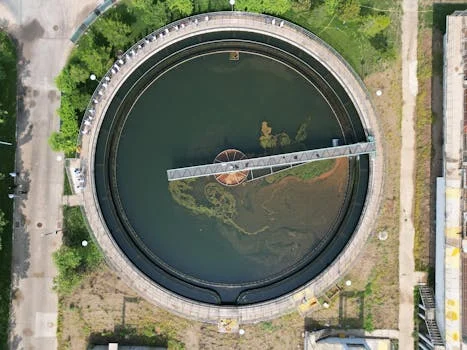
The Rhode Island DEM Planning & Design program requires a multi-stage approval process that typically spans 9 to 18 months for significant upgrades. Engineers submit a facility plan (6–12 months for review) followed by detailed design plans and specifications (3–6 months). Under 250-RICR-150-10-4, submissions must show 100% redundancy for critical mechanical equipment and include odor control plans near residential zones. That review standard exists because coastal storms can push plants to peak hydraulic load without room for untreated bypasses.
Sludge management falls under 250-RICR-150-10-3, which covers transport and ultimate disposal of biosolids. Land application remains permitted, yet many Rhode Island plants are shifting toward beneficial reuse and incineration because land is scarce. Bucklin Point operates a Class A biosolids program using lime stabilization to produce a soil amendment. Plants focused on volume reduction need sludge dewatering equipment for Rhode Island’s municipal plants to cut haul costs and meet landfill moisture limits. Upstream, high-efficiency sedimentation tanks cut solids load before biological treatment.
10-Step Compliance Timeline for New Plant Construction:
- Month 1: Pre-application meeting with DEM Wastewater Treatment Facilities Program.
- Month 2-5: Development of Facility Plan and hydraulic modeling.
- Month 6: Submission of Facility Plan for DEM review.
- Month 8: Public hearing and comment period on proposed facility.
- Month 10: Submission of final design plans and specifications.
- Month 12: Issuance of DEM Order of Approval for construction.
- Month 13: Application for RIPDES (Rhode Island Pollutant Discharge Elimination System) permit.
- Month 15: Operator staffing plan and certification review (Grades I–IV).
- Month 18: Final O&M manual submission and approval.
- Month 24+: Construction completion and commissioning under DEM inspection.
Cost Benchmarks for Municipal Sewage Treatment Plants in Rhode Island (2025)
Capital costs for municipal wastewater infrastructure in Rhode Island rise with land values and nutrient-removal requirements. Small-scale package plants for communities or industrial parks typically range from $5M to $15M. Major urban upgrades, such as the 2020 Fields Point MBR project, can exceed $85M, and large programs can reach $120M. Planners should weigh DAF vs. sedimentation: cost and performance comparison for Rhode Island plants early, because pre-treatment choice changes both CapEx and long-term energy use.
Operating and Maintenance (O&M) costs in Rhode Island generally range from $0.50 to $1.50 per 1,000 gallons treated. Drivers include Northeast electricity prices and chemicals for phosphorus and nitrogen removal. Bucklin Point maintains an annual O&M budget of about $3.2M. Many municipalities use the RI Clean Water State Revolving Fund (CWSRF) for low-interest loans. In land-constrained sites, MBR systems often show a stronger 5-year Total Cost of Ownership because they cut footprint by about 60% and reduce sludge production versus conventional activated sludge.
| Project Type | Capacity Range | Estimated CapEx (2025) | Estimated OpEx ($/1k gal) | Primary Funding Source |
|---|---|---|---|---|
| Small Package Plant | 0.1 - 0.5 MGD | $5M - $12M | $1.20 - $1.50 | Municipal Bonds / CWSRF |
| Medium Plant Upgrade | 1.0 - 10 MGD | $20M - $45M | $0.80 - $1.10 | CWSRF / EPA Grants |
| Large-Scale Facility | 20+ MGD | $80M - $150M+ | $0.50 - $0.75 | Revenue Bonds / CWSRF |
Equipment Selection Guide for Rhode Island Municipal Plants: MBR vs. Conventional vs. DAF
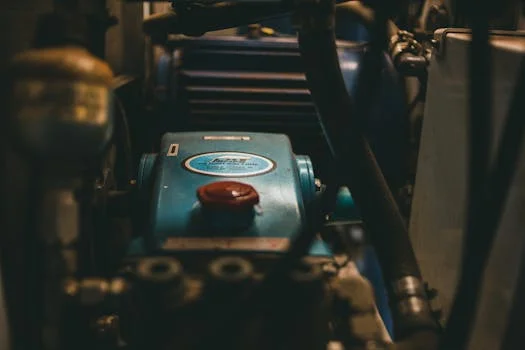
Selecting technology for a Rhode Island municipal plant starts with influent characteristics, which typically average 200–350 mg/L BOD and 250–400 mg/L TSS. In coastal towns such as Newport, seasonal tourism creates sharp hydraulic spikes. Sequencing Batch Reactors (SBR) or integrated WSZ underground treatment systems fit those sites when footprint and flow flexibility matter. Inland plants that take metalworking or food-processing wastes often need DAF systems for Rhode Island’s industrial wastewater pre-treatment to strip Fats, Oils, and Grease (FOG) before biology.
MBR technology is the usual pick when permits demand ultra-low nutrients below 1 mg/L phosphorus. Capital cost runs 20–30% higher than conventional activated sludge, yet secondary clarifiers disappear and reuse-quality effluent becomes practical. Engineers benchmarking nitrogen removal for Narragansett Bay permits can review how the Netherlands achieves 90%+ nutrient removal in municipal plants. Rural districts comparing modular CapEx sometimes look at California’s approach to small-scale municipal wastewater treatment before locking a Rhode Island design basis.
| Criteria | MBR System | Activated Sludge (CAS) | DAF (Pre-treatment) |
|---|---|---|---|
| Effluent Quality | Excellent (BOD/TSS <5) | Good (BOD/TSS <20) | Moderate (FOG/TSS removal) |
| Footprint | Minimal (60% reduction) | Large (Requires clarifiers) | Small to Medium |
| Sludge Production | Low | High (12-15 tons/10MGD) | Variable (Chemical sludge) |
| Maintenance | High (Membrane cleaning) | Moderate | Moderate (Chemical dosing) |
Decision Framework for Rhode Island Engineers:
- Is the site land-constrained? If yes, evaluate MBR or SBR technologies.
- Are Phosphorus limits below 0.5 mg/L? If yes, prioritize MBR or tertiary chemical precipitation with filtration.
- Does the influent contain high FOG or industrial metals? If yes, integrate a DAF unit for pre-treatment.
- Is there a requirement for Class A biosolids? If yes, include anaerobic digestion or lime stabilization in the sludge train.
- Will coastal storms drive untreated bypass risk? If yes, prove peak hydraulic redundancy in the DEM facility plan.
- Is CWSRF or revenue-bond financing the primary path? If yes, document O&M ($/1,000 gal) and energy (kWh/m³) in the facility plan.
- Is headworks screening still coarse-only? If yes, add rotary mechanical bar screens before biology and protect downstream membranes or SBRs.
Who This Is For and Next Step
This guide is for municipal engineers, EPC contractors, and city planners sizing Rhode Island wastewater treatment plants or major upgrades under DEM review. Look elsewhere if you need only a household septic design or a non-discharge on-site system without RIPDES obligations. For budget-grade equipment packages tied to a specific flow and permit limit, request a scoped quote through our municipal wastewater project inquiry form with average/peak MGD, BOD/TSS, and nutrient limits attached. Pair dewatering needs with sludge dewatering equipment for Rhode Island’s municipal plants when haul distance drives OpEx.
Frequently Asked Questions
What are the biggest environmental issues in Rhode Island related to wastewater?
The primary challenges are nutrient pollution (nitrogen and phosphorus) that drives hypoxia in Narragansett Bay, PFAS in groundwater, and Combined Sewer Overflows (CSOs) around Providence. The 2023 DEM reports keep focus on CSO Phase III abatement to protect shellfishing waters. Upper-bay plants often face Total Nitrogen limits near 5 mg/L, which is tighter than the common 30 mg/L BOD and 30 mg/L TSS baselines. Wet-weather hydraulic peaks remain the operational stress point.
How many municipal sewage treatment plants are in Rhode Island?
Rhode Island has 19 major municipal facilities, including Fields Point, Bucklin Point, Woonsocket, Warwick, Newport, Cranston, and the other community plants listed above. Together they treat about 100 million gallons per day. Fields Point alone serves roughly 350,000 residents at a 60 MGD MBR rating. Capacity planning should start from average-day and peak wet-weather hydrographs, not nameplate only.
What are Rhode Island’s effluent limits for municipal plants?
Limits are site-specific under RIPDES, but typical permits require 30 mg/L BOD, 30 mg/L TSS, 1 mg/L phosphorus, and 200 CFU/100 mL fecal coliform. Plants discharging to upper Narragansett Bay often face stricter nitrogen limits, for example 5 mg/L Total Nitrogen. Ultra-low phosphorus below 0.5 mg/L usually forces tertiary filtration or MBR. Always confirm the Order of Approval and current permit before freezing process selection.
How much does it cost to build a new sewage treatment plant in Rhode Island?
Costs range from $5M for small package systems to over $120M for large municipal facilities. The Woonsocket expansion cost $22M, while the Fields Point MBR upgrade was $85M. O&M commonly falls between $0.50 and $1.50 per 1,000 gallons treated, with Bucklin Point near $3.2M per year. CWSRF loans and revenue bonds are the usual funding mix for medium and large projects.
What equipment is needed for a Rhode Island municipal plant?
Essential equipment includes headworks screening, aeration or SBR basins, clarifiers or membranes, disinfection (UV or ClO₂), and sludge dewatering such as plate and frame filter presses. Coastal plants with FOG spikes should budget DAF pre-treatment. Land-constrained sites often replace secondary clarifiers with MBR cassettes. Match each unit to the RIPDES nutrient limit and peak hydraulic factor before issuing bid specs.