Which treatment should a Ridgeland chemical plant choose?
Ridgeland chemical plants should choose dissolved air flotation (DAF) when the primary objective is removing oil, grease, FOG, light particles, fine solids or chemically conditioned floc; they should choose gravity clarification when settling heavy solids is the main objective. The decision also depends on flow, solids loading, chemical conditioning, footprint, sludge handling and discharge targets. Ecologix reports 95% oil-and-grease removal with DAF versus 70% for a clarifier in one food-processing example, but that case does not guarantee performance on an untested chemical stream. A mixed stream may justify DAF for oil recovery followed by clarification for heavier solids.
Clarifiers generally have lower operating costs because they do not require the air compressor and recycle-pump arrangement typical of DAF. DAF adds equipment and operating requirements, especially where chemical conditioning is needed. Selection should therefore begin with the wastewater profile and treatment objective, not with a catalogued removal percentage. The industrial DAF system is relevant where flotation is required, while the high-efficiency lamella clarifier is relevant where gravity separation is the primary design basis.
| Decision condition | Primary mechanism | Procurement implication |
|---|---|---|
| Oil, grease, FOG or light solids dominate | DAF flotation | Include recycle, air generation, conditioning and skimming in the scope. |
| Heavy, settleable solids dominate | Gravity clarification | Require a settleability basis, sludge zone and solids-withdrawal design. |
| Both buoyant and heavy fractions require removal | Hybrid treatment | Define the sequence, intermediate solids handling and final effluent duty. |
| Colloidal material resists settling | Conditioning plus separation | Confirm floatability and chemical demand through bench testing. |
Match the equipment to the wastewater profile
A wastewater analysis must define the contaminants and operating conditions before any DAF or clarifier model is selected. Request flow rate, TSS, FOG, oil and grease, relevant metals, pH and temperature, together with the pollutants controlled by the facility’s discharge or sewer requirements. These results must be representative of normal production, batch discharges and upset conditions; an average laboratory result alone does not establish the equipment duty.
Map each contaminant to its physical behavior. Buoyant oil and FOG are separation targets for DAF. Heavy, settleable solids are more naturally associated with gravity sedimentation. Colloidal or poorly settling material may require pH adjustment, coagulation and flocculation before flotation or solids separation. A supplier should state which mechanism removes each designated pollutant rather than describing every unit as a general-purpose clarifier.
Define the plant objective before setting performance criteria. Chemical wastewater pretreatment for a downstream biological process is not equivalent to water reuse, sludge concentration or direct-discharge compliance. Each objective may require different effluent evidence, solids handling and operating controls. The applicable permit, sewer authority requirements and downstream process limits should be attached to the procurement brief.
Operating constraints also narrow the viable design. Record the available footprint, electrical service, air supply, operator coverage and sludge-disposal route. If chemical conditioning is part of the process, include the PLC-controlled chemical dosing system in the treatment-train review rather than treating it as a minor accessory.
| Wastewater information | Why it affects selection | Evidence to request before quotation |
|---|---|---|
| Flow and TSS | Defines hydraulic and solids capacity. | Representative flow series and solids-loading basis. |
| Oil, grease and FOG | Indicates whether flotation should perform primary removal. | Contaminant analysis and expected recovered-solids stream. |
| Metals and pH | Can require precipitation or chemical conditioning before separation. | Jar-test results and chemical compatibility information. |
| Temperature | Affects conditioning and separation conditions that the supplier must evaluate. | Design temperature and normal operating range. |
| Footprint, utilities and sludge route | Determines whether the technically suitable option is installable and operable. | Utility demand, layout envelope and disposal acceptance criteria. |
How DAF separates chemical wastewater
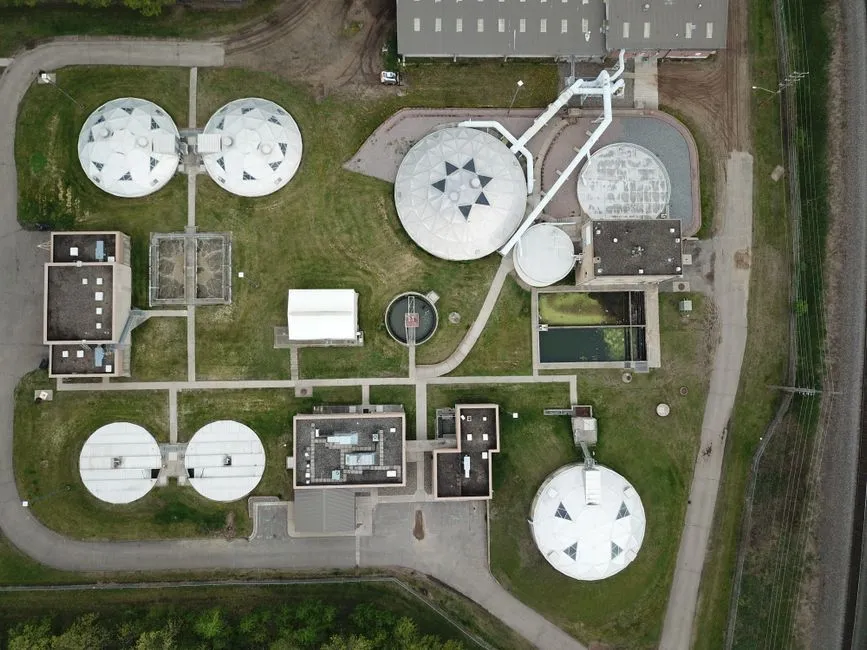
DAF separates material by flotation: dissolved air forms microbubbles in the wastewater, bubbles attach to suspended or conditioned material, and the resulting float is removed from the tank surface by a skimmer. This mechanism differs from gravity clarification because the target particles are intentionally carried upward rather than allowed to settle. Aries describes pH control, coagulation and flocculation as the pretreatment sequence used to optimize contaminant attachment. Its process uses an approximately 100 psi recycle system and approximately 30 µm microbubbles (Aries, source accessed 2026).
Clearwater separately describes microbubbles of 30–50 µm and states that DAF should be paired with coagulation and flocculation to improve particle size and bubble contact (Clearwater Industries, 2026-04-27). The two descriptions show why “DAF” alone is not a sufficient pilot-test specification. Bubble generation, recycle pressure, conditioning sequence, mixing and skimming must be included in the equipment definition and verified against the actual wastewater.
The supplied HydropureWater product range covers 4–300 m³/h across 13 standard models for suspended solids, FOG, oil and grease, and colloidal matter (HydropureWater product information, supplied 2026). That range identifies available standard configurations; it does not establish that every model can treat every Ridgeland wastewater. The supplier must map the selected model to the plant’s flow, solids loading, chemical program and required effluent quality.
Price the treatment train as a system. Depending on the stream, that scope may include equalization, pH control, coagulant and flocculant dosing, mixing, flotation, skimming, sludge withdrawal, controls and downstream solids handling. Where recovered solids require further dewatering, evaluate the plate-frame filter press as part of the solids route rather than as an unrelated purchase.
How clarification differs from flotation
Gravity clarification separates suspended solids by settling them into a bottom sludge zone, while lamella clarification adds inclined plates to compact the settling area. HydropureWater’s lamella clarifier combines sludge recirculation, flocculation and inclined-plate separation in one compact structure. Its stated surface loading rates are 20–40 m/h, with chemical consumption reduced by up to 30% (HydropureWater product information, supplied 2026). These are product claims, not a performance guarantee for an untested chemical stream.
Clarifier performance depends on settleability, particle-to-water density difference, floc conditioning and reliable solids withdrawal. A supplier must define those inputs in the design basis. A treatment objective based only on TSS removal may still fail if the solids are buoyant, colloidal or chemically unstable, while a DAF application may produce a float that includes oil-rich recovered material rather than ordinary settled sludge.
Ecologix reports that a clarifier reduced solids by 90% at lower cost in a mining application with heavy sediment loads (Ecologix Systems, source accessed 2026). This supports clarification where heavy solids and operating cost dominate, but it does not transfer directly to chemical wastewater. Procurement documents should explicitly state whether the required separator uses gravity, flotation or a combined process. Calling a DAF unit a “flotation clarifier” does not make it equivalent to a gravity clarifier.
| Selection feature | Conventional or lamella clarification | DAF |
|---|---|---|
| Separation direction | Solids settle to the bottom. | Conditioned material floats to the surface. |
| Best-fit contaminant | Heavy, settleable solids. | Oil, grease, FOG, light particles and conditioned floc. |
| Major equipment implications | Clarification zone, sludge collection and withdrawal. | Recycle and pressure system, air generation, flotation zone and skimming. |
| Chemical conditioning | May be needed to improve settling. | May be needed to improve attachment and floatability. |
| Recovered-material path | Bottom sludge withdrawal and handling. | Surface float skimming plus any bottom solids withdrawal. |
Compare operating, cost and footprint trade-offs
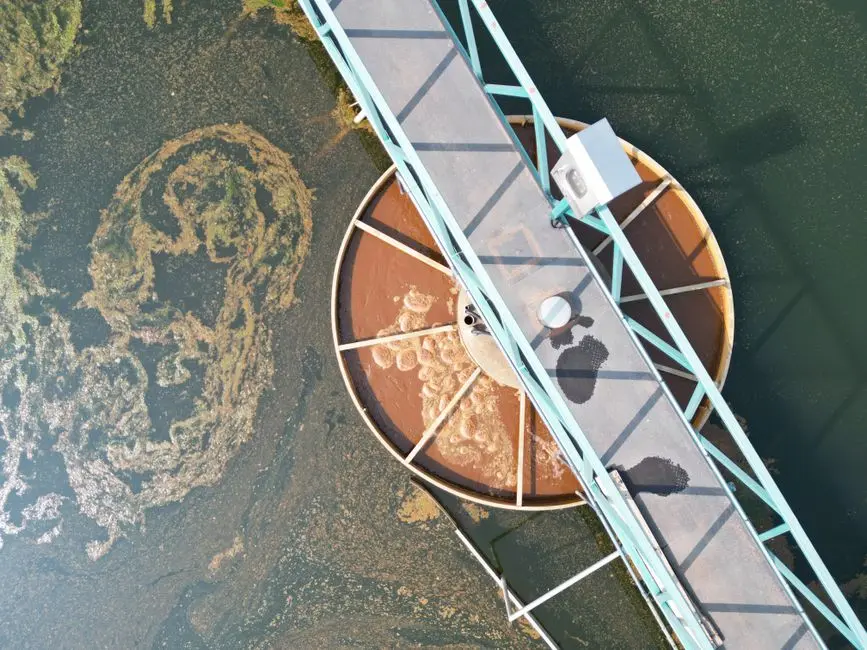
DAF generally has higher upfront and operating requirements than gravity clarification because it needs equipment such as an air compressor and recycle pumps, and because chemical conditioning may also be required. Clarifiers generally have lower operating costs, but purchase price alone is not a valid total-cost comparison. Each bid should separately price power, compressed air, chemicals, sludge handling, maintenance access, controls, operator attention and downstream disposal.
Footprint must be evaluated against the required flow and solids-loading envelope. Clearwater identifies FPAC as a low-profile separator for small-to-medium flow rates with very high TSS and FOG loads; FPBC as a high-profile separator for low-to-medium solids loads, including low-buoyancy particles; and FPHF as a system for high wastewater flows with low-to-large solids loads (Clearwater Industries, 2026-04-27). These descriptions show why one DAF geometry cannot be selected from flow rate alone.
Compare the recovered-solids paths directly. A clarifier normally produces a bottom sludge stream, while DAF produces a surface float and may also withdraw heavier material from the bottom. The chemical plant must know the expected volume, consistency, oil content, destination and required dewatering method for each stream. A DAF skid is not complete if the float cannot be removed, stored and disposed of within the available operating envelope.
Do not reuse another plant’s removal percentage. Ecologix’s 95% versus 70% oil-and-grease result describes one food-processing example, while its 90% solids-reduction result describes a mining example (Ecologix Systems, source accessed 2026). Neither establishes performance for an untested Ridgeland chemical stream. Require each supplier to submit one design basis covering flow, load, chemical program, expected effluent quality, sludge yield, utility consumption and equipment scope. Compare the industrial DAF system and high-efficiency lamella clarifier against that common basis rather than against isolated performance claims.
| Procurement criterion | DAF evaluation | Clarifier evaluation |
|---|---|---|
| Capital scope | Include recycle, pressure and air equipment, flotation tank, skimmer and controls. | Include clarification zone, lamella pack if applicable, sludge collection and withdrawal. |
| Operating utility | Power and compressed air, plus chemical feed where needed. | Typically lower utility demand; confirm mixing and sludge withdrawal requirements. |
| Chemical program | Specify dose, makeup and control response. | Specify dose and mixing only where conditioning is needed. |
| Solids route | Define skimming, bottom withdrawal, storage and disposal. | Define sludge withdrawal, thickening, dewatering and disposal. |
| Acceptance evidence | Remove oil, FOG or solids as applicable to the actual stream. | Demonstrate removal of the specifically defined settleable solids. |
Use testing to validate the final selection
A defensible selection proceeds from characterization to written treatment objectives, then compares DAF, gravity clarification, lamella clarification and hybrid alternatives against the same criteria. The alternatives should be tested against the same wastewater, chemical program and effluent targets. Do not permit one supplier to select its preferred mechanism without explaining how every designated contaminant will be removed.
Jar testing is the first experimental step. Aries states that wastewater samples and bench-scale jar testing can determine flotation characteristics, removal efficiency and a suitable chemical program (Aries, source accessed 2026). Tests should evaluate pH control, coagulation, flocculation, floatability and the fate of separated solids. Where the stream changes substantially, chemistry is unstable or removal claims are critical, use a representative pilot to verify solids capture, oil recovery, sludge generation and downstream effects.
Issue identical design-basis and acceptance questions to every shortlisted supplier. Require the guaranteed duty point, materials, controls, instrumentation, utilities, chemical consumption, maintenance obligations, sludge-removal method and included ancillary equipment. The equipment boundary matters: a tank-only quotation may omit equalization, mixing, dosing, air generation, controls and solids handling needed for an operable treatment system.
If chemical conditioning is part of the selected process, evaluate the PLC-controlled chemical dosing system as a scoped skid for coagulants, flocculants, pH adjusters and specialty chemicals. The broader chemical dosing system comparison can help structure the alternatives, but the final choice should follow the tested chemical program rather than precede it.
- Characterize representative wastewater and define the applicable permit and downstream limits.
- Map target contaminants to flotation, gravity separation or chemical conditioning.
- Run jar tests to establish pH, chemical dose, floatability and settleability.
- Pilot the shortlisted treatment train when variability or guarantees require it.
- Issue one common design basis to suppliers and compare the complete treatment scope.
- Define acceptance tests, operating documentation and downstream solids handling before award.
| Validation stage | Required output | Procurement consequence |
|---|---|---|
| Wastewater characterization | Representative analytical and flow data. | Defines the contaminant and loading basis. |
| Jar testing | Chemical program, floatability and settleability observations. | Screens mechanisms and identifies conditioning needs. |
| Representative pilot | Removal, recovered solids, chemical use and operating observations. | Confirms performance before full-scale commitment. |
| Supplier comparison | Common design basis, scope, utilities and acceptance criteria. | Creates an auditable bid comparison. |
| Acceptance review | Documented results against the agreed duty and effluent requirements. | Reduces commissioning and compliance uncertainty. |
Frequently Asked Questions
Which is cheaper to operate for chemical wastewater?
Clarifiers generally have lower operating costs, while DAF may be more cost-effective when oils, FOG or buoyant solids are the specific targets (Ecologix Systems, source accessed 2026). Request an operating-cost breakdown for power, compressed air, chemicals, labor, maintenance and recovered-solids disposal; no supported quotation is available for a generic Ridgeland stream.
How should a factory size DAF or a clarifier?
Require flow, pollutant loads, settleability or floatability, chemical demand, operating envelope and required effluent quality before comparing models. Request confirmation that the proposed equipment contains adequate flow and loading capacity, together with the supplier’s duty assumptions and margin.
Which equipment is easier to procure for a Ridgeland plant?
Comparability determines procurement quality, not equipment category alone. Give each supplier the same design basis and request materials, utilities, controls, auxiliary-equipment scope, acceptance criteria and service support. That check exposes omissions that could distort price and lead-time comparisons.
Can chemical wastewater use both systems?
Yes. Ecologix identifies hybrid treatment as an option in which DAF handles oil removal and clarification handles sedimentation in complex streams (Ecologix Systems, source accessed 2026). Test the sequence because the first stage can change the solids and oil load entering the second; the related DAF versus clarifier comparison for petroleum wastewater provides a related application framework.
What testing is needed before purchase?
Begin with wastewater analysis and jar testing for chemical conditioning, floatability and settleability, then use representative pilot testing when stream variability or removal guarantees make it necessary. A broader procedural reference is the chemical-wastewater DAF and clarifier selection guide.