Define the Effluent Treatment Objective Before Selecting Equipment
An effluent treatment plant in Guadalajara should be defined by its wastewater source, design flow, discharge route and reuse objective—not by a generic package capacity. Industrial wastewater treatment, municipal sewage treatment, effluent polishing and water reclamation have different process boundaries. Industrial pretreatment may be needed to remove oil, grease, suspended solids and colloids before biological treatment or membranes, while polishing supports a more demanding discharge or reuse specification. The available effluent treatment plant process and compliance guide provides a broader reference for structuring that decision.
Separate four scopes before requesting quotations:
- Industrial wastewater treatment: treatment of process and wash water originating from a defined industrial activity.
- Municipal sewage treatment: treatment designed around a municipal collection system and its wastewater characteristics.
- Effluent polishing: a downstream step that improves an already treated stream against a specified reuse, discharge or process-water requirement.
- Water reclamation: treatment and validation for an intended agricultural, process or potable-use endpoint.
The selected route also determines the applicable documentation. A sewer-discharge proposal must address the receiving utility’s pretreatment requirements. An authorized discharge requires the applicable Guadalajara, Jalisco and receiving-system conditions. Facility reuse requires the receiving process’s water-quality needs and evidence that the proposed train produces fit-for-purpose water.
The University of Twente’s Direct nanofiltration of wastewater treatment plant effluent research investigated nanofiltration for polishing wastewater-treatment-plant effluent and for producing effluent suitable for agricultural or direct/indirect potable uses. That research establishes a decision point: advanced membrane treatment has to be selected against a defined reclamation objective, not included merely because the discharge is being reused. Obtain current requirements from the competent authorities for the facility’s activity, discharge point and receiving system. The US EPA’s Effluent Guidelines describe national standards for industrial wastewater discharged to surface waters and municipal sewage-treatment plants, but they do not replace Mexican local requirements.
Characterize the Wastewater and Size the Treatment Train
A defensible treatment-plant sizing basis requires measured site data and a defined peak condition; the supplied research does not establish a universal design flow or effluent limit for an unspecified Guadalajara facility.
Build the characterization program around the process source and its operating schedule. At minimum, determine flow variability, suspended solids, oil and grease or FOG, COD, BOD, pH, temperature and salinity, then add toxicity and sector-specific contaminants identified during the process review. Record maximum and minimum flows, operating days, production changes, peak-load events, storm-water or wash-down inputs and any planned expansion. Use a sampling plan that captures normal production and the conditions most likely to overload the plant.
Suspended solids, oil and grease, FOG and colloidal matter must be evaluated before a biological or membrane stage is selected. Excess solids or emulsified oil can interfere with biological transfer, membrane separation and downstream polishing. Equalization may be necessary where the discharge is intermittent or highly variable, but its required capacity must come from the measured duty cycle rather than an assumed average.
The listed equipment envelopes are useful for preliminary matching, not final sizing:
| Equipment | Listed capacity or specification | Selection implication |
|---|---|---|
| Industrial DAF pretreatment system | 4–300 m³/h across 13 models | Screen as a possible solids, oil, grease and FOG separation stage, then verify peak flow and contaminant loading. |
| MBR membrane bioreactor system | 10–2,000 m³/day; filtration below 1 micrometre | Evaluate where biological treatment and membrane solids separation are required within the available envelope. |
| Ultrafiltration polishing system | 2,000–40,000 L/h; 0.03-micron PVDF membranes; accepts up to 300 ppm turbidity | Check feed turbidity and the required polishing duty before selecting UF. |
Do not scale a generic plant from a web directory. Require suppliers to show which flow condition their quoted capacity represents, what feed quality they assumed, how the peak condition is handled and which performance parameter each stage must achieve.
Choose a Staged Treatment Process for Industrial Effluent
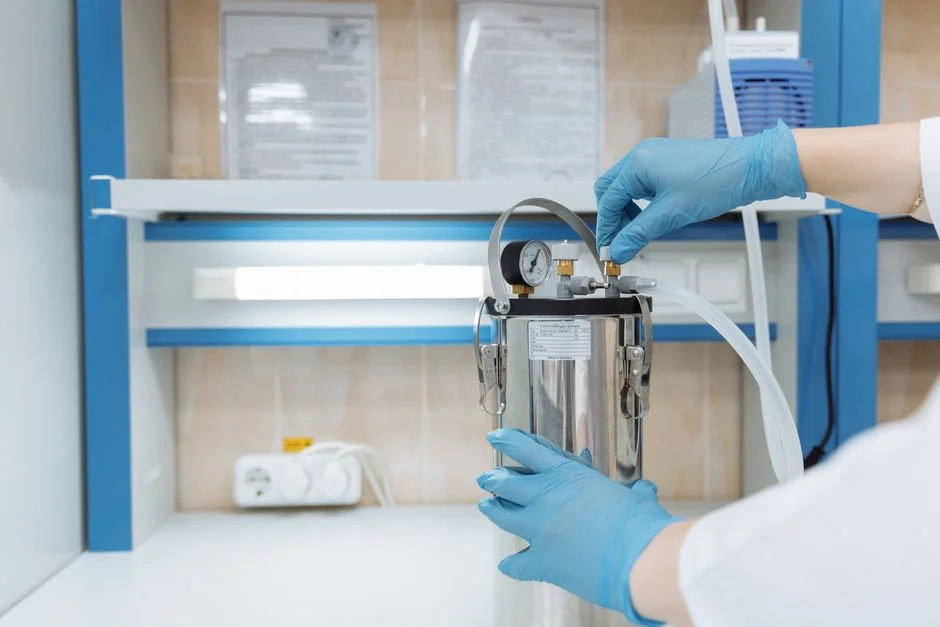
A staged industrial ETP design separates physical removal, biological treatment, membrane separation, disinfection and polishing so each unit has a defined contaminant-removal objective.
The usual process sequence is:
- Screening and equalization: remove coarse material and stabilize flow and load where monitoring shows it is required.
- pH or chemical conditioning: prepare the stream for the following separation or biological stage.
- Oil, FOG and solids separation: prevent oily or particulate material from overloading downstream systems.
- Biological treatment: reduce biodegradable organics where the wastewater and receiving route make biological treatment appropriate.
- Secondary clarification or membrane separation: separate biomass or retain solids before discharge or polishing.
- Disinfection: apply where required by the intended discharge or reuse conditions.
- Advanced polishing: meet a defined process-water, agricultural or reclamation specification.
For wastewater with high suspended-solids or oily characteristics, DAF is a candidate pretreatment stage. The listed industrial DAF pretreatment system spans 4–300 m³/h across 13 models and uses micro-bubble flotation with automatic skimming for suspended solids, FOG, oil and grease and colloidal matter. Those functions must still be matched to measured feed characteristics and peak flow.
Where compact biological treatment and membrane solids separation are appropriate, the listed MBR membrane bioreactor system combines activated sludge with submerged PVDF membrane filtration. Its stated filtration performance is below 1 micrometre, its listed capacity is 10–2,000 m³/day, and the manufacturer states that it uses 60% less footprint than conventional systems. Treat that footprint statement as a vendor claim to be checked against the proposed plant arrangement.
UF and nanofiltration are not interchangeable selection labels. The ultrafiltration polishing system has the listed membrane and turbidity specifications above. The University of Twente study specifically investigated direct nanofiltration for polishing wastewater-treatment-plant effluent and reclamation, which supports defining the polishing objective before selecting the membrane.
Constructed wetlands should be treated as a researched polishing option rather than the default industrial process. Wageningen University and Research’s 2022 doctoral thesis investigated their use for removing micropollutants from wastewater-treatment-plant effluent; that research does not establish them as a substitute for front-end industrial pretreatment.
| Treatment challenge | Candidate stage | Evidence-based check |
|---|---|---|
| Coarse material | Mechanical screening | Confirm screen opening, solids loading and extracted-material handling; the rotary mechanical bar screen is an equipment reference. |
| Suspended solids, oil, grease and FOG | DAF pretreatment | Verify the selected DAF model against peak hydraulic and contaminant loads. |
| Biodegradable organics with membrane solids separation | MBR | Check biological loading, membrane feed quality and the 10–2,000 m³/day envelope. |
| Microbial control | Disinfection | Define the required dose and monitoring basis for an effluent disinfection generator. |
| Separated residuals | Sludge conditioning and dewatering | Include storage, conditioning and a sludge dewatering filter press where the residual assessment supports it. |
Include residual handling from the outset. DAF skimming, biological sludge and chemical precipitates require a destination and handling method; a treatment proposal that omits sludge conditioning, storage or dewatering is incomplete.
Match the Plant to Discharge, Reuse and Operating Requirements
The selected endpoint must be measurable because filtration performance alone does not demonstrate permit compliance or fitness for reuse.
For a sewer discharge, define the receiving utility’s pretreatment objectives and confirm whether the purchase is treatment only, treatment plus disinfection, or a turnkey plant. Require the supplier to state which constituent limits are being addressed and identify the parameter associated with each proposed stage.
For process-water reuse, identify the receiving process and its required water quality before choosing UF, reverse osmosis or another polishing technology. The reverse osmosis water purification system and RO and UF membrane filter elements should therefore be evaluated as components of a specified duty, not selected from a generic filtration claim.
For advanced reclamation, the University of Twente research supports the technical relevance of nanofiltration while also showing why the endpoint must be explicit: its study examined polishing to EU Water Framework Directive standards and production suitable for agricultural or direct/indirect potable uses. Those research contexts are not substitutes for current Mexican reuse requirements or site validation.
| Endpoint | Evidence to request | Do not assume |
|---|---|---|
| Sewer discharge | Receiving-utility acceptance criteria and included pretreatment stages | That treatment equipment automatically satisfies the utility’s permit conditions. |
| Process-water reuse | Receiving-process quality parameters, variability limits and monitoring method | That filtration below a stated pore size guarantees process fitness. |
| Advanced reclamation | Applicable reuse objective, validation evidence and required monitoring | That a research result establishes a Guadalajara authorization or potable-use approval. |
| Plant operation | Footprint, utilities, controls, operator competence, sludge route, maintenance access and expansion plan | That headline capacity captures the full commercial and operational burden. |
Evaluate these operating constraints alongside flow and contaminant-removal claims. A compact train that cannot be maintained, lacks utilities, produces an unresolved sludge stream or cannot accommodate future flow changes may be technically unsuitable despite meeting its nominal duty.
Evaluate Guadalajara Suppliers and Equipment Bids Consistently
A directory match is a discovery aid, while a comparable technical and commercial brief is needed to evaluate Guadalajara wastewater equipment suppliers.
RevenueBase’s September 2026 market view reported 123 exact-match company associations for effluent-treatment-plant construction associated with Mexico. It listed Equimarequimar.mx in Guadalajara with 11–50 reported employees. The same source recorded SISPOTAGUA as providing integrated solutions for municipal drinking-water and wastewater projects with utilities and local governments across western Mexico. These records establish discovery relevance, not suitability for a particular industrial ETP.
Issue the same design basis to every bidder. Require the response to identify:
- Design flow, measured wastewater basis and selected peak condition;
- Treatment objectives and the proposed process stages;
- Equipment model, duty point and expected performance parameter;
- Utilities, footprint, control philosophy and operator requirements;
- Civil, electrical, piping and installation scope;
- Commissioning tests, acceptance method and performance guarantees;
- Warranty, spare parts, local service coverage and response arrangements;
- Exclusions involving permits, sludge disposal, training or site utilities.
Ask each bidder to associate every proposed unit with a contaminant-removal or operating objective. “High-quality output” or “complete treatment” is not an auditable specification. A DAF proposal should identify the relevant feed contaminants and hydraulic duty; an MBR proposal should address biological loading and membrane separation; a polishing proposal should identify the required quality characteristics and any upstream constraints.
| Bid comparison field | Information every bidder must provide | Engineering review question |
|---|---|---|
| Design basis | Flow schedule, peak condition, wastewater characterization and expansion allowance | Is every unit sized from the same submitted duty? |
| Process scope | Stages, equipment model, controls and performance parameters | Does each stage solve a defined contaminant problem? |
| Installed scope | Civil works, utilities, piping, electrical, controls and installation | Are exclusions likely to create a major change order? |
| Acceptance | Commissioning tests, feed conditions, test methods and guarantees | Can performance be verified objectively? |
| Commercial | Price, warranty, spares, training and service terms | Are alternatives compared on the same scope? |
| Support | Local references, service personnel and spare-parts pathway | Can the supplier support the installed equipment after handover? |
Verify references and service capability directly. Company descriptions and directory records should not replace site visits, reference checks or a review of the proposed process and guarantees. Also assess the availability of valves and filtration components for operating maintenance through the water-treatment parts, valves and filter-media range before committing to a supplier.
Build a Cost and Risk Scope Before Ordering
The supplied research contains no validated 2026 price for an ETP in Guadalajara, so a defensible budget requires a site-specific quotation rather than an unsupported cost range.
Separate the estimate into process engineering, equipment, civil works, electrical and controls, piping, installation, commissioning, training, chemicals, sludge handling, permits and maintenance. Ask what is excluded from each quoted line. A low equipment price may omit equalization, chemical dosing, odor control, utilities connections, controls integration, residuals handling or commissioning support.
Model operating exposure as well as acquisition cost. Relevant items include energy, chemical consumption, membrane replacement or cleaning, DAF skimming, sludge treatment and specialist service visits. The supporting process scope should also draw on the broader pharmaceutical wastewater treatment in Mexico where sector-specific chemistry makes the treatment boundary important.
The principal procurement risks are identifiable before award:
- Capacity risk: equipment selected from average flow rather than the agreed peak condition.
- Process risk: biological, flotation or polishing technology selected without confirming the wastewater characteristics.
- Performance risk: guarantees that lack agreed feed conditions, duty points, test methods and treated-water quality criteria.
- Scope risk: civil works, utilities, installation or sludge disposal excluded without a corresponding allowance.
- Schedule risk: approvals, civil work, utility connections or supplier deliverables delay commissioning.
- Compliance risk: permit conditions or reuse claims remain undefined in the purchase order.
Attach an acceptance plan to the order. It should define the agreed feed conditions, duty points, sampling methods, required treated-water quality, corrective actions and acceptance authority. Brochure language alone does not provide a commissioning criterion or a remedy when performance is not achieved.
Frequently Asked Questions
How much does an effluent treatment plant in Guadalajara cost?
No reliable universal price can be derived from the supplied research. Request a site-specific quotation that states wastewater characterization, average and peak flow, treatment objectives, site utilities, civil scope, sludge handling, installation, commissioning, permits and any reuse requirement. Compare bids only after confirming that these inputs and exclusions are equivalent.
Which treatment system is best for industrial wastewater in Guadalajara?
The correct system depends on the contaminant problem. Use DAF where suspended solids, oil, grease or FOG require front-end separation; consider MBR where biological treatment and membrane solids separation are appropriate; and use UF or another membrane stage where a defined polishing duty exists. The governing design inputs are the measured wastewater characteristics, peak flow and required effluent quality—not the equipment name alone.
How do I size an industrial effluent treatment plant?
Require measured flow data, maximum and minimum flows, the production and discharge schedule, wastewater characterization, peak-load conditions and planned expansion. Add the selected discharge or reuse endpoint and site constraints. No supplier should scale equipment from a generic Guadalajara flow without stating the design condition and wastewater basis behind that capacity.
Should I buy a package plant or a custom industrial ETP?
A package plant may suit a standardized, well-characterized duty with stable flow and a clear treatment objective. A custom train may be necessary for variable industrial wastewater, multiple contaminant groups, unusual footprints or demanding reuse targets. Decide after completing characterization; packaging alone does not resolve process fit or compliance.
How can I compare wastewater treatment suppliers in Guadalajara?
Issue one common technical and commercial brief and require responses on process stages, equipment model and capacity, utilities, footprint, controls, guarantees, installation exclusions, commissioning tests, warranty, service coverage and references. Then verify the local references directly. Directory records can help identify candidates, but they cannot establish technical suitability, delivery capability or permit compliance.