What Wastewater Treatment Does a Morelia Data Center Need?
A data center in Morelia needs separate treatment for sanitary wastewater and cooling-tower blowdown: biological treatment for the workforce stream, and filtration, membrane polishing and concentrate management for the industrial process stream. Blowdown is reported at 1,200–6,000 mg/L TDS, with about 25–30% of makeup leaving the loop at four cycles of concentration (Genesis Water Technologies, 2025). The practical train starts with side-stream filtration and UF, then adds NF or RO where reuse requires hardness or dissolved-solids control. Partial or full zero liquid discharge should be evaluated only against confirmed Morelia discharge constraints, tariffs and reuse rules.
The first design error is to treat these streams as one wastewater. Their unit processes, permits, guarantees and residual routes should remain distinct even if they eventually share storage or conveyance. This is the decision-first approach used in the data-center treatment-train methodology and the regional Mexico data-center wastewater treatment guide.
| Stream | Controlling treatment duty | Design decision | Residual route |
|---|---|---|---|
| Sanitary wastewater | Biological treatment, solids separation and disinfection | Select packaged treatment for discharge-only duty or MBR for high-quality reuse or compact solids separation | Confirmed sewer, irrigation or other reuse destination |
| Cooling-tower blowdown | Particulate removal, membrane polishing, chemical control | Use filtration and UF; add NF or RO according to hardness, TDS and reuse requirements | Permitted concentrate discharge, further concentration or crystallization |
Blowdown volume cannot be inferred reliably from IT load. Request the cooling-system vendor’s makeup flow, cycles of concentration, seasonal operating profile, chemical program and expected blowdown. The 25–30% value at four cycles is a design check, not a substitute for the site water balance (Genesis Water Technologies, 2025).
Why Morelia Requires a Site-Specific Water Balance
Morelia’s treatment selection must be based on confirmed local allocation, discharge and reuse conditions; the supplied research does not establish current Morelia extraction limits, sewer tariffs or discharge values. Treating the nearby Valley of Mexico as proof of those requirements would create a permit and budget risk.
The reported blowdown quality is 1,200–6,000 mg/L TDS, equivalent to four to eight times makeup-water TDS under the 2025 Genesis Water Technologies design basis. That concentration affects membrane recovery, antiscalant demand and the choice between NF and RO. Calcium, magnesium, silica and alkalinity also concentrate, making feed chemistry—not a generic equipment catalog—the controlling design input.
A twelve-month water analysis should cover seasonal operation and track TDS, hardness, silica, chloride, sulfate, iron and manganese. The blowdown quality must be measured while the proposed cooling chemistry is operating because biocides, corrosion inhibitors, scale inhibitors and dispersants affect both reuse suitability and pretreatment design.
Local allocation can also reverse the economic choice. A permitted sewer route may support filtration and RO, while contested water allocation may justify partial zero liquid discharge through mechanical vapor compression. Full ZLD becomes relevant when liquid discharge is effectively unavailable or the project has a water-positive objective, but it introduces land, power, maintenance and solid-residual requirements that must be tested against the site.
The Valley of Mexico blowdown-treatment reference is useful for identifying regional pressures and documents to request. It is not evidence of current Morelia permits. The buyer should obtain written confirmation from Morelia’s authorities rather than transfer conditions established for Ecatepec, Mexico City or another municipality.
Separate Sanitary Wastewater from Cooling Blowdown
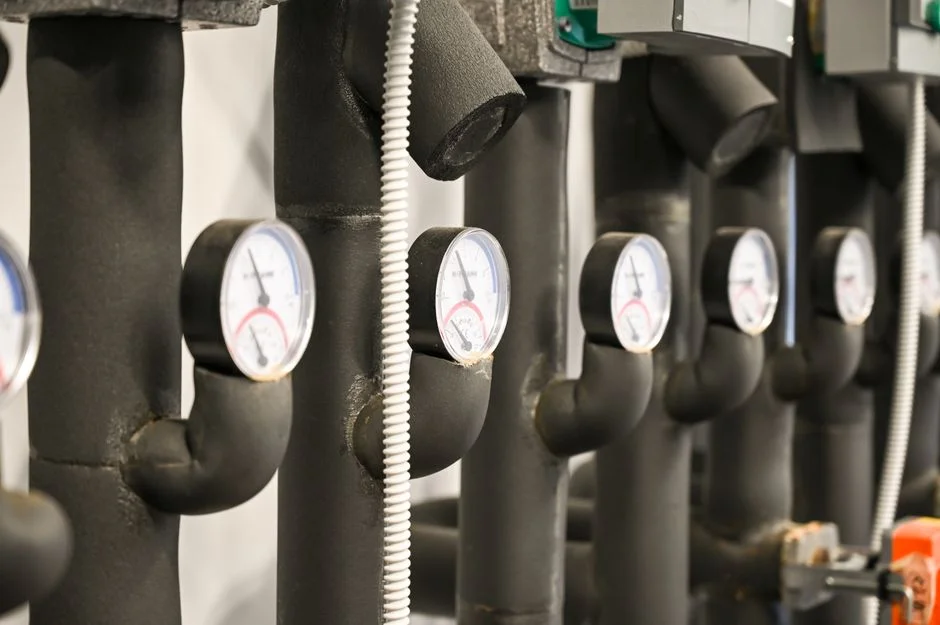
Sanitary wastewater and cooling blowdown have incompatible contaminant profiles and therefore require separate biological and industrial treatment boundaries. Combining them can increase organic loading and solids variability ahead of membranes, invalidate cooling-water chemistry assumptions and force both trains to operate below their intended conditions.
For sanitary wastewater, request measured flow, BOD, TSS, ammonia, phosphorus, intended reuse, available footprint, sludge route and operator availability. HydropureWater’s 2025 Ecatepec reference gives a preliminary workforce estimate of 80–120 L per person per day. Use it only for early planning; the final package must be sized from measured or contractually confirmed flow and loading.
Packaged biological treatment can be compared for discharge-only duty. Where high-quality reuse, reliable solids separation or a small footprint is required, evaluate an MBR sanitary wastewater treatment system. Its selection record should include the reuse specification, disinfection and residual-control requirements, sludge handling, operator availability and acceptance tests.
The blowdown scope should follow a controlled sequence: equalization and characterization; side-stream filtration; UF; NF or RO where justified; residual control or polishing; reuse storage; and managed concentrate disposal. Equalization provides hydraulic and analytical stability, while pretreatment removes suspended solids, biofilm fragments and corrosion products before membranes.
| Design input | Sanitary wastewater | Cooling-tower blowdown |
|---|---|---|
| Flow basis | Measured flow; preliminary workforce screening only | Vendor-confirmed blowdown flow and seasonal profile |
| Water-quality basis | BOD, TSS, ammonia and phosphorus | TDS, hardness, silica, chloride, sulfate, iron, manganese, residual biocide and treatment chemicals |
| Core treatment | Packaged biological treatment or MBR | Side-stream filtration, UF and, when justified, NF or RO |
| Outcome | Permitted discharge or specified reuse | Cooling-makeup reuse, other reuse or permitted discharge with managed concentrate |
Select the Blowdown Treatment Train by End Use
The correct blowdown train ends at the confirmed reuse or discharge objective; adding NF or ZLD before that decision confuses pretreatment with residual management. The process sequence is equalization and analysis, side-stream filtration, UF, NF or RO, residual control or polishing, reuse storage and a lawful concentrate route.
Side-stream filtration is the first guard against suspended solids and biological loading. The cited design basis treats 1–5% of circulation flow with 10–25 micrometre self-cleaning spiral or multimedia filtration (Genesis Water Technologies, 2025). The installed screening cost is US$50,000–200,000, but project capacity and pricing still require the cooling-system data and site installation scope.
A hollow-fiber UF pretreatment system provides a biological and particulate barrier before RO. The cited basis is 0.01–0.1 micron pore size, 10–30 psi operating pressure and 90–95% recovery, with chemical cleaning every one to three months (Genesis Water Technologies, 2025). This performance is a design reference, not a Morelia guarantee.
Use NF when hardness is the limiting constituent. The cited NF basis is 75–150 psi, 70–85% recovery and permeate TDS of 30–50% of feed (Genesis Water Technologies, 2025). Use RO where broad dissolved-solids removal is required for cooling makeup or the receiving route: the cited performance is 95–99% dissolved-solids removal, 150–400 psi, 50–85% blowdown recovery and 10–50 mg/L permeate TDS.
The source-specific cost references are screening benchmarks: side-stream filtration at US$50,000–200,000 installed; a 50,000 GPD RO system at US$250,000–500,000 installed; and RO operating cost at US$1.50–3.00 per thousand gallons (Genesis Water Technologies, 2025). The industrial RO blowdown-recovery equipment and multi-media pretreatment equipment should therefore be quoted from confirmed flow and chemistry, not from the example capacity.
| Stage | Cited design basis | Selection rule |
|---|---|---|
| Side-stream filtration | 1–5% of circulation flow; 10–25 µm | Required protection for downstream membranes and biological control |
| UF | 0.01–0.1 µm; 10–30 psi; 90–95% recovery | Use as the biological and particulate barrier before RO |
| NF | 75–150 psi; 70–85% recovery; permeate TDS 30–50% of feed | Use where hardness is the principal constraint |
| RO | 95–99% dissolved-solids removal; 150–400 psi; 50–85% recovery; 10–50 mg/L permeate TDS | Use for broad dissolved-solids control and cooling-makeup reuse |
Choose a Reuse and Concentrate-Management Level
Partial zero liquid discharge reduces liquid discharge volume but retains a permitted brine route; full zero liquid discharge adds evaporation and crystallization so that no liquid discharge remains. Neither should be selected from a generic water-stress label.
Where municipal supply is stable and a discharge permit is obtainable, the low-stress route can use side-stream filtration plus RO and target 60–75% blowdown reuse, subject to the receiving body. Where allocation is contested or discharge is restricted, evaluate NF for partial softening and partial ZLD through mechanical vapor compression, with an 80% reuse target in the HydropureWater framework.
The reported partial-ZLD combination uses RO at 50–75% recovery feeding MVC at 95% recovery, producing 85–95% overall recovery without a crystallizer (Genesis Water Technologies, 2025). MVC performance is reported at 95–98% concentrate recovery, distillate below 10 mg/L TDS and 15–25 kWh per 1,000 US gallons.
Where no discharge permit is available or the project requires a water-positive outcome, full ZLD adds crystallization to the MVC and RO train. The published screening benchmark is US$3–8 million in capital cost and US$5–15 per thousand gallons in operating cost (Genesis Water Technologies, 2025). This is not a Morelia quotation: salt load, evaporation duty, electricity, crystal handling and the legal concentrate route determine the actual result.
The more-than-US$5–15-per-thousand-gallons discharge band is also a regional screening value, not a Morelia tariff. Obtain the written tariff before comparing direct discharge with partial or full ZLD. The concentration hardware must be selected from the confirmed residual chemistry and destination; available RO and UF membrane replacement elements should be scoped separately from the base treatment package.
| Route | Indicative treatment | Controlling condition | Published benchmark |
|---|---|---|---|
| Low-stress reuse | Side-stream filtration plus RO | Stable supply and obtainable discharge permission | 60–75% blowdown reuse target |
| Medium-stress reuse | NF plus RO, with MVC considered | Contested allocation or restricted discharge | 80% reuse target |
| Partial ZLD | RO at 50–75% recovery feeding MVC at 95% recovery | Permitted residual route remains available | 85–95% overall recovery |
| Full ZLD | RO, MVC and crystallizer | No practical liquid-discharge route | US$3–8 million CAPEX; US$5–15 per thousand gallons OPEX |
Build a Morelia-Compliant Permitting and Procurement Package
Permitting starts by identifying the final route: a municipal collector, surface water, a permitted reuse destination, on-site irrigation or zero liquid discharge. These are not interchangeable design bases because each creates a different receiving authority, monitoring obligation and residual route.
Request current NOM-001-SEMARNAT requirements for the selected receiving body, written Morelia water and sewer tariffs, applicable Edomex reuse permissions, and any extraction-concession conditions affecting cooling makeup. The supplied research does not provide current Morelia discharge limits or tariffs, so final criteria must come from the relevant authorities and local counsel rather than a regional comparison.
The technical package should follow this sequence:
- Obtain the cooling vendor’s makeup flow, blowdown, cycles of concentration, seasonal profile and chemical program.
- Complete a twelve-month site-water analysis covering the specified dissolved, particulate and seasonal parameters.
- Confirm the receiving body, written tariffs, reuse permissions and lawful concentrate route.
- Define separate sanitary and blowdown performance guarantees, including reuse quality and residual disposition.
- Require each bidder to provide a mass balance, controls philosophy, redundancy, commissioning criteria and complete operating assumptions.
Require a low-phosphate, non-chromate cooling-water chemistry proposal and verify its compatibility with membrane pretreatment and the final reuse specification. The cited engineering reference identifies these chemistry characteristics as necessary for downstream membrane reuse, but the final program remains a site-specific selection (Genesis Water Technologies, 2025).
Compare bids on like-for-like operating costs: energy, chemicals, membrane replacement, labor and concentrate disposal should be separate line items. The regional framework in the Mexico data-center treatment reference supports staged procurement, while the Mexico treatment-guide document approach illustrates why local requirements must be requested in writing.
Do not issue a final equipment order until the twelve-month analysis, cooling-vendor data and receiving-body requirements are available. Initial concepts may be budgeted as conditional scenarios; final capacity and guarantees must follow the confirmed inputs.
Frequently Asked Questions
Is a 50,000 GPD RO system the right capacity for a Morelia data center?
No. The 50,000 GPD system and its US$250,000–500,000 installed cost are published benchmarks, not a Morelia capacity recommendation (Genesis Water Technologies, 2025). Request sizing from the cooling vendor’s blowdown flow, the selected recovery target, measured chemistry, operating profile and reuse requirement.
Should the project use NF, RO, partial ZLD or full ZLD?
Select NF when hardness is the limiting constituent, RO when broad dissolved-solids control is required, partial ZLD when discharge volume must be reduced but brine can still be lawfully managed, and full ZLD when no practical liquid-discharge route exists. The decision must follow the confirmed reuse specification, discharge conditions, land, power and residual route rather than equipment price alone.
How should treatment bids be compared for cost and performance?
Require each bidder to price energy, chemicals, membrane replacement, labor and concentrate disposal separately and to submit an OEM-backed mass balance and guarantees for recovery, permeate quality, membrane life and commissioning. The US$1.50–3.00-per-thousand-gallons RO operating benchmark is not comparable unless bidders use the same flow, chemistry, recovery and cost boundary.
Which local approvals should be confirmed before selecting equipment?
Obtain written confirmation of current NOM-001-SEMARNAT requirements for the selected receiving body, Morelia water and sewer tariffs, Edomex reuse permissions and any extraction-concession conditions. Do not transfer Ecatepec or Mexico City conditions to Morelia without confirmation from the competent authority.