Why Rural Turkmenistan Needs Decentralized Sewage Treatment
Municipal sewer is not generally available in Turkmenistan, so rural wastewater treatment must usually be planned on site (Enormous Buildings, 2026). Select an A/O package plant for an integrated buried treatment train, MBR where compactness or membrane solids separation is justified, or a septic tank and soakaway only after site testing confirms disposal conditions. The decision depends on verified flow and load, land, groundwater, effluent reuse, maintenance capacity and local approval. These constraints make decentralized wastewater treatment in Turkmenistan a site-specific engineering problem, not simply an equipment purchase.
Water scarcity is inseparable from the sanitation decision. Borgen Project identified Turkmenistan’s arid desert climate, high temperatures and low precipitation as reasons for severe water insecurity, and described sewage and drainage pollution as major obstacles to water quality. It also identified reuse of treated drainage water as one response to the country’s water challenges (2017-08-09). The project therefore has two linked outputs: treatment of sewage at or near the settlement, followed by safe disposal or reuse of the treated effluent.
The national sewage-sludge energy estimate is a resource assessment, not a plant-performance figure. E3S Web of Conferences reported a sewage-sludge energy potential of 794.45 MJ per inhabitant per year (2026). That value belongs in a national bioenergy-resource study and should not be used to size equipment, estimate electrical demand or promise net energy from a rural installation.
For an initial country and project context, see HydropureWater’s Turkmenistan wastewater guidance, but use it as a source of leads rather than as a substitute for site-specific engineering.
Confirm the Site and Wastewater Design Basis
No equipment should be selected until the site boundary, drainage routes and wastewater demand have been established. Enormous Buildings states that a municipal connection is not generally available and advises confirming whether one genuinely exists before designing an on-site system (2026). That confirmation should come from the site boundary information and relevant local authorities, while the detailed design should be reviewed by a professional registered in Turkmenistan.
Obtain the current and projected wastewater flow, seasonal population, commercial or industrial contributions, inlet BOD, COD, suspended solids, fats and oils, and salinity. A daily mean alone will not establish equipment duty. The calculation must also address peak flow, seasonal variation and organic loading, because hydraulic capacity can be adequate while the biological or solids-handling stages are overloaded.
Map soil type, groundwater, flood levels, drainage paths, protected areas, irrigation use, and the proposed discharge or reuse point. Percolation testing is essential for a soakaway: Enormous Buildings warns that clay soils may not percolate and may require a different disposal method (2026). The same source identifies poor percolation as capable of doubling disposal-field needs, so the test affects both feasibility and cost.
Keep stormwater and foul drainage separate. Roof and paving water should be directed to a soakaway or storm drain, while foul sewage enters the treatment train; combining the two can overload treatment and is described by Enormous Buildings as prohibited in almost all circumstances (2026). Resolve gravity drainage, floor levels, pipe inverts and the outfall before foundations are designed.
| Design input | Evidence required before selection | Decision affected |
|---|---|---|
| Service area and sewer availability | Boundary information and confirmation from local authorities that no municipal connection is available | Whether decentralized treatment is required |
| Wastewater flow and load | Current and projected flow, seasonal population, non-domestic contributions, BOD, COD, suspended solids, fats and oils, and salinity | Hydraulic, biological and solids capacity |
| Ground and groundwater | Soil survey, percolation test, groundwater levels, flood levels and drainage routes | Soakaway feasibility, foundations and outfall protection |
| Receiving environment | Protected areas, irrigation use, discharge point and intended reuse | Effluent specification and disposal route |
| Civil drainage | Separate foul and stormwater layouts, floor levels, pipe inverts and outfall arrangement | Installation scope and construction risk |
Compare A/O Package Plants, MBR and Septic Systems
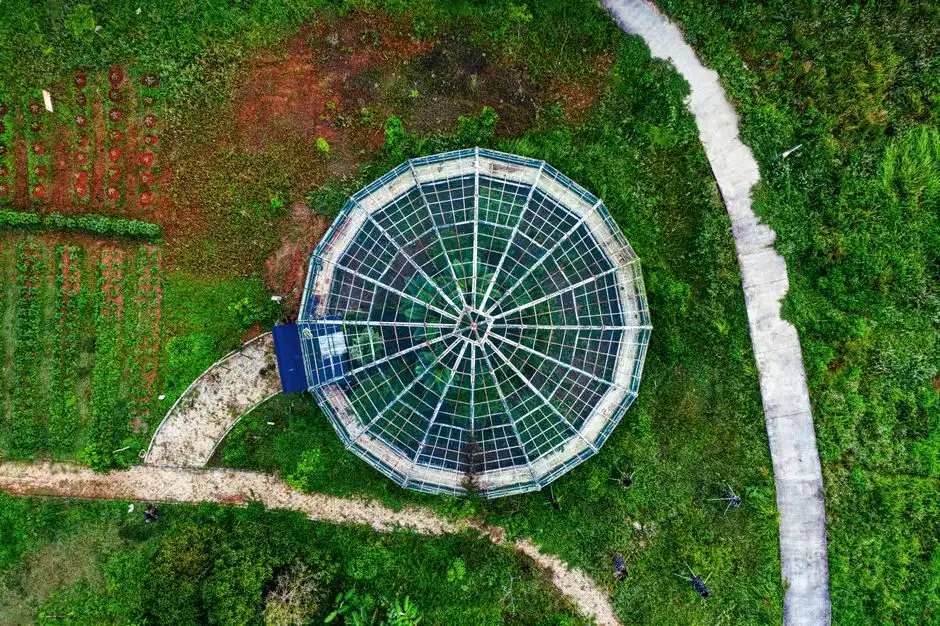
The WSZ series is the lower-complexity rural benchmark because it combines A/O biological contact oxidation, sedimentation and disinfection in one buried package unit. The verified product catalog describes it as fully automated, requiring no operator, and suitable for residential communities, hotels, hospitals, factories and rural areas; it handles 1–80 m³/h and can be installed below grade or mounted on a trailer for mobile deployment (HydropureWater verified product catalog, 2026). A buried A/O package sewage treatment plant should therefore be considered when the site has limited surface space and the project can rely on an automated operating sequence with defined maintenance access.
Use an MBR sewage treatment system where compact equipment or membrane-based solids separation is required. The supplier’s Turkmenistan catalog reports an MBR range of 10–2,000 m³/day and a 60% smaller footprint than conventional systems (HydropureWater location guide, 2026). Those are vendor-market figures, not independent rural-project guarantees. MBR also introduces membrane cleaning, replacement and specialist support, which must be included in the comparison.
A septic tank and soakaway is the conventional on-site foul-drainage arrangement where the site and approval process support it. Enormous Buildings reports that it commonly represents 3–6% of house construction cost and warns that poor percolation can double disposal-field needs (2026). That percentage is not a package-plant price. The arrangement should be rejected or redesigned if clay, groundwater, flood exposure or receiving-water constraints prevent the disposal field from functioning.
| Decision condition | Preferred architecture | Reason | Must be verified |
|---|---|---|---|
| Rural settlement needing an integrated, largely automated system | WSZ A/O package plant | Contact oxidation, sedimentation and disinfection are combined in a buried unit; the catalog range is 1–80 m³/h | Hydraulic and organic loading, process-stage duty, outfall, utilities and maintenance access |
| Severe footprint constraint or need for membrane solids separation | MBR | The catalog reports 10–2,000 m³/day capacity and a 60% footprint saving | Membrane cleaning, replacement, spare parts, operator competence and lifecycle cost |
| Small or dispersed site with favourable soil and approved disposal route | Septic tank and soakaway | Provides on-site foul treatment and disposal where sewer access is unavailable | Percolation, tank sizing, groundwater separation, disposal-field area and local approval |
Do not choose a process from the equipment label alone. The wastewater load, required effluent quality, land availability, disposal route and maintenance capability must be confirmed first. Reported MBR prices of $1.2 million for 100 m³/day, more than $8 million for 20,000 m³/day, and $0.25–$0.40/m³ operating expenditure are benchmarks published by HydropureWater (2026); they are not a rural community budget and should not be transferred to a smaller project without a site-specific quotation.
Size the Package Plant from Verified Demand
Sizing must start with verified average and peak demand, not with population alone. Convert the design population and each commercial, hospitality, agricultural or industrial contribution into wastewater flow, then calculate daily and peak hydraulic requirements. Organic loading must be checked independently because a plant can meet its flow rating while its biological contact-oxidation stage lacks sufficient capacity for the wastewater strength.
Record seasonal changes and add a documented allowance for tourism, irrigation activity, livestock or other seasonal operations. The allowance should come from the project’s operating data rather than an unsupported generic percentage. Select the WSZ within its published 1–80 m³/h range using verified hydraulic and organic loading, peak factors and the manufacturer’s duty curve. The catalog identifies the treatment train as anoxic and aerobic biological contact oxidation followed by sedimentation and disinfection (HydropureWater verified product catalog, 2026), so each stage must remain within its duty condition.
Power availability, backup power, lifting requirements, maintenance access, odor control and the need for a trailer-mounted arrangement should also be settled before order. A trailer configuration is relevant where temporary or mobile deployment is required; otherwise, a buried installation must have sufficient access for inspection, sludge removal and maintenance.
| Sizing or procurement parameter | Requirement | Evidence to request |
|---|---|---|
| Average and peak flow | Derived from current and projected service demand | Seasonal flow calculation and duty curve |
| Organic loading | Verified against each biological stage’s permitted duty | Influent BOD and COD analysis with process calculation |
| Treatment stages | A/O contact oxidation, sedimentation and disinfection checked individually | Stage-by-stage capacity schedule |
| WSZ selection | Unit selected within the published 1–80 m³/h range | Manufacturer sizing calculation and verified model selection |
| MBR comparison | Unit considered within the catalog’s 10–2,000 m³/day range | Membrane replacement, cleaning and spare-parts proposals separated from equipment price |
| Utilities and serviceability | Power, backup, lifting, access, odor control and mobility resolved | Utility demand schedule, general arrangement and maintenance plan |
For a temporary, mobile or difficult-access installation, review the WSZ buried or trailer-mounted configuration options with the supplier. Treat them as configuration questions, not assumptions about site conditions.
Plan Installation, Effluent Use and Maintenance
Installation planning starts with the outfall and gravity drainage, not the package dimensions. Enormous Buildings requires floor levels, invert levels and the outfall to be resolved before foundations are constructed, and requires roof and paving water to be kept separate from foul sewage (2026). Confirm both arrangements before fixing the plant location or ordering civil works.
WSZ units can be installed below grade with landscaping above, or mounted on a trailer for mobile deployment (HydropureWater verified product catalog, 2026). The chosen installation must still allow inspection, sludge removal, electrical servicing and safe access to the treatment stages. Include the excavation, backfill, access provisions, lifting arrangement, utilities connection and commissioning activities in the installation scope.
Evaluate reuse against the receiving environment and the project’s water-security objectives. Borgen Project identified reuse of treated drainage water as one response to Turkmenistan’s water challenges (2017-08-09), but the receiving water, irrigation use and applicable approval must be known before specifying reuse. A reuse claim without a defined destination and water-quality basis is not an engineering requirement.
Packaging does not eliminate maintenance. Assign a responsible operator and define inspection intervals, sludge removal, odor control, electrical checks, instrumentation, remote monitoring, operator training, spares and emergency response. If sludge dewatering is required within the scope, define the equipment duty and operating interface with a plate-and-frame filter press. If the treatment train uses chlorine dioxide, include its generation, storage and safety requirements rather than assuming a generic dosing package; the chlorine dioxide generator specification should be reviewed as part of the complete treatment scope.
Build a Supplier Comparison That Controls Project Risk
Comparable quotations need a common design basis. Require each supplier to identify the proposed process, guaranteed flow range, influent design basis, proposed effluent guarantee, equipment drawings, utilities demand, controls scope and commissioning plan. A unit price without the design flow, influent quality, civil-work boundary, outfall requirement and utilities assumptions cannot be compared reliably.
Ask each bidder to identify applicable local approvals and provide the supporting compliance references. HydropureWater’s Turkmenistan supplier-selection material references GOST 31860-2012 (2026), but that reference should be checked against the project’s current regulatory basis rather than accepted as proof of compliance. The supplier should state which authority will review the design and what drawings, calculations and commissioning evidence it expects to submit.
Compare lifecycle cost, not equipment price alone. The schedule should separate the equipment package from installation, civil works, power, chemicals, sludge handling, operator labor, membrane or media replacement, maintenance and remote support. For MBR proposals, keep the unit price separate from membrane life, replacement frequency and operating-cost assumptions; HydropureWater reports $0.25–$0.40/m³ MBR operating expenditure in its Turkmenistan market material (2026).
Require comparable-installation references, local installation support, spare-parts availability and a written warranty boundary. A tender reported on 7 October 2026 for water and sewage projects in Turkmenabat demonstrates municipal procurement activity, but it is not evidence of a rural packaged-plant award or an applicable rural price (Trend News Agency, as reported by HydropureWater, 2026).
| Bid item | Evidence required | Risk controlled |
|---|---|---|
| Design basis | Flow range, influent analysis, organic loading and duty calculation | Undersized or unsuitable equipment |
| Performance | Guaranteed flow, process-stage duties and proposed effluent guarantee | Unclear acceptance criteria |
| Scope and drawings | General arrangement, civil interface, utilities, controls, commissioning and outfall assumptions | Exclusions and late change orders |
| Compliance | Named approval basis, responsible reviewer and required submission documents | Approval and commissioning delay |
| Lifecycle cost | Installation, power, chemicals, sludge handling, labor, replacements, support and spares | Hidden operating expenditure |
| Supplier capability | Comparable references, local support, spares availability and written warranty boundaries | Delivery and after-sales exposure |
Use the packaged sewage treatment plant selection guide to structure technical comparisons, and the domestic sewage process and sizing guide as a process-screening reference. Neither replaces project-specific testing or approval in Turkmenistan.
Frequently Asked Questions
How much does rural sewage treatment cost in Turkmenistan?
No supported rural package-plant price is available in the supplied research. Enormous Buildings reports that a septic tank and soakaway commonly represents 3–6% of house construction cost (2026), but this is not a package-plant quotation and cannot be applied to a community treatment plant. Request a site-specific quotation based on verified flow, effluent requirements, civil works, power, installation, commissioning, sludge handling and lifecycle operating costs.
Should a rural community choose WSZ or MBR?
Choose WSZ when the objective is an integrated, automated rural process with limited surface equipment and fewer process-stage interfaces: its catalog range is 1–80 m³/h, with contact oxidation, sedimentation and disinfection in one buried unit (HydropureWater verified product catalog, 2026). Choose MBR when membrane solids separation or compact equipment justifies added membrane cleaning, replacement and specialist maintenance. Confirm that requirement in the effluent and site brief before comparing bids.
What capacity does a WSZ sewage treatment plant need?
Start with verified average and peak flow plus the organic loading and seasonal operating profile. Select within the published 1–80 m³/h range using the manufacturer’s duty curve, and confirm the duty of the anoxic and aerobic contact-oxidation, sedimentation and disinfection stages separately (HydropureWater verified product catalog, 2026). Population alone is not a sufficient basis for ordering.
Can a rural Turkmenistan project use a septic tank and soakaway?
Yes, where the site, applicable approval process and receiving environment support it. Enormous Buildings describes it as a common on-site foul-drainage arrangement where municipal sewer is unavailable, but requires soil-percolation testing because clay may not percolate and may require another disposal method (2026). Confirm disposal-field capacity, groundwater separation, flood exposure and the approved outfall before design.
Which documents should be required before ordering?
Require the wastewater analysis, seasonal flow and loading calculation, site boundary and sewer-availability confirmation, soil-percolation report, groundwater and flood survey, discharge or reuse destination, local-authority consultation record, process and effluent guarantee, equipment drawings, utilities schedule, commissioning plan, maintenance responsibility and lifecycle-cost schedule. These documents establish whether the proposed system fits the site and whether the quotation covers a complete, approvable installation.