What Domestic Sewage Treatment Must Achieve in Turkmenistan
Domestic sewage treatment in Turkmenistan generally combines preliminary screening, biological treatment, solids separation and disinfection, followed by site-specific effluent and reuse checks. A packaged A/O system is suitable for many decentralized projects: the WSZ underground package sewage treatment plant integrates anoxic/aerobic contact oxidation, sedimentation and disinfection in one buried unit, handles 1–80 m³/h and requires no operator. For tighter footprint and reuse requirements, an MBR offers sub-1 μm filtration at 10–2,000 m³/day, but requires more careful process, membrane and sludge planning. Final selection must be based on measured flows and loads, discharge location, reuse objectives, local approvals and equipment-specific guarantees.
Domestic sewage treatment means treating wastewater from households and equivalent domestic premises through a defined treatment train: screening, biological treatment, solids separation and disinfection. The receiving environment and intended reuse determine whether treatment alone is sufficient or additional controls are required.
Water availability makes this a consequential decision in Turkmenistan. The Zagazig Journal of Agricultural Research’s 2021 review associates the country’s economic transition and rising water demand with declining clean-water reserves, shallowing mountain and trans-boundary rivers, declining fish stocks and the threat of an ecological water crisis. It also reports increasing demand under stringent health standards and emerging contaminants, which the review says can make traditional wastewater-treatment technologies inadequate for safe-water objectives.
Before comparing equipment, answer three questions:
- What must be removed from the wastewater?
- Where will the treated effluent be discharged?
- Will any portion be reused, and for what purpose?
HydropureWater’s Turkmenistan wastewater guidance references GOST 31860-2012. That does not establish the complete legal basis for an individual project. The applicable standard, permit conditions, receiving authority and reuse criteria must be confirmed for the discharge location and intended use.
Build a Project-Specific Sewage Profile
A defensible equipment selection begins with measured wastewater quantities and loads, not a catalogue flow label. Separate the design average, peak hourly flow and seasonal peak, and identify the occupied population and development phase represented by each value.
Request laboratory characterization covering COD, BOD, total suspended solids, ammonia nitrogen, total nitrogen, total phosphorus, pH, oil and grease, temperature and conductivity. Add pharmaceutical, healthcare or industrial contaminants where the premises create them. Sampling locations and periods should represent normal occupancy and identifiable seasonal or discharge events.
Map the complete water path: inlet works, flow measurement, biological reactor, clarifier or membrane stage, disinfection, effluent storage, reuse distribution, sludge collection, thickening, dewatering and final disposal. This prevents the biological unit from being quoted in isolation. The rotary mechanical bar screen may form part of inlet works where the physical screening duty is defined.
| Design input | Evidence required | Decision affected |
|---|---|---|
| Hydraulic profile | Average daily flow, peak hourly flow and seasonal peak | Unit selection, equalization, piping and disinfection |
| Wastewater quality | COD, BOD, suspended solids, nitrogen, phosphorus, pH, oil and grease, temperature and relevant contaminants | Biological loading, pretreatment and effluent performance |
| Site conditions | Summer and winter design temperatures, groundwater, soil infiltration, flood exposure, footprint and maintenance access | Civil works, installation depth, odor control and resilience |
| Utilities | Power reliability, backup requirement, reagent storage and drainage | Controls, energy demand and commissioning |
For Turkmenistan, document summer air temperatures, winter design conditions, groundwater level, soil infiltration, flood exposure, available footprint, access for maintenance, power reliability and backup-power needs. Do not substitute generic population factors or clean-water assumptions without checking local occupancy, tariff data, seasonal use and the agreed design basis.
Use the wastewater profile to identify pretreatment needs. Biological treatment should not be assumed to handle grit, grease, solids, pharmaceuticals or sudden equalization peaks on its own. Any inlet, screening, grease-control, equalization or other pretreatment unit should be sized from the measured flow and contaminant condition.
Compare A/O, MBR and Decentralized Treatment Routes
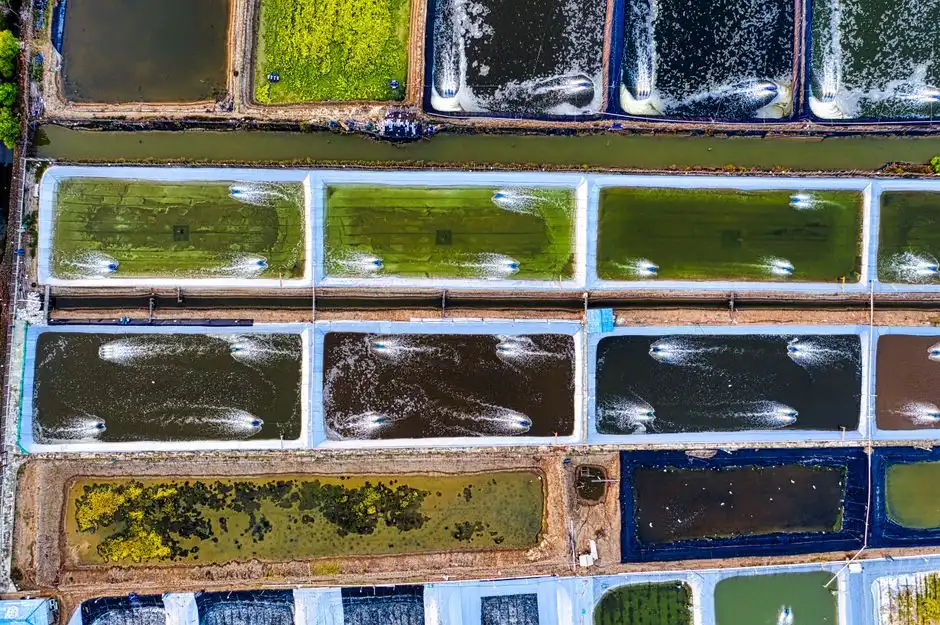
The WSZ is the reference A/O package, while the MBR is the compact, high-quality alternative; neither should be selected from footprint or nameplate capacity alone.
| Decision factor | WSZ A/O package | MBR system |
|---|---|---|
| Verified catalog scope | 1–80 m³/h | 10–2,000 m³/day |
| Process arrangement | Anoxic/aerobic contact oxidation, sedimentation and disinfection in one buried package | Submerged PVDF membrane filtration with effluent filtration below 1 μm |
| Installation | Below grade with landscaping above, or trailer-mounted for mobile deployment | Compact installation requiring a defined membrane and aeration arrangement |
| Operating implications | Fully automated; catalog specification states no operator required | Requires membrane aeration, fouling control, instrumentation and maintenance |
| Selection focus | Decentralized sites where integration and civil-work simplicity are priorities | Projects requiring tighter solids separation or more demanding reuse applications |
The MBR membrane bioreactor system is specified by HydropureWater for 10–2,000 m³/day, submerged PVDF membranes and filtration below 1 μm. HydropureWater also claims a 60% smaller footprint than conventional systems; that is a manufacturer comparison, not a guaranteed saving for every project configuration.
HydropureWater’s WSZ product scope covers residential communities, hotels, hospitals, factories and rural areas. A buried A/O package may simplify integration and reduce above-ground civil work. MBR separates solids more tightly and may support more demanding reuse objectives, but it adds membrane aeration, fouling control, instrumentation and maintenance obligations.
Vermifiltration is another decentralized route to investigate. The IntechOpen chapter “Application of Vermifiltration for Domestic Sewage Treatment” describes it as efficient, viable, less expertise-intensive and suitable for domestic septic-tank sewage. The supplied excerpt contains no Turkmenistan-specific performance values, so it should remain an option requiring local validation rather than a prequalified replacement.
Reuse is not automatic. Confirm the reuse endpoint and obtain separate water-quality, public-health and site-specific approval requirements.
Size the Treatment Train from Peak Demand
Hydraulic capacity and biological capacity are separate calculations. A unit’s maximum flow does not establish that it can accept the project’s organic, nitrogen or phosphorus loading without exceeding its process limits.
- Compare the measured or forecast peak with the WSZ selection range of 1–80 m³/h and the MBR catalog range of 10–2,000 m³/day.
- Calculate hydraulic and biological duties from the project-specific wastewater profile.
- Allocate capacity across biological reaction, solids separation, disinfection and equalization.
- Check redundancy, maintenance access and the consequences of peak or slug loading.
The supplied research contains no universal design-loading rate, hydraulic retention time, aeration rate or daily per-capita sewage factor. These must be requested from the selected supplier after the wastewater profile is finalized; using an unsupported generic factor would make the quotation non-comparable.
For an MBR design, require the vendor calculation to identify membrane area, module arrangement, mixed liquor suspended solids concentration, aeration demand, flux behavior, peak equalization and redundancy. For an A/O package, require biological loading, anoxic and aerobic stage allocation, clarifier duty, disinfection contact time and sludge return or wasting arrangements.
| Equipment reference | Verified component specification | Sizing limitation |
|---|---|---|
| WSZ package | 1–80 m³/h | Selection range; not a universal loading or effluent-performance rule |
| MBR system | 10–2,000 m³/day | Catalog range; membrane and biological duties remain project-specific |
| DF membrane module | 0.1 μm pore size; 80–225 m² membrane area; 32–135 m³/day stated production | Component specifications, not a universal plant-sizing rule |
The DF-series MBR membrane module therefore helps define component options, but it cannot replace the plant calculation. Add equalization where peak flow or slug loading could otherwise exceed biological, membrane or disinfection capacity.
Plan Disinfection and Sludge Handling as Part of the Plant
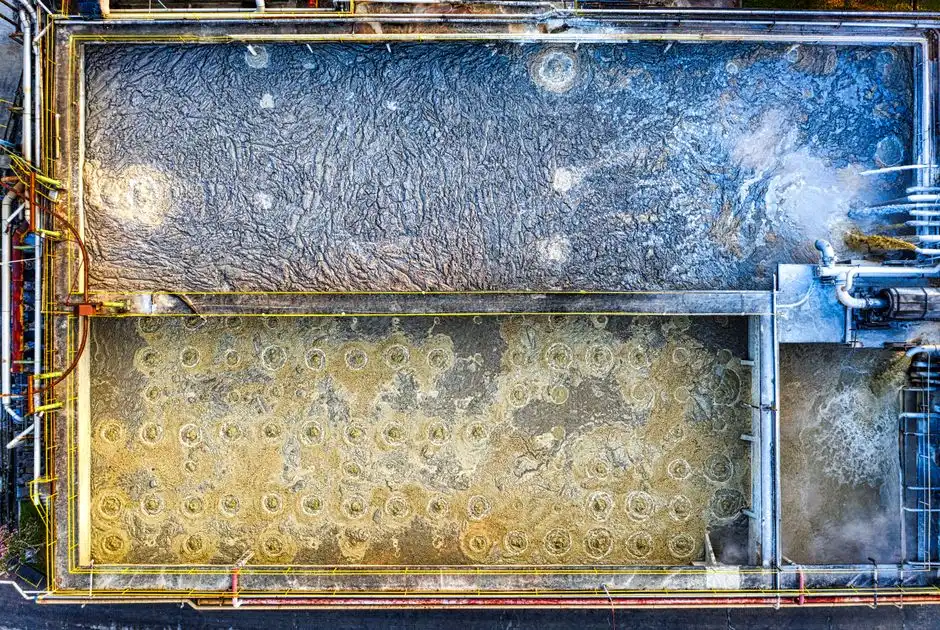
Disinfection and sludge handling determine whether a treatment train works as a complete facility. Both need an explicit design basis before equipment selection.
Specify the disinfection target and the flow condition at which it must be achieved. The supplied research does not provide a universal Turkmenistan residual-disinfection limit for every domestic sewage application. The chlorine dose, contact arrangement and monitoring point must follow the confirmed permit and receiving-water requirements.
For chemical generation, the chlorine dioxide generator is specified in manual or fully automated configurations with an output range of 50–20,000 g/h. Select the generator from required dose, treated flow, operating mode and site controls rather than choosing from maximum output alone.
The UV sterilizer for water treatment offers flanged, quick-connect, double-lamp, medium-pressure, self-cleaning, outdoor rainproof and open-channel configurations. UV avoids reagent dosing but introduces electrical, lamp-maintenance, fouling and transmission requirements. It is not automatically preferable to chemical disinfection.
Carry sludge from primary clarification and biological excess into a defined thickening, stabilization, dewatering and disposal route. The plate-and-frame filter press is specified with 1–500 m² filtration area and manual, hydraulic or fully automatic PLC-controlled operation. That range identifies equipment options; it does not determine the required area without solids characterization and production data.
Require the supplier to define sludge age, solids production, polymer demand where applicable, dewatering cake destination and maintenance obligations. Sludge storage, odor control and haulage arrangements belong in the site plan.
Evaluate Supplier Offers Against a Turkmenistan Project Checklist
A comparable quotation should state what the supplier is supplying, what the plant must achieve and which responsibilities remain with the civil contractor. Generic claims about standards or service do not establish delivery scope.
| Review area | Evidence to request before award |
|---|---|
| Design basis | Average and peak flow, influent loads, treatment objectives, guarantees, testing method, utilities demand and excluded civil works |
| Approvals | Exact applicable standard, permit pathway, discharge destination and reuse criteria |
| Manufacturing and delivery | Quality-control records, corrosion protection, lifting and shipping method, installation support, training and commissioning |
| Operations | O&M manuals, remote monitoring, critical spares, after-sales response and spare-part lead times |
| Performance | Conditions attached to guarantees and the response when influent leaves the agreed envelope |
HydropureWater’s Turkmenistan materials reference GOST 31860-2012, but the identifier should not be treated as the complete approval basis without confirmation from the relevant authority. Ask each supplier to identify the exact standard or permit pathway applicable to the project.
Request demonstrated experience for delivered projects with comparable wastewater, capacity and operating conditions rather than accepting generic national or international claims. Confirm manufacturing quality control, corrosion protection for local site conditions, shipping method, installation support, operator training, commissioning, spare parts and after-sales response.
Compare lifecycle constraints: membrane cleaning or replacement, aeration energy, chemicals, sludge hauling, remote monitoring, operator attendance and spare-part lead times. Clarify whether performance guarantees apply at average flow, peak flow, stated influent loads, a specified temperature range and stated effluent parameters.
The commercial statement by Vikas Pump that it provides installation support, technical guidance and after-sales service is an example of the service elements to request. It is not evidence that every supplier provides them. The Turkmenistan project guidance should be used to compile the local approval and execution checklist.
Commission, Monitor and Maintain the Installed System
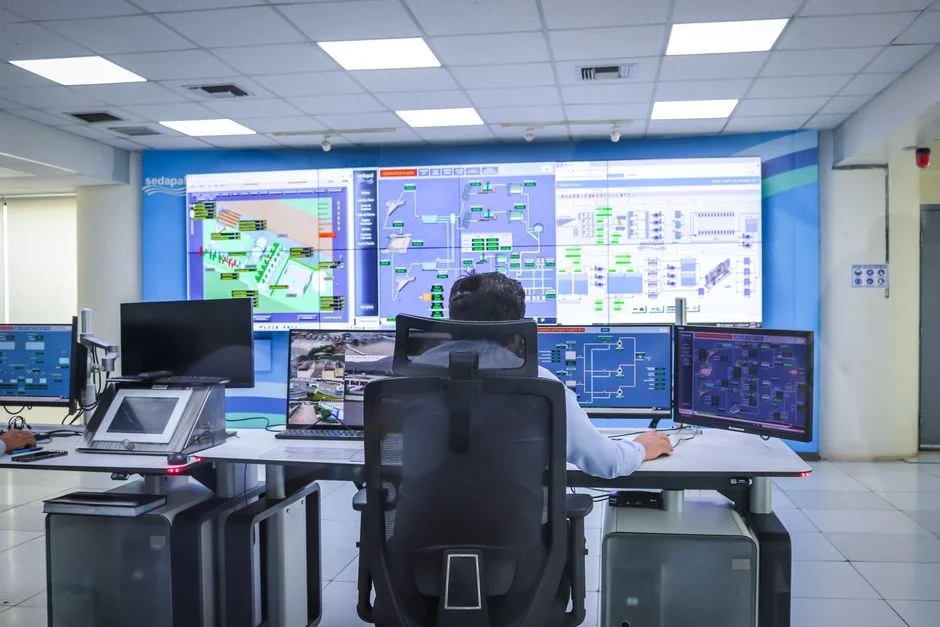
Acceptance should verify the installed process and operating readiness, not merely confirm that the equipment has started.
Before acceptance, inspect the complete flow path, bypass provisions, power supply, backup strategy, controls, alarms, reagent storage, drainage and sludge-removal route. Confirm access for maintenance, lifting, membrane removal and dewatering-cartridge withdrawal.
Perform manufacturer-recommended wet testing, leakage checks, control checks and staged biological start-up. The supplied sources do not specify a universal commissioning duration. Record the agreed test sequence, acceptance values, responsible parties and outstanding corrective actions.
Establish a baseline for COD, BOD, suspended solids, ammonia nitrogen, pH and flow. Where applicable, also record dissolved oxygen, pressure differentials, aeration conditions and sludge characteristics. For MBR operation, track membrane condition, aeration, cleaning events and normalized permeate performance.
HydropureWater specifies the DF series as consuming 10–20× less energy than external cross-flow systems. This is a manufacturer claim requiring project-specific validation; it should not be entered into an energy budget as an independently demonstrated saving.
For A/O packages, track biological activity, aeration, settling, sludge wasting, odor control and seasonal performance. Schedule preventive maintenance, retain critical spares and define the escalation path for alarms, laboratory support and emergency response. The municipal water-treatment EPC guide provides a wider framework for implementation planning, while local commissioning procedures must remain equipment-specific.
Frequently Asked Questions
How much does domestic sewage treatment in Turkmenistan cost?
No defensible price can be stated without the treatment capacity, wastewater profile, reuse objective, site works and delivery scope. Request a cost breakdown covering equipment, freight, installation, civil works, controls, power backup, pretreatment, disinfection, sludge handling, commissioning, training, spares and long-term consumables. For lifecycle comparison, ask separately for aeration energy, chemicals, membrane maintenance, sludge transport and operator attendance.
Which capacity should be selected for a housing, hotel or hospital project?
First compare the measured peak flow with the WSZ range of 1–80 m³/h and the MBR range of 10–2,000 m³/day. Then size biological and hydraulic duties from the wastewater profile. These equipment ranges do not establish loading, retention time or effluent performance; require a stage-by-stage vendor calculation and confirmation of equalization, redundancy and pretreatment.
How should an equipment supplier be selected?
Request verified performance data under defined influent and flow conditions, the exact equipment scope, excluded civil works, delivery terms, commissioning support, O&M documentation, critical spares and enforceable guarantees. Also check installation experience under comparable conditions and define how warranty claims, alarm response and spare-part supply will be handled.
What compliance risks should be checked before approving reuse in Turkmenistan?
GOST 31860-2012 is referenced in HydropureWater’s Turkmenistan guidance, but it is not a complete project approval basis. Confirm the applicable permit, discharge destination and reuse criteria with the relevant authority. Identify the intended reuse endpoint, its public-health and water-quality requirements, and whether the proposed treatment train can demonstrate compliance under the agreed peak-flow and load conditions.