Confirm Whether the Development Needs a Package Plant
A package sewage treatment plant should be considered only after confirming that the development lacks a practical municipal sewer connection and that on-site treatment is the responsible discharge solution. In outlying eThekwini developments without access to a full waterborne sewage system, WISA identifies privately owned package plants as an option alongside conservancy tanks; some local soil conditions also prevent septic-tank-and-soak-away installation (WISA, 2004). Ask the local authority whether sewerage exists, whether a discharge licence is required, and whether discharging to a watercourse or applying effluent to land carries different conditions.
Do not infer hydraulic capacity from the number of homes alone. Obtain expected and peak daily wastewater flows, trade-wastewater contributions, groundwater ingress and the development phase being served. Compare WSZ and MBR package plants for housing developments only after the sewerage and discharge route have been screened.
Site restrictions also affect the technology decision. Biocell identifies site restrictions and the required effluent standard as project-specific variables that determine whether above-ground or below-ground treatment is appropriate. A buried system may preserve landscaping and reduce visual impact, but excavation, groundwater, access and civil works must be assessed before treating it as the preferred option.
Apply the Durban Discharge and Approval Screen
Package plants must comply at all times with the domestic-wastewater General Limit Values in the General Authorisations under section 39 of the National Water Act 36 of 1998 (WISA, 2004).
| Parameter | Cited general limit |
|---|---|
| Faecal coliforms | 1000 per 100 ml |
| COD | 75 mg/l |
| pH | 5.5–9.5 |
| Ammonia as nitrogen | 3 mg/l |
| Nitrate/nitrite as nitrogen | 15 mg/l |
| Free chlorine | 0.25 mg/l |
| Suspended solids | 25 mg/l |
| Electrical conductivity | 70 mS/m above intake, to a maximum of 150 mS/m |
| Ortho-phosphate as phosphorus | 10 mg/l |
WISA states that all the listed limits apply when the effluent is irrigated. These values are a screening baseline, not a substitute for the site-specific permit. The WISA paper also requires details of the proposed sewage treatment plant or process and the registered professional engineer responsible. Put both items into the approval submission.
Because the source is dated 2004, it cannot establish every condition applicable in 2026. Confirm the current requirements with eThekwini Municipality and the relevant environmental authority, including the permitted discharge point, licence conditions, monitoring, reporting and access for sampling. A selected treatment train must demonstrate compliance for every applicable parameter, not simply claim that the equipment is “for domestic wastewater”.
Choose Between WSZ and MBR Package Treatment
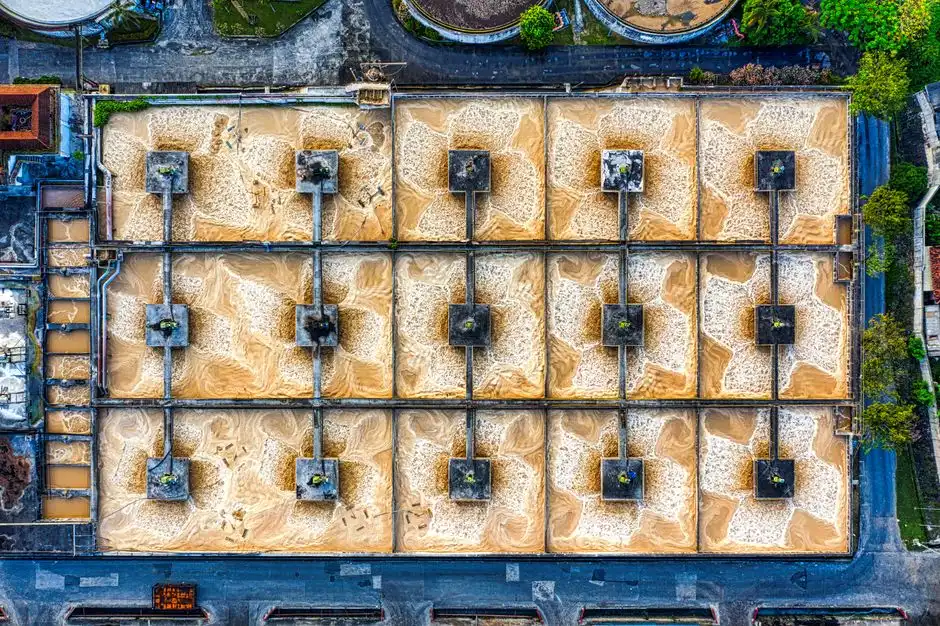
WSZ is the compact conventional-package candidate, while MBR is the higher-separation candidate when the project specification justifies membrane filtration.
| Decision point | WSZ underground package sewage treatment plant | MBR membrane bioreactor wastewater system |
|---|---|---|
| Treatment architecture | Anoxic/aerobic biological contact oxidation, sedimentation and disinfection in one buried package | Activated-sludge treatment combined with submerged PVDF membrane filtration |
| Catalogue capacity range | 1–80 m³/h | 10–2000 m³/day |
| Catalogue effluent description | Package treated by biological contact oxidation, sedimentation and disinfection | Filtered below 1 μm |
| Primary screening position | Compact conventional treatment where the approved effluent specification can be met | Higher separation where stricter polishing or reuse objectives justify membrane treatment |
| Design checks still required | Peak duty, equalisation, standby, sludge management, disinfection and maintenance access | Peak duty, membrane design, equalisation, sludge management, disinfection and maintenance access |
The WSZ underground package sewage treatment plant is described in its catalogue as fully automated, requiring no operator, and suitable for residential communities with landscaping above the buried unit. Its catalogue range is 1–80 m³/h, which serves as a screening bracket rather than an engineered capacity for the estate.
The MBR membrane bioreactor wastewater system combines activated sludge with submerged PVDF membranes and is specified at 10–2000 m³/day, with effluent filtered below 1 μm. Neither catalogue range establishes that the system meets a site-specific permit or reuse requirement.
Biocell highlights variable residential flows, including morning, late-afternoon and evening peaks, and potentially high ammonia and COD (Biocell Water, residential development wastewater treatment source supplied without a publication date). Treat this as a sizing warning. Ask the registered professional engineer to confirm duty, redundancy, peak treatment, equalisation, sludge management, disinfection and maintenance access.
Size the Plant Around Peak Flow and Future Development
Final capacity must be derived from the approved design flow, not the number of homes or a catalogue maximum.
- Determine daily wastewater generation from the applicable project design basis.
- Establish the peak-hour flow, including the residential periods identified by Biocell.
- Identify inflow and infiltration and assess groundwater conditions.
- Select the preliminary treatment duty and process configuration.
- Check equalisation, standby and modular expansion provisions.
- Verify the selected package against the approved design flow and effluent specification.
The supplied research contains no defensible per-person or per-home wastewater-generation factor. Require the designer to identify the source and assumptions behind the calculation rather than inserting an unsupported rate.
For phased estates, assess whether each phase requires independent treatment or whether additional modules can be installed later. Biocell describes modular installation as an advantage for growing developments because systems can be installed in phases. The bidder must define the future duty, expansion interfaces, equalisation strategy and effect of additional loading on the originally approved installation.
Use the 1–80 m³/h WSZ range only to screen whether the calculated peak and daily requirements could be accommodated. Use the 10–2000 m³/day MBR range as an initial commercial screen, then validate the complete hydraulic and process design. Request peak-flow modelling, equalisation calculations, standby provisions, start-up performance and measurable performance guarantees.
Build the Site, Operations and Procurement Brief
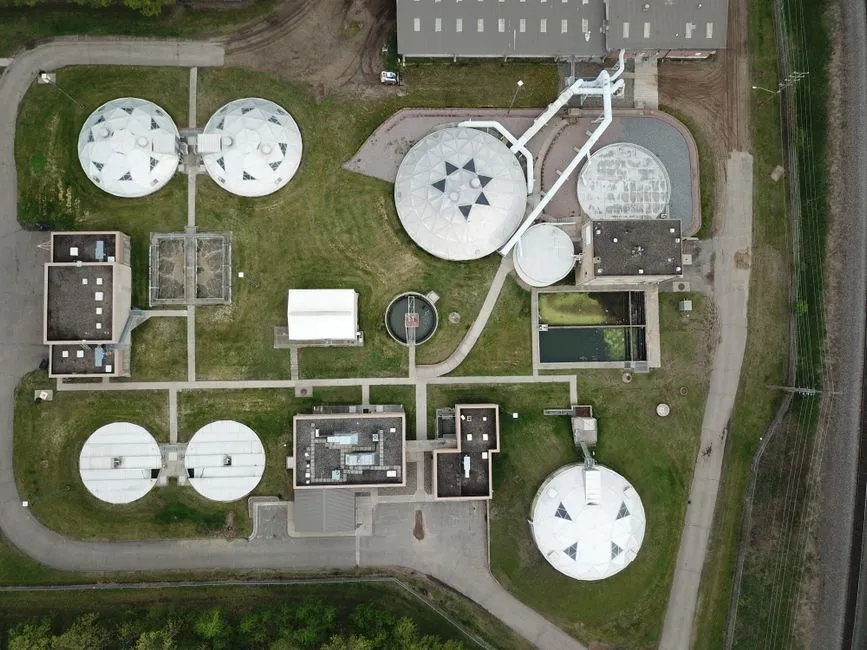
A comparable quotation requires the same project inputs, process scope and commercial boundaries from every bidder.
| Bid package | Information or evidence required |
|---|---|
| Design basis | Current and future housing phases; expected and peak flows; wastewater characteristics; discharge point; effluent specification; footprint; soil and groundwater conditions |
| Process proposal | Process flow and mass balance covering equalisation, biological treatment, solids separation, disinfection, sludge handling and final discharge |
| Operations | Automation, alarms, routine service access, spare parts, operator training, sludge removal and emergency response |
| Commercial cost lines | Equipment, civil works, installation, commissioning, power and controls, permits or engineering support, sludge removal, routine maintenance and consumables |
| Programme | Delivery, installation, testing, commissioning and approval schedule |
Biocell identifies alarms, optional GSM alarm dialout and SCADA monitoring as useful operating features, while noting that maintenance access and simple servicing affect long-term operation. Require bidders to explain how technicians will reach submerged equipment without unnecessary tank entry or disruption.
For cost comparison, request separate itemised quotations for each line above. The supplied sources contain no Durban capital-cost or lead-time figures; obtain current prices, payment milestones, exclusions, delivery dates, installation periods, commissioning responsibilities and approval support.
The 2019 University of KwaZulu-Natal Durban study recommends Integrated Urban Water Management as a planning principle. Check that the proposed plant supports the wider estate water plan, including any water-reuse objectives, rather than treating it as an isolated tank.
Frequently Asked Questions
What should be compared when budgeting for a packaged sewage treatment plant in Durban?
Compare itemised equipment, civil works, installation, commissioning, power and controls, engineering or permit support, sludge removal, maintenance, consumables and emergency-response costs. The supplied research provides no defensible Durban price range, so request current quotations using one common scope.
How should a supplier be selected for a housing development?
Request process guarantees, test evidence, eThekwini approval experience, service scope and references for comparable housing developments. Also check which party remains responsible for performance, regulatory submissions, operator training, spares and long-term maintenance.
Should the plant be sized from the number of homes?
No. Size it from expected daily flow, peak-hour flow, inflow and infiltration, wastewater characteristics and the phase being served. Require the designer to document the calculation and verify peak treatment and equalisation.
Are the general wastewater limits sufficient for approval?
No. The values cited by WISA provide a screening baseline, but the site-specific permit and current authority confirmation govern. Confirm the discharge route and present conditions with eThekwini Municipality and the relevant environmental authority before ordering.