What Changes When LG Energy Solution Acquires the Plant
When LG Energy Solution acquires an industrial plant in Vietnam, the wastewater obligations remain site-specific and permit-based. The buyer must determine whether the plant retains its existing environmental permit or requires amendment, reissuance, or a new permitting determination after the change in ownership.
Vietnam’s central environmental structure changed on March 1, 2025, when the Ministry of Natural Resources and Environment merged with the Ministry of Agriculture and Rural Development to form the Ministry of Agriculture and Environment (MAE), according to Trade.gov’s Vietnam - Environmental Technology guide. The Vietnam Environment Administration (VEA), under MAE, is the central body that issues regulations, standards, and permits and performs inspections. Municipal and provincial Departments of Agriculture and Environment manage environmental-protection activities locally.
The acquisition does not create a separate wastewater regime for the buyer. The acquired company must still satisfy the permits, reporting duties, pollution-control obligations, and enforcement history attached to its entity, facility, production processes, and discharge route. The legal review therefore starts with the exact plant identity, site boundaries, operating permits, current process, and proposed ownership structure.
Wastewater review must also be separated from adjacent transaction workstreams. Legal counsel should check land-use transfer or approval requirements, construction approvals, hazardous-waste obligations, and any contractual change-of-control provisions. An environmental impact assessment may matter if the transaction or later expansion requires one, but the supplied research does not establish that a new assessment is automatically required for this acquisition.
| Diligence object | Confirmed national framework | Plant-specific evidence required |
|---|---|---|
| Environmental oversight | MAE is the central ministry; VEA issues permits and conducts inspections; local departments implement environmental activities. | Current permit, regulator correspondence, inspections, and enforcement records. |
| Change of ownership | The supplied research does not establish a universal transfer procedure. | Controlled permit text, ownership-change clauses, and written confirmation from the competent authority. |
| Land and construction | Land-use rights and related approvals remain distinct from wastewater permitting. | Land certificates, transfer documents, construction approvals, and site-boundary plans. |
| Pollution control | The Revised Law on Environmental Protection took effect in January 2022 and requires factory operators to use best available technologies. | Process wastewater balance, treatment design basis, performance records, and technology gap assessment. |
For a broader comparison of transaction due diligence, see the CATL plant acquisition wastewater due-diligence guide. A separate CATL Arizona acquisition wastewater guide is not authority for Vietnamese permits or plant-specific limits.
The Transaction Due-Diligence Workflow
The acquired site’s documents and measurements must form a traceable chain from regulated entity to permit status, treatment adequacy, and contractual liability. The following workflow prevents an unverified discharge problem from being discovered only after closing.
- Identify the regulated entity and site. Collect the enterprise registration, facility boundary, operating status, current production process, proposed acquirer information, and the legal relationship between the seller, operating company, and property owner.
- Compile the permit register. Request the environmental permit, sewer or pretreatment approval, discharge-point authorization, water-abstraction arrangements, amendments, and inspection records. Trade.gov confirms VEA’s permitting and inspection role, but the research does not establish which individual approvals apply to this plant.
- Reconstruct the wastewater balance. Obtain process-flow diagrams, source segregation, average and peak flows, batch-dump information, storm-water separation, sampling-station records, and water-reuse plans.
- Verify performance. Request the available monitoring results, calibration records, laboratory reports, non-compliance correspondence, corrective-action plans, and third-party audits. The available period must be stated rather than implied.
- Test liabilities. Screen for legacy contamination, unreported discharges, pending enforcement, sludge-storage constraints, receiving-system claims, and treatment-plant condition.
- Close identified gaps. Map every gap to a permit amendment, pre-closing covenant, purchase-price adjustment, escrow, indemnity, capital allowance, or post-closing milestone.
| Evidence package | Owner | Decision supported |
|---|---|---|
| Entity, land, site, and ownership documents | Legal lead | Correct legal entity and site; applicable land and change-of-control review. |
| Permit register and regulator file | Legal lead and EHS lead | Permit continuity, amendment need, reporting history, and enforcement exposure. |
| Wastewater balance and analytical data | Process engineer | Treatment adequacy, peak-load risk, and required upgrades. |
| Sludge, reuse, and receiving-system records | EHS and process engineers | Residual-management route and discharge or reuse feasibility. |
| Remediation cost and closing mechanism | Legal, engineering, and procurement leads | Price protection, conditions precedent, and accountable delivery. |
The key discipline is to treat each unsupported statement as a missing record, not a presumed fact. For example, a seller’s statement that the plant has “sufficient treatment capacity” should be converted into peak-flow and pollutant-load calculations, operating records, equipment condition evidence, and the applicable permit or receiving-system criteria.
Wastewater Permit and Discharge Obligations
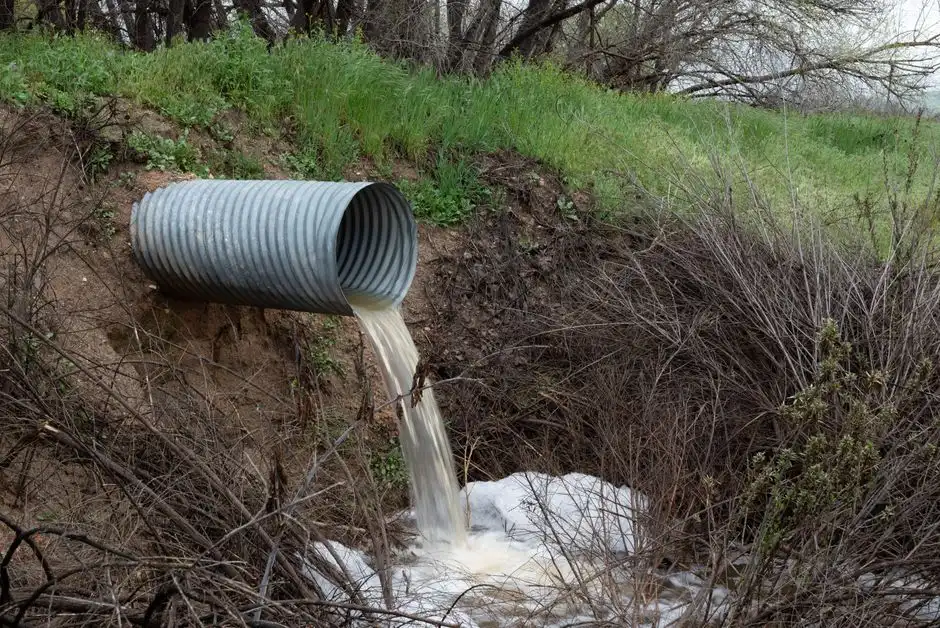
The permit pathway must be established from the controlled site documents because direct environmental discharge and discharge to an industrial-zone or municipal sewer are different arrangements. The acquisition team should not assume that an industrial park connection eliminates environmental permitting or that a discharge authorization covers reuse.
Trade.gov’s 2026 country guide describes the present oversight chain: MAE sets the national framework, VEA issues permits and conducts inspections, and provincial or municipal departments handle local environmental-protection activities. The controlled permit must therefore be read together with the applicable receiving utility or industrial-zone operator requirements and any land-use or construction approvals associated with the site.
From the permit, obtain the permitted pollutant limits, averaging periods, monitoring frequencies, sampling points, reporting deadlines, receiving-water conditions, discharge-point description, and amendment triggers. Confirm whether the permit remains valid after the ownership change or requires a formal determination. The supplied research contains no confirmed site-specific numerical limits for LG Energy Solution or the acquired Vietnamese plant, so no universal COD, heavy-metal, pH, or flow limit should be stated.
For sewer or centralized industrial-zone discharge, request the operator’s industrial-user permit or connection approval, discharge acceptance criteria, prohibited-waste list, control-equipment requirements, sampling rules, surcharge terms, and enforcement history. If the acquired plant performs pretreatment, verify both the upstream sewer conditions and the downstream environmental authorization. The plant’s legal responsibility for pretreatment cannot be separated from the industrial park operator’s responsibility for centralized treatment.
The Revised Law on Environmental Protection, which took effect in January 2022, requires factory operators to use best available technologies to control pollution and limit environmental impacts, according to Trade.gov. Permit existence is therefore not a sufficient diligence conclusion. The buyer must also examine whether the installed control technology is appropriate for the verified process wastewater and whether its demonstrated performance meets the permit and receiving-system conditions.
| Question to resolve | Document or evidence | Risk if unresolved |
|---|---|---|
| Does ownership change the permit? | Permit transfer provisions, change-of-control clause, and regulator confirmation. | Unpermitted operation or delayed production transfer. |
| Where may the plant discharge? | Permit discharge point, sewer contract, connection approval, and receiving-system records. | Wrong compliance pathway or unauthorized discharge route. |
| What must be monitored? | Permit schedule, monitoring plan, sample locations, methods, and laboratory records. | Incomplete evidence of compliance. |
| Which pretreatment duties apply? | Industrial-user permit, prohibited-waste list, control requirements, and surcharge rules. | Rejection, enforcement, or treatment-system disruption. |
| Is reuse covered? | Reuse approval, water-quality criteria, transfer arrangement, and operating procedures. | Uncontrolled reuse or responsibility gaps. |
Battery Manufacturing Wastewater Risk Profile
The treatment decision must begin with measured streams from the acquired battery plant, not with a generic battery-process profile. Request the wastewater source, process stream, generation pattern, flow variability, pH, suspended solids, oil and grease, metals, nutrients, and any process-specific chemical constituents. The research provides no confirmed wastewater flow or pollutant load for the acquired site.
Separate contact, product, cleaning, laboratory, cooling, and sanitary streams where records support that separation. A measured flow balance is necessary because dilution can conceal a high-strength batch stream, while combining streams can make the combined flow appear more manageable than the receiving system actually permits. Batch dumps, production cleaning, and floor washing should be checked separately from continuous process discharge.
Assess adequacy under peak production, startup, shutdown, dumping, and upset conditions. Average daily flow cannot demonstrate that equalization, treatment units, sludge handling, or monitoring can manage transient loads. The review should follow the complete train: equalization; pH or coagulation control where supported by the data; solids separation; biological treatment where appropriate; polishing; disinfection where required; and final monitoring. Comparing an industrial DAF pretreatment system with an integrated MBR membrane bioreactor is meaningful only after the stream characteristics and verified targets are established.
Request evidence on membrane fouling, residual solids, chemical consumption, sludge generation, odor, noise, and backup arrangements where high solids, metals, or variable industrial flows are present. An operational record should show how the train behaves during upsets and how failed equipment affects compliance.
The decision rule is direct: if the existing treatment train cannot reliably meet the verified permit and receiving-system conditions after an appropriate upgrade, remediation becomes a transaction workstream. It should not be deferred as post-closing optimization. For additional treatment concepts, the comparison of MBR and conventional activated sludge for metals wastewater provides a useful engineering reference, subject to site-specific validation.
| Risk feature | Evidence to obtain | Treatment-design consequence |
|---|---|---|
| Batch or variable flow | Event logs, production schedule, and measured peak-flow records. | Equalization and transient treatment capacity must be demonstrated. |
| Metals or soluble contaminants | Source-specific analytical data and receiving-system criteria. | Determine whether precipitation, adsorption, biological treatment, or polishing is required. |
| Suspended solids or oily waste | Solids characterization and separation performance data. | Evaluate solids capture, sludge removal, and pretreatment performance. |
| Production change | Current and proposed process descriptions. | Revisit design loads, chemical demand, residuals, and monitoring needs. |
| Unreliable compliance | Permit deviations, downtime records, and corrective actions. | Add redundancy and require treatment before closing. |
Treatment Capacity, Reuse, and Sludge Decisions
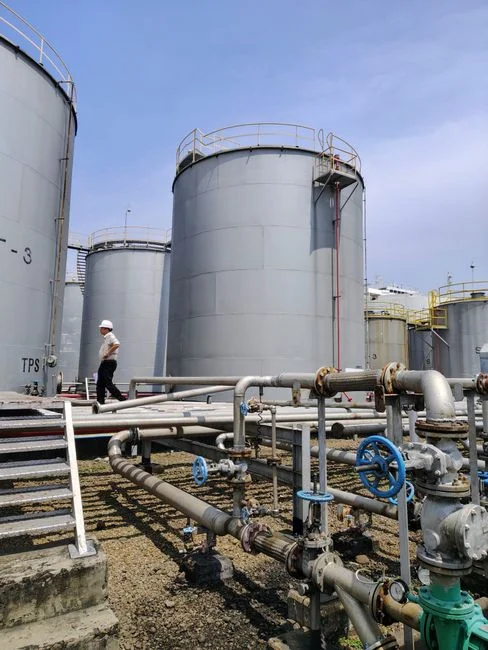
Technology selection should follow verified flows, pollutant loads, discharge or reuse targets, and residual-handling capacity. Trade.gov reports that about 80% of Vietnamese wastewater plants used activated-sludge systems in 2024, while the market was shifting toward membrane bioreactors, biofilm systems, and advanced biological treatment to meet stricter standards and support reuse. This is national market direction, not evidence of spare capacity near the acquired plant.
Trade.gov also reports that more than 55 wastewater plants were in development in 2024, with combined capacity exceeding 2 million m³/day. Those projects cannot be treated as available reception capacity without confirming their location, industrial compatibility, commissioning status, operating record, and acceptance criteria.
Treated wastewater reuse passes through a separate commercial and technical gate. Vietnam.vn reported that the DEEP C1 pilot in Hai Phong treated 1,000 m³/day for cooling, irrigation, road washing, and other suitable uses. The same report states that expansion still requires use-specific water-quality standards, operating procedures, risk controls, transfer mechanisms, and long-term monitoring. A pilot therefore does not establish that the acquired plant’s proposed reuse is lawful or operational.
Request evidence identifying who owns and operates the reuse system, how water is transferred, which permit covers the use, who controls water quality, how monitoring is performed, and who responds to non-compliance. If the buyer intends to reuse water, the proposed supplier must demonstrate performance against the applicable use-specific criteria rather than against a generic effluent specification.
Sludge must be treated as a linked capacity constraint. Verify dewatering performance, storage, transport, permitted destination, and contractual acceptance before adding biological or membrane treatment capacity. More incoming flow does not create a sound solution if the residual cannot be lawfully handled.
| Treatment route | Decision basis | Required evidence before selection |
|---|---|---|
| Existing on-site treatment upgrade | Verified gaps are correctable without creating a permit or residual-handling conflict. | Mass balance, equipment condition, upgrade scope, performance test, and compliance pathway. |
| Centralized industrial-park treatment | Accepted industrial wastewater and available hydraulic and pollutant capacity are confirmed. | Connection agreement, acceptance criteria, current loading, contingency plan, and tariff or surcharge terms. |
| Advanced biological treatment | Effluent quality and reuse goals justify the process. | Pilot or validated design basis, membrane fouling plan, residuals route, and performance guarantee. |
| Treated wastewater reuse | Water quality, transfer arrangements, and operating responsibility are defined for the intended use. | Use-specific criteria, permit coverage, risk-control plan, monitoring, and user agreement. |
Capacity screening should use verified peak hydraulics, pollutant loads, required redundancy, future production scenarios, and discharge or reuse targets. Vendor nameplate flow alone is not a sufficient sizing basis.
Who Must Act Before Signing and After Closing
The acquired site’s environmental risks should be assigned to named owners before signing, with unresolved conditions carried into the transaction agreement. The legal lead controls permit and change-of-control status; the EHS lead assesses compliance and enforcement exposure; the process engineer verifies flows, loads, and treatment adequacy; and the procurement lead controls supplier scope, performance guarantees, spares, and local support.
Pre-signing deliverables should include a complete permit register, the available monitoring and laboratory records, process-flow and wastewater-balance drawings, non-compliance history, sludge records, land or contamination reports, and a quantified remediation estimate. The record period must state how much history was available rather than imply a complete period.
Pre-closing conditions should address required regulator or sewer approvals, permit continuity, transfer of monitoring and reporting duties, agreed treatment-upgrade funding, and access for outstanding investigations. Post-closing controls should include baseline sampling, operator training, preventive maintenance, calibrated monitoring, laboratory chain-of-custody procedures, and defined escalation for permit deviations.
The Bac Ninh land study provides a transaction-process caution. Growing Science’s Management Science Letters study, published in 2023, reported that complaints about land acquired by the State represented 61.27% of complaint cases during 2016–2020 and found legal factors to be the weakest influence among the groups studied. The case was not an industrial wastewater acquisition, but it reinforces the need for documented local approvals and grievance procedures where land transfer is involved.
| Gate | Accountable owner | Required output |
|---|---|---|
| Pre-signing | Legal and EHS leads | Permit register, compliance history, enforcement assessment, and unresolved authority questions. |
| Pre-signing | Process engineer | Wastewater balance, treatment adequacy report, remediation estimate, and capacity plan. |
| Pre-closing | Legal and procurement leads | Approvals, permit continuity, funding mechanism, supplier scope, guarantees, and local support commitments. |
| Post-closing | EHS and operations | Baseline sampling, training, maintenance, monitoring controls, and deviation-escalation procedure. |
Frequently Asked Questions
Does an acquisition automatically change the plant’s wastewater limits?
No automatic change should be inferred from the supplied research. The buyer must obtain the controlled permit and written confirmation from the competent authority and receiving utility on permit continuity, amendment, or reissuance. Any changed limits must come from the applicable approval, not from the ownership transaction itself.
How should a treatment supplier be selected?
Require a site-specific mass balance and, where the risk warrants it, a pilot or equivalent validation. The bid should include a performance guarantee against the verified permit or reuse criteria, identified compliance references, O&M scope, critical-spares availability, and a local support plan. Vendor nameplate capacity is not a substitute for demonstrated performance.
How should wastewater equipment be sized?
Size from verified peak flow and pollutant-load data, including batch, startup, shutdown, and dumping conditions. Apply the applicable permit or reuse criteria, future production scenario, redundancy requirement, and confirmed receiving-system or residual-handling capacity. Average plant output alone is not a defensible design basis.
What should happen if the plant has environmental violations?
Preserve the violation notices, monitoring history, correspondence, and corrective-action records; then quantify remediation cost and permit exposure. Allocate responsibility through covenants, indemnities, escrow, or price adjustments, and confirm that the corrective action satisfies the competent authority after closing. Signing should not treat an unsupported verbal assurance as closure.
How long will the local authority review take?
The supplied research provides no guaranteed review period. The deal team should request a jurisdiction-specific schedule from the relevant MAE, VEA, local authority, land authority, and receiving utility, while confirming which approvals are actually required. No unsupported delivery date should be placed in the transaction timetable.