What treatment does a Turin data center actually need?
A Turin data center generally needs pretreatment, UF and brackish RO for cooling-tower blowdown if the goal is reuse or sewer compliance. The process should segregate blowdown from chiller bleed, humidification drain and sanitary streams; then remove suspended solids and phosphorus with DAF, protect the membranes with 0.03 µm UF, and recover low-TDS permeate for cooling makeup. A practical baseline operates RO at 75-80% recovery, producing 10-50 mg/L TDS permeate. MVC polishing is an optional higher-recovery measure for constrained discharge periods or a zero-discharge mandate, not an automatic base-load choice. Final design depends on Turin source-water chemistry, actual flow, ACEA industrial admission terms and D.Lgs. 152/2006 limits.
The decision sequence is straightforward: define each wastewater stream, characterize the cooling-water chemistry, identify the legally available discharge or reuse route, and only then size equipment. Cooling-tower blowdown is normally the principal process stream. Chiller bleed, treatment backwash, equipment-cleaning water and air-handling condensate have different hydraulic and chemical characteristics and require separate assessment; RSP Engineers, in its 2026 process-wastewater guidance, identifies these as distinct sources from sanitary sewage.
The supplied reference for a Rome data center answers an equivalent design question, but its chemistry, utility territory, tariff assumptions and permit pathway are not Turin facts. Its 100 MW example, at PUE 1.2 and WUE 1.8 L/kWh, draws approximately 3.6 ML/day, with cooling-tower blowdown at 1.14-1.70 ML/day. Those values can frame a Turin sensitivity case, but they cannot replace Turin source sampling, utility discussions or site measurements.
Build the Turin wastewater balance from source water to final discharge
A defensible water balance separates makeup, evaporation, drift, blowdown, domestic wastewater, backwash and other drains before equipment is selected. The Rome reference attributes approximately 60% of a 100 MW site’s water draw to evaporation, with the remainder divided between blowdown and drift. For Turin, verify each term against the selected cooling system rather than copying the Rome balance.
Cooling water cycles of concentration determine the purge requirement. Genesis Water Technologies gives the blowdown ratio as 1/(CoC−1): blowdown is 25% of makeup at 4 CoC and 20% at 6 CoC. Moving from 4 to 6 CoC therefore reduces blowdown by 20%, not 50%, while increasing scale, corrosion and biological-control demands.
The supplied Rome intake case—300-500 mg/L TDS, calcium-bicarbonate hardness around 280 mg/L as CaCO₃ and chloride at 30-60 mg/L—is a comparison case only. Require Turin project sampling rather than transferring those values into the design basis. In the Rome case, approximately 1,500-2,500 mg/L TDS occurs at 5 CoC; silica reaches 40-60 mg/L and calcium sulfate approaches its solubility envelope near 6 CoC.
Request 12 months of source-water and blowdown records covering flow, conductivity/TDS, pH, calcium, hardness, alkalinity, sulfate, chloride, silica, iron, copper, zinc, TSS, temperature, residual chlorine and the complete cooling-water chemical package. Use the data center cooling tower blowdown recycling specifications as a process reference, not as a Turin chemistry record.
| Design input | Evidence supplied | Turin procurement requirement |
|---|---|---|
| Site water demand | Rome reference: approximately 3.6 ML/day at 100 MW, PUE 1.2 and WUE 1.8 L/kWh | Calculate from Turin IT load, cooling configuration and operating scenarios |
| Intake chemistry | Rome comparison: 300-500 mg/L TDS; hardness around 280 mg/L as CaCO₃; chloride 30-60 mg/L | Sample Turin source water across seasonal and source changes |
| Blowdown concentration | Rome comparison: approximately 1,500-2,500 mg/L TDS at 5 CoC | Measure at actual CoC and chemical dose |
| Scaling indicators | Rome comparison: silica 40-60 mg/L; calcium sulfate approaching its solubility envelope near 6 CoC | Model with Turin calcium, sulfate, silica, alkalinity and temperature |
| Cycles of concentration | Genesis: blowdown is 25% of makeup at 4 CoC and 20% at 6 CoC | Check cooling control, side-stream filtration and chemical-control limits |
Segregate the streams before choosing the treatment train
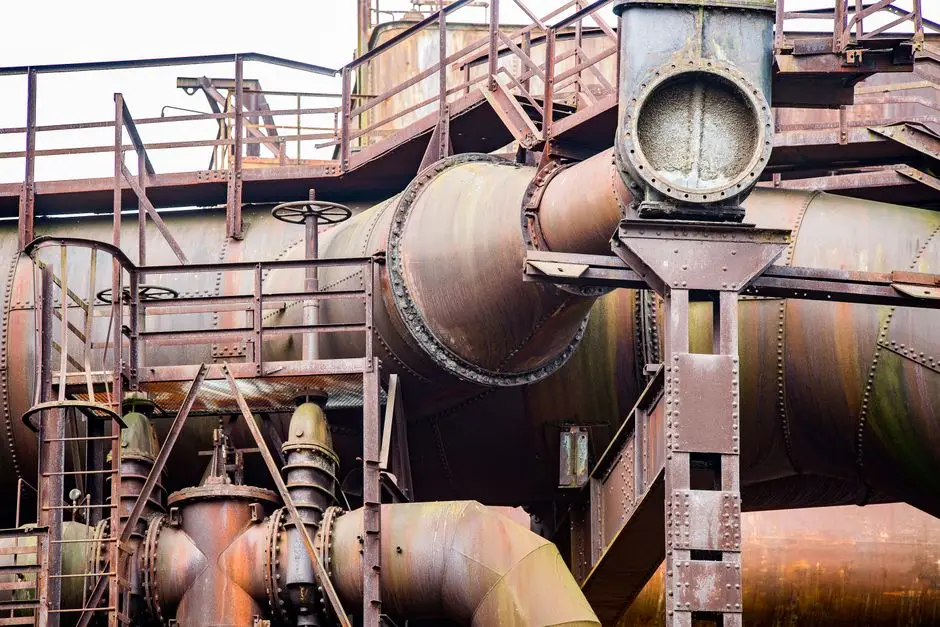
The four-stream model prevents incompatible wastewater from setting the membrane design. HydropureWater’s Rome 2026 guide separates cooling-tower blowdown, chiller bleed, humidification drain, and sanitary or diesel-generator test water. Cooling-tower blowdown is the largest stream; chiller bleed can have higher TDS, humidification drainage is intermittent and dilute, and sanitary or generator-test water is biologically active.
The chemical package further complicates the decision. RSP Engineers’s 2026 guidance notes that cooling-water treatment can alter pH, introduce biocides and corrosion inhibitors, concentrate heavy metals and produce wastewater incompatible with sewer or receiving-water requirements without appropriate pretreatment. A permit application therefore needs the actual chemical programme, not only bulk conductivity and pH.
Provide separate meters, sample points and control boundaries wherever streams cannot safely share equalisation or pretreatment. Do not let sanitary flow set membrane loading, and do not route chiller bleed through a DAF duty sized for the larger cooling-tower stream unless equalisation and chemistry demonstrate that the combined flow is acceptable.
| Stream | Characteristic | Treatment or routing decision |
|---|---|---|
| Cooling-tower blowdown | Largest process stream; concentrated salts, chemicals, suspended corrosion products and biofilm fragments | Primary candidate for DAF-UF-RO; meter and sample independently |
| Chiller bleed | Potentially higher TDS because of hotter condenser return temperatures | Characterise separately before equalisation |
| Humidification drain | Intermittent and comparatively dilute | Use an appropriate equalisation and segregation strategy |
| Sanitary or generator-test water | Biologically active and not interchangeable with process water | Keep outside the membrane-train design basis unless expressly included |
Use DAF and UF to protect the membranes and sewer route
DAF and UF perform different duties: DAF removes suspended material, oils, flocs and part of the phosphorus load, while UF removes the fine particles that can foul RO membranes. HydropureWater’s Rome guide specifies DAF effluent below 15 mg/L TSS and 60-80% total-phosphorus reduction; these are reference values to verify against Turin influent and the final pretreatment design.
The reference sequence uses multi-media filtration to polish to 10-15 µm, followed by PVDF ultrafiltration at 0.03 µm. It reports SDI below 3 after UF and a 90-95% recovery barrier against biofouling. These targets address the phosphonates, antiscalants, biocides, corrosion inhibitors, suspended corrosion products and biofilm fragments identified by RSP Engineers.
For procurement, compare an industrial dissolved air flotation pretreatment system and a 0.03 µm ultrafiltration system for RO pretreatment against verified hourly flow, feed chemistry and duty. The cited DAF range is 4-300 m³/h with automatic skimming; the UF range is 2,000-40,000 L/h with automatic backwash and air scour. Daily average flow alone cannot establish equipment size.
UF backwash and DAF sludge are design streams, not disposal afterthoughts. Define level control, thickening, chemical conditioning and the authorised disposal route before awarding the pretreatment package. Media filtration and chemical dosing must also be included in the hydraulic and control narrative.
| Stage | Reference duty | Principal design check |
|---|---|---|
| DAF | TSS below 15 mg/L; 60-80% total-phosphorus reduction in the Rome reference | Verified peak flow, oil load, floc properties and sludge withdrawal |
| Multi-media filtration | 10-15 µm polishing in the Rome reference | Backwash frequency, headloss and media compatibility |
| 0.03 µm UF | SDI below 3 and a 90-95% recovery barrier against biofouling in the Rome reference | Hourly flow, temperature, feed chemistry and backwash residual |
| Residuals | DAF sludge and UF backwash | Level control, thickening, storage and authorised disposal |
Choose RO for baseline recovery and reserve MVC for constrained discharge
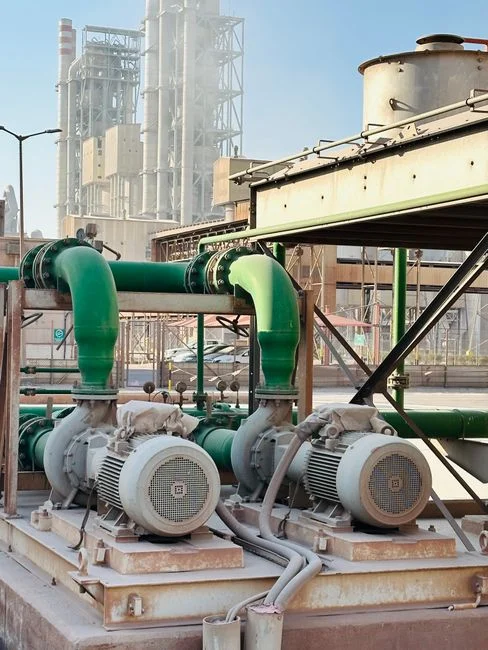
Brackish reverse osmosis is the baseline treatment for cooling-tower reuse because it can separate most dissolved salts from the blowdown. HydropureWater’s reference reports 75-80% RO recovery and 10-50 mg/L TDS permeate; it also identifies silica and calcium sulfate as constraints beyond that recovery range. The industrial RO equipment basis should therefore be checked against the project-specific 75-80% target rather than a generic maximum recovery claim.
RO permeate can be blended into cooling-tower makeup after confirming chemistry, temperature and cooling-system compatibility. RO concentrate is not eliminated: it remains the residual requiring an authorised discharge route, additional treatment or evaporation. A sewer route may accept treated concentrate only if its flow and composition satisfy the industrial admission contract.
Mechanical vapour compression is the higher-recovery overlay. The supplied reference cites 95-98% concentrate recovery, distillate below 10 mg/L TDS and 15-25 kWh per 1,000 US gallons. The same reference reports approximately 95% overall recovery when MVC is added to the RO baseline. That configuration can support seasonal restrictions, constrained sewer admission or a zero-liquid-discharge objective, but the supplied evidence states that full ZLD is rarely justified on economics alone.
IDE Tech’s MAXH2O evidence describes induced precipitation before high-recovery RO for silica and calcium carbonate control. Treat this as an advanced alternative requiring its own chemistry, solids-handling and reliability review, not as a standard Turin requirement.
| Configuration | Recovery evidence | Residual and operating consequence |
|---|---|---|
| DAF-UF-BWRO | 75-80% RO recovery; 10-50 mg/L TDS permeate in the supplied Rome reference | RO concentrate requires an authorised route; lower energy demand than MVC-based ZLD |
| DAF-UF-BWRO-MVC | Approximately 95% overall recovery in the supplied Rome reference | MVC distillate below 10 mg/L TDS; 15-25 kWh per 1,000 US gallons |
| Advanced precipitation and high-recovery RO | IDE Tech reports a route toward 90-95% recovery | Additional solids management and project-specific membrane and reactor design |
Match the treatment configuration to the legal discharge route
The legal route determines the required treatment package. HydropureWater’s Rome reference associates direct surface-water discharge with D.Lgs. 152/2006 Parte III, Tab. 3 and municipal sewer admission with Tab. 5. Turin’s actual route must be confirmed with the competent Piedmont authorities and the relevant sewer utility; neither the Rome permit path nor its ACEA service territory applies automatically to Turin.
The cited Tab. 5 values are sulfate at 1,000 mg/L, total phosphorus at 10 mg/L, oils and greases at 20 mg/L, free chlorine at 0.2 mg/L and pH from 5.5 to 9.5. These are the limits stated in HydropureWater’s 2026 Rome reference, not a substitute for the Turin industrial admission contract, which may impose stricter ceilings or additional flow and monitoring conditions.
At the Rome comparison concentration of 1,500-2,500 mg/L TDS, raw blowdown would not meet the surface-water route without further treatment. The sewer route generally requires RO polishing, neutralisation and other controls before the concentrate can be considered for admission, subject to the utility’s actual terms.
RSP Engineers’s 2026 procurement guidance recommends early utility coordination to establish maximum hourly flow, quality ceilings, connection fees, monitoring requirements and the designated discharge point before freezing equipment. Permit compliance and water-use effectiveness are separate tests: low WUE does not demonstrate compliant discharge chemistry.
| Route | Reference basis | Equipment consequence for Turin |
|---|---|---|
| Municipal sewer | HydropureWater’s Rome reference cites D.Lgs. 152/2006 Tab. 5 and an ACEA industrial admission contract | Obtain the Turin contract ceilings first; likely requires RO concentrate treatment and monitoring |
| Surface water | HydropureWater’s Rome reference associates this route with D.Lgs. 152/2006 Parte III, Tab. 3 | Confirm Piedmont requirements; raw 1,500-2,500 mg/L TDS comparison chemistry is insufficient |
| Near-zero liquid discharge | The supplied Rome reference uses MVC as a seasonal or contingency overlay | Reserve capacity only after confirming seasonal restrictions, concentrate disposal and operating capability |
Compare reuse, sewer discharge and seasonal high-recovery options
Reuse, sewer discharge and seasonal MVC are different commercial configurations, not variants of one guaranteed solution. The decision should compare the value of recovered water with treatment energy, residual disposal, permit risk and the operating burden placed on site staff.
The supplied Rome case reports a 3-5-year return for baseline reuse; it is a Rome benchmark, not a Turin forecast. Turin’s business case needs current freshwater tariffs, sewer charges, connection fees and any discharge-quality premium. The same source reports approximately €230K-460K capital expenditure for a 190 m³/day BWRO train, compared with €2.8-7.4 million for full ZLD. These are source benchmarks without a Turin price adjustment.
Operating expenditure is also materially different. The supplied BWRO benchmark is €1.40-2.80 per 1,000 L treated, including energy, chemicals, membrane replacement and maintenance. MVC energy is stated as 15-25 kWh per 1,000 US gallons. Full-year MVC operation therefore needs both an energy-cost calculation and a justified outlet for the residual stream.
Three cases should be compared:
- Return RO permeate to cooling makeup and admit treated concentrate to sewer under an acceptable contract.
- Return RO permeate to cooling makeup and operate MVC seasonally, or during a formally constrained discharge period.
- Produce a lower-grade reclaimed stream for an identified non-critical use while disposing of the main stream under the available route.
Request verified hourly flow, the utility quality ceiling, freshwater tariff, discharge fee, distance to a reuse customer, seasonal restriction, WUE target and staff operating capability before selecting equipment.
| Decision input | Baseline reuse | Seasonal MVC overlay | Lower-reuse treatment |
|---|---|---|---|
| Reuse value | Cooling-makeup substitution | Cooling-makeup substitution plus avoided constrained discharge | Use depends on a qualified off-taker |
| CAPEX benchmark | €230K-460K for 190 m³/day BWRO | €2.8-7.4M for full ZLD at the same capacity | Requires a project-specific quotation |
| OPEX benchmark | €1.40-2.80 per 1,000 L treated | MVC: 15-25 kWh per 1,000 US gallons | Requires a project-specific quotation |
| Main risk | Residual admission and membrane fouling | Utilisation, energy cost and residual handling | Low reuse value and uncertain demand |
Plan permits, controls and residual management before ordering equipment
Permit and interface decisions belong on the project critical path. The supplied Rome case gives approximately 6-9 months from design freeze to first compliant discharge, dominated by the utility contract and environmental follow-on. This is a benchmark, not a Turin commitment; Turin dates require confirmation from the competent authorities and utility.
Specify continuous or scheduled monitoring for flow, pH, conductivity/TDS, temperature and chlorine where relevant. Add the sampling points, certified analysis programme, self-monitoring plan and reporting owner required by the selected legal route. Instrument each segregated stream rather than relying on a site total when individual compliance or process-control decisions are needed.
Reserve the treatment footprint during site planning. RSP Engineers’s 2026 guidance identifies tanks, pumps, chemical storage, control panels, spill containment, drainage, vehicle access and maintenance space as necessary interfaces; omitting them can force redesign. Electrical demand, chemical delivery, drainage isolation and access should therefore appear in the Turin site drawings.
Resolve every residual before award: DAF sludge, UF backwash, RO concentrate, MVC distillate and any chemical-treatment waste. Identify its authorised destination, responsible owner, storage requirement and operating interface. Supplier selection should require a verified flow basis, feed-water matrix, membrane-compatibility statement, control philosophy, utility demand, FAT/SAT scope, membrane guarantees, replacement inventory, local service capability and O&M training. The performance-based wastewater O&M contract considerations provide a structure for testing those obligations.
| Pre-order package | Minimum evidence or decision |
|---|---|
| Legal basis | Current Turin/Piedmont route, industrial admission contract and named authorities |
| Hydraulic basis | Measured hourly and seasonal flows for each segregated stream |
| Chemical basis | 12 months of source, blowdown and cooling-chemical data |
| Residual plan | Destination, storage and operating responsibility for every residual |
| Equipment acceptance | Guaranteed feed basis, recovery, permeate quality, utility demand, FAT/SAT and membrane replacement terms |
| Operations | Monitoring ownership, certified sampling, spares, local service and operator training |
Frequently Asked Questions
Which Turin discharge route changes the treatment design?
A municipal sewer route may permit a DAF-UF-RO train if the final concentrate meets the Turin utility’s flow and quality ceilings. Direct surface-water discharge requires the applicable Piedmont route and stricter discharge-quality assessment; near-zero discharge adds MVC or another concentration step. Obtain the current permit requirements and industrial admission terms before selecting the train.
How should DAF and UF be sized?
Size both units from verified maximum and minimum hourly flows for the segregated blowdown stream, not the daily site average. Check DAF oil and solids loading, UF feed chemistry, temperature, backwash demand and the available footprint. The supplied Rome references to 4-300 m³/h for DAF and 2,000-40,000 L/h for UF are comparison ranges, not Turin sizing inputs.
How do BWRO and full ZLD compare in cost and recovery?
For the supplied 190 m³/day comparison, BWRO is approximately €230K-460K in capital cost with operating cost of €1.40-2.80 per 1,000 L treated. Full ZLD is approximately €2.8-7.4 million, with MVC energy of 15-25 kWh per 1,000 US gallons. Request a Turin quotation using the verified flow, source chemistry, residual route and operating scenarios; do not treat these Rome-derived benchmarks as local prices.
What must a treatment supplier demonstrate before quotation?
Require the supplier to demonstrate sizing against the verified flow and feed-water matrix, membrane compatibility, expected recovery and permeate quality, control philosophy, utility demand, residual handling, FAT/SAT scope, membrane guarantees, replacement inventory, local service capability and O&M training. A supplier selection check should also identify who remains responsible for permit compliance and long-term performance.
Why is Turin site-specific sampling required?
Source-water chemistry determines scaling, corrosion, fouling and the achievable RO recovery. The supplied Rome values—300-500 mg/L intake TDS and approximately 1,500-2,500 mg/L at 5 CoC—are reference values only. Turin sampling must establish the actual matrix before treatment values are finalised against current permits, the industrial admission contract and the equipment proposal.