
Start with the site, flows and discharge pathway
The best packaged sewage treatment plant for a Christchurch housing development depends on four inputs: actual peak and sustained flows, treatment and discharge conditions, site and receiving-water constraints, and phased-development requirements. An underground A/O package plant may fit where conventional biological treatment and limited surface coverage are priorities. An MBR may be justified by a tighter effluent specification, reuse objective or smaller footprint, while a constructed wetland depends on available land and a suitable maintenance plan. None should be selected from headline capacity alone.
Before approaching suppliers, record the contributing population, daily wastewater generation, water-use assumptions, peak periods and the occupancy sequence for each development stage. Residential flow is variable; commercial guidance from Biocell Water states that peaks typically occur in the mornings, late afternoons and evenings, with lower-flow periods between them. Use project-specific water-use and occupancy data rather than converting a population figure directly into a design flow.
Wastewater quality matters as much as flow. Biocell Water notes that residential ammonia and COD can be relatively high, associating these loads with increased disinfectant and cleaning-product use and the absence of grease traps at many houses. Ask whether pretreatment, nutrient removal, disinfection or grease management is required rather than assuming one complete package covers every obligation.
Identify the receiving pathway before selecting equipment: public sewer, groundwater dispersal or surface-water discharge. A conventional sewer connection may remove the need for an onsite treatment train; otherwise, obtain the applicable consent and discharge conditions from the relevant authority. Lincoln University’s 2012 Christchurch research found that wastewater wetlands can support urban resilience, but also identified their large area requirements, making land availability a project constraint rather than a secondary detail.
| Project input | Information required | Decision affected |
|---|---|---|
| Demand | Daily flow, peak periods, contributing population, water use and development stages | Treatment capacity, storage, pumping and staged expansion |
| Wastewater quality | COD, ammonia, solids, grease and any non-residential inflows | Treatment train, pretreatment and nutrient controls |
| Discharge pathway | Public sewer, groundwater or surface water, plus applicable conditions | Whether onsite treatment is needed and which guarantees apply |
| Site | Area, access, burial conditions, flood exposure, power and future landscaping | A/O, MBR or wetland configuration |
| Programme | Initial and final occupancy, infrastructure timing and expansion plan | Modularity and commissioning sequence |
For a buried conventional-biological approach, an underground A/O package sewage treatment plant provides a reference point for evaluating an integrated treatment train.
Compare A/O, MBR and wetland treatment routes
A/O, MBR and constructed wetlands perform different functions and should not be compared only by tank volume or published flow capacity. The applicable discharge conditions, available footprint, land requirement, reuse objective and operating responsibilities determine which route is credible.
The WSZ underground package combines anoxic and aerobic A/O biological contact oxidation, sedimentation and disinfection in an integrated unit. HydropureWater states a capacity range of 1–80 m³/h, automatic operation and no requirement for a resident operator. It is suited to projects seeking a buried conventional-biological process, provided the specified treatment sequence can be accommodated within one unit.
The MBR membrane bioreactor wastewater system combines activated sludge with submerged PVDF membrane filtration. HydropureWater states filtration below 1 μm, capacity from 10–2,000 m³/day and a footprint 60% smaller than conventional systems. The filtration rating describes separation performance; it is not proof that the system will meet any particular Christchurch consent limit. The procurement team must compare the complete process against the consent specification.
MBR becomes more compelling when membrane separation is required by the specified effluent, a reuse objective exists or site constraints justify compact equipment. It also adds membrane inspection, replacement and performance-management obligations that should be priced. A/O remains a practical option where its treatment sequence can meet the consent and the site can accommodate its civil works.
A constructed wastewater wetland is a landscape-integrated route rather than a compact package equivalent. Lincoln University’s 2012 Christchurch work tested tidal-flow staged-planning and horizontal subsurface-flow concepts and concluded that landscape design can help mitigate large area requirements. It did not establish a universal minimum site area, so the design must be based on the selected process, available land, hydraulic residence time and maintenance arrangements.
| Route | Principal strengths | Main buyer checks |
|---|---|---|
| A/O biological package | Buried installation; integrated biological treatment, sedimentation and disinfection | Does the complete train meet the consent, footprint and operating requirements? |
| MBR | Fine solids separation; compact configuration; potential reuse application | Confirm effluent performance, membrane life, replacement scope and power demand |
| Constructed wetland | Integration with open-space and urban-resilience planning | Secure sufficient land and define hydraulic, maintenance and monitoring requirements |
Keep ancillary modules separate from the main architecture. Biocell Water lists phosphorus removal, disinfection, ammonia removal and grease treatment as add-on requirements, so each must be verified against the project design rather than assumed to be included.
Translate development demand into a sizing brief
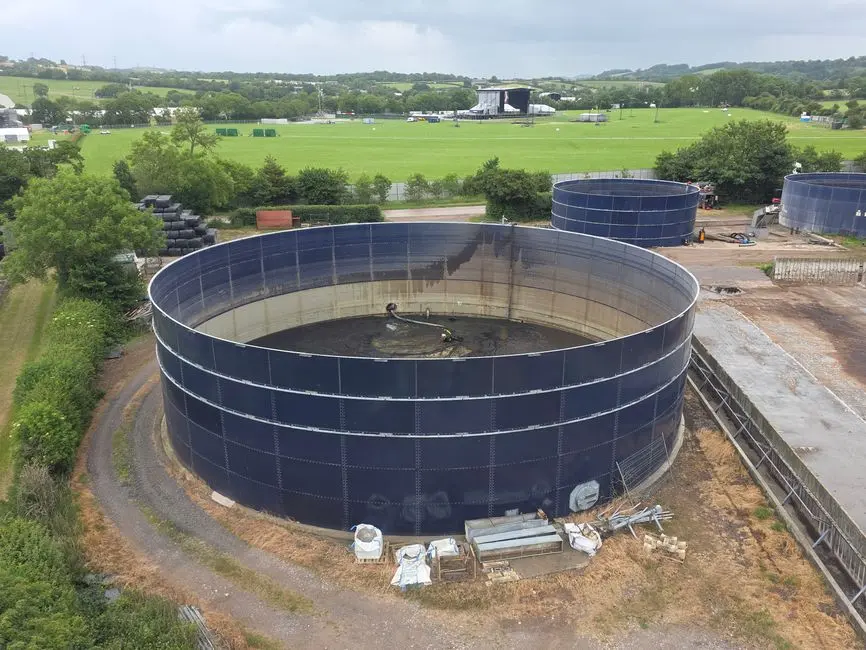
A defensible sizing brief separates initial occupancy from final build-out and converts the development programme into peak, sustained and low-flow scenarios. Where the project lacks public sewerage, or pretreatment is required before discharge, request evaluation of a complete treatment-and-disposal solution rather than a tank alone.
State both the peak-flow basis and the sustained treatment capacity. Also document the low-flow periods that the biological process must handle. Do not let a supplier select the unit from average daily flow alone: the treatment train should be checked against the selected peak scenario, sustained organic and ammonia loading, and the operating strategy for low-flow conditions.
Define every required treatment function: biological treatment, solids separation, disinfection, phosphorus removal, ammonia management and grease handling. For the A/O route, ask the supplier to confirm that the proposed WSZ unit remains within the published 1–80 m³/h range and includes A/O contact oxidation, sedimentation and disinfection. For the MBR route, confirm that the proposed configuration remains within the published 10–2,000 m³/day range and state whether reuse is an explicit design objective or merely a possible consequence of membrane filtration.
Population figures are not design factors by themselves. Biocell Water describes commercial experience ranging from projects serving up to 50 people to projects serving up to 5,000 people, but these are supplier-experience ranges rather than universal population-to-capacity conversions. The engineer must reconcile occupancy, water use and the staged flow profile to the selected process.
| Document to request | What it should demonstrate |
|---|---|
| Process flow diagram | Every treatment, storage, pumping, disinfection and disposal step |
| Hydraulic loading calculation | Peak, sustained and low-flow scenarios linked to development stages |
| Control narrative | Operating sequence, interlocks, alarms, power failure and manual arrangements |
| Commissioning plan | Testing, training, performance verification and handover criteria |
| Maintenance schedule | Inspections, sludge removal, consumables, spares and operator responsibilities |
Require the selected module or treatment train to match both the current development stage and an agreed expansion sequence. Phased delivery can reduce unnecessary early capacity, but only if the interim arrangement meets the applicable discharge conditions.
Account for Christchurch conditions and consent risk
Christchurch consent risk cannot be closed by selecting a technology name; each condition must map to a treatment step, monitoring point, operating control and responsible operator. Confirm the receiving-water or groundwater pathway with the relevant consent authority and base the equipment specification on the resulting conditions.
The University of Canterbury’s study of the Avon/Ōtākaro River provides environmental context rather than a sewage-treatment design standard. Researchers collected 30 sediment samples from six zones, identified 156 microplastic particles and reported a mean abundance of 5.2 particles per 100 g-1 of sediment. The study did not provide a Christchurch microplastic discharge limit. It therefore cannot be used to justify a particular effluent target, but it does support careful assessment of solids and plastic controls where surface-water discharge or stormwater interaction is proposed.
Assess the civil design for earthquake-related ground conditions, access, burial depth, flood exposure and future landscaping. Confirm whether treatment, storage or electrical equipment could be affected by flooding, and ensure access remains available for maintenance and sludge removal. These site risks can alter both the treatment configuration and the full installed cost.
For wetland routes, evaluate land availability against the selected wetland design and Christchurch’s urban-resilience objectives. Lincoln University’s 2012 research found that landscape design can mitigate wetland area requirements, but it did not supply a universal minimum area. Do not use that finding to bypass site-specific hydraulic and maintenance design.
Build a consent-compliance schedule with one row for each applicable condition. Include the evidence required to demonstrate compliance, the monitoring frequency, who takes the sample, the acceptance test and the responsible operator. Obtain the actual consent conditions before finalising the process guarantee or selecting a supplier.
Build a procurement and handover checklist
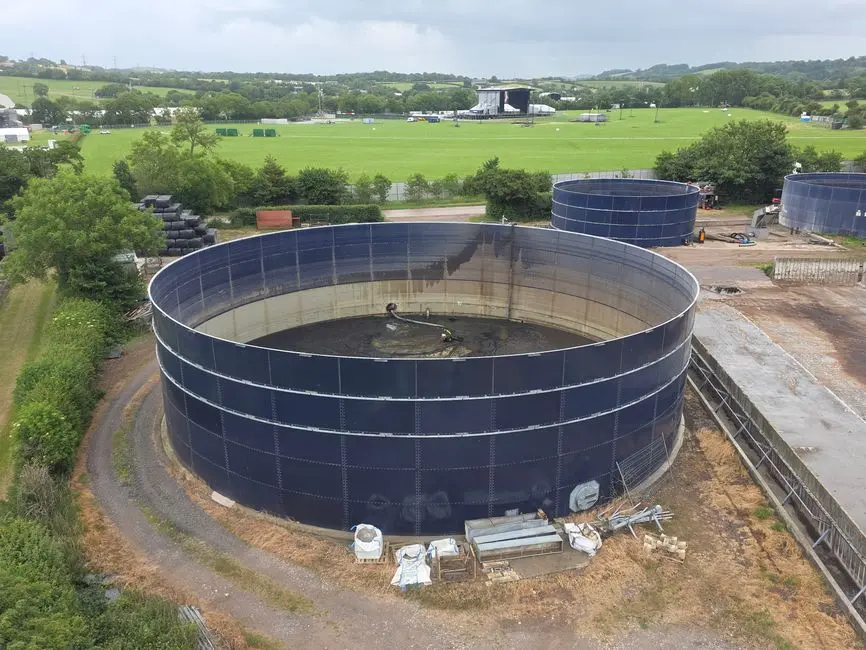
Comparable quotations require a defined scope boundary. Ask each bidder to state the treatment route, design flow range, process guarantees, footprint, civil works, power demand, commissioning period and maintenance tasks. Headline treatment capacity or purchase price alone will not permit a valid comparison.
Identify what each price includes and what it excludes. Pumps, blowers, membrane or media replacement, sludge removal, laboratory access, odour control, backup arrangements and future expansion should each be stated explicitly. A modular installation can support phased housing development, as commercial guidance from Community Sewer describes, but the quotation must identify the modules, connections and site works required for each stage.
| Comparison area | Required supplier response |
|---|---|
| Technical basis | Process route, design flows, treatment guarantees and consent-condition mapping |
| Installed scope | Tank or modules, civil works, pumps, controls, power, drainage and commissioning |
| Operations | Service access, inspections, sludge handling, spares, alarms and operator training |
| Monitoring | Local controls, remote monitoring requirements and alarm escalation |
| Whole-life cost | Power, consumables, sludge disposal, laboratory access, operator time and expansion |
Request a maintenance plan covering service access, routine inspection frequency, sludge handling, spare parts, alarm response and operator training. Biocell Water describes GSM alarm dial-out and SCADA monitoring as available options, but these should be specified rather than assumed. For sludge-handling boundaries, define the interface between the treatment supplier and any plate-and-frame filter press used for sludge dewatering.
Compare full lifecycle scope, not equipment cost alone. The supplied research contains no comparable Christchurch prices, so obtain project-specific quotations using the agreed flows, loads, consent conditions, civil works, monitoring and staged-capacity assumptions.
Frequently Asked Questions
What package plant is best for a Christchurch housing development?
The correct choice depends on project flows and loads, the discharge pathway, consent conditions, available footprint, site constraints and phased growth. Compare A/O, MBR and wetlands only after those inputs are defined.
When is an A/O package plant more practical than MBR?
An A/O package is generally more practical where a buried conventional-biological train can meet the consent and the site can accommodate the required civil works. MBR merits closer consideration when the specified effluent, reuse objective or footprint constraint justifies membrane separation and associated maintenance.
Can the number of residents be converted into a design flow?
No defensible conversion can be made from population alone. The buyer must provide occupancy stages, water-use assumptions and the resulting peak and sustained flow profile for the specific housing development.
What should be checked when selecting and pricing a supplier?
Request a process flow diagram, hydraulic calculation, consent-compliance mapping, control narrative, commissioning plan, maintenance schedule and full scope boundary. Obtain separate pricing for civil works, power, consumables, sludge handling, monitoring, operator time and future expansion; the supplied research provides no comparable Christchurch quotation.
How should Christchurch receiving-water sensitivity be addressed?
Obtain the actual consent conditions from the relevant authority and map each one to treatment, monitoring and operational controls. Use the University of Canterbury microplastic study as environmental context only; it does not establish a local effluent limit or predict a consent outcome.