Start with the discharge route, not the equipment catalog
No single packaged sewage treatment plant fits a Beirut housing development until the flow route, discharge destination and local approval requirements are established. Confirm whether a public sewer is available, whether connection requires pretreatment, and which authority reviews the design before comparing equipment. If treatment must occur onsite, the viable architecture depends on the receiving environment, required effluent specification, land availability and future occupancy. If a sewer connection is available, the project may need pretreatment rather than a complete treatment package.
Prepare a discharge-route note that identifies the proposed discharge point, receiving environment, sewer-entry requirements, responsible authority and intended reuse, if any. This note should also record the permits or approvals still outstanding. The supplied research does not establish a verified numerical effluent limit for Beirut, so an engineer should not substitute a generic regional value or a supplier’s catalog guarantee for project-specific approval.
The Lebanon wastewater-treatment guide is a starting point for the local engineering and regulatory check, not evidence that one configuration will be approved. Ask the local authority whether it will consider a sewer connection, onsite treatment, a specific receiving point or a reuse proposal. This decision can eliminate unsuitable processes before the developer spends time sizing them.
Build the hydraulic and wastewater design brief
A housing-development plant must be sized for the combined peak-flow and low-flow pattern of residential wastewater, not merely for the development’s daily water demand. Biocell Water reports that residential flow varies through the day and that peak flow typically occurs in the mornings, late afternoon and evenings, corresponding to periods when residents leave for or return from work and school. The hydraulic brief should therefore distinguish average flow, contributing peak flow and the operating periods that each capacity must cover.
Collect the daily population, expected occupancy by development phase, average daily wastewater flow, peak-flow assumptions, seasonal occupancy and duty hours. Do not treat domestic sewage as a constant-concentration stream. Request wastewater characterization covering the parameters relevant to biological loading and pretreatment, including ammonia and COD. Biocell Water notes that residential ammonia and COD can be high because of increased use of disinfectants and cleaning products, as well as homes without grease traps.
Confirm whether individual homes will have grease traps and what maintenance responsibility applies to them. If they will not, the inlet and biological treatment design must account for grease and associated solids rather than leaving that duty outside the supplier’s scope.
| Design-brief input | Information to establish | Why it affects selection |
|---|---|---|
| Population and occupancy | Daily population, occupancy by phase and seasonal variation | Defines the organic and hydraulic basis without assuming full occupancy on day one |
| Flow | Average flow, contributing peak flow and daily duration of peaks | Tests reactor, equalization, pumping and discharge capacity |
| Wastewater quality | COD, ammonia and other project-relevant characteristics | Sets biological loading and pretreatment requirements |
| Local inputs | Grease-trap arrangement, inflow pattern and discharge route | Defines inlet works and the required treatment train |
| Development plan | Occupancy growth and planned future modules | Supports phased procurement without reserving unnecessary capacity |
Biocell Water publishes residential solutions for small projects serving up to 50 people and larger projects serving up to 5,000 people. Those portfolio limits are market references, not universal hydraulic sizing rules; the engineer must convert the project’s actual flow and loading data into the required duty.
The underground integrated sewage treatment plant can then be evaluated against the brief, but its published capacity does not replace project-specific hydraulic and process checks.
Compare underground packages with containerized systems
Buried and above-ground packages require different site and commercial scopes. Biocell Water describes below-ground residential solutions as requiring construction of a concrete tank, after which equipment is supplied and installed inside. That arrangement can suit land-constrained or landscaped development only if excavation, structural design, groundwater, access and buoyancy are properly addressed.
For an underground package, obtain the excavation depth, tank construction method, civil-work allowance, access arrangements, drainage, groundwater assumptions, lifting provisions and requirements for restoring the surface. Do not treat the tank as a catalog item with a single quotation: civil works can materially change the installed scope and programme.
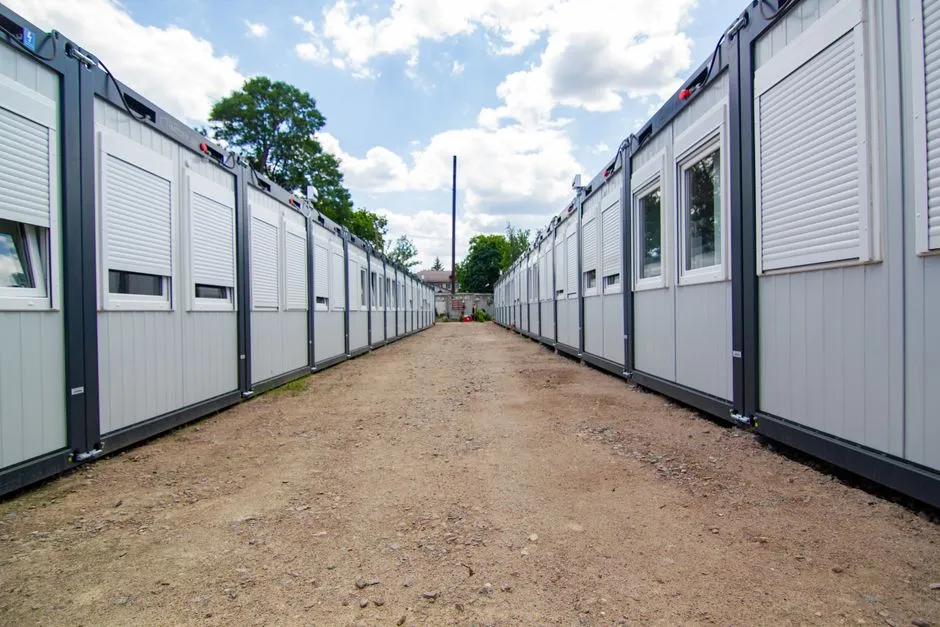
For a containerized sewage treatment plant, assess the above-ground footprint, module access for maintenance, noise and visual impact, utility connections, lifting requirements and the arrangement for adding modules later. Modular systems have a documented advantage for phased development because they can be installed as occupancy grows, according to Biocell Water. That advantage still requires a defined expansion interface and confirmation that future modules will connect to the original treatment train.
| Decision factor | Underground integrated package | Containerized or modular system |
|---|---|---|
| Land and excavation | Requires excavation, underground civil works and surface reinstatement | Uses an above-ground area and retains access around modules |
| Construction | Coordination between tank construction and equipment installation | Equipment and collection hardware can be assembled and shipped before site installation |
| Maintenance | Access and lifting must be designed into the buried installation | Module access must be retained for inspection and component removal |
| Phasing | Expansion depends on the tank and civil-work design | Additional modules can support development in stages, subject to connection design |
| Commercial scope | Civil, structural, excavation and reinstatement must be identified separately | Footprint, utilities, lifting, enclosure and access must be identified separately |
HydropureWater’s WSZ series is stated to handle 1–80 m³/h and can be buried with landscaping above or mounted on a trailer for mobile deployment. The WSZ design uses A/O biological contact oxidation, sedimentation and disinfection. These configurations are alternatives, not interchangeable descriptions of the same project: the selected arrangement must fit the verified hydraulic duty, discharge route and site constraints.
Neither architecture is universally preferable in Beirut. The correct comparison is between the complete civil and operating burden of a buried installation and the footprint, maintenance access and expansion provisions of a modular installation.
Choose MBBR, SBR or MBR against the required outcome
MBBR, SBR and MBR should be selected against the required effluent, reuse objective, site and budget—not by process name alone. Biocell Water identifies MBBR and SBR as typical below-ground residential options. For above-ground containerized or plug-and-play modules, it lists fixed-bed biological reactor, MBBR and MBR technologies, with selection described as site-specific and dependent on the required effluent standard and available budget.
Choose MBR when membrane separation, a compact treatment footprint or a potential route to higher-quality reuse justifies the added equipment complexity. HydropureWater’s containerized MBR wastewater treatment system combines activated sludge with submerged PVDF membranes and is specified at 10–2,000 m³/day. Its catalog capacity still must be checked against the project’s average flow, peak behavior and loading.
For a reuse proposal, require suppliers to define the intended application and identify the complete downstream safeguards. Membrane separation by itself should not be treated as a complete reuse design. Also request the proposed effluent basis, membrane configuration and every reuse claim in side-by-side proposals.
| Selection condition | Process to investigate | Evidence required from the supplier |
|---|---|---|
| Onsite treatment with underground construction | MBBR or SBR | Process calculation, tank arrangement, civil interface and project-specific performance guarantee |
| Compact modular installation | Fixed-bed reactor, MBBR or MBR | Footprint, module arrangement, utilities, maintenance access and phased expansion provisions |
| Membrane separation or potential reuse | MBR | Submerged membrane configuration, pretreatment, fouling controls, final treatment and reuse application |
| Any selected process | Project-specific outcome | Guaranteed COD, BOD, TSS, ammonia, phosphorus and disinfection results, where applicable |
Keep device specifications separate from guaranteed project performance. No COD, BOD, TSS, ammonia, phosphorus or disinfection result should be promised unless it appears in the vendor’s project-specific guarantee and is tied to the agreed design basis. The research does not quantify comparative effluent performance among MBBR, SBR and MBR, so bidders should not be ranked on unsupported performance claims.
Where flat-sheet membrane details are submitted, the flat-sheet MBR membrane design criteria can support technical review, but the installed system—not an isolated membrane specification—must meet the project guarantee.
Plan the treatment train and supporting equipment
A packaged biological plant is only one part of the treatment train. A practical arrangement is inlet works and screening, flow equalization, biological treatment, solids separation, disinfection, effluent storage or reuse, and sludge handling. Each item must be sized for the complete duty rather than treated as an optional accessory.
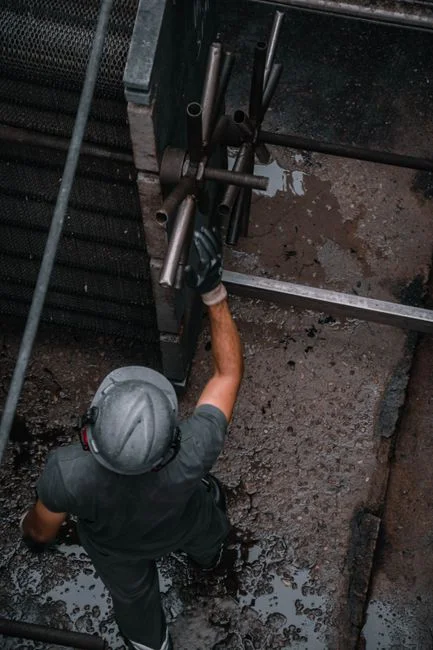
Confirm incoming wastewater requirements before the package inlet. Screening can be supplied as a rotary mechanical bar screen, while the required pretreatment route may also depend on the presence of grease, solids and flow equalization needs. Capacity matching must include the biological reactor and every upstream and downstream component that can constrain effective treatment.
For residential solids, ask the bidder to state the solids-retention strategy, wasting method, storage arrangement, removal frequency and final disposition. A plate-and-frame filter press may be proposed for dewatering, but the proposal must define its duty, ancillary equipment, cake handling and operator requirements. Otherwise, sludge removal can remain an undefined lifetime cost.
Disinfection should be matched to the approved effluent route. A UV sterilizer can form part of the train, but the supplier must address flow, transmittance, fouling, controls and confirmation that the treatment objective has been met.
For reuse, define the application before final process selection. Potable, irrigation, washdown or other reuse each requires a different design basis. Membrane filtration should not be presented as a complete reuse scheme without the required downstream safeguards, distribution controls and project-specific acceptance criteria.
Build a comparable supplier proposal
A comparable quotation requires every bidder to answer the same design-basis questions and define the same total installed scope. Require each proposal to state average flow, contributing peak flow, wastewater characteristics, operating hours, required effluent specification and discharge route. A catalog flow rate without these inputs is not an offer against the development’s actual duty.
Request drawings and schedules covering civil and installation requirements, footprint, utilities, backup strategy, operator attendance, maintenance intervals, spare parts and commissioning. Add sludge handling, alarms, remote monitoring, training, warranty and performance testing to the commercial schedule rather than accepting them as verbal inclusions.
Community Sewer’s published delivery sequence provides a useful procurement reference: requirements consultation, regulatory research, planning and design, build and shipment, installation and startup, followed by a 12-week follow-up assessment to confirm treatment levels and address any shortcomings. Use this not as a universal installation time, but as a sequence bidders must map against their responsibilities.
| Proposal area | Information every bidder must provide | Commercial check before comparison |
|---|---|---|
| Design basis | Flow, occupancy, wastewater characteristics, duty hours, effluent requirements and discharge route | Confirm that all bids use the same project inputs |
| Equipment and civil works | Process train, footprint, excavation, tank, foundations, access and installation sequence | Identify exclusions and hidden site-work allowances |
| Utilities and operations | Power, drainage, controls, alarms, remote monitoring, attendance and maintenance | Separate recurring operating costs from capital items |
| Residuals | Sludge generation, storage, dewatering, removal and final disposition | Price the complete residual-management route |
| Delivery and approval | Freight, taxes, permits, installation, commissioning and acceptance testing | Reject a plant-only comparison that omits these items |
| Verification | Post-startup period, test method, acceptance criteria and remedial responsibility | State each bidder’s period and method rather than assuming one follows another’s |
The packaged sewage treatment plant selection for housing developments provides another proposal-structure reference, but its project assumptions must not be transferred to Beirut. Do not compare quotations that omit freight, civil works, power connection, taxes, commissioning, sludge removal or permit support.
Make the final selection with a staged approval process
The final selection should follow a five-stage approval sequence that keeps regulatory, hydraulic and commercial decisions separate. First, obtain site information and confirm the regulatory and discharge pathway. Second, complete the hydraulic brief and identify candidate underground, containerized and biological architectures. Third, issue one common design basis to shortlisted suppliers. Fourth, compare technical proposals, guarantees, lifecycle responsibilities and total installed scope. Fifth, confirm the approved design locally before procurement, fabrication and installation.
This sequence prevents a preferred equipment format from driving the project before the discharge route is known. It also allows phased development to remain an explicit design requirement: size the treatment train for the development plan while allowing modules to be added as occupancy grows, without leaving future hydraulic, power, control or discharge connections undefined.
The Lebanon project guide can support the local review, but the approval decision must be recorded for the actual site and receiving point. Record design assumptions, supplier clarifications, guarantees and excluded works in the final approval package. A plant should not be released for procurement until the discharge route, design duty, civil interface and local approval status are aligned.
Frequently Asked Questions
How much does a packaged sewage treatment plant cost for a Beirut housing development?
There is no supported project price in the supplied research, so a reliable quotation requires the average and peak wastewater flow, wastewater characteristics, required effluent specification, discharge route, selected architecture and complete civil and installation scope. Ask bidders to price the treatment train, freight, taxes, power connection, commissioning, sludge handling, operator support and permit assistance separately. Compare the resulting total installed scope rather than accepting only a plant-and-equipment price.
What size sewage treatment plant does a Beirut housing development need?
Size the plant from verified population, occupancy by phase, average and peak flow, wastewater characteristics and the approved discharge requirements. The published ranges are useful only as market references: Biocell Water lists residential solutions from up to 50 people to up to 5,000 people, while HydropureWater specifies the WSZ series at 1–80 m³/h and its integrated MBR system at 10–2,000 m³/day. Ask the selected supplier to demonstrate that its proposed configuration handles the project’s complete design basis.
Is MBR better than MBBR or SBR for a residential development?
MBR is the stronger candidate when the project requires membrane separation, a compact installation or a potential route to higher-quality reuse, but it adds equipment complexity. Biocell Water identifies MBBR and SBR as typical below-ground residential options and selects above-ground processes according to site, effluent requirements and budget. Compare each bid against the required outcome, available space, civil works, utilities, maintenance and project-specific performance guarantee.
Can a packaged sewage treatment plant be installed in phases?
Yes, if the design preserves a defined expansion route. Biocell Water identifies phased installation as an advantage of modular systems as a development grows. Require the supplier to show future-module capacity, connection locations, hydraulic and electrical provisions, controls integration and the effect of later modules on the original treatment train. Community Sewer also describes modular design as enabling development in phases rather than purchasing the entire system at once.
How long does a packaged sewage treatment plant take to install and commission?
The supplied research does not provide a general installation duration for a Beirut housing development. The programme depends on the discharge approval, civil works, tank construction, equipment fabrication, utility connections and site conditions. Community Sewer describes consultation, regulatory research, design, build and shipment, installation and startup, then a 12-week follow-up assessment; use that sequence to request milestones, but require each bidder to state its own programme and post-startup verification method.