Which Packaged Sewage Treatment Plant Fits a Mombasa Housing Development?
For a Mombasa housing development, the best fit is usually a buried anoxic/aerobic packaged sewage treatment plant when reliable grid power, adequate land and a compliant discharge or sewer route are available. Select MBR where plot space is constrained or high-quality reuse is mandatory. A biodigester with polishing may suit smaller, off-grid or capital-sensitive sites, but additional treatment may be necessary to meet effluent limits. Final capacity must be based on occupancy-based flow, peak loading and the applicable discharge or reuse standard—not unit count alone.
The selection turns on four inputs: occupied units and resident profile; average and peak flow; the discharge or reuse destination; and available power, land and maintenance access. Mombasa requires an additional check: the receiving environment, groundwater, flood exposure and access to the final disposal point may invalidate a design transplanted from another Kenyan city without site investigation.
Where those conditions support it, a WSZ underground integrated sewage treatment plant is the practical baseline. If the plot cannot accommodate the A/O arrangement or reuse is mandatory, compare an integrated MBR wastewater treatment system. Neither decision should precede hydraulic calculations and confirmation of the disposal route.
| Site condition | Conditional technology | Decision to verify |
|---|---|---|
| Reliable power, adequate land and compliant discharge route | Buried A/O packaged plant | Sustained peak capacity, equalization and final disposal design |
| Severe land constraint or mandatory high-quality reuse | MBR | Power resilience, membrane lifecycle and reuse category |
| Smaller, off-grid or capital-sensitive development | Biodigester with polishing | Whether polishing is sufficient for the required effluent quality |
| Low-occupancy project | Mini packaged plant | Peak flow, commissioning and compliance evidence |
Size the Plant from Occupancy, Not Unit Count
Residential sewage hydraulic loading must be calculated from occupancy and water demand, because a development can change materially after handover through household additions, domestic staff, gardens and swimming pools. HydropureWater’s 2026 guidance gives residential flow bands of 150–200 L/person/day for middle-income Kenyan estates, 100–130 L/person/day for rural and low-income settings, and 250–300 L/person/day for upscale developments with gardens, swimming pools and domestic staff.
Its worked example uses 200 homes, five residents per home and 180 L/person/day: the resulting average flow is 180 m³/day. Applying the stated 1.8 peak factor produces a sustained peak of 324 m³/day during the two-to-four-hour morning window. This is the hydraulic case a bidder must reproduce from the developer’s final occupancy assumptions.
Equalization is not an optional civil accessory. In the same HydropureWater example, equalization is sized at six to eight hours of average flow, or 45–60 m³ for the 200-home estate. It should dampen the morning surge and protect biological treatment and disinfection from short-duration overload.
- Confirm occupied units, expected residents, staff and water-using facilities.
- Assign each user group to the applicable residential flow band.
- Calculate average daily flow and document the selected peak factor and duration.
- Require the vendor to demonstrate both average treatment capacity and sustained peak performance.
- Size equalization from the selected flow basis and include it in the civil scope.
| Design item | 200-home worked example | Buyer check |
|---|---|---|
| Occupancy assumption | Five residents per home | Replace with the development’s approved occupancy and user profile |
| Average flow | 180 m³/day | Submit the calculation from unit count, occupants and litres per person per day |
| Sustained peak flow | 324 m³/day | Identify treatment and equalization provisions for the peak window |
| Equalization | 45–60 m³ | Include excavation, access, pumping and control arrangements |
Compare A/O, MBR, Biodigesters and Mini Plants
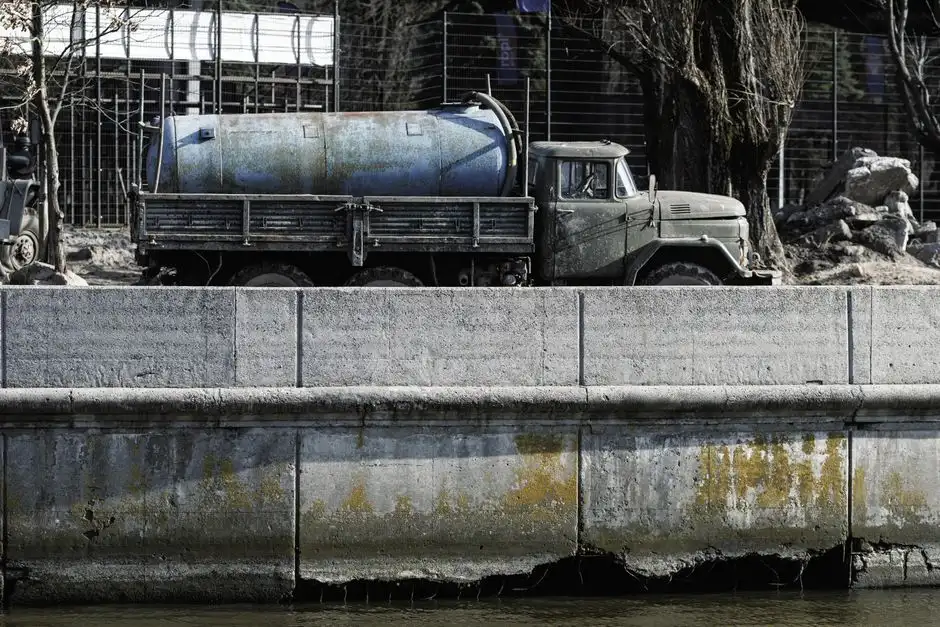
The WSZ A/O process combines anoxic and aerobic biological contact oxidation, sedimentation and disinfection in one buried unit that can be landscaped over; HydropureWater reports a treatment range of 1–80 m³/h. For its 180 m³/day example, it assigns a 10 m³/h WSZ unit, giving roughly 30% standby relative to average capacity while separately requiring equalization for the 324 m³/day peak.
MBR combines activated sludge with submerged PVDF membrane filtration. HydropureWater reports membrane pores below 1 μm, a capacity range of 10–2,000 m³/day and a footprint approximately 60% smaller than conventional systems. It also identifies membrane replacement every five to eight years and stronger dependence on reliable power. The MBR membrane bioreactor module should therefore be evaluated as a long-term operating commitment, not simply a compact tank.
Biodigesters operate without grid power and suit smaller or off-grid sites. However, HydropureWater states that standalone treatment removes only 60–80% of BOD, so a polishing stage is needed to meet the cited NEMA discharge envelope. Mini packaged plants can suit low-occupancy projects, but their small size does not remove the need to engineer peak flow, equalization, commissioning and compliance evidence.
| Option | Reported advantage | Principal trade-off | Reported footprint |
|---|---|---|---|
| WSZ buried A/O | Single buried process; can be landscaped over | Requires grid power and conventional treatment capacity | 6–8 m² in HydropureWater’s 200-home example |
| MBR | Compact, with near-reuse-quality effluent | Membrane replacement and stronger power dependence | 3–4 m² in the same example |
| Biodigester plus polishing | Can operate without grid power | Polishing is needed for the cited NEMA-level envelope | 25–30 m² including polishing wetland |
| Mini packaged plant | Suited to low-occupancy developments | Still requires full hydraulic and compliance engineering | Not supplied by the research |
Design the Mombasa Site for Treatment and Disposal
Treatment and final disposal are separate design decisions. The developer must first confirm whether effluent will enter a municipal sewer, an approved soakaway or watercourse, or a defined reuse system. HydropureWater’s 2026 guidance identifies on-site disposal or irrigation reuse as practical routes for estates outside a central municipal sewer network and states that both require a NEMA discharge licence.
That route must appear in the RFQ. Otherwise, bidders may price an isolated treatment container while leaving the pump connection, sewer interface, soakaway, storage irrigation system or outfall undefined. Ask each bidder to state which civil works are included and which depend on the receiving authority or developer.
For coastal Mombasa, require the civil designer to resolve the plant invert, chamber access, buoyancy protection, corrosion protection and any soakaway against site-specific geotechnical and groundwater conditions. Also check flood levels and maintain access to electrical equipment, openings and sampling points during heavy rain. These are design inputs, not generic construction notes: failure to establish them leaves the hydraulic selection unverified.
Maji Hill identifies soil percolation, hydraulic-load calculation and correct sizing as central to system performance. Its guidance states that failing systems commonly result from undersizing or unsuitable site conditions. A Mombasa RFQ should therefore require the disposal route, design groundwater or flood datum, available footprint, access route, power supply and maintenance arrangements in the same information schedule.
Meet NEMA and County Approval Requirements
Residential developments with 20 or more units, and projects listed in the NEMA EIA schedule, require an EIA report and NEMA discharge licence before commissioning, according to HydropureWater’s 2026 guidance. The licence route should therefore be treated as a schedule constraint rather than a post-contract administrative task.
At the point of discharge, HydropureWater cites an envelope of BOD not exceeding 30 mg/L, TSS not exceeding 30 mg/L, COD not exceeding 50 mg/L, pH from 6.5 to 8.5, fecal coliforms not exceeding 100 per 100 mL, and oil and grease not exceeding 10 mg/L. These values belong in the performance specification and sampling plan; they should not appear only in a vendor brochure.
Require an approval and performance pack containing the EIA report, NEMA licence, design drawings stamped by a registered engineer, commissioning report and quarterly effluent results from a NEMA-accredited laboratory. Maji Hill also requires post-commissioning sampling with written laboratory results and scheduled maintenance and testing to maintain compliance over the plant’s operating life.
Reuse needs a separate decision. HydropureWater cites WHO thresholds of fecal coliforms not exceeding 1,000 per 100 mL for restricted irrigation and 200 per 100 mL for unrestricted irrigation. Confirm the intended reuse category with the approving authority rather than assuming that discharge compliance permits unrestricted reuse.
| Approval or evidence item | Procurement requirement |
|---|---|
| EIA and discharge licence | Project-specific approvals obtained before commissioning |
| Stamped design | Registered engineer’s drawings covering treatment and final disposal |
| Commissioning evidence | Commissioning report and verified effluent results |
| Ongoing compliance | Quarterly results from a NEMA-accredited laboratory |
| County submission | Confirmed project route with the Mombasa County authority and NEMA |
Compare Capital Cost and Lifecycle Commitments
Equipment quotations are not comparable unless they cover the same civil, regulatory and operating scope. HydropureWater’s 2026 indicative ranges are USD 35,000–80,000 for a 200–300 m³/day WSZ buried A/O plant, USD 90,000–180,000 for MBR, and USD 8,000–20,000 for a 50–100 m³/day biodigester with polishing wetland.
HydropureWater states that its turnkey prices include civil works, mechanical equipment, chlorination and commissioning, but exclude land, the EIA and the NEMA licence fee. Its stated EIA allowance is USD 5,000–15,000, while sludge hauling is estimated at Ksh 8,000–15,000 per trip in 2026.
Operating cost can also change the result. HydropureWater estimates WSZ operating expenditure at USD 0.20–0.60 per cubic metre treated and KES 2.2–3.9 million annually for a 240 m³/day plant in 2026. Require a breakdown for electricity, chemicals, aerator and pump maintenance, sludge removal, laboratory testing and emergency support. For MBR, price membrane replacement separately within the full planning period.
HydropureWater also identifies a three-month performance-verification period before final discharge sign-off. Budget for it and do not treat mechanical commissioning as the end of the compliance process.
| Cost element | 2026 evidence or requirement |
|---|---|
| WSZ A/O capital cost | USD 35,000–80,000 for 200–300 m³/day |
| MBR capital cost | USD 90,000–180,000 |
| Biodigester with polishing | USD 8,000–20,000 for 50–100 m³/day |
| EIA | USD 5,000–15,000 allowance |
| Sludge hauling | Ksh 8,000–15,000 per trip |
| WSZ operating expenditure | USD 0.20–0.60 per m³; KES 2.2–3.9 million annually at 240 m³/day |
Issue a Packaged Plant RFQ That Produces Comparable Bids
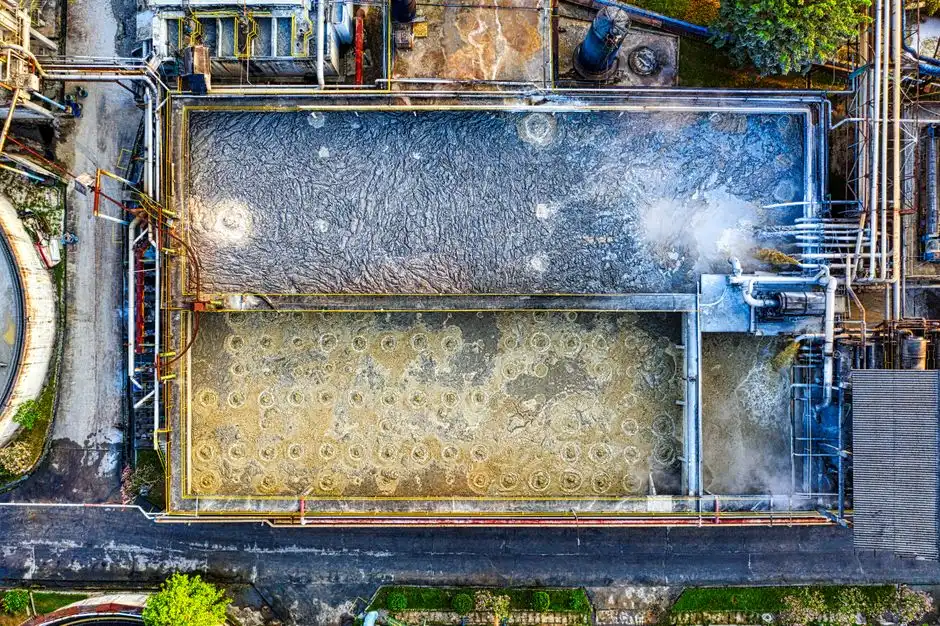
A comparable RFQ must begin with the same design basis. Require every bidder to state average flow, sustained peak flow, equalization volume, process stages, final disposal route and the applicable discharge or reuse limits. If those inputs are missing, a nominal plant capacity is not a compliant offer.
Ask for stamped drawings, hydraulic calculations, electrical-load data, standby provisions, commissioning tests, as-built drawings, a maintenance schedule and a clearly defined owner-operator training scope. Performance evidence must address BOD, TSS, COD, pH, fecal coliform and oil-and-grease limits, with the sampling point identified.
Price the full 10-year commitment separately: power, chemicals, aerator and pump maintenance, sludge removal, laboratory testing, membrane replacement where relevant and emergency callouts. The packaged sewage treatment plant selection for housing developments provides a useful structure for comparing quoted technical and commercial scope.
Maji Hill’s integrated approach—one party for design, supply, installation, commissioning and maintenance—reduces interfaces between parties with different incentives. Whether the bidder uses one contractor or a coordinated team, assign responsibility for contracted performance clearly. Specify acceptance tests and remedies for failure to achieve the required effluent quality; nominal equipment capacity is not an acceptance criterion.
- Issue a common occupancy, hydraulic, disposal and compliance schedule.
- Require technical and commercial responses against the same schedule.
- Normalize the 10-year operating-cost comparison.
- Define acceptance testing and contractual remedies.
- Make permits, approvals, training and handover deliverables explicit.
Frequently Asked Questions
How should a Mombasa housing estate be sized before choosing a treatment plant?
Start with occupied units and the resident profile, then apply the applicable residential flow band. HydropureWater’s worked example uses 200 homes, five residents per home and 180 L/person/day to produce 180 m³/day average flow, then applies a 1.8 peak factor to obtain 324 m³/day sustained for the two-to-four-hour morning window. Equalization is 45–60 m³ in that example. Request the vendor to repeat the calculation using final occupancy, staff, gardens, pools and water demand.
What will a packaged sewage treatment plant for a Mombasa housing development cost?
HydropureWater’s 2026 indicative capital ranges are USD 35,000–80,000 for a 200–300 m³/day WSZ buried A/O plant, USD 90,000–180,000 for MBR, and USD 8,000–20,000 for a 50–100 m³/day biodigester with polishing wetland. Request itemized quotations covering equalization, final-disposal civil works, chlorination, commissioning, EIA and licensing because these items may sit outside the equipment price. Ask separately for power, chemicals, sludge hauling, laboratory testing and membrane replacement.
Which documents should the developer obtain before commissioning?
For a residential development with 20 or more units, or a project listed in the NEMA EIA schedule, HydropureWater’s 2026 guidance calls for an EIA report and NEMA discharge licence before commissioning. Also require stamped engineering drawings, the commissioning report and quarterly results from a NEMA-accredited laboratory. Confirm the Mombasa County submission route directly with the local authority and NEMA.
How should a buyer select a supplier for a coastal housing estate?
Request one accountable scope covering design, supply, installation, commissioning and maintenance, or assign equivalent responsibility where several firms are involved. Evaluate stamped drawings, hydraulic calculations, electrical resilience, standby provisions, training and measurable acceptance criteria. Site-specific coastal checks—including groundwater, flood exposure, corrosion, access and the final disposal route—should be contractual deliverables rather than assumptions in a brochure.
Can treated sewage from the plant be used for estate irrigation?
Possibly, but the reuse category must be fixed before plant selection. HydropureWater cites fecal-coliform limits of 1,000 per 100 mL for restricted irrigation and 200 per 100 mL for unrestricted irrigation. These thresholds differ from the cited discharge envelope, so confirm the intended use with NEMA and the relevant county authority and require the selected process to demonstrate the applicable limit at the reuse point.
Related Equipment
- chlorine dioxide generator for wastewater disinfection — specifications, capacity range, and technical data
- plate and frame sludge filter press — specifications, capacity range, and technical data