What Cartagena Data Centers Must Decide Before Sizing Equipment
There is no defensible equipment preset for a Cartagena data center: the correct design depends on source-water chemistry, cooling-loop performance, blowdown flow, climate, reuse objectives, permit conditions and concentrate disposal. A site-specific water balance should determine the required treatment rather than a generic filtration–UF–RO package. This follows the same site-specific data center blowdown treatment methodology used for an Indian data center, while avoiding assumptions imported from Cali, Bogotá, Phoenix or Barranquilla.
Before equipment is specified, document the makeup source, circulation rate, evaporation, blowdown, expected cycles of concentration and the data-hall build-out sequence. Model seasonal wet-bulb conditions at the actual site because attainable cycles of concentration and evaporative losses affect both water demand and the treatment load. Coastal source-water scenarios must include salinity and chloride where the selected supply is affected; Cartagena is a coastal location, but that alone does not establish the chemistry of every available source.
Then define the primary objective: cooling-tower makeup reuse, treatment for sewer discharge, non-potable reuse, or partial zero-liquid-discharge with managed brine. The applicable cooling-blowdown recovery and reuse guide explains why the objective changes the process design.
| Decision input | Information required | Why it gates the design |
|---|---|---|
| Water balance | Makeup, circulation, evaporation, blowdown and build-out phases | Sets hydraulic capacity and treatment loading |
| Source-water chemistry | TDS, chloride, hardness, silica, alkalinity, turbidity and treatment residuals | Determines scaling, corrosion and pretreatment needs |
| Climate | Site-specific seasonal wet-bulb assessment | Links cooling performance to evaporation and attainable cycles of concentration |
| Project objective | Reuse, sewer compliance, non-potable reuse or partial ZLD | Selects the required permeate and concentrate outcomes |
| Permit pathway | Receiving sewer, authority and proposed discharge point | Establishes the applicable discharge and authorization conditions |
| Concentrate destination | Permitted discharge, return to process, authorized treatment, further concentration or disposal | Prevents an unresolved residual stream |
Decision gate: freeze no treatment train until measured or representative makeup and effluent data, blowdown flow, recovery target, permit pathway and concentrate destination are documented.
How the Cooling Water Balance Sets the Blowdown Load
Cycles of concentration determine the relationship between blowdown volume and the dissolved solids carried out of the cooling loop. Genesis Water Technologies (2026) reports that a cooling tower operating at 4 cycles of concentration sends approximately 25–30% of makeup water to blowdown. That relationship provides a preliminary mass balance, not a final site calculation; evaporation, circulation and measured operating data must replace the generic assumption.
The same source reports typical blowdown TDS of 1,200–6,000 mg/L, equivalent to 4–8 times the makeup-water concentration, and suspended solids of 10–50 mg/L. The dissolved load can include calcium, magnesium, silica and bicarbonate alkalinity, while treatment chemicals, corrosion products, biofilm fragments and airborne particulates affect membrane compatibility and discharge quality.
| Water-balance term | Evidence-based benchmark | Engineering use |
|---|---|---|
| Blowdown as a share of makeup | Approximately 25–30% at 4 cycles of concentration — Genesis Water Technologies, 2026 | Initial hydraulic screening before site calculations |
| Blowdown TDS | 1,200–6,000 mg/L, or 4–8 times makeup concentration — Genesis Water Technologies, 2026 | Sizes the RO mass-loading problem |
| Suspended solids | 10–50 mg/L — Genesis Water Technologies, 2026 | Defines filtration and UF requirements |
| Reuse recovery | 60–85% for cooling-tower makeup reuse — Genesis Water Technologies, 2026 | Application benchmark, not a guaranteed result |
Increasing cycles of concentration reduces blowdown and freshwater demand, but it also concentrates scale formers and treatment residuals. Higher cycles can therefore reduce pretreatment flow while increasing membrane scaling risk and concentrate salinity. The design should compare operating scenarios rather than maximize concentration in isolation.
Compare Reuse, Discharge Compliance and Partial ZLD
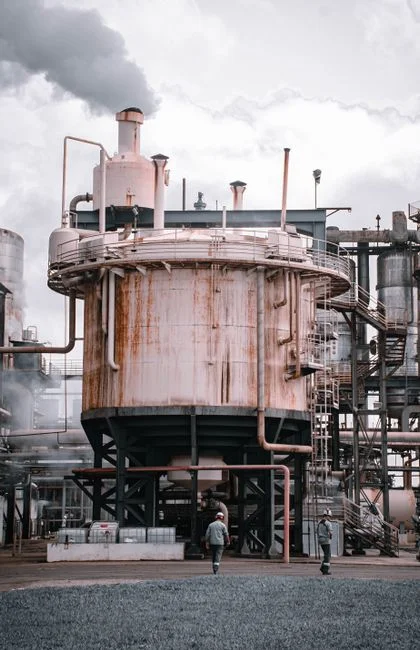
Cooling-tower makeup reuse generally provides the greatest operational value because it reduces freshwater demand and discharge exposure. Genesis Water Technologies (2026) reports typical recovery of 60–85% for this application. The recovered stream must still satisfy the cooling loop’s chemistry, corrosion-control and biological-control requirements; low permeate TDS alone is not proof that the reuse is acceptable.
Discharge-compliance treatment is governed by the receiving sewer and the facility’s applicable CVC permit, not by a universal target. The buyer should obtain current limits for TDS, total suspended solids and treatment-chemical residuals under the pathway identified with Resolución 631/2015. The receiving authority and sewer operator must confirm the discharge point, analytical methods and any site-specific conditions.
Partial ZLD is relevant when a suitable discharge route is unavailable or uneconomic. Genesis Water Technologies (2026) reports that partial concentration can reduce the residual liquid stream by 80–90%. It describes a combined RO-plus-MVC configuration capable of 85–95% overall recovery; that should be evaluated as an option for difficult concentrate conditions, not installed automatically. Full ZLD also requires evaporation, crystallization, heat, maintenance and authorized solids disposal.
| Objective | Primary treatment focus | Residual-stream requirement | Main decision |
|---|---|---|---|
| Cooling-tower makeup reuse | TDS reduction, scaling control, solids and biological-load removal | Manage RO concentrate and cleaning waste | Does permeate quality fit the cooling chemistry and corrosion program? |
| Sewer discharge compliance | Permit-specific TDS, TSS and treatment-residual limits | Direct permitted discharge or pretreatment | What limits actually apply at this facility? |
| Non-potable reuse | Quality suitable for the identified use | Return to process or manage concentrate | Is a defined non-potable demand available? |
| Partial ZLD | Concentrate reduction and additional recovery | Further concentration or authorized treatment | Does the reduction justify added heat and maintenance? |
Every option needs a defined concentrate fate: direct permitted discharge, return to the process, transfer to an authorized treatment route, further concentration or physical treatment for disposal.
Build the Filtration and Membrane Treatment Train
The recommended sequence begins with solids removal, protects the membranes with ultrafiltration and then uses reverse osmosis to reduce the dissolved load. Each stage addresses a different failure mechanism; adding UF does not remove dissolved salts, while RO does not replace adequate pretreatment.
Start with self-cleaning side-stream filtration rated at 10–25 µm and sized at approximately 1–5% of total circulation flow, according to Genesis Water Technologies (2026). This stage removes corrosion products, biofilm fragments and particulates that would otherwise increase membrane fouling. Follow with hollow-fiber ultrafiltration pretreatment where the feed contains significant colloids, solids or biological load.
Genesis Water Technologies (2026) states that UF operates at 10–30 psi, typically achieves 90–95% recovery and generally requires chemical cleaning every 1–3 months depending on feed quality. RO then addresses hardness, silica, salts and most treatment chemicals. The same source states that RO removes 95–99% of dissolved solids and typically produces 10–50 mg/L TDS permeate.
| Process stage | Design benchmark | Function and acceptance criterion |
|---|---|---|
| Side-stream filtration | 10–25 µm; approximately 1–5% of circulation flow — Genesis Water Technologies, 2026 | Remove solids before UF; verify pressure differential, filtrate quality and automatic cleaning |
| Hollow-fiber UF | 10–30 psi; 90–95% recovery; chemical cleaning every 1–3 months — Genesis Water Technologies, 2026 | Provide membrane-quality feed; verify flux, backwash and cleaning-cycle controls |
| Brackish-water RO | 150–400 psi; 50–85% recovery; 10–50 mg/L permeate TDS — Genesis Water Technologies, 2026 | Reduce dissolved load; verify salt passage, normalized permeate flow, recovery and scaling margin |
| Antiscalant and pH control | Design-specific dosing based on feed chemistry | Control CaCO₃ and silica scaling without incompatible chemical accumulation |
| Controls and monitoring | Conductivity, permeate quality, feed conditions, concentrate flow and high-pressure alarms | Interlock chemical dosing and protect the train during abnormal conditions |
The industrial reverse osmosis system for blowdown recovery should be sized from the actual water balance, not a generic flow rate. Antiscalant control, pH adjustment, membrane-feed monitoring, permeate-quality interlocks and concentrate-flow measurement are core components. Confirm compatibility with biocides, scale inhibitors, corrosion inhibitors and dispersants. Genesis Water Technologies (2026) identifies legacy chromate and high-phosphate programs as particularly problematic for reuse and discharge compliance. Return permeate as makeup or blend it with another source only after confirming cooling chemistry and corrosion compatibility.
Protect Membrane Performance and Legionella Control
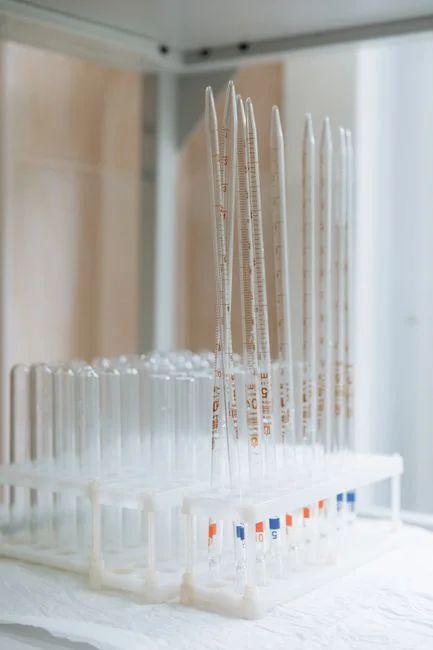
Membrane protection begins with a complete feed characterization, not just permeate targets. Before finalizing pretreatment, obtain turbidity, suspended solids, SDI, hardness, silica, alkalinity, conductivity, treatment-chemical residuals and biological indicators. Genesis Water Technologies (2026) recommends feed filtration below 10–15 µm before membranes and chemical conditioning to control scaling.
UF backwash, RO cleaning and chemical inventory must also appear in the site water balance. These streams can increase drainage load and create additional residual flows. A supplier’s claimed recovery is incomplete if it omits concentrate, backwash or cleaning waste.
Maintain the cooling tower’s established biocide, corrosion and scale-control program while selecting membrane-compatible chemistry. A low-TDS permeate does not eliminate the need for Legionella and biofilm control in the recirculating loop, and excessive phosphate or chromate can transfer problems into membrane fouling or the discharge stream.
| Control area | Procurement requirement |
|---|---|
| Feed protection | Document filtration, SDI, scaling analysis and chemical-conditioning limits |
| Residual streams | Account for UF backwash, RO concentrate and chemical-cleaning waste |
| Online monitoring | Measure conductivity, permeate quality, pressure differentials and concentrate flow |
| Automation | Interlock dosing, high-pressure protection, leak detection and abnormal-condition shutdowns |
| Cooling-loop control | Maintain the established biocide, corrosion and scale-control program |
Commissioning should demonstrate alarm response, instrument calibration, leak detection and operator procedures. The equipment package and the cooling-loop chemistry program must be reviewed together.
Plan the Concentrate and Residual Streams
Concentrate flow and constituent concentrations must be calculated at the selected RO recovery before choosing a final disposal route. Doing this last leaves the largest unresolved mass balance in the project. RO concentrate, UF backwash and chemical-cleaning waste also belong on the site drainage, pretreatment and permit diagrams from the beginning.
Genesis Water Technologies (2026) reports that a 50,000 GPD blowdown RO system may cost $250,000–$500,000 installed and $1.50–$3.00 per thousand gallons treated. These are market benchmarks for the cited system class, not Cartagena quotations. A buyer should require a local quotation based on actual flow, feed chemistry, recovery, utilities, controls, residual handling and site installation conditions.
| Residual stream | Planning requirement | Potential destination to evaluate |
|---|---|---|
| RO concentrate | Calculate flow and constituent loading at the guaranteed recovery | Permitted discharge, return to process, further concentration or authorized treatment |
| UF backwash | Include volume and chemistry in the drainage balance | Return to suitable pretreatment or manage as a residual stream |
| Chemical-cleaning waste | Determine composition, segregation and collection method | Approved collection or treatment route |
| Concentrated brine | Assess heat, energy, maintenance and solids consequences | Authorized treatment, transfer or physical disposal |
Where permitted discharge is unavailable or uneconomic, compare partial concentration with full ZLD. Genesis Water Technologies (2026) reports 95–98% recovery for MVC, distillate below 10 mg/L TDS and energy use of 15–25 kWh per 1,000 US gallons of distillate for the cited system class. Full ZLD adds crystallization and leaves a solid salt or sludge residue requiring an authorized route; it should be selected only when liquid-discharge elimination is mandatory.
Navigate Colombian Permitting and Project Sequence
Permitting should begin with evidence: characterize the influent and effluent across seasonal conditions, identify the receiving sewer and confirm the authority responsible for the proposed discharge point. No single resolution can replace a facility-specific review of current requirements, receiving-system capacity and permit conditions.
HydropureWater (2026) identifies Resolución 631/2015 as the binding industrial-discharge instrument setting limits for TDS, total suspended solids and treatment-chemical residuals before discharge to sewer. The same source gives a practical sequence: influent and effluent characterization; EIA chapter and CVC permiso de vertimientos application; concesión de aguas application; Resolución 1207/2014 alignment if the recovered stream is classified as reuse; and operational commissioning under CVC oversight.
| Project stage | Required evidence or action | Decision released |
|---|---|---|
| Characterization | Seasonal influent and effluent analysis | Treatment objectives and permit basis |
| Authority identification | Confirm receiving sewer, CVC pathway and responsible operators | Applicable discharge point and authority |
| Environmental application | Prepare the EIA chapter and permiso de vertimientos application | Regulatory review of the discharge proposal |
| Water authorization | Prepare the concesión de aguas application | Authorization pathway for the selected makeup source |
| Reuse classification | Assess Resolución 1207/2014 alignment where recovered water will be classified as reuse | Applicable reuse framework |
| Commissioning | Analytical acceptance, membrane tests, leak tests, controls validation, training and records | Operational readiness under the required oversight |
Verify all current requirements and facility-specific limits with the competent authority and sewer operator before freezing the process specification. Commissioning records should cover analytical results, membrane performance, leak testing, control validation, operator training, reuse volumes and discharge monitoring.
Evaluate Energy, Carbon and Commercial Trade-Offs
Water reuse can increase treatment energy and carbon, so the comparison must include operating consequences rather than treating water savings as the only benefit. The 2026 Open Engineering Inc preprint found that its wastewater scenario had about twice the global warming potential of the freshwater case, with treatment energy accounting for roughly 80% of the difference.
The same study found that the UF+RO scenario consumed more than five times the freshwater-case energy, partly offset by improved cycles of concentration that reduced blowdown and chemical consumption. It also estimated an indirect water penalty of approximately 0.93 L/m³ from upstream electricity and chemical inputs, less than 0.1% of the direct freshwater-displacement benefit.
These are comparative life-cycle findings, not guaranteed Cartagena operating results. The actual electricity carbon intensity and treatment train may differ. Ask suppliers to compare alternatives over the same site life and include freshwater, electricity, membrane replacement, chemicals, labor, discharge costs, blowdown reduction and concentrate disposal. Evaluate carbon and water impacts together rather than assigning one metric automatic priority.
A Practical Procurement and Acceptance Checklist
A complete RFQ should make performance conditional on the site’s actual water balance, chemistry and permit basis. Generic guarantees that exclude feed conditions are not enough to compare technically equivalent offers.
| RFQ item | Minimum information or guarantee required | Acceptance check |
|---|---|---|
| Feed basis | Source, circulation flow, blowdown flow, cycles of concentration, chemistry, temperature and scaling analysis | Recalculate equipment size and guarantees from Cartagena data |
| Performance | Permeate quality, recovery, concentrate flow, power demand and cleaning frequency | Test against defined feed and operating envelopes |
| Drawings | Pretreatment, backwash, cleaning, storage, concentrate, controls, drains, power and access | Verify interfaces and residual-stream routing |
| Automation | PLC, alarms, local/remote operation, calibration and data logging | Witness functional tests and failure interlocks |
| Service | Availability, spare parts and technical training commitments | Define response times and handover documentation |
| Permit compatibility | Permit-dependent effluent and residual-stream conditions | Reject guarantees based on unsupported assumptions |
Require each supplier to document its sizing basis, projected membrane condition, chemical demand, cleaning assumptions and residual handling. Use actual Cartagena source-water and permit data to test the proposal. Include a factory or site acceptance test for analytical performance, controls, alarms, leak detection, calibration and documentation before final acceptance.
Frequently Asked Questions
How much cooling-tower blowdown does a Cartagena data center produce?
Genesis Water Technologies (2026) reports that approximately 25–30% of makeup water leaves the cooling loop at 4 cycles of concentration. This is a preliminary relationship. The project must replace it with measured evaporation, makeup, circulation and blowdown data, because climate, operating cycles and future data-hall load will change the actual flow and contaminant loading.
Can recovered RO permeate replace cooling-tower makeup?
Yes, if its chemistry, corrosion risk and biological-control compatibility fit the cooling program. Genesis Water Technologies (2026) gives 60–85% recovery as an application benchmark for cooling-tower makeup reuse, but that is not a guaranteed Cartagena result. The buyer should require actual source-water data, permeate guarantees, blending criteria and a cooling-loop materials assessment.
What do filtration, UF and RO each remove?
Side-stream filtration at 10–25 µm removes solids and can be sized at approximately 1–5% of circulation flow. Hollow-fiber UF operates at 10–30 psi, typically achieves 90–95% recovery and generally needs chemical cleaning every 1–3 months. RO operates at 150–400 psi, typically removes 95–99% of dissolved solids and produces 10–50 mg/L TDS permeate at 50–85% recovery. All benchmarks are from Genesis Water Technologies (2026); final sizing requires feed-specific testing and scaling analysis.
How much will the blowdown RO system cost?
Genesis Water Technologies (2026) reports $250,000–$500,000 installed for a 50,000 GPD blowdown RO system and $1.50–$3.00 per thousand gallons treated. These are not Cartagena quotations. Request a site-specific price showing the treatment train, foundations and installation, electrical requirements, controls, membranes, antiscalant, pretreatment, concentrate handling, commissioning, operator training, exclusions and the validity period.
What permits are required before discharge?
HydropureWater (2026) identifies Resolución 631/2015 as the binding industrial-discharge instrument for the relevant industrial discharge limits and describes a CVC permiso de vertimientos sequence beginning with influent and effluent characterization, followed by the environmental application, water authorization and operational commissioning. Confirm the current requirements, facility-specific limits, receiving sewer and discharge authority with the competent bodies before the design is frozen.