Which packaged sewage treatment plant fits a Tokyo housing development?
The WSZ underground integrated sewage treatment plant is the strongest initial fit for a Tokyo housing development needing a compact, buried, automated system. It combines anoxic/aerobic biological contact oxidation, sedimentation and disinfection within a 1–80 m³/h equipment envelope. Consider an MBR when the design requires submerged PVDF membrane filtration or falls within its 10–2,000 m³/day range. A sewer connection remains the baseline comparison. Final selection requires verified flows, groundwater conditions, available footprint, discharge route, local approvals and clear operating responsibilities.
The WSZ underground integrated sewage treatment plant is the stronger initial candidate for a compact residential installation where landscaping can cover the unit. Its process train is suitable for domestic sewage treatment in an integrated package, while its published range permits comparison against the development’s average and peak hydraulic loading. The MBR membrane bioreactor alternative is more appropriate when the process specification calls for membrane separation rather than clarification-based solids removal.
Neither equipment range establishes automatic compliance in Tokyo. The selected system must match the actual discharge destination, project-specific conditions, applicable local approvals and a signed design basis. Sewerage should remain commercially and technically open during selection because the supplied research does not establish that an on-site package is always preferable to a connection to the public network.
Turn the development plan into a wastewater design brief
A Tokyo residential wastewater plant cannot be selected reliably from dwelling count alone because the supplied research provides no Tokyo residential unit-to-flow conversion factor. The buyer needs verified average daily flow, peak-hour flow, projected wastewater characteristics and the design horizon before comparing equipment.
Issue the design brief as a controlled document. It should identify the connected population or dwelling units, average and peak flow, groundwater and soil conditions, available footprint, burial depth, access route, power supply, odor controls, sludge handling, monitoring requirements and discharge destination. The commercial quotation should be tied to that same basis, including the process duty, retention arrangement, control philosophy, utilities and maintenance access.
| Design-brief item | Information required before equipment selection |
|---|---|
| Hydraulic basis | Verified average daily flow, peak-hour flow, design horizon and projected wastewater characteristics |
| Site and civil constraints | Groundwater level, soil condition, footprint, burial depth, structural loading, flood exposure and maintenance access |
| Climate and nuisance controls | Surface-water or groundwater intrusion, rainfall-derived inflow, odor transmission, noise and lighting controls |
| Utilities and residuals | Power supply, chemical dosing, sludge removal route, monitoring, sampling and control-system requirements |
| Regulatory route | Discharge destination, responsible authority and required approvals |
Capacity must remain within the relevant published envelope: 1–80 m³/h for WSZ and 10–2,000 m³/day for MBR. Those limits are equipment bounds, not permission to select the upper end without hydraulic and process verification. A rotary mechanical bar screen should be considered only if influent screening requirements and the responsible authority support it; the source material does not make it an automatic accessory.
Climate and site diligence should test rainfall-derived inflow, flood exposure, groundwater, odor transmission, landscaping loads and access for maintenance. Require the design team and owner’s representative to sign the design basis before bids are compared to ensure quotations are based on consistent flow assumptions, treatment duties and site-work boundaries.
Compare WSZ, MBR and a sewer connection
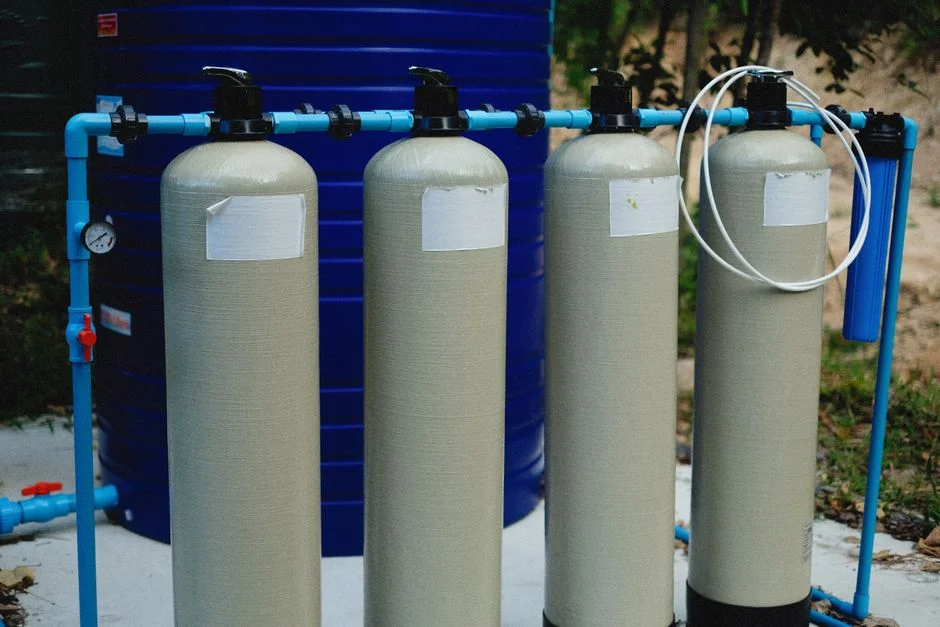
WSZ and MBR should be compared by treatment mechanism, hydraulic envelope, installation implications and operating burden, while a sewer connection should be priced as the utility baseline. The two package systems use different capacity time bases, so the buyer must first express average, peak and design flows on a common basis.
| Option | Treatment and configuration | Published capacity basis | Selection considerations |
|---|---|---|---|
| WSZ | Integrated anoxic/aerobic biological contact oxidation, sedimentation and disinfection; fully automated | 1–80 m³/h | Catalog information states that no operator is required; suitable for below-grade installation with landscaping above, and trailer mounting is also available for mobile deployment |
| MBR | Activated-sludge treatment combined with submerged PVDF membrane filtration | 10–2,000 m³/day | Filtration below 1 μm; catalog specification claims near-reuse-quality effluent and a 60% smaller footprint than conventional systems |
| Sewer connection | Utility-managed conveyance and treatment route | To be established with the responsible sewer organization | Confirm feasibility, connection requirements, approvals, charges, site works and whole-life operating responsibilities; no supplied research establishes a Tokyo threshold, setback or price |
The WSZ is the direct fit for a compact, largely automated residential package. “No operator required” describes the stated operating configuration, not elimination of the owner’s inspection, compliance and maintenance duties. The MBR specification supports a high-performance membrane option where separation below 1 μm is specifically required or justified by the process design. Its claimed footprint advantage should be checked against the complete installed arrangement, including tankage, access, controls and residual handling.
For sewerage, request confirmation from the relevant organization rather than assuming either a connection is available or that on-site treatment is cheaper. The comparison should include excavation, connection infrastructure, external power, odor controls, monitoring, sludge disposal, maintenance, local support and end-of-life obligations.
Map the treatment process from inlet to effluent
The WSZ process runs from inlet and screening considerations through anoxic/aerobic biological contact oxidation, sedimentation, disinfection and the approved effluent route. The biological stages address the soluble and suspended organic load; sedimentation then separates settleable solids before disinfection. The final reuse or discharge assessment must follow the project’s approval conditions rather than rely on a generic catalog claim.
The MBR route combines activated-sludge treatment with submerged PVDF membrane filtration. That arrangement is not hydraulically or operationally equivalent to clarification plus disinfection: membrane modules require an agreed cleaning and replacement regime, and the owner must price membrane life, cleaning chemicals, withdrawal and solids handling. Neither supplied specification establishes that either package is suitable for direct potable reuse in Tokyo.
Identify interfaces from the verified influent and residuals. Rotary mechanical bar screening may address rags, fibers and suspended solids where the approved process design requires it. A plate-frame filter press becomes relevant if residual sludge dewatering is necessary. An automatic chemical dosing system should be specified only where the process design calls for chemical addition. These are conditional interfaces, not standard inclusions established by the research.
Resource recovery should remain a separate feasibility topic. The Environmental Science Water Research & Technology paper titled The heat recovery potential of ‘wastewater’ used environmental water-quality data from England to estimate heat-recovery potential from sewage effluent discharged to rivers. Its findings are not evidence of heat recovery in Tokyo or a feature of WSZ or MBR. Similarly, the IntechOpen paper on microalgae phycoremediation describes BOD reduction, coliform inhibition, nutrient removal and possible biofuel coupling, but it does not establish a packaged-plant requirement for housing.
Check Tokyo site, community and operational constraints
A package plant can be technically suitable yet unacceptable on a Tokyo site if odor, noise, traffic, maintenance access or community impacts are not resolved. The Toshima City study in the Journal of Housing and the Built Environment includes crime prevention, public safety, sewage and wastewater treatment, and noise or vibrations among its housing-environment indicators. It also identifies social association and housing environment as factors affecting residential satisfaction.
That study used a questionnaire concerning foreign residents in Toshima City. Its findings provide a useful community-risk frame, but they should not be generalized to every Tokyo household. The practical implication is to treat reliable wastewater infrastructure and the surrounding housing environment as part of stakeholder acceptance rather than treating the treatment unit as an isolated buried asset.
The WSZ can be installed below grade with landscaping above, but burial does not remove the civil-design questions. The designer must address groundwater, flood exposure, buoyancy, structural loading, waterproofing, ventilation, odor control and safe maintenance access. A treatment-parts and valve selection should follow the approved equipment schedule and the specific hydraulic and process design.
Assign responsibility for routine inspection, desludging, laboratory monitoring, spare parts, power-failure response and effluent records. The WSZ catalog’s no-operator statement does not transfer legal or environmental obligations; it supports a defined and largely automated operating concept. The owner still needs an O&M schedule, named response responsibilities and a records system.
For a 2026 tender, ask each supplier for local project evidence, installation references, commissioning protocols, control-system support, spare-parts availability and response times. Generic international certifications do not demonstrate approval for the actual Tokyo site. Require references that match the proposed treatment route, scale and operating model, then verify them through the procurement process.
Build a 2026 procurement and verification plan
A defensible Tokyo procurement converts the technical shortlist into a sequence of approval, pricing and verification steps. The domestic sewage treatment buyer’s guide provides a broader procurement reference, but the governing requirements must come from the responsible Japanese authority and the actual project site.
- Appoint the Tokyo project team and confirm whether effluent will enter sewer, surface water, groundwater or another approved route.
- Issue a signed design brief containing verified flows, site constraints, treatment objectives and the applicable equipment envelope.
- State whether WSZ, MBR and sewer connection are being priced for comparison, and define the commercial boundary for each.
- Consult the responsible local authority or sewer utility and obtain the applicable application, discharge, construction and monitoring requirements.
- Require guaranteed process performance tied to the agreed design basis, drawings, O&M manuals, training, commissioning criteria and lifecycle-cost breakdown.
- Evaluate site works, installed footprint, power, chemicals, sludge disposal, maintenance intervals and local support.
- Obtain planning, procurement and authority approvals before manufacturing, then verify factory testing, delivery, installation, commissioning and monitoring handover.
| Stage | Required buyer action | Evidence to retain |
|---|---|---|
| Design basis | Fix flows, site conditions, treatment duty and discharge route | Signed design brief and authority consultation record |
| Supplier pricing | Require bottom-up installed and lifecycle costs | Cost breakdown, guarantees, drawings and O&M submission |
| Compliance review | Check project-specific approval and monitoring conditions | Authority correspondence and approval records |
| Delivery and handover | Verify factory, site, commissioning and monitoring readiness | Test records, training records, spares list and handover certificate |
The supplied research contains no Tokyo plant-price benchmark. The tender should therefore require bottom-up pricing with clear exclusions, rather than compare quotations against an unsupported market range. The same discipline applies to discharge limits and sewer-connection thresholds: request the applicable project-specific conditions from the responsible authority and sewer utility.
Frequently Asked Questions
What will a packaged sewage treatment plant cost for a Tokyo housing development?
No Tokyo price range is supported by the supplied research. Require each supplier to price the configured unit, excavation and civil works, installation, controls, power, chemicals, commissioning, monitoring, sludge handling, maintenance and local support. The buyer should also identify exclusions, such as authority fees or sewer connection work, so the alternatives are compared on equivalent boundaries.
How should WSZ and MBR capacity be compared for housing?
First convert the verified design basis into a common flow basis. WSZ is published at 1–80 m³/h, while MBR is published at 10–2,000 m³/day. Average flow
Frequently Asked Questions
How much does a packaged sewage treatment plant cost for a housing development in Tokyo?
For a standard housing development in Tokyo, capital expenditure for packaged sewage treatment plants typically ranges from 5,000,000 JPY to 25,000,000 JPY depending on the population equivalent (PE) and specific site requirements. This estimate excludes civil engineering works, land preparation, and utility connections, which can add an additional 30% to 50% to the total project budget.
Annual operational costs, including electricity, sludge removal, and mandatory inspections under the Johkasou Act, generally range from 150,000 JPY to 500,000 JPY. Long-term costs are heavily influenced by the frequency of sludge extraction required by local municipal ordinances and the electricity tariff rates for aeration blowers.
Should a Tokyo housing development use the WSZ package plant or an MBR system?
The choice between a WSZ (Wastewater Stabilization Zone) system and a Membrane Bioreactor (MBR) system depends primarily on space constraints and effluent quality requirements. WSZ systems are generally more cost-effective for larger sites with ample footprint, typically meeting standard BOD effluent levels of 20 mg/L.
MBR systems are recommended for Tokyo urban infill projects where land is limited, as they operate at higher mixed liquor suspended solids (MLSS) concentrations, reducing the required tank volume by 30% to 50%. MBR systems consistently produce high-quality effluent below 5 mg/L BOD, making them ideal if the development intends to reuse treated water for toilet flushing or landscape irrigation.
How do I size a sewage treatment plant for a housing development?
Sizing is calculated based on the Japan Industrial Standard (JIS) for Johkasou, which estimates a daily per-capita water consumption of approximately 200 to 250 liters. The total design flow is determined by multiplying the number of occupants by this consumption rate, applying a peaking factor of 1.5 to 2.0 to account for diurnal flow variations.
Engineers must also consider the Biochemical Oxygen Demand (BOD) load, typically calculated at 40 to 50 grams per person per day. For compliance with Tokyo Metropolitan Government regulations, the plant must be sized to handle the peak hydraulic load while maintaining a hydraulic retention time (HRT) of at least 12 to 24 hours in the aeration chamber to ensure sufficient biological degradation.
What should I check when selecting a packaged sewage treatment plant supplier in Japan?
Ensure the supplier possesses the appropriate certification from the Ministry of the Environment and verify that the specific model is registered under the Japan Education Center of Environmental Sanitation (JECES). Request technical documentation confirming the system's performance against the Ministry’s specific effluent standards for total nitrogen (TN) and total phosphorus (TP).
Evaluate the supplier's local service network, specifically their ability to provide 24-hour emergency response and scheduled inspections by licensed Johkasou operators. Confirm that the supplier provides a comprehensive warranty covering mechanical components like blowers and pumps for at least two years and offers a long-term parts availability guarantee for a minimum of 15 years.
Can a packaged sewage treatment plant be approved for discharge in Tokyo?
Yes, packaged sewage treatment plants are routinely approved for discharge into public water bodies or sewage systems in Tokyo, provided they comply with the Water Pollution Control Act and local municipal bylaws. All systems must meet the national effluent standards, which typically require BOD levels of 20 mg/L or less and suspended solids (SS) below 20 mg/L.
In addition to national standards, developers must verify if the site falls under the Tokyo Metropolitan Government’s stricter local effluent requirements, which may impose tighter limits on nitrogen and phosphorus to prevent eutrophication in Tokyo Bay. Obtaining a discharge permit requires submitting a detailed design report, including a process flow diagram and a maintenance plan, to the local health or environmental bureau for review.