
Why Campuses Are Evaluating MBR for Wastewater
MBR is a strong candidate for university campus wastewater when the objective is compact biological treatment with membrane solids separation and potential reuse. Campus evidence includes a college-campus bath-wastewater pilot (Membranes, 2021) and a pilot-scale university study treating domestic wastewater with variable characteristics for potential reuse (Springer eBooks). The principal design risk is membrane fouling, identified in a 2023 review as the main obstacle to large-scale MBR deployment (MSR Journal, 2023). For a 2026 project, define wastewater variability, reuse target, pretreatment, membrane format, cleaning strategy and capacity before selecting equipment. HydropureWater offers an integrated submerged-PVDF MBR system for 10–2,000 m³/day, with a claimed footprint reduction of 60% versus conventional systems and filtration below 1 μm (HydropureWater verified product catalog).
MBR combines biological treatment with membrane separation; the 2023 review describes this combination alongside operating modes, membrane materials and module configurations (MSR Journal, 2023). That makes it relevant to campuses seeking higher-quality effluent or a defined reuse train without relying on a conventional clarification step alone.
The campus evidence is relevant but bounded. A college-campus pilot investigated MBR treatment of bath wastewater to support water conservation and potential public-area reuse (Membranes, 2021). A separate pilot-scale university study examined domestic wastewater with variable characteristics for potential reuse (Springer eBooks). These studies justify campus-specific investigation; they do not establish one effluent specification for every campus stream.
Scale remains a central commercial issue. The 2023 review identifies fouling as the most significant hindrance to large-scale MBR application and also flags high capital and operating costs (MSR Journal, 2023). Product footprint claims can support early siting screens, but procurement should still examine peak flow, reuse demand, pretreatment, utilities and operator capability. Further technical and cost context is available in the 2026 MBR wastewater cost and technology guide.
Define the Campus Wastewater and Reuse Objective
Average daily flow is not a sufficient design basis for MBR for university campus wastewater because occupancy, discharge timing and wastewater composition can vary materially across the campus. The project basis should first define what must be treated, what quality is required and which demand the reclaimed flow must serve.
- Document daily and seasonal flow ranges, occupancy changes, peak-hour discharge patterns, wastewater temperature and the contributions from toilets, kitchens, laboratories, dormitories, medical facilities and industrial teaching activities.
- Separate influent streams where their characteristics or reuse destinations differ.
- Define the receiving requirement: discharge, toilet flushing, landscape irrigation, cooling makeup, washdown, laboratory use, process water or a broader non-potable reuse scheme.
- Obtain current discharge, sewer and reuse requirements from the authority having jurisdiction. The supplied research contains no universal campus MBR effluent limit, so no numerical limit should be assumed.
- Use the profile to calculate design flow, biological loading, membrane area, storage and disinfection requirements.
The university-campus pilot provides direct support for investigating MBR where domestic wastewater characteristics vary and reuse is the objective (Springer eBooks). It does not replace current campus characterization. Dormitory, medical, laboratory and industrial-teaching streams may require dedicated sampling or separate treatment decisions rather than one blended assumption.
| Design input | Evidence or decision required | Procurement consequence |
|---|---|---|
| Flow profile | Daily, seasonal, peak-day and peak-hour data | Defines hydraulic capacity and storage |
| Wastewater characterization | Sample results by stream and operating period | Defines biological loading, pretreatment and fouling risk |
| Reuse destination | Application-specific quality and reliability requirements | Defines membrane, disinfection and storage needs |
| Regulatory basis | Current requirements from the authority having jurisdiction | Defines discharge and reuse compliance scope |
| Site and operations | Footprint, utilities, access and operator capability | Defines configuration and service scope |
Final membrane area and biological loading require a wastewater profile and site-specific engineering calculations. Reuse objectives should be expressed as measurable quality, flow and operating conditions before suppliers are asked to guarantee performance.
Build the MBR Treatment Train
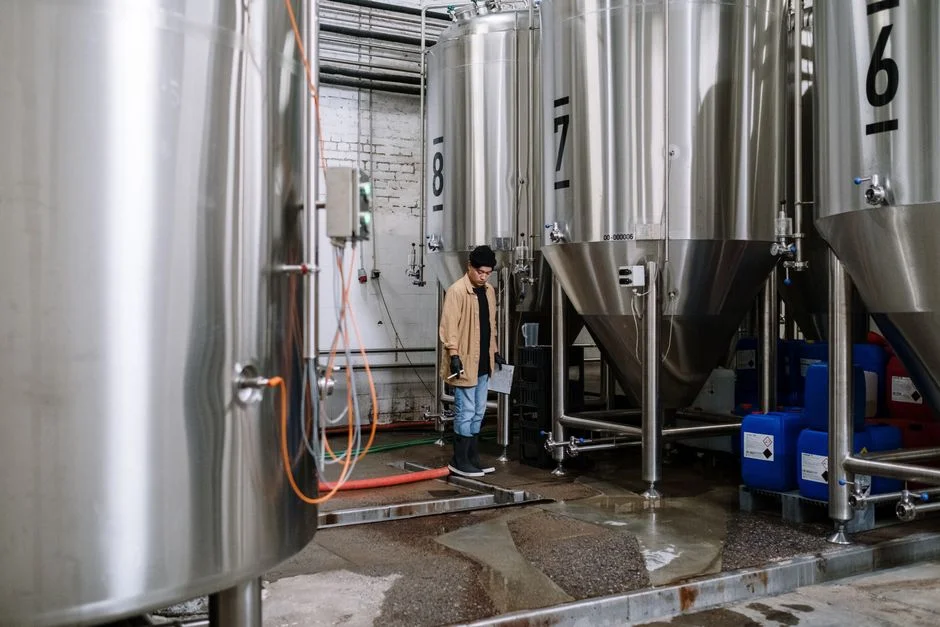
A campus MBR treatment train should connect preliminary controls, biological treatment, membrane separation, permitted disinfection where required, and reuse or discharge storage. Each stage has a distinct design dependency, and no unit should be added solely because it appears in a generic MBR diagram.
- Preliminary treatment and equalization: address screening, solids, grease, fibers and flow variation identified by campus sampling.
- Biological treatment: provide the biological process required for the biodegradable organic load; the 2023 review defines MBR as the combination of membrane separation and biological treatment (MSR Journal, 2023).
- Membrane separation: retain solids within the bioreactor, reducing the clarification dependence associated with conventional treatment (MSR Journal, 2023).
- Disinfection and storage: add treatment required by the defined discharge or reuse application rather than assuming membrane separation alone establishes suitability.
The 2023 review covers MBR configurations, operating modes, membrane materials and modules, making it a useful technical reference during process selection (MSR Journal, 2023). The EPA’s MBR wastewater-management fact sheet is the appropriate authority for an overview of applicability, design features, design considerations and case studies.
Pretreatment must follow characterization. Screening, grease removal or fiber control should be specified only where the wastewater profile or equipment design requires them. The EPA fact sheet identifies applicability and design considerations as core MBR design elements (U.S. EPA). For an integrated campus package, compare the proposed scope with the underground integrated sewage-treatment system to identify which preliminary, biological, membrane and storage functions are actually included.
| Process stage | Primary design question | Required input |
|---|---|---|
| Screening and equalization | Which solids, fibers, grease and flow variations require removal or attenuation? | Campus wastewater profile |
| Biological treatment | What biological capacity and operating mode suit the organic load? | Flow and wastewater characterization |
| Membrane separation | Which configuration and membrane area provide the required hydraulic performance? | Peak flow, temperature, loading and fouling controls |
| Disinfection | Is additional treatment required for discharge or reuse? | Authority requirements and reuse standard |
| Storage and distribution | How will reuse flow be buffered and delivered? | Reuse demand profile and site hydraulics |
Choose a Membrane Configuration
The integrated submerged system and the DF flat-sheet module solve different campus design problems, so configuration selection should follow the treatment train, site constraints and maintenance strategy. Published catalog ranges are useful screens, not final sizing.
HydropureWater’s integrated system combines activated-sludge treatment with submerged PVDF membrane filtration. Its catalog states filtration below 1 μm, a footprint 60% smaller than conventional systems, and capacity from 10 to 2,000 m³/day (HydropureWater verified product catalog). These are supplier claims, not independent campus performance data. The design question is whether an integrated package reduces site complexity without omitting required pretreatment, disinfection or access.
The DF flat-sheet MBR modules use 0.1 μm PVDF elements, an integrated aeration box for continuous membrane scouring, individually replaceable elements and a stainless-steel frame (HydropureWater product catalog). The supplier states that DF modules consume 10–20× less energy than external cross-flow systems; that is a product comparison, not a universal MBR efficiency guarantee. Catalog configurations of 80–225 m² correspond to stated production capacities of 32–135 m³/day, while the integrated system provides the wider plant-level range of 10–2,000 m³/day (HydropureWater product catalog; HydropureWater verified product catalog).
| Configuration | Membrane form | Stated pore size | Catalog capacity or area | Scouring method | Replacement arrangement | Campus siting question |
|---|---|---|---|---|---|---|
| Integrated system | Submerged PVDF | <1 μm | 10–2,000 m³/day | Integrated system; method not stated in excerpt | Not stated in excerpt | Does the packaged scope meet pretreatment, reuse and maintenance requirements? |
| DF flat-sheet module | Flat-sheet PVDF | 0.1 μm | 32–135 m³/day; 80–225 m² | Integrated aeration box with continuous scouring | Individually replaceable elements | Can operators replace elements safely and access the module on site? |
During engineering selection, check each catalog range against peak-day flow, peak-hour flow, required reuse flow, wastewater temperature and expected loading. Average flow may screen configurations, but it cannot establish membrane area, aeration, storage or redundancy.
Control Fouling and Protect Lifecycle Performance
Fouling is the most significant hindrance to large-scale MBR application, according to the 2023 review (MSR Journal, 2023). The commercial consequence is direct: a supplier’s membrane selection cannot be separated from cleaning strategy, monitoring, operator workload and replacement provisions.
The review organizes mitigation into chemical cleaning, physical cleaning, biological control, electrical control, and changes to membranes and modules (MSR Journal, 2023). A procurement specification should identify which measures are integrated, which are optional, and how performance will be tracked. It should also define cleaning-chemical consumption, cleaning equipment, operator involvement and the treatment of spent cleaning solution.
The DF module’s integrated aeration box and continuous membrane scouring form part of the supplier’s fouling-control proposition. The associated claim of 10–20× lower energy consumption than external cross-flow systems must remain a supplier comparison, not an assumed campus result (HydropureWater product catalog). Evaluate the RO and UF membrane filtration elements where replacement filtration stages are included, but do not conflate spare-element availability with a demonstrated fouling-control plan.
| Review factor | Commissioning question | Operating record |
|---|---|---|
| Operational conditions | What temperature, loading and aeration conditions are specified? | Trend operating parameters against the approved design basis |
| Feed characteristics | Which campus streams can introduce solids, grease, fibers or difficult constituents? | Maintain stream-specific influent data |
| Biomass characteristics | How will mixed-liquor solids and biological stability be monitored? | Record the specified biomass indicators and operating interventions |
| Membrane characteristics | How will resistance, permeability or an equivalent condition indicator be assessed? | Track baseline, deviations and recovery |
| Cleaning strategy | Which chemical, physical or biological action responds to each identified condition? | Log frequency, chemical use, duration and performance recovery |
Do not promise a cleaning interval or membrane life without site-specific wastewater, temperature, loading and operating data. The campus pilot should test the proposed control strategy under representative variation, and the supplier should define how results will be transferred into operating procedures and lifecycle cost.
Sizing, Budgeting and Selecting a Campus MBR Supplier
Defensible MBR sizing begins with peak and seasonal flow, reuse demand, wastewater characterization, site footprint, available utilities, operator capability and the applicable discharge or reuse standard. These inputs determine hydraulic capacity, biological loading, membrane area, storage and pretreatment—not just the number of modules.
- Issue a site-specific design basis and wastewater profile to shortlisted suppliers.
- Require a process basis, hydraulic and membrane-area calculation, performance guarantees tied to defined influent and effluent conditions, and the treatment-train boundary.
- Request membrane materials, module geometry, controls scope, instrumentation, pretreatment, installation, commissioning, training and O&M support.
- Require module replacement provisions, spare-parts strategy and evidence that the fouling-control approach responds to the review’s identified factors (MSR Journal, 2023).
- Compare total cost of ownership, including chemical cleaning, physical cleaning, biological control, energy, operator labor and membrane replacement.
The supplied research contains no complete campus-project cost figure, so a generic price or cost-per-cubic-metre estimate would be misleading. Use the 2026 MBR wastewater cost and technology guide as the next detailed budgeting resource, then request a project-specific quotation with scope exclusions identified.
Pilot testing is warranted where campus wastewater is highly variable or the reuse application remains unproven. The university-campus domestic wastewater study addressed variable characteristics for potential reuse (Springer eBooks), while the college-campus study examined bath wastewater (Membranes, 2021). A pilot should resolve project-specific questions about loading, fouling, controls and reuse performance rather than serve as a generic demonstration.
If chemical dosing is part of the proposed train, establish its purpose, metering, containment and operating responsibility during supplier review. The automatic chemical-dosing system can be evaluated as part of that scope, but the procurement should not presume that chemical cleaning or dosing is required until the fouling-control plan establishes the need.
| Supplier scorecard area | Evidence to request | Decision consequence |
|---|---|---|
| Process design | Site-specific basis, calculations and treatment-train boundary | Confirms technical fit |
| Performance evidence | Relevant wastewater and operating conditions behind guarantees | Defines risk allocation |
| Membrane system | Material, geometry, area, access and replacement method | Supports maintenance planning |
| Fouling control | Monitoring, cleaning methods and recovery criteria | Supports lifecycle cost |
| Controls and commissioning | Scope, training, startup plan and performance test | Supports operability |
| Commercial support | Warranty, service, spares and O&M pricing structure | Clarifies long-term obligations |
| Permit and reuse support | Compliance basis and application-specific documentation | Connects equipment to the reuse decision |
Frequently Asked Questions
What is the best MBR configuration for a university campus?
The best configuration depends on wastewater characteristics, peak flow, reuse target, footprint, fouling-control strategy and operator capability. Compare the integrated submerged system’s catalog range of 10–2,000 m³/day with DF module production of 32–135 m³/day, but do not select from average flow alone (HydropureWater verified product catalog; HydropureWater product catalog). Start with the campus profile and treatment objective.
How should preliminary MBR capacity be checked?
Use the catalog range only as a screen. Obtain peak-day and peak-hour flow, seasonal demand, wastewater characterization and reuse-flow requirements, then request hydraulic and membrane-area calculations tied to those inputs. The 2026 MBR wastewater cost and technology guide provides the framework for the next engineering step.
What should a campus MBR quotation include?
Request a project-specific price with the process basis, equipment scope, controls, pretreatment, installation, commissioning, cleaning, membrane replacement and O&M separated clearly. The supplied research contains no complete campus-project price, so the buyer must obtain the quotation and its exclusions rather than rely on a generic per-cubic-metre figure.
How should MBR suppliers be evaluated?
Evaluate wastewater-specific evidence, membrane and module details, fouling-control methods, replaceability, controls, commissioning support, guarantees and O&M cost transparency. The 2023 review identifies fouling as the principal large-scale obstacle, so the supplier should show how chemical cleaning, physical cleaning or biological control will be detected, performed and budgeted (MSR Journal, 2023).
When is a campus wastewater pilot useful?
Pilot testing is valuable where wastewater characteristics vary substantially or the intended reuse has not yet been demonstrated under campus conditions. The supplied university pilot directly addressed variable domestic wastewater for potential reuse (Springer eBooks), while the college-campus pilot investigated bath wastewater (Membranes, 2021). The pilot should test the specific questions that remain after wastewater characterization and reuse definition.