Separate the Data Center Wastewater Streams
A Managua data center generally needs separate treatment and permitting strategies for cooling tower blowdown, sanitary sewage, equipment-cleaning water and treatment-system backwash. Cooling blowdown is usually the largest industrial stream: HydropureWater’s 2026 engineering guide places its TDS at 3,000–10,000 mg/L, with pretreatment needed for suspended solids and scale-forming minerals. A preliminary train is equalization and cooling, DAF or clarification, filtration, disinfection and, where reuse justifies it, RO polishing. RO commonly recovers 75–90%, while ZLD reaches 99% or more. Final requirements must be confirmed with Managua’s receiving utility and Nicaragua’s competent environmental authority.
Cooling tower blowdown is the concentrated liquid purged from an evaporative cooling loop after evaporation leaves dissolved minerals, suspended solids and treatment chemicals behind. It should not be combined with sanitary sewage or equipment-cleaning wastewater without a demonstrated treatment and permitting rationale.
Air-handling condensate may also require separate assessment because its quality and volume depend on the cooling and dehumidification configuration. Water-treatment backwash can contain concentrated treatment chemicals, filter solids or regenerant. The following source-separated inventory is the correct starting point for equipment sizing.
| Stream | Typical source | Design issue to resolve |
|---|---|---|
| Cooling tower blowdown | Evaporative cooling loop purge | Concentrated minerals, treatment chemicals, suspended solids, temperature and reuse suitability |
| Sanitary sewage | Building fixtures and staff facilities | Separate biological treatment, discharge route and local requirements |
| Water-treatment backwash | Softener, filter or membrane cleaning | Regenerant content, solids and batch holding requirements |
| Equipment-cleaning wastewater | Chillers, heat exchangers and maintenance areas | Cleaning chemicals, oil and episodic flow profile |
| Air-handling condensate | Cooling coils and dehumidification | Temperature, conductivity and any treatment additives |
Hot blowdown may require cooling or holding before discharge, as noted by RSP Engineers in Process Wastewater Considerations for Data Center Operations (2026). However, the sewer authority—not the data center alone—must confirm acceptable temperature, pollutant concentrations and sampling requirements. The supplied research contains no Managua or Nicaragua discharge limits. Obtain the sewer discharge permit, industrial pretreatment requirements, environmental permits and any reuse restrictions from the receiving utility and competent authority before design freeze.
Build a Site Water Balance and Characterization Plan
The design flow must come from a measured data center water balance, not from nameplate IT load or a generic flow factor. Meter makeup water, blowdown, evaporation and final discharge separately for each cooling system, then reconcile those readings with operating hours, drift and losses.
Start by recording conductivity, pH and suspended solids, then obtain a broader laboratory characterization. Request makeup-water hardness, alkalinity, silica, chloride, sulfate, calcium, conductivity, temperature and the complete cooling-water chemical program. Blowdown volume alone cannot establish pretreatment loading, RO recovery, concentrate quality or chemical demand.
For screening, Genesis Water Technologies’ Why Cooling Tower Blowdown Is Your Hidden Opportunity (2026) gives the relationship:
Blowdown ratio = 1/(CoC − 1)
At 4 cycles of concentration, theoretical blowdown is 25% of makeup; at 6 CoC, it is 20%. The reduction is five percentage points, or 20% relative to the 4-CoC discharge, not a 50% reduction. Genesis also reports that actual blowdown can exceed theoretical calculations by 15–30% because of unmeasured losses and emergency dumps.
| Water-balance input | Measurement or source | Use in preliminary design |
|---|---|---|
| Makeup water | Totalizing meter by cooling system | Calculate blowdown ratio and recoverable volume |
| Blowdown and discharge | Separate flow meters | Reconcile actual losses, dumps and bypasses |
| Evaporation | Heat-rejection duty, operating hours and seasonal data | Estimate true consumptive use and WUE |
| Cycles of concentration | Conductivity comparison of circulating and makeup water | Set chemical and scaling limits |
| Water chemistry | Makeup and blowdown laboratory analysis | Select DAF, UF, RO, ZLD and chemical conditioning |
| Operating variability | At least one complete operating cycle | Size equalization, controls and peak treatment capacity |
Calculate each cooling system’s water balance from rated heat-rejection or evaporation duty, current CoC, operating hours and seasonal variation, then validate the result against at least one complete operating cycle. The comparable data center blowdown treatment guide and data center wastewater treatment methodology provide useful frameworks for organizing the engineering basis of design.
Set the Cooling Water Chemistry and Reuse Targets
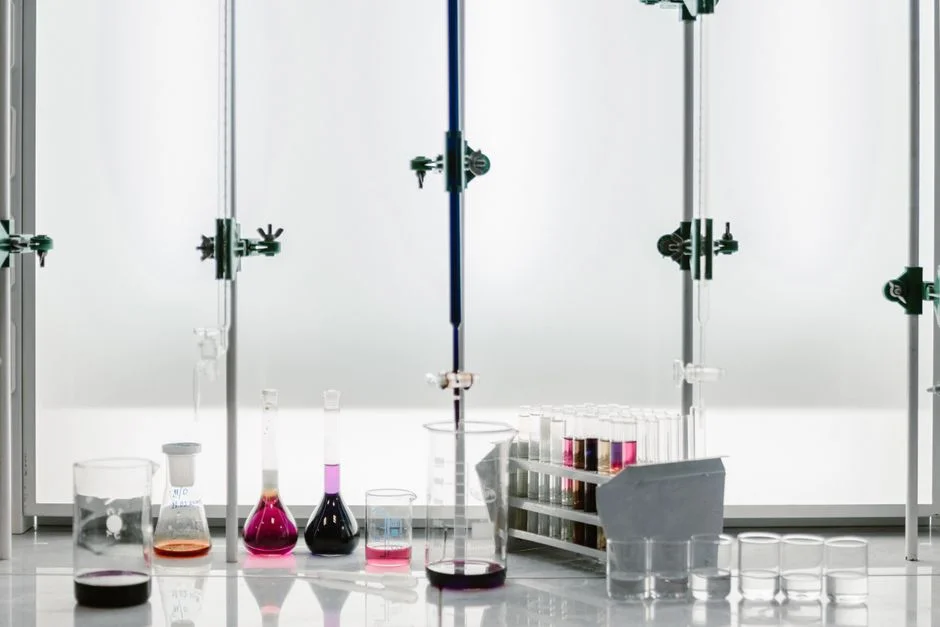
Cooling-loop chemistry and recovered-makeup quality are separate design envelopes. HydropureWater’s Data Center Cooling Tower Blowdown Recycling Specs 2026 gives preliminary recycled-makeup targets below 500 mg/L TDS, below 30 mg/L COD and below 1,000 µS/cm conductivity. These are engineering targets, not Managua legal limits.
The same guide clarifies the ASHRAE reference: Addendum i to ANSI/ASHRAE/ICC/USGBC/IES Standard 189.1-2017, approved on 24 July 2019, records a 2,050 ppm maximum for recirculating-water TDS. It also cites earlier-discharge exceptions above 1,500 mg/L TDS or 150 mg/L silica as SiO₂, together with basin ceilings of 300 ppm chlorides as Cl, 150 ppm silica, 600 ppm calcium hardness as CaCO₃, 600 ppm alkalinity as CaCO₃—or 500 ppm on passivated galvanized steel—250 ppm sulfates and LSI of +2.8.
These values must not be conflated. The 500 mg/L figure is the recovered-permeate target; the 2,050 ppm figure is a basin ceiling in the cited ASHRAE table. Neither establishes a discharge limit applicable in Nicaragua.
| Variable | Design relevance | Primary control or verification |
|---|---|---|
| TDS and conductivity | Basin concentration, membrane loading and makeup purity | Continuous conductivity plus periodic laboratory TDS |
| Silica | Risk of scale on membranes, fill and heat-transfer surfaces | Laboratory analysis and RO trend |
| Calcium, alkalinity and LSI | Calcium carbonate scaling potential | Water balance, pH and saturation-index calculation |
| Calcium sulfate and sulfate | Potential precipitation at concentration | RO recovery trials and concentrate analysis |
| Chloride | Corrosion and pitting risk | Makeup, permeate and concentrate testing |
| COD and TOC | Organic loading and biofilm development | Laboratory COD/TOC with ATP where appropriate |
| pH and temperature | Treatment performance, scaling and microbiology | Continuous pH; temperature monitoring |
| Microbiological activity | Legionella risk in recycled loops | Disinfection control and verification sampling |
Set the tower’s permitted chemistry, the treatment skid’s feed assumptions and the recovered water’s final specification independently. They are linked through the water balance, but they are not the same acceptance criterion.
Select the Managua Treatment Train
For partial cooling-blowdown reuse, the preliminary train is collection and equalization, temperature management where required, DAF or clarification, multimedia filtration or UF, RO where recovery quality requires it, and disinfection before reuse. The sequence should be adjusted only after the measured water balance and local discharge constraints are established.
HydropureWater’s 2026 treatment baseline assigns specific functions to each stage: DAF removes suspended solids, oils and organics; multimedia filtration or UF provides a secondary particulate barrier; and RO separates permeate from concentrate. A DAF pretreatment for cooling tower blowdown can remove floatables and solids before the membrane barrier, while a UF system for blowdown and RO pretreatment reduces the particulate load presented to RO.
| Process stage | Purpose | Design requirement |
|---|---|---|
| Equalization and temperature management | Balance variable flow; cool or hold water if required | Confirm permitted temperature and equalization volume |
| DAF or clarification | Remove suspended solids, floatables, oils and some organics | Base loading on measured flow and solids data |
| Multimedia filtration or UF | Provide a secondary particulate barrier | Define filtrate specification, backwash and recovery |
| RO | Produce low-TDS permeate for selected reuse | Set recovery from concentrate chemistry, not nominal rate |
| Disinfection | Control microbiological risk | Validate residual and monitoring for Legionella risk |
RO generally recovers 75–90% of the blowdown, according to HydropureWater’s 2026 guide. Recovery above 95% generally requires EDI or another high-pressure RO stage. ZLD integrates RO with thermal concentration and crystallization to achieve 99% or greater recovery.
A lower-complexity route may suit noncritical uses such as irrigation, toilet flushing or equipment washing if water quality and local rules permit, but the supplied research identifies no Managua approval pathway for those uses. Do not infer approval from a generic reuse description.
Sanitary wastewater requires a separate biological train. HydropureWater’s WSZ package combines A/O biological contact oxidation, sedimentation and disinfection; its MBR system is intended for larger industrial or reuse applications. For industrial cooling reuse, HydropureWater’s 2026 guide prefers chlorine dioxide over chlorine at higher pH because it remains effective against biofilms and Legionella.
Compare Sewer Pretreatment, Partial Reuse and ZLD
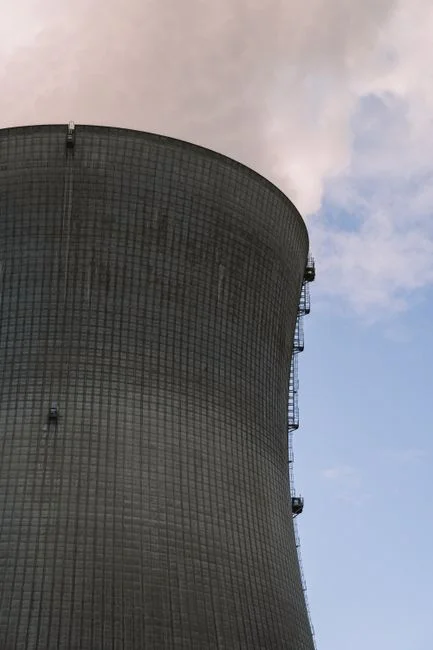
The preferred Managua route depends on confirmed sewer limits, recovered-water demand, residual disposal, utility costs and operator capability. A sewer-connected project requires an approved discharge route and usually on-site pretreatment; partial reuse adds RO and a brine-management obligation; ZLD removes most liquid discharge but increases capital, energy and solids handling.
| Decision factor | Permitted sewer discharge with pretreatment | Partial internal reuse with RO | ZLD |
|---|---|---|---|
| Primary benefit | Simplest recovery of discharge capacity | Reduces freshwater demand and discharge volume | Maximizes water recovery and residual control |
| Key constraint | Receiving utility permit and pollutant limits | Brine destination and recovery chemistry | Thermal energy, capital cost and solid-residue handling |
| Generalized capital cost | Not established in supplied research | RO: $500–$1,500 per m³/day of capacity | ZLD: $2,000–$4,000 per m³/day of capacity |
| Generalized operating cost | Not established in supplied research | Not established in supplied research | $3.00–$5.00/m³; a broader guide range is $3.00–$5.50/m³ |
| Operational burden | Lower where treatment is limited to pretreatment | Requires membrane operation and concentrate management | Highest process and maintenance complexity |
The capital and operating figures come from HydropureWater’s 2026 engineering guide and are generalized ranges, not Managua quotations. Final project cost requires local utility tariffs, construction pricing, brine-disposal or hauling costs, confirmed water-quality data and site-specific civil, electrical and controls work.
Genesis Water Technologies’ 2026 site-selection logic remains applicable: utility cost, receiving sewer limits, water reliability, climate, available disposal routes and staffing should determine the technology. Do not import hyperscale assumptions into a Managua project. A modular system may be more operable than a large integrated plant.
Resilience is not free energy efficiency. Reduced freshwater withdrawals can protect continuity during supply disruption, but recovery equipment adds power demand. Report water savings, electricity consumption and PUE together so a lower WUE is not mistaken for an overall energy improvement.
Plan Monitoring, Disinfection and Sludge Handling
The recovery system must be treated as an operable water-treatment asset with defined interlocks, residuals and maintenance access. Continuously trend conductivity and flow, then set alarm and trip limits from the final recycle specification and site chemistry rather than generic defaults.
Monitor COD, chloride, silica, hardness, pH and temperature at intervals established by the permit, reuse program and equipment warranty. Include biological verification using TOC analysis and ATP measurements where appropriate, following HydropureWater’s 2026 approach to identifying biofilm risk. For pretreatment control, turbidity monitoring for pretreatment provides a useful instrument-selection reference.
Specify the residual-handling system in the same design. DAF and filtration produce solids requiring thickening, dewatering, storage and a confirmed disposal route. RO produces a concentrated brine whose permitted destination must be established hydraulically and legally before the recovery skid is awarded. A brine line that terminates in an undefined “temporary storage” area is not a complete design.
| System element | Supplier information required |
|---|---|
| Monitoring | Conductivity, flow, pH, turbidity and temperature instruments; sampling ports; calibration scope |
| Disinfection | Generation method, dose control, residual monitoring and Legionella risk verification |
| Solids handling | DAF sludge and filter backwash volumes; thickening, storage and removal method |
| Brine handling | Recovery, concentrate flow and quality, storage capacity and approved destination |
| Maintenance | Automatic backwash, air scour, membrane cleaning access and critical spares |
| Controls | PLC integration, interlocks, alarms, data logging and local service scope |
Where the finalized process requires pH adjustment, antiscalant or coagulant, include controlled chemical dosing. HydropureWater’s automatic chemical dosing system is a reference point for this scope, but chemical selection and dosage must follow site water chemistry and vendor guarantees. For solids, the sludge dewatering buyer guide provides a useful framework for specifying the residuals interface.
Issue a Complete Request for Design or Quotation
A comparable quotation requires measured flow and chemistry, the intended reuse duty and the residual-disposal constraint. A flow rate alone will produce a skid that may fail on salinity, scaling, biological loading, temperature or concentrate management.
- Provide measured blowdown flow, makeup flow, current CoC, operating hours, seasonal range and one complete operating cycle.
- Provide makeup and blowdown analyses, the cooling chemical program, temperature range and source-water variability.
- Define the intended reuse, required recovery duty, recovered-water quality, utility limits and brine-disposal constraint.
- Specify automation, redundancy, maintainability, local service, operator training and commissioning acceptance tests.
| Bid item | Response required from each bidder |
|---|---|
| Performance | Guaranteed throughput, recovery percentage, recovered-water quality and pretreatment performance |
| Residuals | Concentrate volume and quality; solids volume; proposed final destination |
| Consumables | Chemical types, expected dosage, membrane cleaning frequency and service life |
| Utilities | Power demand, water demand, cooling duty and auxiliary drains |
| Execution | Control philosophy, redundancy, commissioning tests, schedule and local support |
Genesis Water Technologies’ 2026 guide describes a modular 100–300 GPM blowdown-treatment example for smaller facilities. A Managua plant below hyperscale scale should require the bidder to justify a right-sized alternative rather than apply a hyperscale design template. This example is a source-provided sizing reference, not a capacity requirement for the site.
Frequently Asked Questions
What discharge limits apply to a Managua data center cooling tower?
The supplied research contains no Managua or Nicaragua discharge limits, so no numerical limit should be assumed. Before design freeze, request the sewer discharge and industrial pretreatment conditions from the receiving utility, plus applicable environmental and reuse requirements from Nicaragua’s competent authority. Obtain written limits for temperature, pH, TDS, conductivity, suspended solids, metals, treatment chemicals, monitoring frequency and residual disposal. The ASHRAE basin values cited in HydropureWater’s 2026 guide are engineering references, not substitutes for local permits.
Does a Managua data center need reverse osmosis to reuse cooling blowdown?
Not necessarily. DAF or clarification followed by multimedia filtration may suit a lower-quality noncritical reuse, while RO is needed when the recovered water must meet a much tighter chemistry specification. HydropureWater’s 2026 guide gives preliminary permeate targets below 500 mg/L TDS, below 30 mg/L COD and below 1,000 µS/cm conductivity. Select RO only after identifying the reuse application, required quality, sewer limit, brine destination and recovery target.
What flow and water-quality data should be sent to a wastewater equipment supplier?
Send measured makeup and blowdown flows, discharge flow, current CoC, operating hours, seasonal variation, temperature, conductivity, pH and suspended solids, plus laboratory results for hardness, alkalinity, silica, chloride, sulfate and calcium in both makeup and blowdown. Include the cooling chemical program, intended reuse, utility constraints and brine-disposal limitation. Require the supplier to state whether its guarantee depends on those site values and on the sampling period used to establish them.
How much does cooling-tower blowdown treatment cost in 2026?
HydropureWater’s 2026 guide gives generalized capital ranges of $500–$1,500 per m³/day for RO and $2,000–$4,000 per m³/day for ZLD. It gives ZLD operating cost as $3.00–$5.00/m³, with a broader guide range of $3.00–$5.50/m³. These are not quotations for Managua. Request itemized pricing based on measured flow, pretreatment, civil work, utilities, chemicals, controls, commissioning, brine or solids disposal, local service and expected replacement costs.
DAF, UF or RO: which treatment step should the Managua project specify first?
Specify the treatment train, not one isolated unit. DAF or clarification is the first barrier when measured blowdown contains solids, oils or floatables; multimedia filtration or UF protects downstream membranes; RO is used where dissolved-salt removal is required for the selected reuse. First obtain the water balance, complete chemistry and local limits. Then define performance and acceptance criteria for each barrier, including the required recovered-water quality and the destination of filter backwash and RO concentrate.