Start with the controlling discharge requirements
EV and automotive plants near Edinburgh, United States, meet sewer pretreatment limits through a permit-specific treatment train installed before the connection to the local publicly owned treatment works (POTW) collection system. The controlling package includes applicable categorical pretreatment standards, state requirements, POTW local limits, and the plant’s individual industrial user permit. Treatment selection should follow an industrial wastewater characterization, while performance must be demonstrated through monitoring at the end-of-pipe point of connection.
The EPA defines pretreatment standards as pollutant discharge limits applying to industrial users under 40 CFR 403.3(j). Federal categorical standards, state rules, POTW local limits, and permit conditions perform different functions; the most stringent applicable requirement governs the design. POTW local limits address the treatment works, sludge processes, and receiving waters, including potential pass-through and interference. EPA describes them as site-specific numeric or narrative requirements that may include best management practices (BMPs).
Local limits are imposed at the industrial user’s end-of-pipe discharge point, meaning the point of connection to the POTW collection system. That is the practical reference for the compliance demonstration, although internal control points remain useful for protecting individual treatment units. The broader sequence for industrial pretreatment compliance before sewer discharge follows the same logic: identify the authority, obtain the current documents, characterize the wastewater, and design to the enforceable result.
| Document or authority | What it establishes | Information to obtain |
|---|---|---|
| Federal categorical pretreatment standards | Pollutant discharge limits applicable to a covered industrial category | Applicability determination and current 40 CFR requirements |
| State requirements | Requirements that may supplement or exceed federal rules | Current state pretreatment standards and applicable guidance |
| POTW local limits and sewer rules | Site-specific numeric or narrative limits, including possible BMPs | Current ordinance, local limits, prohibited discharges, monitoring forms, and surcharge rules |
| Individual industrial user permit | Site-specific discharge conditions, monitoring, reporting, and operating requirements | Current permit, application, compliance schedules, and approved monitoring point |
Identify the receiving POTW and its pretreatment coordinator before selecting equipment. The coordinator should provide the current local limits, sewer-use rules, monitoring requirements, and discharge permit. The supplied research does not identify the exact POTW, industrial user permit, or sewer authority governing a particular Edinburgh-area EV or automotive plant. Numerical limits from the Middlesboro 2025 Code are therefore examples only and must not be presented as Edinburgh requirements.
Map the EV and automotive plant wastewater streams
An EV or automotive plant should classify each wastewater source before combining it with other flows because equalization does not remove incompatible pollutants or eliminate permit violations. The inventory should cover vehicle washing, paint and surface preparation, metalworking, coating, battery or component production, cooling and process water, floor and equipment washing, stormwater, and sanitary streams where applicable. For every source, record its production relationship, flow pattern, known materials, existing treatment, sampling point, and discharge status: continuous, batch, episodic, or prohibited.
Separate high-strength or incompatible streams before they reach a shared equalization tank. A concentrated wash discharge, coating reject, or metal-bearing slug should not be allowed to impair downstream oil and FOG removal, suspended-solids pretreatment, pH control, or biological treatment at the POTW. The objective is controlled segregation followed by treatment units matched to the actual pollutant behavior.
Use EPA’s local-limit methodology as the basis for industrial wastewater characterization: determine pollutants of concern, collect and analyze data, and calculate maximum allowable loadings. EPA’s pretreatment guidance identifies those elements and the need for periodic reevaluation. This approach is described further in characterizing industrial wastewater against local limits.
| Stream group | Potential process concern | Characterization question |
|---|---|---|
| Vehicle, floor, and equipment wash | Suspended solids, oil and FOG, detergents, episodic wash loads | Which wash recipes enter the stream, and how do solids and surfactants vary by operation? |
| Paint and surface preparation | pH, coatings, color, solvents, and variable batch volumes | Are paints and cleaners used in the wastewater-bearing operation, and is segregation feasible? |
| Metalworking and coating | Metals, pH, suspended solids, oils, and process chemistry | Which metals are present, what is their solubility, and can they be removed or reduced reliably? |
| Battery or component production | Process-specific chemistry, metals, and coating residues | Which streams actually enter the sewer system, and which are hazardous-waste or zero-discharge streams? |
| Cooling, process water, and stormwater | Discharge authorization, heat, scaling, contaminants, and episodic flow | Is the stream authorized for sewer discharge, and under what monitoring or BMP conditions? |
The supplied research establishes no EV-specific local limits near Edinburgh. Any stream classification, pollutant target, or discharge authorization must therefore be checked against the controlling industrial user permit, POTW local limits, and applicable state and federal rules. If characterization is incomplete, procurement should proceed only as a conceptual process basis until representative data are available.
Build a treatment train that responds to the permit
Start with source control and segregation because preventing incompatible wastewater from entering the sewer is more reliable than treating a diluted or blended mixture. Equipment should then address the pollutants identified in the permit and waste characterization. A rotary mechanical bar screen for industrial wastewater may protect downstream equipment where rags, plastics, fibrous debris, and suspended solids could overload pumps, valves, or biological processes.
For wastewater containing suspended solids, oil and FOG, or colloidal material, consider dissolved air flotation. The catalog describes a DAF system for automotive wastewater pretreatment with a stated treatment range of 4–300 m³/h, automatic skimming, and micro-bubble flotation. These values describe the offered equipment range; they do not establish removal performance or the capacity required for an Edinburgh plant.
Where solids, colloids, or bacteria must be removed before a sensitive downstream process, consider ultrafiltration. The supplied catalog describes hollow-fiber systems from 2,000 to 40,000 L/h using 0.03 micron PVDF membranes, automatic backwash, and air scour. Selection should depend on the required effluent objective, feed characteristics, membrane fouling tendency, cleaning strategy, and treatment redundancy.
Use a lamella clarifier where compact clarification, sludge recirculation, and chemical reduction are appropriate. The catalog states surface loading rates of 20–40 m/h and chemical consumption up to 30% lower. Treat metals or pH only when characterization and permit language identify them as regulated parameters; otherwise, unnecessary chemical addition can create another waste or operating problem. DAF versus clarifier for transportation equipment wastewater provides a useful comparison of the selection logic.
Automatic chemical dosing should follow identification of the target pollutant, required chemistry, and permit condition. The dosing catalog identifies PLC-controlled injection of coagulants, flocculants, pH adjusters, and specialty chemicals, but the final arrangement must include chemical storage, containment, feed verification, and an operating response to abnormal conditions.
Sludge is a treatment waste stream that also requires a management plan. The plate and frame filter press catalog provides filtration areas from 1 m² to 500 m² with manual, hydraulic, or fully automatic PLC-controlled operation. The selected dewatering method should reflect sludge volume, solids characteristics, required dryness, disposal route, odor control, and operating labor.
| Treatment need | Potential process step | Design inputs still required |
|---|---|---|
| Remove debris and protect equipment | Rotary mechanical bar screen | Debris type, flow variability, screen loading, and downstream capacity |
| Remove suspended solids, oil and FOG, or colloidal material | DAF with chemical conditioning as required | Influent concentrations, flow profile, required removal, sludge yield, and operating mode |
| Remove solids, colloids, or bacteria before sensitive treatment | Ultrafiltration | Required pore-size objective, feed chemistry, fouling rate, cleaning validation, and redundancy |
| Clarify solids and support chemical reduction | Lamella clarifier with recirculation and dosing | Metals or pH basis, hydraulic loading, sludge settleability, and final disposal route |
| Manage treatment residuals | Plate and frame filter press | Sludge characteristics, required dryness, cycle time, container handling, and destination |
Do not specify final capacity or removal performance from catalog ranges alone. Final sizing requires wastewater flow, pollutant concentrations, operating variability, retention time, hydraulic losses, chemical demand, sludge handling, and the enforceable end-of-pipe result.
Convert concentration limits into a mass-loading design
Mass loading converts a concentration limit and authorized flow basis into the pollutant quantity that the treatment system must control. EPA identifies maximum allowable loadings as part of its local-limit guidance. For each permit parameter, calculate mass per unit time from wastewater flow and concentration, then compare the result with the applicable allowable loading and concentration requirement.
The calculation should be tested against normal production, peak discharge, and episodic wash or slug conditions. A high-concentration batch can violate a limit even if the daily average appears acceptable, while a high-flow dilute stream can create a material pollutant load. Compliance design must therefore address both concentration and mass loading, using the more stringent applicable requirement among the categorical standard, state rule, POTW local limit, and permit condition.
Use a consistent, documented flow basis. The permit may specify how flow is to be measured, averaged, or reported, and the plant should not substitute a different basis for convenience. Where sampling is composited, the waste characterization should establish whether the composite represents the discharge over the permitted monitoring period. For episodic discharges, identify the trigger for sampling, containment capacity, and the operating response if the available treatment capacity is exceeded.
The mass-loading and treatment-selection review for industrial wastewater illustrates why equipment selection and permit calculations should remain connected. No Edinburgh concentration or loading limit was supplied for this article, so an engineer must obtain the exact flow basis and enforceable values from the controlling documents.
Middlesboro’s 2025 Code demonstrates how a permit package can combine conventional parameters, metals, narrative restrictions, and BMPs. Section 51.062 lists BOD at 350 mg/l, COD at 1,000 mg/l, TSS at 350 mg/l, ammonia nitrogen at 30 mg/l, and total phosphorus at 14 mg/l, plus separate metal limits. These are explicitly non-Edinburgh values and are used here only to show why concentration alone is an incomplete design basis.
Permit-based design sequence: select the governing requirement; establish the authorized flow basis; calculate mass per unit time; test peak, batch, and slug conditions; and confirm that treatment remains compliant without relying on dilution.
Demonstrate compliance at the point of discharge
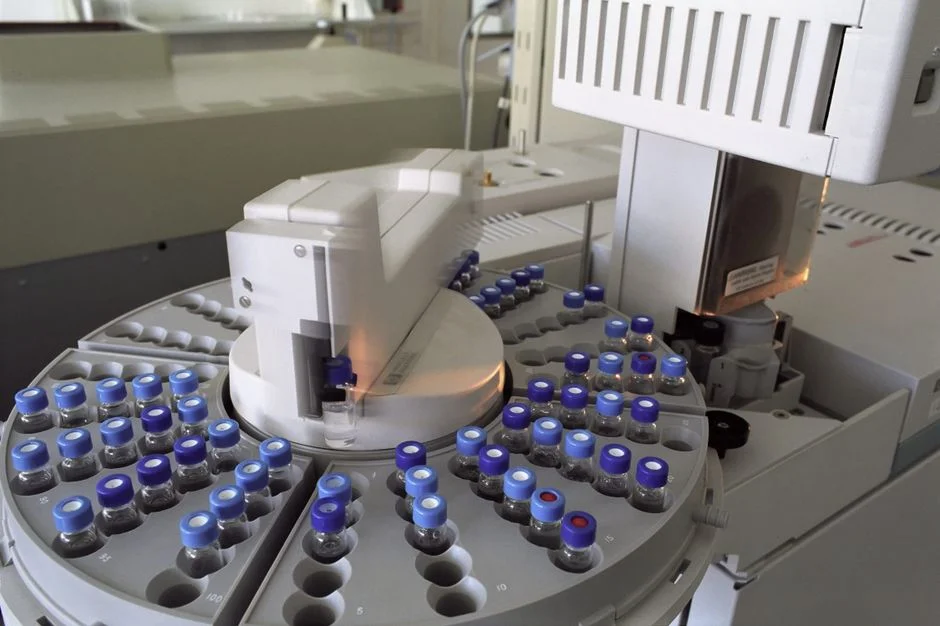
The compliance sample point is the end-of-pipe discharge at the connection to the POTW collection system. Internal control points can support process protection, but they do not replace the required discharge demonstration. The monitoring program should follow the POTW’s sampling method, frequency, parameter list, recordkeeping, inspection, and reporting requirements rather than a generic sampling plan.
Analytical results should be linked to operating records. Record flow, production or batch status, chemical additions, equipment status, bypass events, and deviations from normal operation. This creates an auditable chain from source activity through treatment to discharge. It also helps distinguish a process upset from an analytical or sampling error during an exceedance investigation.
Include narrative requirements and BMPs in the compliance system, not just numerical limits. EPA describes local limits as potentially narrative, while Middlesboro’s 2025 Code Section 51.062 states that BMPs required by the pretreatment coordinator may be treated as local limits and pretreatment standards. Although Middlesboro is not the controlling authority for Edinburgh, its provision illustrates why operating practices belong in the permit-based compliance system.
| Compliance record | Minimum operational context | Use |
|---|---|---|
| Monitoring result | Sample type, timing, parameter, analytical result, and responsible sampler | Demonstrate performance against permit conditions |
| Flow record | Discharge volume and the method used to establish the permitted flow basis | Support concentration and mass-loading evaluation |
| Operating log | Production, batch status, chemical additions, unit availability, and bypasses | Connect the result to plant conditions |
| Inspection and maintenance record | Equipment condition, corrective maintenance, and calibration status | Show that treatment remained in service and controlled |
| Corrective-action record | Affected stream, cause, response, resampling, and closeout | Address an exceedance and prevent recurrence |
Establish a corrective-action process before an exceedance occurs. The minimum sequence is to isolate the affected stream, stop or contain the discharge if directed by the permit, investigate the cause, adjust treatment, resample as required, and document the outcome. For deeper process context, see a treatment and monitoring pathway that links source conditions to discharge performance.
Use this pre-purchase compliance checklist
Procurement should not request a final process proposal before the controlling permit package is complete. Obtain the current POTW local limits, state requirements, applicable categorical standard, industrial user permit, monitoring forms, and enforcement history. A bidder should then state the governing parameter, design influent, required effluent objective, flow basis, operating mode, redundancy, and monitoring method for every proposed unit.
Require a waste-characterization plan, mass-loading calculation, hydraulic profile, chemical-management plan, sludge-handling plan, commissioning protocol, and performance test tied to the permit. The proposal should explain how episodic vehicle-wash discharges and production slugs are contained and treated without bypassing. It should also state what happens when a critical unit is unavailable and whether the remaining train can maintain compliance during that condition.
| Vendor submission | Buyer check | Compliance risk addressed |
|---|---|---|
| Governing limits and permit basis | Verify document dates, applicability, and the authorized flow basis | Designing to the wrong authority or an obsolete limit |
| Influent characterization | Confirm representative sampling and worst-case operating conditions | Undersized or incorrectly selected treatment |
| Mass-loading calculation | Check concentration, average, peak, batch, and slug conditions | Passing an average while violating a slug or loading condition |
| Hydraulic and operating plan | Review equalization, redundancy, bypass prevention, and failure response | Treatment failure during variable plant operations |
| Monitoring and commissioning protocol | Tie tests to the permit sample point and analytical methods | Unverifiable performance claims |
| Sludge and chemical plan | Identify storage, handling, disposal, and containment arrangements | Secondary permit exposure and unsafe operation |
Require explicit confirmation that the proposal does not rely on dilution to achieve compliance. Middlesboro Section 51.063 in the 2025 Code prohibits increasing process water or otherwise using dilution as a substitute for adequate treatment; that rule is not an Edinburgh limit, but it illustrates the compliance principle a bidder should disclose. Further selection criteria are set out in the permit-based process design and commissioning review.
Frequently Asked Questions
What sewer limits apply to an EV or auto plant near Edinburgh?
The controlling package includes applicable federal categorical pretreatment standards, state requirements, the POTW’s local limits, and the plant’s individual industrial user permit. EPA explains that local limits can be numeric or narrative and may include BMPs. The exact Edinburgh-area authority, limits, flow basis, and monitoring conditions must be obtained from the receiving POTW and pretreatment coordinator; the supplied research does not establish them.
Can dilution let the plant meet sewer limits?
No. Dilution is not an acceptable treatment strategy. Middlesboro Section 51.063 in the 2025 Code expressly prohibits increasing process water or attempting dilution as a substitute for adequate treatment. Although that section does not govern Edinburgh, the vendor should document the physical treatment and mass-loading calculations that achieve the applicable limit without dilution.
Should the plant buy a DAF system or a lamella clarifier?
Choose based on the stream and permit result: oil and FOG content, suspended-solids characteristics, chemical use, sludge production, flow variability, and required end-of-pipe performance. DAF is a candidate where suspended solids, oil and FOG, or colloidal material must be separated. A lamella clarifier is a candidate for clarification and chemical reduction where characterization supports that process. Neither should be selected from flow or catalog range alone.
How should pretreatment equipment be sized, and what should a supplier provide?
Size the system with representative wastewater data and the permit’s concentration and flow basis, then test it against average, peak, batch, and slug conditions. Ask each supplier for the governing limits, influent characterization, calculated mass loadings, treatment calculations, hydraulic profile, monitoring points, commissioning tests, failure response, and corrective-action provisions. These submissions allow the buyer to compare engineering assumptions and select a treatment train that can be verified at the discharge point.