What Is Known About Shell's German Operations
Shell was planning two biomethane plants at Karstaedt and Steinfeld, according to Bioenergy News, which reported in 2026 that the projects could meet up to 5% of current German biomethane consumption by the end of the decade. The same report stated that more than 150 local power plants sought organic-residue-derived methane from Shell.
Those facts establish Shell’s activity in the German biomethane market, but they do not establish that Shell has acquired a particular industrial plant in Germany. The supplied research identifies no such completed transaction, site or affected wastewater authorization. This guide provides a transaction framework rather than a site-specific permit determination.
For an actual acquisition, Shell should apply the same evidence discipline used in a Shell plant-acquisition wastewater due-diligence framework: identify the controlling documents, establish who must approve a change of ownership or operator, and verify that the installed treatment system can perform within the permitted operating envelope.
Classify Every Wastewater and Water Discharge Route
Each discharge route must be classified before permit transferability can be assessed, because the receiving authority and the applicable consent differ between direct and indirect discharge. A plant-wide average is not sufficient: composition, hydraulic loading and treatment requirements change by stream and operating condition, as illustrated in the stream-characterization approach for semiconductor wastewater.
Create a register for process wastewater, cooling and wash water, stormwater, groundwater, stormwater overflow, firewater and any separately regulated discharge. For every entry, identify the source, destination, flow regime, pollutants, monitoring points and responsible operator. Where a stream has more than one destination, map each route separately rather than assigning a single overall classification.
| Site record | Evidence to obtain | Transaction decision enabled |
|---|---|---|
| Stream and source | Process description, flow diagrams, production scenarios and operating-condition data | Identifies which streams and production changes need separate review |
| Discharge destination | Direct-discharge point, public sewer connection, treatment-works route or mixed discharge | Identifies the controlling authority or agreement |
| Water balance | Withdrawal, process flow, wastewater flow, recycle and production forecast | Establishes hydraulic and pollutant-load envelopes |
| Monitoring points | Sampling locations, parameters, frequencies, methods and deviations | Tests whether compliance evidence represents actual operations |
| Operator responsibility | Operational roles, maintenance records, alarms, bypasses and reporting assignments | Allocates post-closing actions and capital responsibility |
Build the German Permit and Consent Register
Change-of-control status is document-specific and cannot be determined from the acquisition agreement alone. Shell must obtain the underlying German authorizations, approvals, declarations and consents rather than rely on a permit register or seller summary.
For each instrument, record the issuing authority, legal scope, effective dates, discharge points, pollutant limits, monitoring plan, reporting duties, compliance status and transfer or change-of-control language. Review approvals covering discharge-point changes, production increases, treatment-system modifications, groundwater, stormwater and expansion projects. A 2026 EU wastewater regulations overview can support legal scoping, but the controlling requirements remain those issued for the German site. Following this document review, Shell should reconcile the findings with the physical site status.
| Permit or consent | Required document review | Pre-closing status |
|---|---|---|
| German wastewater authorization | Official authorization, appendices, amendments, monitoring plan, discharge-point drawings and correspondence | Confirm transfer, modification, reissuance or new approval |
| Groundwater permit | Authorized use, monitoring duties, conditions and regulator correspondence | Confirm continuity of site-specific obligations |
| Stormwater and firewater approvals | Discharge controls, retention requirements, inspections and reporting | Assign deficiencies and required works |
| Modification or expansion approval | Approved design, commissioning evidence and operating restrictions | Verify that as-built operations match approval |
| Regulatory compliance history | Compliance reports, exceedances, enforcement correspondence and deviations | Quantify unresolved compliance and closure risk |
Request correspondence and compliance reports from the seller and regulator to distinguish formal permit conditions from operational commitments or enforcement matters. A transfer clause is not the only issue: the permit must still be valid, the site must be capable of meeting its conditions, and any required regulator consent must be obtained before the relevant change takes effect.
Verify Sewer Use and Indirect-Discharge Obligations
Indirect discharge is governed by more than the site’s wastewater authorization. Obtain the sewer-use agreement, indirect industrial discharge agreement or industrial pretreatment permit, together with all appendices, annexes, amendments, monitoring results and enforcement records.
Identify the pollutant limits, sampling duties, surcharge triggers and capacity contributions that apply to the new operator. Confirm whether historical exceedances, monitoring gaps or unreported production changes affect the site’s permission to discharge. The binding pretreatment requirements must come from the receiving German authority, not from a non-German cross-site example.
Reconcile water withdrawals, wastewater flow, analytical results and production forecasts through a mass balance. This is the minimum basis for determining whether sewer capacity exists and whether a future production scenario could alter treatment requirements. Ask the sewage operator which information it requires for a change of company or operator, and whether the agreement, contribution calculation or sampling plan must be amended.
The pretreatment review for industrial users near Solon provides a useful diligence structure, but its examples do not establish German limits or substitute for the receiving authority’s conditions.
Test the Existing Treatment Plant Against Real Operating Conditions
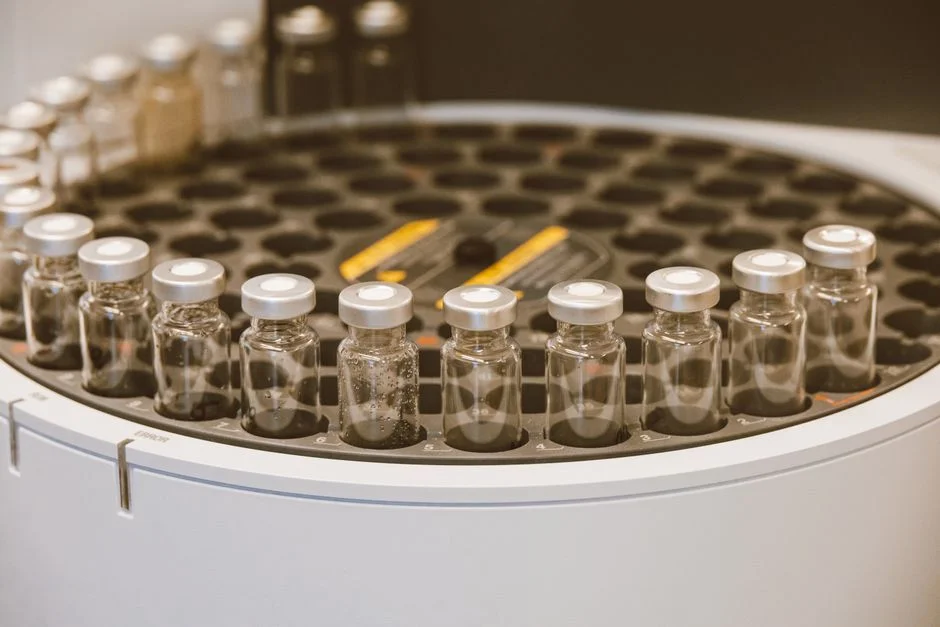
Installed treatment capacity cannot be accepted from nominal flow alone. Shell needs evidence that the system performs within the verified treatment-plant operating envelope, including variability in flow, pollutant load, operating temperature and production conditions.
Inspect every treatment unit for condition, redundancy, bypass arrangement, power and chemical resilience, automatic controls, alarms and spare-parts availability. Test operating logic, duty arrangements and treatment performance under real wastewater variation. Reconcile the water balance, wastewater flow, analytical results and production forecast to establish present headroom and the effect of future production changes.
| Engineering question | Required evidence | Capital implication |
|---|---|---|
| Does the plant meet the permitted load envelope? | Mass-balance calculations, performance data and outlet analyses | Define whether the existing system is transferable or inadequate |
| Is biological or membrane treatment appropriate? | Stream-specific biological load, membrane requirements and operating history | Evaluate an integrated MBR wastewater treatment system against verified demand |
| Is oil, grease, solids or colloidal material present? | Documented stream characteristics and treatment-removal performance | Evaluate an industrial DAF system for oil, grease and solids removal for the applicable stream |
| Is redundancy adequate? | Unit condition, bypass design, controls, utilities and spares | Assign immediate reliability works and longer-term capital expenditure |
| Is the performance claim credible? | Guaranteed outlet performance, auxiliary-consumption guarantees, bypass restrictions and comparable-reference evidence | Define enforceable supplier or contractor acceptance criteria |
For biological or membrane-intensive applications, an MBR process-design review should compare biological treatment and membrane filtration against the verified load envelope. Where oil, grease, suspended solids or colloidal contaminants are documented, the DAF-versus-clarifier assessment should be stream-specific. Neither technology is a default solution.
Address Monitoring, Reuse and Emerging Contaminant Risk
Monitoring history establishes whether the site’s compliance evidence represents actual wastewater. Review sampling locations, parameters, frequencies, analytical methods, chain of custody, deviations, missing data and actions taken after exceedances.
Assess whether the monitoring plan can detect pollutants associated with current and proposed operations. It must also distinguish reused water from final discharge: reuse, internal recirculation and release to a public treatment works require separate mass-balance and destination entries.
The research cites a 2026 source reporting that 20 PFAS compounds were detected in Micron’s Virginia wastewater and that approximately 68% of measured PFAS consisted of short-chain PFCAs, which the cited research describes as especially difficult to treat. This is a screening prompt, not a German legal limit. Shell should determine whether fluorinated chemicals enter the acquired site’s streams, whether monitoring can detect relevant compounds, and whether source substitution or dedicated treatment is warranted.
For comparative context only, the research reports that Micron stated 85% of 39 million m³ of treated wastewater discharged in CY2019 went to publicly operated treatment works and that its approximate average global recycling rate was 50%, based on its 2020 Sustainability Report. These figures do not establish German requirements or the acquired plant’s reuse performance. A structured wastewater and cooling-blowdown implementation review should be adapted to verified site streams rather than copied from another facility.
Translate the Review into Closing and Capital Decisions

Every regulatory and engineering finding should end in an assigned decision. Classify each requirement as satisfied, transferable after confirmation, subject to regulator or sewage-operator consent, requiring modification, or a pre-closing condition. This prevents a generic equipment proposal from being mistaken for a resolution of a permit issue.
| Finding | Transaction treatment | Required deliverable |
|---|---|---|
| Valid authorization with no identified transfer restriction | Transferable after documentary confirmation | Permit-status memorandum and regulator confirmation where required |
| Change of operator or control requires consent | Pre-closing condition | Executed consent before the relevant change takes effect |
| Monitoring shows unrepresentative or incomplete evidence | Requiring verification or modification | Gap-closing sampling plan, method review and compliance assessment |
| Treatment performance cannot meet the verified envelope | Separate immediate compliance action from capital work | Concept design, mass balance, performance guarantee and approval dependency |
| Sewer agreement requires amendment or revised capacity contribution | Subject to sewage-operator agreement | Revised agreement, contribution calculation and implementation timetable |
| Legacy contamination or closure obligation is identified | Allocate liability and require supporting evidence | Contamination file, baseline position and negotiated allocation |
Equipment selection should follow the verified stream characteristics, flow profile, pollutant load, discharge route and applicable permit conditions. An MBR may be appropriate for a biological or membrane-intensive application, while DAF may address suspended solids, oil and grease, FOG and colloidal material. Require guaranteed outlet performance within a defined operating envelope, auxiliary-consumption guarantees, bypass restrictions and evidence from comparable wastewater before accepting a performance claim.
The comparison of treatment options against the verified load envelope is a useful structuring method, but the final scope must follow German site documents and measured wastewater rather than imported assumptions.
Frequently Asked Questions
Does a German wastewater approval transfer automatically when Shell acquires the plant?
No automatic transfer should be assumed. The transaction must be tested against the transfer or change-of-control language, validity, scope and status of each German authorization, approval, declaration and consent. Sewer agreements and pretreatment permissions may also require amendment or confirmation from the relevant operator.
What should Shell obtain before selecting wastewater treatment equipment?
Shell should first classify each stream, collect the controlling approvals and sewer agreements, review monitoring history, and
Frequently Asked Questions
Does Shell need a new wastewater permit when it acquires a plant in Germany?
Under the German Water Act (Wasserhaushaltsgesetz - WHG), a wastewater discharge permit is generally linked to the facility location rather than the operator. However, Shell must notify the responsible water authority (Untere Wasserbehörde) of the change in operator, as permits are subject to specific conditions that may require formal transfer or amendment to reflect the new legal entity.
If the acquisition involves process changes or an increase in discharge volume exceeding thresholds defined in the Abwasserverordnung (AbwV), a new permit application or a substantial modification permit (Änderungsgenehmigung) will be mandatory. Failure to update the permit holder can lead to immediate administrative enforcement actions.
What wastewater documents should Shell request before closing a German plant acquisition?
Shell should conduct comprehensive due diligence by requesting the current discharge permit (Einleitgenehmigung) including all ancillary provisions (Nebenbestimmungen) and the most recent self-monitoring reports (Eigenkontrollverordnung - EKVO). Additionally, review the plant's wastewater cadaster (Abwasserkataster), which must detail all internal discharge points, chemical inventories, and pretreatment protocols.
Furthermore, request the last three years of official inspection reports from the water authority and proof of compliance with the specific annexes of the Wastewater Ordinance (Abwasserverordnung - AbwV) applicable to the plant's industrial sector. Records of any past exceedances or administrative fines are critical for quantifying potential environmental liabilities.
How much does German industrial wastewater compliance cost after a plant acquisition?
Costs are primarily driven by the Wastewater Charges Act (Abwasserabgabengesetz - AbwAG), which levies fees based on the harmfulness of the discharge, calculated in "damage units" (Schadeinheiten) for parameters like chemical oxygen demand (COD), phosphorus, nitrogen, and heavy metals. The base rate is currently 35.79 Euro per unit, though this is subject to periodic legislative adjustments.
Operational costs include mandatory certified laboratory analysis, which can range from 5,000 to 50,000 Euro annually depending on the complexity of the discharge permit, and potential investments in pretreatment technology to meet updated Best Available Techniques (BAT) conclusions under the Industrial Emissions Directive (IED).
How should wastewater treatment equipment be sized for a newly acquired German plant?
Equipment sizing must be based on the maximum hydraulic load (m³/h) and the pollutant mass load (kg/day) specified in the facility’s discharge permit. Engineers must use the "Best Available Techniques" (BAT) reference documents (BREFs) for the relevant industrial sector to ensure the treatment capacity accounts for peak production cycles and potential future tightening of emission limit values (ELVs).
Systems must incorporate sufficient buffer tank capacity to handle production surges and storm water runoff if the site operates a combined sewer system. Sizing calculations must be verified against the German DWA (German Association for Water, Wastewater and Waste) standards, specifically the A-131 series for biological treatment, to ensure technical compliance with national engineering norms.
Which wastewater compliance risks should be made conditions before a German acquisition closes?
Shell should mandate the remediation of any legacy soil or groundwater contamination caused by leaking wastewater piping as a condition precedent. Furthermore, if the plant does not currently meet the emission limit values (ELVs) stipulated in the relevant annex of the Abwasserverordnung, the seller must either implement necessary upgrades or provide a price reduction equivalent to the projected capital expenditure for compliance.
Legal conditions should also include the clearance of any ongoing administrative enforcement orders (Anordnungen) from local water authorities and the verification that all wastewater discharge infrastructure has been tested for leak-tightness according to DIN 1986-30 or equivalent industrial standards. Any non-compliant discharge infrastructure identified during due diligence should be rectified prior to the transfer of operational liability.