What Makes Citric Acid Wastewater Difficult to Treat?
MBR can treat citric acid wastewater, but the correct design depends on the source. Citric acid production wastewater can be highly concentrated, with published conditions of 15,000–20,000 mg/L COD and pH 2–4; one 2023 study achieved 97.3% COD removal through Ca(OH)₂ precipitation, followed by 92.0% removal in an aerobic MBR, for 99.8% combined removal. For lower-strength membrane-cleaning wastewater, another study reported over 96% COD removal at influent COD of 500–700 mg/L and identified 4 hours as the minimum tested HRT. MBR is therefore best evaluated as part of a pretreatment, biological, membrane-separation, and sludge-management train rather than as a stand-alone guarantee.
The first design error is treating all streams containing citric acid as equivalent. Production wastewater and membrane-cleaning wastewater differ in concentration, pH, solids, possible co-contaminants, and treatment objectives. The distinction is developed in the Ultrafiltration System for Citric Acid Wastewater: 2026 Engineering Guide.
According to the 2023 study “A combined process of chemical precipitation and aerobic membrane bioreactor for treatment of citric acid wastewater,” citric acid production generates approximately 40 tons of wastewater for each ton of citric acid produced. That production stream had COD of 15,000–20,000 mg/L and pH of 2–4. Low pH, high organic loading, and variable flow therefore require source characterization before a biological system is sized.
| Waste stream | Published feed conditions | Design implication |
|---|---|---|
| Citric acid production wastewater | COD 15,000–20,000 mg/L; pH 2–4; approximately 40 tons wastewater per ton of citric acid produced | Classify as concentrated, acidic, high-COD wastewater; investigate pH control, equalization, precipitation or recovery, and solids removal before biological treatment |
| Membrane-cleaning wastewater | Influent COD 500–700 mg/L in the 2022 study “Treatment of Membrane Cleaning Wastewater from Thermal Power Plant Using an Integrated MBR” | Consider biological MBR treatment only within the tested matrix; verify the presence of acids, alkalis, oxidants, detergents, and other cleaning chemicals |
Request flow and diurnal variation, COD, BOD, pH, suspended solids, calcium, sulfate, temperature, nutrients, and any cleaning chemicals. These inputs determine biological loading, reagent demand, membrane compatibility, and whether the stream can be treated alone or must be segregated.
Choose the MBR Treatment Train
Concentrated production wastewater should not enter a biological MBR as an untested raw feed. The defensible sequence is characterization, acid recovery or pH adjustment, equalization, solids removal, biological degradation, membrane separation, and controlled sludge treatment.
- Characterize and segregate. Separate production wastewater from cleaning wastewater and sample each stream through its operating cycle.
- Recover or neutralize. Assess whether acid recovery is technically and economically viable; otherwise define the required pH correction.
- Equalize and remove solids. Dampen load and pH peaks, then remove suspended or precipitated material that could impair membranes.
- Balance the biological feed. Supply nutrients where the measured wastewater composition requires them.
- Biologically degrade and separate. Use the aerobic MBR to retain biomass and remove biodegradable organics.
- Manage residuals. Establish wasting, dewatering, chemical cleaning, and final disposal provisions.
For concentrated production wastewater, the 2023 study supports Ca(OH)₂ precipitation followed by an aerobic MBR. For membrane-cleaning wastewater, the 2022 study supports MBR treatment at the reported feed and operating conditions, but its synthetic cleaning stream also contained sodium hydroxide, hypochlorite, and hydrochloric acid; those reagents are therefore mandatory compatibility checks, not optional observations.
| Decision condition | Treatment route | Evidence or design requirement |
|---|---|---|
| Concentrated production wastewater, COD 15,000–20,000 mg/L, pH 2–4 | Equalization and pH correction, followed by calcium hydroxide precipitation, solids separation, then aerobic MBR | Follow the combined-treatment sequence evaluated in the 2023 study; validate precipitation and feed chemistry at plant scale |
| Membrane-cleaning wastewater, COD 500–700 mg/L | Evaluation of biological MBR under the conditions reported in the 2022 study | Check oxidants, alkali, acid, detergents, and membrane compatibility; confirm pH, nutrients, and flow variation |
| High suspended solids or variable precipitation residuals | Clarification or flotation before the MBR | Evaluate a DAF machine and an automatic chemical dosing system against measured solids and reagent demand |
A laboratory COD result does not establish discharge or reuse compliance. Final limits must come from the site-specific permit or the receiving process-water specification, including pH, conductivity, hardness, residual organics, and other relevant parameters.
Precipitation and Equalization Protect the MBR
Calcium hydroxide precipitation can remove part of the organic load and create a solids burden that must be separated before membrane filtration. Its operating conditions must be established by testing rather than copied blindly from a laboratory study.
The 2023 combined-process study optimized Ca(OH)₂ precipitation using response-surface methodology. Its best reported COD removal was 97.3% at 70°C, 4-hour reaction time, and 200 rpm agitation. These are the study’s optimized laboratory conditions, not universal plant defaults. The work evaluated temperatures of 30, 50, and 70°C, reaction times of 2, 4, and 6 hours, and agitation speeds of 100, 150, and 200 rpm.
Plant trials should verify reaction time, mixing, reagent availability, pH response, and the quantity and settleability of generated solids. This matters because an MBR can retain biomass effectively, but it does not make suspended precipitate harmless. Excess solids can raise solids loading, impair membrane separation, and complicate wasting and dewatering. A DAF unit may therefore form part of the solids-control train where the actual solids characteristics support its use.
Equalization serves a different function. It reduces hydraulic and organic shocks, while pH adjustment establishes a condition compatible with biological activity and membrane materials. Both require site-specific design because the published production-wastewater profile does not specify the plant’s peak flow, buffer demand, or mixing requirements.
For soluble membrane-cleaning wastewater, ask the supplier to confirm chemical compatibility with submerged PVDF or any alternative membrane material before fixing the biological stage. The 2022 cleaning-water study included sodium hypochlorite, sodium hydroxide, and hydrochloric acid, so exposure to aggressive cleaning reagents must be considered in membrane selection, cleaning strategy, and feed segregation.
Set MBR Biological Operating Parameters
Hydraulic retention time controls biological contact time, while sludge retention time controls how long biomass is retained; neither value transfers automatically between unlike waste streams.
For membrane-cleaning wastewater, the 2022 study reported average COD removal of 97.6% at a 30-day SRT and 6-hour HRT. At a 4-hour HRT, COD removal averaged 97.0% under the same stated comparison. The study also identified a clear deterioration at 2-hour HRT: COD removal fluctuated between 65% and 84%, and effluent COD rose above 100 mg/L. It therefore identified 4 hours as the inferior tested limit for normal MBR operation in that application.
For pretreated citric acid production wastewater, the 2023 study reported 92.0% COD removal at 24-hour HRT and 10-day SRT. The MBR operated continuously for 10 days in that investigation. This is a different feed and a different treatment train, so its HRT and SRT cannot be substituted for the cleaning-wastewater values.
| Study and date | Feed and route | HRT | SRT | Reported result |
|---|---|---|---|---|
| “Treatment of Membrane Cleaning Wastewater from Thermal Power Plant Using an Integrated MBR,” 2022 | Synthetic cleaning wastewater; influent COD 500–700 mg/L | 6 h | 30 d | 97.6% average COD removal |
| Same 2022 study | Same cleaning-wastewater application | 4 h | Not stated in the cited comparison | 97.0% average COD removal; 4 h identified as the inferior tested HRT |
| “A combined process of chemical precipitation and aerobic membrane bioreactor for treatment of citric acid wastewater,” 2023 | Citric acid production wastewater after Ca(OH)₂ pretreatment | 24 h | 10 d | 92.0% COD removal |
Scale-up should be supported by pilot or vendor testing when flow variability, nutrient imbalance, or unfamiliar contaminants could change biodegradation and fouling. A useful design review begins with MBR wastewater treatment costs per m³ in 2026, then tests the biological assumptions against representative site wastewater.
Compare Standalone MBR and Combined Treatment
The combined treatment benchmark is the 2023 production-wastewater study: 97.3% COD removal by Ca(OH)₂ precipitation, 92.0% by MBR, and 99.8% for the combined process, with COD decreasing from 52,000–114 mg/L. This is evidence for a pretreatment-plus-MBR train, not evidence that every standalone MBR can accept concentrated production wastewater.
The separate membrane-cleaning benchmark comes from the 2022 study: over 96% COD removal at influent COD of 500–700 mg/L, with effluent COD below 20 mg/L. Its feed matrix, experimental conditions, and endpoints differ from the production-wastewater study, so the two sets of removal percentages are not interchangeable guarantees.
| Design question | Standalone MBR route | Combined treatment route |
|---|---|---|
| When is it credible? | For lower-strength cleaning wastewater after confirming chemical compatibility and the tested operating envelope | For concentrated production wastewater when precipitation or recovery and solids separation are required |
| Chemical and solids burden | Depends on cleaning chemicals and biological solids production | Includes precipitation reagent and a precipitate or sludge stream requiring separation and treatment |
| Process complexity and footprint | Fewer upstream unit operations, subject to feed qualification | More process steps and equipment, but potentially better protection of the biological and membrane stages |
| Performance evidence | 2022 cleaning-wastewater study: over 96% COD removal at influent COD 500–700 mg/L | 2023 production-wastewater study: 99.8% combined COD removal, with COD decreasing from 52,000–114 mg/L |
Compare bids on footprint, chemical use, solids production, biological loading, fouling control, process complexity, and residual-sludge handling. Use total COD removal as a treatment metric only. Final reuse suitability must still be judged against the receiving process specification, including pH, conductivity, hardness, residual organics, and other site-specific requirements. An integrated MBR membrane bioreactor system should therefore be evaluated as one element of the complete treatment train.
Select Membrane, Controls, and Fouling-Management Systems
Membrane selection should be tied to the actual feed, required permeate flow, cleaning chemistry, and site operating constraints. A supplier should specify submerged or external architecture, membrane material, nominal pore size, module area, design flux, permeate flow, and the design basis for each value.
The HydropureWater verified product catalog describes an integrated system combining activated sludge treatment with submerged PVDF filtration, filtration below 1 μm, a footprint 60% smaller than conventional systems, and capacities from 10 to 2,000 m³/day. These are manufacturer claims and should be checked against the proposed feed, process configuration, and site layout.
The catalog also describes DF flat-sheet modules using 0.1 μm PVDF membranes with integrated aeration for scouring, individually replaceable elements, and energy consumption stated as 10–20 times lower than external cross-flow systems. These are manufacturer claims, not independently established operating results; request site-specific confirmation for the selected wastewater, flux, cleaning regime, and energy boundary. The DF series flat-sheet MBR modules are one option for technical review, not a universal selection.
| Supplier item | Required information or function | Buyer check |
|---|---|---|
| Membrane system | Architecture, material, pore size, module area, design flux, permeate flow | Confirm compatibility with the selected cleaning and pretreatment chemicals |
| Fouling control | Automatic backwash or cleaning, aeration scouring, transmembrane-pressure monitoring, permeate turbidity, flow balance | Define cleaning triggers, chemical compatibility, recovery procedure, and operator intervention |
| Controls | PLC controls, alarms, interlocks, operating trend records | Verify that alarms identify the failed pump, valve, instrument, or membrane condition |
| Residual solids | Inventory, wasting, dewatering, odor control, cleaning, replacement, and maintenance access | Include a plate-and-frame filter press or other dewatering method where the solids balance justifies it |
For context only, the 2026 Nature Communications municipal study reported approximately 800 days of parallel full-scale operation at 7,500 m³/day. Its vibrating MBR had 20% higher average specific flux and 75% lower specific energy consumption for fouling control than a conventional aerated MBR. This municipal evidence is not a citric acid performance guarantee and should not be transferred to an industrial design without confirmation.
Build a Supplier Comparison and Acceptance Checklist
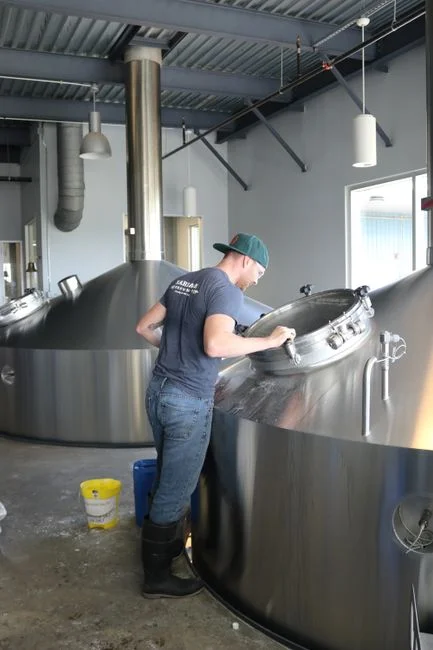
A comparable proposal must state the wastewater source and the precise basis of every performance guarantee. Without feed COD, pH, flow range, temperature, and operating schedule, percentage removal figures are not technically auditable.
| Document or commitment | What to request | Acceptance question |
|---|---|---|
| Design basis | Exact source, feed COD, pH, flow range, temperature, schedule, pretreatment, and required outcome | Does the proposal cover the actual wastewater rather than a generic citric acid stream? |
| Technical package | Process flow diagram, membrane data sheet, hydraulic and SRT calculations, equipment list, utilities, control philosophy, cleaning strategy, solids balance, and O&M estimate | Can the client reproduce the sizing and verify the complete mass and solids balances? |
| Performance language | Separate guaranteed values, literature examples, and laboratory results | Is any laboratory removal percentage presented as a site guarantee? |
| Acceptance tests | COD, pH, turbidity, permeate flow, transmembrane pressure, and operating stability | Have numerical limits been taken from the permit or reuse contract rather than assumed? |
| Commercial and lifecycle support | Price, lead time, membrane and spare-parts availability, training, remote support, and comparable industrial references | Does the commercial scope include commissioning, cleaning chemicals, replacement membranes, and solids handling? |
Require site-specific proposal language. A supplier should identify which values it guarantees and which are drawn from academic studies. Acceptance criteria should use the client’s permit or reuse specification to set COD, pH, turbidity, permeate-flow, transmembrane-pressure, and stability limits.
Commercial evaluation should also distinguish equipment price from lifecycle cost. Pretreatment, chemical dosing, utilities, controls, membrane replacement, cleaning, sludge handling, operator attendance, and maintenance can change the operating burden even where the quoted membrane package appears comparable. Request the inputs needed for an auditable cost comparison rather than accepting a generic unit rate.
Frequently Asked Questions
Can an MBR treat high-COD citric acid production wastewater directly?
Do not assume that it can. The 2023 study evaluated Ca(OH)₂ precipitation followed by an aerobic MBR, not unqualified biological treatment of raw production wastewater. Use precipitation or recovery, pH control, equalization, and solids removal as the first design decision, then confirm the residual feed through representative testing.
How long does MBR treatment take?
Neither published value is universal. The 2022 cleaning-wastewater study identified 4 hours as its inferior tested HRT, with 97.0% average COD removal at that condition. The 2023 production-wastewater MBR used 24-hour HRT and 10-day SRT after precipitation. Feed strength, treatment route, and objectives differ, so determine the design with site-specific testing.
How should an MBR supplier be selected?
Require feed-specific evidence, membrane data, a fouling-control strategy, control narratives, sludge handling, and site-specific acceptance criteria. Ask for comparable industrial references and clearly separate guaranteed performance from literature examples. Also verify membrane and spare-parts availability, operator training, remote support, delivery lead time, and the boundary of the commercial offer.
What information is needed before sizing or pricing the system?
Provide flow and variation, COD, BOD, pH, suspended solids, calcium, sulfate, temperature, nutrients, and cleaning chemicals. Define pretreatment, SRT and HRT, required membrane area, controls, utilities, and residual-sludge handling. The site permit or reuse specification must establish the performance target; without these inputs, a defensible capacity, price, or acceptance limit cannot be set.
Does MBR effluent automatically qualify for industrial water reuse?
No. The 2022 study reported effluent COD below 20 mg/L for its membrane-cleaning wastewater application, but reuse eligibility is controlled by the receiving process specification. Assess pH, conductivity, hardness, residual organics, and other relevant contaminants against that specification before treating the effluent as reusable.