
Why Coffee Processing Wastewater Needs a Tailored MBR Design
An MBR can be part of a treatment train for coffee processing wastewater, but it should not be treated as a stand-alone solution for every coffee plant. A 2026 Materials study found that coffee wastewater can contain a high organic load plus caffeine, phenolic compounds, and melanoidins. Its tested integrated train combined biological treatment, activated carbon, membrane filtration, ozone, and UV, removing 82.4-95.4% of total organic carbon and reducing turbidity by 96.3-99.8% at pH 4.02-7.25. Because that was a multi-stage system, the results should not be attributed to MBR alone. Plant-specific segregation, equalization, biological loading, membrane fouling, polishing, and discharge or reuse requirements must be verified before sizing or purchasing an MBR.
The first design question is not whether to buy an MBR; it is whether the relevant streams have been defined. Roasted-coffee extraction, instant-coffee processing, equipment cleaning, clean-in-place discharge, and floor washing can produce different flow and contaminant profiles. High-strength product losses should be kept separate from routine washdown where segregation is practical, because dilution may hide a hydraulic or organic problem rather than remove it.
Skorupa et al. described coffee processing wastewater as having a high organic load and containing caffeine, phenolic compounds, and melanoidins. That profile can challenge biological treatment, activated-carbon demand, and MBR membrane fouling. It also means that a supplier’s generic food-wastewater data cannot establish biological loading, membrane area, polishing demand, or final effluent quality.
Before comparing equipment, obtain seasonal and shift-based flow and load data, together with pH, temperature, suspended solids, organic indicators, nitrogen, phosphate, and the applicable discharge or reuse specification. The evidence boundary is important: the 2026 coffee study used synthetic wastewater containing roasted coffee extract. It is relevant process evidence, but it is not a substitute for testing the plant’s actual streams. The MBR versus conventional activated sludge for food wastewater comparison should therefore be made at the whole-train level, using the same site-specific inlet and acceptance criteria for both options.
What an MBR Actually Removes from Coffee Wastewater
An MBR combines two functions that are usually separated in conventional treatment: biological reaction in a suspended-growth bioreactor and solids separation by a membrane. The academic Membrane Bioreactors source defines the environmental application as activated sludge in the bioreactor and biologically treated wastewater as the liquid product, with the membrane replacing the clarifier.
This division of duties matters for coffee wastewater. Biological treatment converts biodegradable organics and can support nitrification or denitrification where the process configuration and nutrient data make them relevant. The membrane retains biomass and separates solids from the treated liquid; it does not, by itself, establish removal of dissolved caffeine, phenolic compounds, or melanoidins. The supplied research characterizes those compounds but provides no isolated MBR removal values for them.
The EPA’s Membrane Bioreactors Wastewater Management Fact Sheet identifies applicability, design features, advantages, and design considerations as the basis for project-level screening. A coffee plant should apply those considerations to its own wastewater rather than transfer removal claims from a different sector.
| MBR element | Primary function | Coffee-wastewater design question |
|---|---|---|
| Suspended-growth bioreactor | Biochemical degradation of biodegradable organics; support for relevant nutrient processes | Can the selected biological process handle the measured organic and nutrient loads across production and cleaning cycles? |
| Membrane separator | Biomass retention and solids-liquid separation | Will flux and cleaning remain stable with the actual suspended solids and extract composition? |
| Downstream polishing | Residual organics, color, or other contaminants not assigned to the membrane | Is activated carbon or an equivalent barrier required for the reuse or discharge specification? |
A sound supplier brief therefore allocates removal credit by unit operation. Biological degradation, membrane solids rejection, activated-carbon sorption, and disinfection are separate mechanisms. Any statement that an “MBR removes coffee organics” without that allocation is incomplete.
Evidence From a 2026 Coffee Wastewater Treatment Study
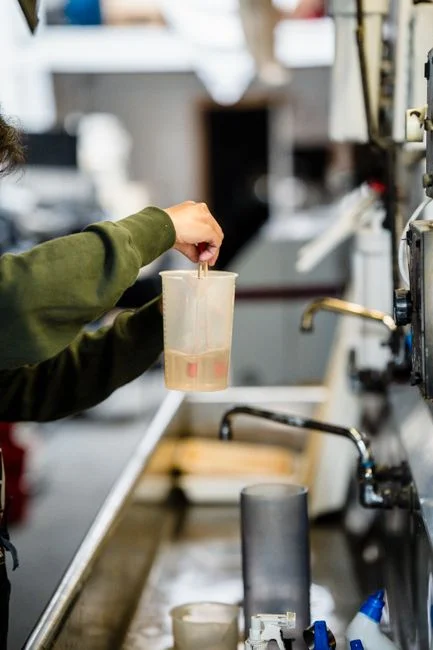
The strongest coffee-specific evidence supplied is an integrated treatment study, not an isolated MBR trial. Skorupa et al. tested biological treatment, activated carbon sorption, membrane filtration, and disinfection with ozone and ultraviolet radiation. The experiments used synthetic wastewater containing roasted coffee extract to represent contaminants associated with instant-coffee production and equipment cleaning.
The study’s whole-train results were 82.4-95.4% total organic carbon removal and 96.3-99.8% turbidity reduction at pH 4.02-7.25. Nutrient removal was more variable: ammonium nitrogen removal ranged from 0-77.4%, while phosphate removal ranged from 0-39.9%. These are reported integrated-system results from Materials (Basel), published 16 May 2026; they are not standalone membrane-removal guarantees.
| Measured outcome | Reported result | Correct interpretation |
|---|---|---|
| Total organic carbon removal | 82.4-95.4% | Performance of the integrated biological, activated-carbon, membrane, and disinfection sequence |
| Turbidity reduction | 96.3-99.8% | Whole-train result at the reported pH range; not attributable to the membrane alone |
| Ammonium nitrogen removal | 0-77.4% | Variable integrated performance that requires site-specific confirmation |
| Phosphate removal | 0-39.9% | Variable integrated performance; no universal treatment credit is established |
| Test wastewater | Synthetic wastewater containing roasted coffee extract | Process-relevant evidence, but not direct performance evidence for a plant’s wastewater |
Skorupa et al. also stated that further research is needed to select more favorable process parameters. For procurement, that qualification is central. A trial using actual extraction, instant-coffee, cleaning, and washdown streams should precede final guarantees. The trial should measure the response to production batches, cleaning peaks, seasonal changes, membrane flux, polishing demand, and the plant’s actual acceptance criteria. Otherwise, the 2026 percentages are useful context but weak evidence for a fixed-price performance promise.
Build the Treatment Train Around the MBR
A coffee wastewater MBR should be designed as a source-controlled treatment train, with the membrane serving as the solids-separation component rather than the entire treatment strategy. The recommended sequence is source segregation and flow measurement, equalization, necessary pH and load control, biological treatment, MBR solids separation, residual-organic or color polishing, and route-dependent disinfection.
- Segregate and measure: distinguish extraction or instant-coffee process water, equipment cleaning, clean-in-place flows, and floor washing where practical.
- Equalize: dampen batch and cleaning discharges before the biological and membrane stages.
- Control where necessary: apply the pH and load-control steps identified by influent characterization and process review.
- Remove biodegradable organics biologically: establish the reactor loading, aeration, and sludge-retention strategy from site data.
- Separate solids with the MBR: retain biomass and assess membrane-fouling and cleaning requirements.
- Polish the permeate: use activated carbon or an equivalent barrier where residual color or organics require it.
- Disinfect for the final route: add the required treatment where the discharge or reuse path demands it.
The 2026 coffee study supports this sequence because it paired biological treatment with activated carbon sorption, membrane filtration, ozone, and UV rather than relying on membrane separation alone. It does not establish that every coffee plant needs all those stages, nor does it establish a universal effluent specification.
| Design output | Required supplier response | Reason for coffee wastewater |
|---|---|---|
| Equalization strategy | Identify reactor, membrane, and control responses to batch and cleaning discharges | Variable discharge timing can disturb biological loading and membrane operation |
| Sludge handling | Define excess-sludge removal, storage, and destination | Retained biomass creates a predictable solids-handling duty |
| Membrane-fouling control | State cleaning method, trigger logic, recovery approach, and waste-stream handling | Coffee extracts can contribute organics, color, and solids that affect membrane condition |
| Activated-carbon polishing | Define the residual compounds to be polished and provide a replacement or regeneration basis | Residual color and soluble organics may remain after biological treatment and membrane separation |
| Disinfection and reuse | Match the final barrier to the legal discharge or reuse specification | One universal treatment route is not established by the coffee study |
Where the selected pretreatment requires solids removal, review a dissolved air flotation machine as a possible upstream unit rather than assuming it is necessary. For the final reuse route, a UV sterilizer for water treatment may form part of the disinfection train where appropriate. Neither unit should be added to a generic coffee MBR scope without an identified process duty.
Size the MBR from Plant Data, Not a Generic Flow Rate
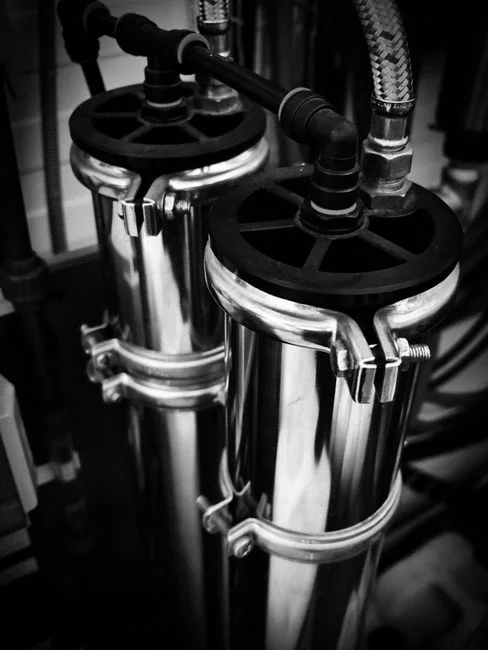
MBR sizing begins with the plant’s hydraulic and contaminant profile, not a catalogue capacity. The supplier needs average and peak flow, batch-discharge timing, clean-in-place and floor-wash contributions, and a clearly stated design operating basis. Equalization volume and membrane redundancy should reflect the actual discharge pattern rather than a daily average alone.
Request COD or another relevant organic-loading indicator, total organic carbon, suspended solids, ammonia, phosphate, pH, temperature, and the composition of coffee extracts, caffeine, phenolics, and melanoidins. The supplied research establishes why these contaminants matter, but it does not provide universal acceptance limits for an integrated MBR wastewater treatment system.
Each proposal should state its hydraulic and biological design basis, membrane area, aeration strategy, sludge-retention control, cleaning strategy, redundancy, controls, and the whole-train performance basis. That requirement prevents a membrane catalogue specification from being mistaken for an engineered treatment guarantee.
| Supplier submission item | Buyer check | Purpose |
|---|---|---|
| Design flow and load basis | Does it use measured plant data and state the operating envelope? | Prevents selection from generic food-wastewater assumptions |
| Membrane area and aeration | Are hydraulic, biological, and fouling assumptions shown? | Links equipment selection to plant conditions |
| Sludge-retention control | How is excess sludge removed and handled? | Defines a major operating and solids-management output |
| Cleaning and redundancy | How are cleaning, recovery, membrane failure, and module replacement handled? | Addresses membrane-fouling and availability risk |
| Performance basis | Which stage receives removal credit, and under what inlet conditions? | Prevents whole-train claims being presented as MBR guarantees |
The HydropureWater verified product catalog lists its integrated MBR for 10-2,000 m³/day, with submerged PVDF filtration below 1 micrometer and a claimed 60% smaller footprint than conventional systems. These are preliminary screening attributes, not coffee-process guarantees. Final sizing requires actual wastewater characterization and supplier design review. The DF-series submerged MBR membrane modules should be evaluated within the complete system rather than purchased as an isolated capacity item.
Compare MBR and Conventional Activated Sludge for Coffee Plants
The relevant comparison is between complete treatment trains, not between an MBR tank and a single piece of conventional equipment. An MBR integrates biological treatment and membrane solids separation. A conventional activated-sludge train separates those functions into a biological reactor and clarifier, with associated sludge handling.
| Decision factor | MBR-based train | Conventional activated-sludge train | Buyer decision |
|---|---|---|---|
| Solids separation | Membrane replaces conventional clarification | Clarifier remains part of the train | Compare effluent quality, footprint, and installed equipment |
| Footprint | HydropureWater states 60% less floor space than conventional systems | Requires reactor, clarifier, and supporting installations | Verify the claim against the proposed site layout, sludge handling, and piping |
| Operating complexity | Adds membrane aeration, cleaning, integrity monitoring, and replacement considerations | Adds clarifier operation and sludge-handling requirements | Compare the full operating envelope and staff capability |
| Evidence relevance | Requires actual wastewater testing; the 2026 study was multi-stage | Must also be tested against the same coffee streams and acceptance criteria | Do not transfer whole-train coffee results to either configuration alone |
| Reuse readiness | May reduce downstream solids separation requirements | May require additional clarification or polishing | Base the decision on the final reuse or discharge specification |
The footprint claim is a useful starting point, not a site-specific result. Installation, access, tankage, aeration, sludge handling, maintenance clearances, and pipe routing can change the comparison. Likewise, the 2026 coffee study shows that an integrated sequence can treat complex coffee wastewater; it does not prove that one equipment configuration is universally superior.
Use the MBR cost per m3 and system-selection guide to structure the commercial comparison, but base the capital decision on a pilot or side-by-side conceptual evaluation using actual wastewater. Define acceptance criteria before testing. This approach is consistent with the MBR versus conventional activated sludge for food wastewater: compare equivalent effluent duties, whole-train boundaries, site constraints, and life-cycle operating requirements.
Procurement Checklist for a Coffee Wastewater MBR
A purchase-ready brief should make each supplier define the treatment boundary and the evidence behind its performance claim. The primary documentary deliverable is a treatment-train diagram supported by a mass balance and an explicit design basis. The supplier should state which removal occurs through biological treatment, membrane separation, activated-carbon polishing, and disinfection.
| Required item | Minimum evidence requested | Risk addressed |
|---|---|---|
| Treatment-train design | Flow diagram, mass balance, design basis, and stage-by-stage removal allocation | Prevents whole-train performance being presented as MBR performance |
| Actual-wastewater pilot | Variability, flux behavior, cleaning intervals, sludge production, effluent results, and operating labor | Tests the proposed process under plant conditions |
| Contaminant response | Discussion of caffeine, phenolics, melanoidins, color, and cleaning-load effects | Exposes biological, polishing, and fouling risks |
| Commercial scope | MBR module, tankage, aeration, controls, piping, pretreatment, polishing, disinfection, sludge handling, installation, commissioning, training, membrane replacement, and warranties | Defines what the quoted price actually includes |
| Guarantee definition | Inlet condition, system boundary, test method, operating envelope, and remedy | Prevents an unsupported standalone removal-rate promise |
The pilot should capture more than a clean-water sample. Schedule representative extraction and production conditions, cleaning events, and flow peaks. Record membrane-flux behavior, cleaning frequency, chemical demand, biological response, polishing consumption, sludge production, and operator intervention. Require the proposed acceptance test to use the same sampling and analytical methods as the site’s permit or reuse specification.
Do not accept a guaranteed MBR removal rate unless the supplier defines the inlet condition, whole-train boundary, test method, and operating envelope supporting it. If the commercial boundary omits equalization, pretreatment, polishing, disinfection, sludge handling, or membrane replacement, the quoted configuration may not deliver the demonstrated whole-train result. The MBR cost per m3 and system-selection guide provides a useful framework for checking omissions before comparing offers.
Frequently Asked Questions
What does an MBR for coffee processing wastewater cost?
The supplied research contains no defensible coffee-MBR price. A reliable budget requires actual average and peak flow, organic and nutrient loads, pretreatment needs, polishing and disinfection requirements, site constraints, and the selected commercial boundary. Request a priced equipment and site-performance schedule, including aeration, controls, piping, sludge handling, installation, commissioning, training, membrane replacement, and warranties. Compare those scopes rather than a price per cubic metre alone.
How should an MBR be sized for a coffee factory?
Actual flow and wastewater characterization must precede selection. The catalog range of 10-2,000 m³/day is preliminary screening information, not a design result. Give each supplier the measured flow profile, loading indicators, suspended solids, pH, temperature, nitrogen, phosphate, extract characteristics, discharge timing, and final effluent requirement, then require a documented hydraulic, biological, and membrane design basis.
What should a buyer check when selecting an MBR supplier?
Check the system boundary, actual-wastewater pilot evidence, membrane and sludge-maintenance scope, and measurable acceptance criteria. The supplier should identify the treatment train, allocate removal credit among its stages, report membrane-flux and cleaning behavior, and define the operating envelope behind any performance guarantee. A proposal supported only by generic food-wastewater data does not demonstrate suitability for coffee wastewater.
Does the 2026 coffee study establish a discharge or wastewater reuse limit?
No. The 2026 study reports whole-train removal from synthetic wastewater containing roasted coffee extract, not a universal legal or reuse specification. The site’s permit, receiving-water requirements, or reuse specification governs. Use the study to frame pilot variables and treatment stages, then demonstrate compliance or reuse suitability with the actual wastewater and the required analytical methods.