Start with the project design basis, not the number of flats
The best packaged sewage treatment plant for a Chennai housing development is the one sized to the verified peak design flow, with treatment and disinfection sufficient for its intended reuse, installed within the available footprint, and supported by the documents needed for local approvals. A WSZ integrated unit is a strong fit for compact residential schemes because it combines A/O biological contact oxidation, sedimentation and disinfection in one buried package handling 1–80 m³/h. An MBR system is preferable when high-quality reuse justifies membrane complexity. Final selection should follow a wastewater flow survey, site survey and treatment-requirement review rather than flat count alone.
A defensible design basis begins with measured daily sewage generation and the peak factor applied to the occupied development. It must also examine groundwater and stormwater ingress, kitchen or commercial waste, and the wastewater load expected from later housing phases. A sewer-flow survey is therefore more useful than extrapolating from the number of flats alone.
HECS’s Chennai guide states that residential buildings generating more than 10 KLD—approximately 70–80 flats—must have a functional STP before receiving an Occupancy Certificate under CMDA and TNPCB requirements (HECS, 2026). Treat that as a vendor-reported regulatory threshold, not a universal hydraulic design rule. The wastewater designer should reconcile occupancy, unit mix, connected population and peak demand.
Next, define the treated-water destination: toilet flushing, landscape irrigation, drain discharge or a combination. Each route changes the required treatment quality, pumping, storage and backup arrangements. Ask the local consultant to confirm whether the submission must include treatment-performance guarantees, process drawings and supporting documents for consent and building-plan approval. The industrial wastewater requirements associated with acquired plants in India and packaged sewage treatment plant selection for housing developments provide useful procurement context, but Chennai requirements must be confirmed locally.
| Design-basis input | Evidence the consultant should obtain | Decision affected |
|---|---|---|
| Occupancy and development phase | Unit mix, occupied population and planned extensions | Present and future flow basis |
| Hydraulic flow | Measured daily flow, peak factor and inflow peak | Plant capacity and equalisation |
| Non-domestic contributions | Groundwater, stormwater and kitchen-waste assessment | Inlet design and treatment loading |
| Reuse or discharge route | Quality criterion, pumping, storage and end-user demand | Treatment process and disinfection |
| Approvals | Local consent pathway and OC documentation list | Design deliverables and programme |
Match the treatment process to the required water quality
MBBR, SBR and MBR are not interchangeable product labels: each responds differently to flow variation, treated-water quality and maintenance expectations. HECS’s residential STP guide describes three core treatment stages: primary treatment removes solids and debris, biological treatment breaks down organic matter, and disinfection reduces pathogens before non-potable reuse (HECS, 2026). That process logic is shared by packaged systems, but the biological reactor, separation method and final polishing determine the fit.
MBBR uses carrier media to support continuous biological treatment. SBR operates through fill, react, settle and decant cycles, making it suitable for variable flows according to HECS (2026). MBR adds membrane filtration to biological treatment and therefore suits projects requiring more stringent reuse output. HECS describes its MBR systems as achieving BOD below 5 mg/L and TSS below 5 mg/L; the same source states the reuse target as BOD below 10 mg/L, TSS below 10 mg/L and Faecal Coliform below 200 MPN/100 mL (HECS, 2026). These are supplier-published benchmarks, not guaranteed site results.
The WSZ underground integrated sewage treatment plant is a different procurement proposition: A/O biological contact oxidation, sedimentation and disinfection are combined in a single buried package, stated to handle 1–80 m³/h with automated operation and no routine operator requirement. The MBR membrane bioreactor wastewater system is stated at 10–2,000 m³/day, with filtration below 1 μm and a footprint 60% smaller than conventional systems, according to HydropureWater product information.
Do not make the final selection until the project consultant has checked hydraulic loading, reuse targets, site constraints, sludge handling, power availability and maintenance capability. A higher-quality process is not automatically the better fit if its membrane-cleaning regime, replacement risk and electrical demand are not supported by the operating plan.
| Process or architecture | Core treatment arrangement | Best-supported project fit | Decision to verify |
|---|---|---|---|
| MBBR | Continuous biological treatment using carrier media | Residential treatment where moderate reuse and lower process complexity are required | Actual treated-water guarantee and media replacement scope |
| SBR | Fill, react, settle and decant cycles | Sites with variable flows requiring batch treatment | Cycle control, equalisation and peak response |
| MBR | Biological treatment combined with membrane filtration | Projects requiring the higher-quality reuse option | Membrane maintenance, replacement and power demand |
| WSZ integrated package | A/O contact oxidation, sedimentation and disinfection | Compact sites with a defined reuse or discharge route | Verified hydraulic capacity and disposal route |
Check whether the site can physically and legally accept the plant
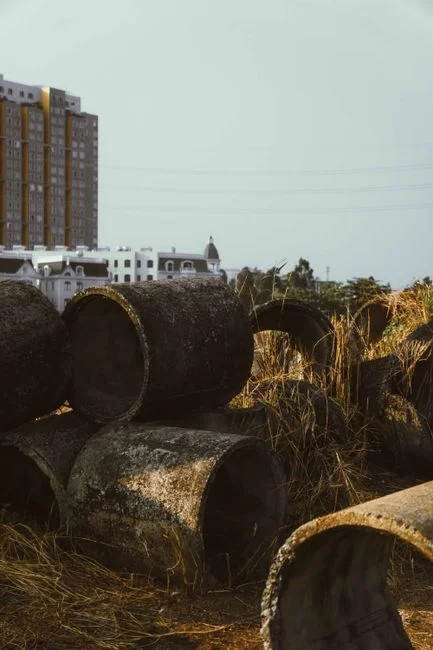
A plant is unsuitable if it cannot be delivered, excavated, maintained or connected within the available site. Before freezing the layout, verify the footprint, access route, excavation conditions, groundwater level, flood exposure, power supply, effluent-lift arrangement and connection point. Include access for sludge removal, membrane or media servicing, electrical control, odour control and safe maintenance.
Chennai ground conditions vary by location. HECS identifies sandy coastal soil in Ennore, black cotton soil in parts of Poonamallee and hard rock in Perungalathur (HECS, 2026). These are indicative area observations, not a site-specific geotechnical investigation. Foundations, excavation support, groundwater management and below-grade installation must therefore be designed from the project’s own soil and groundwater data.
For coastal exposure, HECS recommends FRP rather than mild steel because Chennai’s humidity and salt-laden air can accelerate corrosion; it also recommends corrosion-resistant blower components and fittings (HECS, 2026). FRP identifies the tank material, not the treatment process inside it. A project may therefore have an FRP tank housing MBBR, SBR or MBR equipment.
HECS reports a 50 KLD FRP MBR installation in the stilt-parking area of a 350-unit Chennai apartment complex, serving toilet-flushing reuse (HECS, 2026). Use this as a feasibility example, not a universal layout solution. The guide to discharge limits in India also illustrates why industrial and domestic discharge requirements should not be conflated.
HECS states that STP technical documentation may be required for TNPCB consent and CMDA building-plan submissions (HECS, 2026). The local environmental and building consultants must confirm the applicable consent pathway, required guarantees and Occupancy Certificate prerequisites. Do not treat vendor claims of universal OC compliance or zero groundwater risk as established facts.
| Site check | Information required | Possible consequence if unresolved |
|---|---|---|
| Ground and groundwater | Geotechnical report, groundwater observations and flood level | Foundation redesign, dewatering or relocation |
| Installation and access | Excavation route, crane access, tank cover and maintenance clearances | Delivery damage, redesign or restricted servicing |
| Corrosion exposure | Tank material, blower, pump, fitting and electrical enclosure specifications | Accelerated deterioration and uncertain service life |
| Legal interface | Consent pathway, approval deliverables, outlet and reuse connections | Programme delay before commissioning or OC |
Compare the two commercially relevant packaged architectures
The WSZ and MBR packages differ more in process architecture than in the generic idea of factory-built treatment. WSZ integrates A/O biological contact oxidation, sedimentation and disinfection in a buried unit stated to handle 1–80 m³/h, allowing the area above the package to remain available for landscaping. MBR combines activated sludge with submerged membrane filtration, with stated capacity of 10–2,000 m³/day, filtration below 1 μm and a 60% smaller footprint than conventional systems, according to HydropureWater product information.
Space cannot be judged from the tank footprint alone. An underground WSZ installation still needs excavation, access, lifting provision and clearances for inspection and sludge removal. An MBR package requires access to membranes, aeration equipment, electrical controls and maintenance points even when its overall installation is compact. The location beneath stilt parking, as in the HECS case example, is one arrangement rather than a general recommendation.
For reuse, MBR is the stronger catalogue option when the project requires near-reuse quality. WSZ remains appropriate where the verified treatment objective, intended reuse plan and applicable local discharge standard can be met by the integrated process. The buyer should demand a project-specific performance basis rather than infer compliance from a process description.
The O&M comparison also needs to be commercial. Membrane systems require membrane and related consumable management. HydropureWater’s WSZ catalogue states full automation and no routine operator requirement, but the developer must still define alarm handling, inspections, sludge removal, testing and attendance arrangements.
Request separate quotations that state process guarantees, civil interfaces, inlet and outlet works, power requirements, commissioning, training, spares and annual-maintenance assumptions. A lower equipment price may not represent the same complete scope.
| Procurement item | WSZ integrated package | MBR system |
|---|---|---|
| Stated capacity | 1–80 m³/h | 10–2,000 m³/day |
| Treatment arrangement | A/O contact oxidation, sedimentation and disinfection | Activated sludge and submerged membrane filtration |
| Installation concept | Buried package with surface area above | Package or system arrangement with equipment and membrane access |
| Reuse position | Applicable where the specified project objective is met | Preferred catalogue option for the higher-quality reuse requirement |
| Key O&M issue | Automation, inspection, sludge removal and testing | Membrane cleaning, consumables and replacement management |
Plan commissioning and lifecycle support before ordering
HECS’s 2026 implementation sequence provides a practical procurement checklist: site assessment, capacity recommendation, proposal with P&ID and layout, technical-document support, factory-built delivery, installation, seeding, trial operation, handover and optional AMC (HECS, 2026). Convert that sequence into a milestone programme with named responsibilities and acceptance tests.
For a 10–50 KLD FRP packaged STP, HECS reports delivery in 3–6 weeks, on-site installation and commissioning in 5–10 days after delivery, and 6–10 weeks from order to commissioning (HECS, 2026). These are vendor-reported planning ranges, not guaranteed project dates. Exclude or separately programme site permissions, foundation work, inlet and outlet chambers, electrical supply, testing, approvals and owner training.
The contract should identify who is responsible for foundations, civil interfaces, sludge removal, power supply, performance testing, training, regulatory documentation and handover. The MBR maintenance cost and OPEX breakdown and 2025 guide to skid-mounted treatment-plant specifications and costs provide useful distinctions to carry into a residential scope.
HECS lists AMC separately at ₹20,000–₹2,00,000 per year depending on capacity (HECS, 2026). Request an itemised quotation that states whether membranes, media, chemicals, labour, testing and emergency visits are included. HECS also cites a 25–35% reduction in municipal-water consumption through toilet-flushing reuse in Chennai apartments (HECS, 2026); treat this as a project outcome reported by the vendor, not a guaranteed saving.
Questions to ask before approving the supplier quotation
Comparability starts with the guaranteed design flow and peak-flow behaviour. Request the process calculations, P&ID, process-flow diagram, tank and material specifications, blower and pump duties, electrical load and control philosophy. These documents should reconcile the quoted capacity with the project’s occupied and future flow basis rather than use a nominal unit rating.
Ask for a treated-water guarantee tied to the intended reuse route, the applicable discharge or reuse criterion and the test method. The guarantee should identify sampling points, test parameters, acceptance period and remedies; it should not transfer a catalogue benchmark to every installation.
The layout should show the complete operating envelope: access, tank cover, blower area, maintenance clearances, inlet and outlet works, sludge holding, bypass provisions and future expansion interfaces. Ask separately what is excluded from the supply-and-installation price, including civil work, membranes, media, consumables, electrical work, sludge disposal, testing, permits and AMC.
Reference projects should be comparable in flow, housing type, reuse application and Chennai operating conditions. Request contactable references that can be verified. Finally, require a document-responsibility schedule identifying what the supplier will prepare for TNPCB and CMDA submissions and what remains with the developer’s consultant. The domestic sewage treatment buyer’s guide provides a useful structure for these evidence checks, although Chennai approvals remain project-specific.
Frequently Asked Questions
How many flats need a packaged sewage treatment plant in Chennai?
HECS’s Chennai guide states that residential buildings generating more than 10 KLD—approximately 70–80 flats—must have a functional STP before receiving an Occupancy Certificate under CMDA and TNPCB requirements (HECS, 2026). Use that approximation as a screening point, not a sizing calculation. The final capacity must come from the occupancy, unit mix, measured sewage flow and peak-factor assessment.
Is MBBR, MBR or SBR best for a Chennai apartment complex?
MBBR is the simpler biological option, SBR is suited to variable flows, and MBR is the higher-quality reuse option, according to HECS (2026). The WSZ package provides a different integrated alternative using A/O contact oxidation, sedimentation and disinfection. Select against the required reuse quality, footprint, sludge route, power supply and maintenance capability rather than choosing by process name alone.
How much does a packaged STP cost for a housing development?
The supplied research does not provide a complete Chennai housing-development price. It identifies capacity, process, automation, tank material, reuse requirements, civil work and AMC as cost drivers, and gives a vendor-cited AMC range of ₹20,000–₹2,00,000 per year depending on capacity (HECS, 2026). Request itemised quotations for equipment, foundations, inlet and outlet works, electrical supply, installation, testing, approvals, training, consumables and AMC so that the alternatives can be compared on the same scope.
Which packaged STP is easiest to install on a space-constrained Chennai site?
HECS reports a 50 KLD FRP MBR unit installed in the stilt-parking area of a 350-unit Chennai apartment complex (HECS, 2026), while the WSZ package can be buried below grade. Neither option is automatically easier: request a scaled layout showing excavation, access, cover, blower and membrane-service clearances, inlet and outlet works, and the soil and groundwater basis.
What should a Chennai STP supplier provide to reduce compliance risk?
Require a site-specific design basis, process calculations, P&ID, guaranteed flow, treated-water criteria, commissioning protocol, performance-test method, operating manual, training, maintenance plan and a schedule allocating approval-document responsibilities. Treat general statements of CPCB or TNPCB compliance as insufficient without the applicable standard, test method and contractual acceptance requirement.