What the Available Evidence Does and Does Not Establish
No supplied source identifies a specific Freeport-McMoRan plant acquisition in Malaysia, so the requirements must be established from the target site's current permits, waste streams and compliance record rather than from an acquisition precedent. In due diligence, verify the applicable environmental approval, effluent limits, monitoring conditions, sewer pretreatment requirements and land-based discharge controls; then test whether the existing treatment system can reliably meet them. Freeport-McMoRan's 2017 CDP Water Response states that most mining operations were managed as zero-discharge facilities, while water-risk assessments were performed annually and considered risks more than six years ahead. These company practices inform the review, but they are not Malaysian regulatory limits.
The acquisition precedent in the supplied material is the Phelps Dodge transaction, not a Malaysian plant acquisition. The Kellogg School of Management case, originally published in 2007 and made available online in January 2017, states that JPMorgan and Merrill Lynch arranged $17.5 billion in debt financing and $1.5 billion in credit facilities. That financing context does not establish wastewater obligations, permit-transfer conditions or environmental liabilities for any Malaysian target. A broader framing of the transaction screen is available in the Freeport-McMoRan acquisition due-diligence approach, but its Mexican context cannot be substituted for Malaysian evidence.
The first diligence questions are therefore site-specific: What is the facility's state and local authority jurisdiction? What receiving waters or sewerage system receive its discharges? Who is the current permit holder? Is the proposed transaction a share sale, asset sale or business transfer? What happens to permits, water rights, monitoring duties and operating responsibility at closing?
Freeport-McMoRan's 2017 CDP Water Response covers the 2016 operating year and provides corporate water-governance context only. It should not be cited as proof of Malaysian environmental approval transfer requirements, industrial effluent limits, environmental impact assessment obligations or sewer pretreatment requirements. Those conclusions require the target's current approval file and confirmation from the responsible Malaysian authority and qualified Malaysian environmental counsel.
Build the Malaysian Environmental Permit and Liability File
The permit file must establish both the legal route for continued operations and the historical evidence of compliance before the transaction team assigns liability or capital expenditure. A nominal permit limit does not demonstrate that the plant achieved it, and a change-of-control clause does not prove that a transfer will be approved without action.
Request the complete approval set, including the environmental approval or permit, expiry and renewal status, transfer conditions, amendments, monitoring schedules, reporting records and regulator correspondence. Identify whether the site discharges directly to land or receiving waters, enters a sewer or centralized treatment plant, reuses and stores water under a zero-discharge arrangement, or combines these routes. The Malaysia acquisition wastewater due-diligence guide provides a useful adjacent framing, but the target's own approvals remain controlling.
Compare historical effluent and monitoring results against each applicable condition rather than against the plant's stated design capacity. Also obtain non-compliance notices, enforcement files, environmental audit reports, incident records, outstanding remediation commitments, third-party claims and conditions attached to land or water-use rights. Legal non-compliance and uncertainty over whether a permit can transfer must remain separate issues in the transaction file.
| Close-to-close item | Evidence to request | Decision test |
|---|---|---|
| Environmental approval transfer | Current approval, expiry and renewal status, amendments, transfer provisions and regulator correspondence | Is continued operation legally available on closing, or is reapplication, amendment or reissuance required? |
| Permit compliance | Effluent results, monitoring records, deviation reports, audit findings and corrective-action records | Do actual results meet every applicable condition, including monitoring and reporting obligations? |
| Environmental liability | Enforcement notices, remediation commitments, contamination assessments, third-party claims and incident reports | Is liability known, quantified and allocated among seller, buyer, indemnities or post-closing capital? |
| Waste acceptance route | Discharge permits, sewer acceptance documents, trade-waste records, land-based controls and water-use conditions | Does every authorized route remain available after the proposed transaction? |
Confirm with the responsible Malaysian authority and qualified Malaysian environmental counsel which approvals can transfer and which require amendment, reapplication or reissuance. Do not assume that completion of a share, asset or business transfer automatically satisfies change-of-control rules. Assign an accountable person to close each regulator confirmation before the transaction reaches final approval.
Map Every Waste Stream and the Water Balance
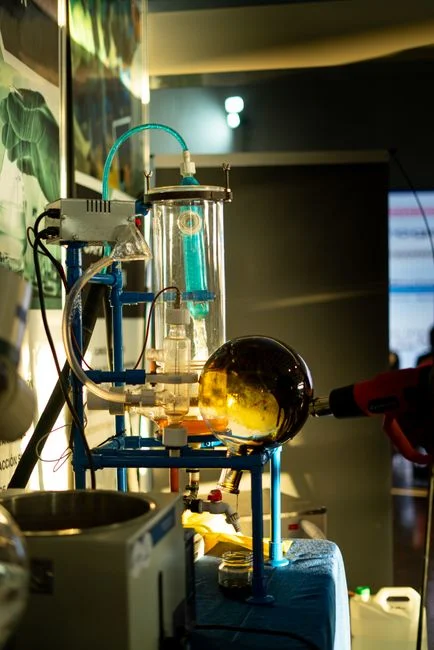
Treatment selection is invalid unless the acquired site's complete water balance and waste-stream inventory are reconciled. A nominal production or discharge figure cannot substitute for representative flow and quality data, particularly where zero-discharge operations, evaporation, storage or residual sludge moisture materially alter the liquid balance.
Create a source-by-source inventory covering process water, contact and cooling water, washdown, tailings or leach solutions, stormwater, runoff, domestic sewage, laboratory waste and third-party wastewater received by the site. For each stream, document flow, seasonality, variability, chemistry, toxicity, oil and grease, suspended solids, pH, temperature, salinity and relevant contaminants. The mining wastewater MBR versus activated sludge comparison illustrates the importance of matching technology to documented duties, but it does not establish the Malaysian target's design basis.
| Water-balance control | Information required | Diligence question |
|---|---|---|
| Withdrawals and inputs | Source, volume, quality, rights and seasonal availability | Can the site secure the stated water supply under normal and stressed conditions? |
| Process consumption and reuse | Recirculation, return flow, reuse quality and operational losses | Does claimed reuse reconcile with metered flow and process demand? |
| Discharge and storage | Discharge volume, destination, storage inventory and available capacity | Is there sufficient storage and authorized disposal capacity for the operating balance? |
| Residuals | Sludge volume, moisture content, characterization and disposal route | Are residual water and waste liabilities omitted from the water balance? |
Freeport-McMoRan's 2017 CDP response reports approximately 1,740,000 megaliters of water use in 2016 and approximately 80% recycled water. It also says most mining operations were managed as zero-discharge facilities. These are corporate figures for 2016, not Malaysian requirements or plant-design values. They provide a benchmark for asking how recycling, discharge and water consumption are reconciled.
Require a site water-risk review covering supply availability, water quality, current regulation, stakeholder conflict and climate-related operating risks. Freeport-McMoRan's 2017 disclosure says annual facility-scale risk assessments considered risks more than six years ahead and that growth-related water risks were evaluated over the next 10 years. Use those horizons as diligence prompts, while recognizing that long-term reuse or zero-discharge objectives must remain compatible with the target's permit and physical site constraints.
Verify Whether the Existing Treatment Train Can Be Retained
Each treatment stage should receive a separate retain, upgrade or replace decision because satisfactory performance in one unit does not establish compliance across the entire train. Test the installed equipment against documented worst-case influent, applicable permit conditions, bypass consequences, redundancy, controls, standby power and maintenance history.
Review screening, equalization, oil and grease removal, solids separation, biological treatment, filtration, disinfection, pH or chemical correction, dewatering and final storage as distinct decision points. For zero-discharge or reuse operations, evaluate evaporation losses, residual salt accumulation, sludge quality, storage capacity and the consequence of exceeding the permitted balance. A plant may be technically operable yet unable to close the site's water balance during the driest or most demanding operating period.
| Assessment area | Condition-assessment evidence | Retention outcome |
|---|---|---|
| Hydraulic capacity | Design flow, actual loading, peak and worst-case influent, equalization and bypass records | Retain only if the stage has documented margin under the agreed design basis. |
| Process capability | Representative testing, operating trends, chemistry, toxicity, solids, oil and grease and pH | Upgrade or replace where performance cannot reliably achieve the required function. |
| Reliability and controls | Maintenance history, redundancy, automatic controls, standby power, alarms and incident response | Assign corrective capital before acceptance of the operating risk. |
| Residuals and closure | Sludge dewatering, characterization, storage, disposal route and chain of custody | Do not close the asset decision until residual handling is legally and physically secured. |
The corporate monitoring disclosure is a useful diligence benchmark. Freeport-McMoRan's 2017 CDP Water Response reported that withdrawals, discharges, discharge quality by standard effluent parameters and consumption were collected and reported annually at 76–100% of sites, facilities or operations. The 2017 response does not disclose the target's Malaysian monitoring record, so request and test that record directly.
Use the reported risk horizon as a condition-review question: can the acquired system remain compliant and operational as production, climate conditions or water availability change? That is more useful than asking only whether the equipment meets its original nameplate duty. The mining wastewater MBR versus activated sludge comparison provides a technical reference for comparing treatment architectures, but the final decision must follow the acquired plant's permit, footprint, influent and reuse objectives.
Select Treatment Options by Wastewater Function
Equipment selection should follow the required treatment function and verified wastewater characteristics, not a preferred technology. Every proposed addition must connect to the site's permit, water balance, residual-handling route and operating constraints.
Use coarse screening where rags, plastics or fibrous debris could damage pumps or downstream biological or membrane processes. Consider a DAF system for industrial wastewater pretreatment where the duty is removal of suspended solids, oil and grease, FOG or colloidal material before clarification or biological treatment. Representative testing must establish suitability; the function cannot be inferred from photographs or nominal plant descriptions.
Use an integrated MBR membrane bioreactor where the required effluent quality and available footprint justify submerged membrane separation. Compare that option with conventional activated sludge using the site's actual effluent target, land availability, existing structure, residual production, controls and operating constraints. Automatic chemical dosing for pH, coagulation, flocculation or specialty treatment should follow the required chemical range, control strategy and residual by-product assessment.
| Required function | Potential treatment approach | Decision evidence |
|---|---|---|
| Protect downstream equipment | Coarse screening and solids management | Debris loading, pump protection and downstream process requirements |
| Remove floatable and colloidal material | DAF followed by clarification or biological treatment | Representative oil, grease, solids and colloid testing |
| Achieve high-quality effluent within site constraints | MBR or conventional activated sludge | Effluent target, footprint, influent variability, residuals and operating comparison |
| Control pH or specialty contaminants | Automatic chemical dosing and process control | Required chemical range, residual by-products and control response |
| Manage treatment residuals | Sludge dewatering, storage and authorized disposal | Permit linkage, characterization, chain of custody and destination |
Treat sludge dewatering and disposal as part of the wastewater permit and acquisition model. Verify the residual disposal route, characterization requirements, handling records, chain of custody and whether accumulated sludge represents a pre-closing liability or a post-closing operating obligation.
Use a Close-to-Close Acquisition Decision Gate
Every material environmental issue should have an allocated transaction outcome: closing condition, price or indemnity item, post-closing capital commitment, or explicitly accepted operating risk. Permit uncertainty cannot remain in an unallocated technical workstream because it affects legal authority, closing certainty, capital and post-closing liability.
Before final investment approval, require a signed-off mass and water balance, permit-by-permit compliance matrix, equipment condition assessment, remedial cost estimate and treatment concept. The treatment concept should connect verified flows and quality data to the permit target, reuse objective, storage requirement, residual disposal and operating constraints. Do not populate an estimate from generic equipment ranges without a site-specific design basis.
| Issue classification | Required action before completion | Evidence of closure |
|---|---|---|
| Closing condition | Resolve approval transfer, enforcement, remediation or other identified legal obstacle | Authority confirmation, approved transfer or reissued approval, and agreed release mechanism |
| Price or indemnity item | Quantify known remediation, compliance or residual liability and allocate it contractually | Cost estimate, technical basis and executed purchase agreement allocation |
| Post-closing capital commitment | Define upgrade scope, deadline, permit interface and operating dependency | Approved design basis, capital estimate, schedule and accountable owner |
| Accepted operating risk | Document the risk, monitoring, contingency and decision threshold | Executive acceptance supported by evidence and a funded response plan |
Quantify each proposed upgrade using the site's actual flow and quality data, compliance deadline, reuse value, operating cost, residual disposal and outage constraints. The transaction-focused wastewater decision framework provides an adjacent process example, but Malaysian permit evidence must govern the target's disposition.
The final closure check is the operating baseline. Confirm that construction changes, commissioning records, updated monitoring data and as-built documents reconcile with regulatory commitments. Assign responsibility for any post-closing capital item, continuing monitoring and residual management; a signed acquisition agreement does not itself close those obligations.
Frequently Asked Questions
What costs should a buyer budget for wastewater compliance after a Malaysian plant acquisition?
The supplied research contains no Malaysian plant-acquisition cost estimate. Request a site-specific estimate based on verified flow, representative wastewater characteristics, applicable permit conditions, treatment objectives, residual handling, storage, reuse value, operating costs and site constraints. Request separate capital, commissioning, operating, residual-disposal and contingency allowances, with each amount tied to an identified design or compliance need.
How should wastewater equipment be sized for an acquired plant?
Require an approved process design basis and representative wastewater data rather than selecting from nominal acquisition headline flows. Size each stage against verified worst-case flow, quality, variability, storage and redundancy requirements, then reconcile the selected process with the permit and complete water balance.
Which supplier qualifications matter when retaining or replacing Malaysian wastewater equipment?
Request demonstrated fit with the verified wastewater duty, Malaysian project support, a defined automation and controls scope, validation data, O&M documentation, and evidence that consumables or membranes can be obtained reliably. Also require clear responsibility boundaries for performance testing, commissioning, training, maintenance and residual handling.
How should compliance risk be distinguished from technical uncertainty before closing?
Legal non-compliance requires confirmation of the applicable approval, breach or obligation and the responsible authority's position. Technical uncertainty concerns performance that has not yet been demonstrated. Assign an owner and closure evidence to each item: regulator confirmation or corrective action for legal exposure, and approved testing, condition assessment or commissioning evidence for technical uncertainty.