How to Choose MBR or Conventional Activated Sludge in Callao
For transportation equipment wastewater in Callao, MBR is usually the stronger option when variable wash-water flows, oil and grease, solids, a compact site, or water reuse make reliable solids separation and high-quality effluent important. Conventional activated sludge can be more economical when wastewater is relatively uniform, land is available, and discharge requirements do not justify membranes. The supplied product data shows integrated MBR systems can provide less than 1 μm filtration in a footprint claimed to be 60% smaller than conventional systems, for 10–2,000 m³/day. Final selection still depends on wastewater characterization, permit limits, reuse targets, lifecycle cost, and pretreatment needs.
Conventional activated sludge is a biological process followed by solids separation. MBR retains the activated-sludge biology but replaces the conventional clarifier with membrane filtration. That change improves solids capture and can make MBR more suitable for a compact installation or a water-reuse project.
The selection rule is conditional, not technological preference. Choose MBR when reliable solids separation, reuse readiness, limited footprint, or difficult hydraulic and contaminant loading justify membrane operation. Choose conventional activated sludge when the wastewater is comparatively uniform, land is available, and a simpler process can meet the verified discharge standard at a lower lifecycle cost. The MBR wastewater treatment cost guide provides a useful framework for developing a site-specific comparison, but it does not replace a Callao quotation.
No Callao-specific numerical discharge or reuse limits appear in the supplied research. The buyer must confirm applicable requirements with the receiving authority, the sewer authority where relevant, and any customer specifying reused water. Those requirements determine whether conventional separation is adequate and whether additional treatment is needed.
| Decision condition | Preferred direction | Reason to verify |
|---|---|---|
| Compact site or planned reuse | MBR | Membrane solids separation can reduce required land and produce a clearer effluent. |
| Relatively uniform flow and loading | Conventional activated sludge may be preferable | Simpler equipment may provide a lower lifecycle cost when the verified target does not require membranes. |
| Variable batches, oil and grease, or high solids | Either, with suitable pretreatment and controls | Neither process should be expected to compensate for uncontrolled loading or an unsuitable upstream treatment train. |
| Unconfirmed permit or reuse standard | No final selection | Obtain written requirements before comparing biological and solids-separation performance. |
Transportation Equipment Wastewater Characteristics That Drive the Design
Vehicle, rail, aircraft, and related component-maintenance operations produce wastewater streams that may differ substantially within one facility. A vehicle wash, oily parts washer, floor washdown, paint-stripping operation, and stormwater runoff should not be treated as one interchangeable stream merely because they enter the same collection system.
Before selecting MBR or conventional activated sludge, require the operator to document average and peak flow, operating schedule, batch-discharge behavior, oil and grease, suspended solids, detergents, metals, pH, and temperature. The audited characterization should identify whether flow arrives continuously or in intermittent wash cycles. Diluting a concentrated stream may reduce its concentration at the inlet, but it does not remove the underlying treatment obligation.
Use physical pretreatment where the wastewater contains rags, plastics, fibrous debris, or other suspended material. The rotary mechanical bar screen is described by the supplied product data as removing suspended solids, rags, plastics, and fibrous debris that can protect downstream pumps, valves, and biological processes.
For oil, grease, FOG, suspended solids, or colloidal material, evaluate DAF pretreatment for oil and grease. The supplied DAF catalog lists 13 standard models from 4–300 m³/h, but model selection still requires verified flow, contaminant loading, and operating objectives.
- Separate the source streams and establish their operating schedules.
- Sample each material stream for the parameters relevant to biological loading, membrane protection, discharge, and reuse.
- Select screening, equalization, and oil and grease removal according to the characterization.
- Define biological and solids-separation objectives against the confirmed permit or reuse specification.
| Input to obtain | Why it affects selection | Equipment implication |
|---|---|---|
| Peak and average flow plus batch profiles | Determines equalization and biological loading conditions. | May require flow-control, storage, or feed-pump provisions in either train. |
| Oil and grease and FOG | Can interfere with biological treatment and membrane surfaces. | Evaluate upstream DAF or another approved separator. |
| Suspended solids and fibrous debris | Increases solids loading and can foul or damage equipment. | Provide appropriate screening and solids handling. |
| Detergents, metals, pH, and temperature | May inhibit biology or affect membrane material and operation. | Define feed limits, controls, and pretreatment. |
| Reuse application and receiving requirements | Sets the required treatment and disinfection objectives. | May justify MBR and additional downstream treatment. |
How Each Treatment Train Handles the Wastewater
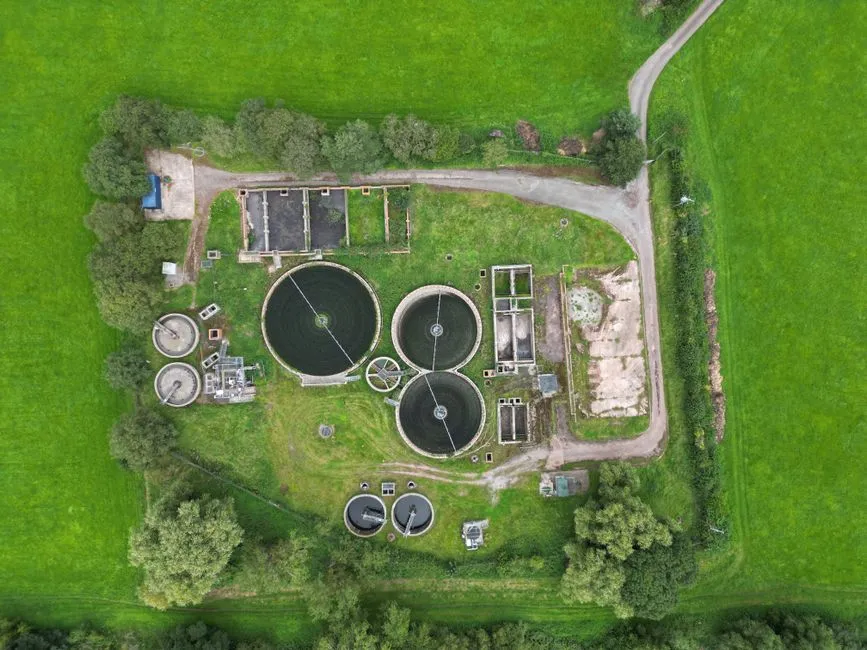
Both technologies rely on microorganisms to remove biodegradable organics, but they differ most visibly in how solids are separated from the treated liquid. That difference drives footprint, effluent clarity, reuse potential, and operating requirements.
In a conventional activated sludge system, wastewater enters an aerated biological reactor where microorganisms consume biodegradable material. Mixed liquor then moves to a clarifier, where part of the biomass settles as sludge and the clarified liquid continues for discharge or further treatment. The performance of that separation step depends on settling behavior, sludge condition, hydraulic conditions, and the design of the clarifier.
An MBR retains the activated-sludge reactor and uses membrane modules as the solids-separation barrier. The supplied integrated MBR wastewater treatment system combines activated-sludge treatment with submerged PVDF membrane filtration and states that its effluent receives less than 1 μm filtration. That is a supplier specification for the offered configuration, not proof of performance at an uncharacterized Callao site.
The academic review The Advancement in Membrane Bioreactor Technology toward Sustainable Industrial Wastewater Management, published by the National Library of Medicine’s PubMed Central in 2023, identifies membrane filtration and sustainable industrial wastewater management as central areas of MBR development. The supplied Elsevier DOI for a pharmaceutical CAS-versus-MBR study returned a 404 page, so it cannot support numerical comparative conclusions in this article.
Membrane fouling control is part of the treatment design, not an accessory issue. A supplier must address membrane cleaning, aeration, feed control, solids inventory, and the consequences of abnormal loading. Likewise, conventional activated sludge requires attention to biological health, settling, wasting, and sludge handling. The MBR footprint claim may be decisive on a constrained site, but it does not remove the need for operating discipline.
MBR Versus Conventional Activated Sludge: Decision Matrix
MBR generally trades additional equipment, membrane maintenance, and process control for more controlled solids separation and a smaller treatment footprint. Conventional activated sludge can offer a simpler train and potentially lower lifecycle cost when the wastewater and permit requirements are straightforward.
| Evaluation item | MBR | Conventional activated sludge | Procurement consequence |
|---|---|---|---|
| Biological treatment | Uses activated-sludge biology within an MBR train. | Uses an activated-sludge biological process. | Compare feed suitability, loading controls, and operator requirements. |
| Solids separation | Uses membrane filtration rather than a conventional clarifier. | Uses conventional settling and sludge separation. | Obtain solids-removal guarantees against the verified effluent target. |
| Footprint | The supplied HydropureWater catalog claims 60% less footprint than conventional systems. | Requires space for the biological train and clarifier. | The 60% figure is a supplier product claim, not a universal MBR benchmark. |
| Water-reuse readiness | More readily supports reuse where membrane-produced effluent quality is suitable and reuse treatment is verified. | May be adequate for specified non-potable reuse or discharge, subject to confirmation. | Obtain the reuse customer’s written quality and process requirements. |
| Hydraulic flexibility | Can suit variable loading when equalization, pretreatment, and controls are properly designed. | Can also accommodate variation, but clarifier and biological performance require verification. | Provide peak-flow and batch-event data to both bidders. |
| Fouling and maintenance | Requires membrane cleaning, aeration, feed control, and fouling monitoring. | Requires settling control, biological monitoring, and sludge handling. | Compare maintenance routines and failure-response requirements. |
| Sludge handling | Retains solids in the biological reactor before membrane separation; the resulting waste stream still requires handling. | Produces sludge through conventional biological wasting and settling. | Price collection, storage, dewatering, and disposal. |
| Available configuration | The supplied integrated system covers 10–2,000 m³/day. | No equivalent supplied capacity scope was established in the research. | The MBR range does not establish the required Callao design flow. |
| Capital and lifecycle cost | Cost drivers include membranes, pretreatment, controls, installation, cleaning, and replacement parts. | Cost drivers include reactors, clarifiers, basins, piping, controls, and sludge handling. | Request itemized site-specific prices; do not apply unsupported savings percentages. |
For a compact or reuse-driven installation, MBR is generally the stronger candidate after appropriate pretreatment has established a stable feed. For stable wastewater where land is available and lifecycle cost dominates, conventional activated sludge remains defensible when it can meet the confirmed requirement without adding membrane-related capital, fouling controls, and replacement exposure.
Cost comparison must be lifecycle-based. Request separate pricing for equipment, membranes, installation, controls, pretreatment, foundations, power, start-up, cleaning chemicals, replacement parts, operator labor, and sludge handling. The supplied research does not support defensible Callao energy, maintenance, life-expectancy, or percentage-cost claims, so a bidder should substantiate each value with its own design basis and warranty.
The DF membrane bioreactor module can be included in the technical bid package, but the comparison should remain tied to the complete train rather than the module alone.
Sizing, Cost, and Supplier Evaluation Checklist
A defensible proposal requires a verified wastewater basis, a defined treatment objective, and a complete treatment train. “Transportation-equipment wastewater” is too broad a basis for equipment sizing or lifecycle cost.
| Bid item | Information to request | Acceptance evidence |
|---|---|---|
| Design basis | Average and peak flow, batch-event profiles, wastewater characterization, reuse requirements, and confirmed permit limits. | Audited data and written receiving-authority or reuse-customer requirements. |
| Process train | Equalization, screening, oil and grease pretreatment, biological treatment, solids separation, disinfection, and sludge handling. | Process flow diagram with design duties, bypass provisions, and control narrative. |
| MBR configuration | Membrane type, configuration, production rate, cleaning method, aeration, feed controls, redundancy, and membrane replacement terms. | Guaranteed duty under the stated influent and effluent conditions. |
| Commissioning | Acceptance tests, training, performance demonstration, start-up support, and included warranty. | Written test protocol and enforceable performance guarantee. |
| Local risk | Permit conditions, sewer authority requirements, reuse-customer specifications, and operator availability. | Compliance matrix with each responsible party identified. |
Ask each bidder to identify the design flow, treatment objectives, pretreatment, controls, redundancy, sludge-handling route, membrane-cleaning strategy, and warranty coverage. That sequence prevents a membrane or reactor quotation from hiding upstream treatment requirements.
For flat-sheet MBR options, the supplied DF module facts are 0.1 μm PVDF pore size, 80–225 m² configurations, 32–135 m³/day production, and a claimed 10–20× lower energy consumption than external cross-flow systems. These are supplied product facts, not a Callao design guarantee. Require the supplier to substantiate their applicability to the proposed wastewater, operating schedule, and energy model.
Request lifecycle inputs for membrane replacement, air scour, pump duty, chemical cleaning, energy, operator labor, sludge dewatering, and maintenance. The supplied research provides no defensible Callao cost benchmark, so a final price requires the wastewater characterization, design flow, selected treatment objective, installation conditions, utility requirements, and sludge-disposal route.
Before award, require local compliance verification, commissioning acceptance criteria, operator training, spare-parts availability, and a written performance guarantee. Where residual sludge requires further dewatering, evaluate the plate-frame filter press as part of the complete solids-handling scope rather than treating sludge disposal as incidental.
Frequently Asked Questions
What determines the cost of MBR versus conventional activated sludge for a Callao transportation facility?
The largest cost differences will depend on the selected process and site conditions, not a generic technology surcharge. Request itemized quotations for equipment, membranes, pretreatment, installation, controls, foundations, power, start-up, cleaning, replacement parts, operator labor, energy, and sludge handling. The supplied research contains no Callao-specific cost benchmark, so any final price requires verified flow, wastewater composition, treatment objectives, and installation inputs.
How should the treatment system be sized for transportation equipment wash water?
Size from the measured average and peak flow, batch schedules, equalization requirements, and the treatment objective—not from the equipment category. Submit the wastewater characterization, flow profile, reuse specifications, and permit conditions to bidders. The integrated MBR’s supplied 10–2,000 m³/day range describes the available configuration; it does not establish the correct size for the facility.
Which questions should a buyer ask when selecting a treatment supplier?
Ask bidders to identify the design basis, process flow, membrane configuration, pretreatment, controls, redundancy, cleaning strategy, sludge route, commissioning tests, operator training, warranty, and local spare-parts support. Require written acceptance criteria and a performance guarantee. A detailed product brochure without a project-specific design basis is not an adequate comparison.
Will an MBR remove the oil and grease associated with vehicle and parts washing?
Do not treat the membrane as the primary oil and grease solution. Characterize the stream and evaluate screening, equalization, and DAF pretreatment for oil and grease where the characterization supports it. Excess grease, variable loading, toxic shocks, or uncontrolled pH can impair biological treatment and membrane operation, so feed controls and pretreatment remain part of the MBR design.
What Callao compliance risk should be resolved before purchasing equipment?
Obtain the applicable discharge, sewer-authority, and reuse-customer requirements in writing. The supplied research contains no Callao-specific numerical limits, so no buyer should infer compliance from a product claim of less than 1 μm filtration. Build a compliance matrix linking each requirement to a proposed treatment step, monitoring method, commissioning test, and responsible operator.
Related Equipment
- DAF pretreatment for oil and grease — specifications, capacity range, and technical data