Why Rwanda Needs Decentralized Residential Treatment
Residential wastewater treatment in Rwanda is usually decentralized because Kigali has no centralized public sewerage system, and many homes rely on pits or locally developed treatment systems. The right system depends on wastewater flow and composition, available land, groundwater conditions, discharge location, maintenance capacity, and the applicable approval. A 2018 Kigali assessment found low technical, socioeconomic, legal, and institutional sustainability in existing collective systems, including inadequate aeration, low settling-tank residence time, high fecal coliform and suspended solids, and irregular inspection. A packaged A/O plant is suitable where a compact, automated biological process is needed; an MBR is appropriate where tighter solids separation, reuse potential, or larger capacity justifies higher complexity. Final design must use local wastewater data and confirm current discharge requirements rather than rely on generic assumptions.
The Assessment of Wastewater Management Practices in Kigali City, Rwanda (The Open Environmental & Biological Monitoring Journal, 2010) found that Kigali has no centralized public sewerage system, although a small number of semi-centralized facilities and estate-scale systems exist. The 2018 Assessing the Sustainability of Decentralized Wastewater Treatment Systems in Rwanda study further reports that 81.6% of improved sanitation in Rwanda used pit latrines with solid slab because a sewage system or network was absent. That figure describes sanitation infrastructure, not proof of wastewater treatment.
A treatment purchase should therefore begin with a documented discharge route: protected surface-water discharge, groundwater infiltration, irrigation reuse, or transfer to an approved receiving system. If no lawful receiving route or reuse purpose exists, the project is not complete. The buyer must establish who owns the system, who operates it, how residuals are removed, and which authority approves the discharge. The Rwanda wastewater treatment context and project references provide a starting point for local regulatory and design checks.
Build a Project-Specific Wastewater Profile
Occupancy and water-use evidence must be converted into a project-specific flow and influent-quality basis before selecting equipment. The 2010 Kigali study provides useful comparison data, but its dwelling categories and coefficients should not be applied automatically to a new estate without checking current consumption patterns.
| Dwelling category in the 2010 Kigali study | Average water consumption | Return-flow coefficient | Procurement use |
|---|---|---|---|
| High-standing | 184 l/ca.d | 0.52 | Use only if the project is comparable and current demand is verified |
| Medium-standing | 57 l/ca.d | 0.68 | Use only if the project is comparable and current demand is verified |
| Low-standing | 20 l/cap.d | 0.75 | Use only if the project is comparable and current demand is verified |
Source for the table: Assessment of Wastewater Management Practices in Kigali City, Rwanda, The Open Environmental & Biological Monitoring Journal, 2010. The study’s values are local evidence, not a substitute for project measurements.
The preliminary flow should be built from occupancy, measured or verified per-capita demand, a justified return-flow factor, and allowances for groundwater infiltration and peak conditions. The engineer must confirm diurnal peaking and whether stormwater enters the proposed network. The 2018 sustainability study reported that most assessed networks carried both sewage and stormwater although they had been designed for sewage only.
Before final process selection, characterize domestic wastewater for pH, conductivity, dissolved oxygen, total dissolved solids, chemical oxygen demand, total nitrogen, total phosphorus, and suspended solids. Sampling design should also account for fats, oils, and greases because the 2018 study found clogged or sealed household grease-removal units and inadequate sewer inspection.
The receiving environment must be defined before selecting a treatment train. The 2010 Kigali study found that monitored effluent quality far exceeded limits for discharge into sensitive waters. A domestic sewage treatment buyer’s guide can help structure the same wastewater-profile and receiving-point checks for Rwanda.
Compare Residential Treatment Options

No treatment concept is automatically suitable for a residential site; capacity, land, discharge conditions, reuse objectives, and operator capability determine the choice.
| Option | Primary function | Strongest fit | Main issues to resolve |
|---|---|---|---|
| Septic tank | Holding, solids separation, and controlled discharge | Single home or small cluster where the receiving and desludging arrangements are demonstrably adequate | It is not a complete treatment train without required treatment, discharge, inspection, and sludge-removal provisions |
| Decentralized biological treatment | Biological treatment with site-specific solids management | Clusters needing biological treatment where land and operating arrangements permit | Process consistency, solids removal, odour control, access, and trained operation |
| Packaged A/O | Compact anoxic and aerobic biological treatment with solids separation and disinfection | Residential clusters requiring biological treatment, automation, and a small footprint | Hydraulic and organic loading, aeration, sludge removal, access, power, and groundwater conditions |
| MBR | Activated sludge with submerged membrane separation | Larger capacities or projects requiring stronger solids separation or a defined reuse path | Additional process complexity, membrane cleaning, scouring or backwashing, solids handling, standby arrangements, and specialist operation |
The HydropureWater WSZ range is a packaged A/O reference with a stated capacity of 1–80 m³/h, combining anoxic and aerobic biological contact oxidation, sedimentation, and disinfection in a buried unit. Its suitability for a project still depends on local civil design, influent loading, installation conditions, and operation. See the packaged A/O residential wastewater treatment plant specification.
The HydropureWater MBR range is a membrane reference with a stated capacity of 10–2,000 m³/day, using activated sludge and submerged PVDF membrane filtration; the catalogue describes near-reuse-quality effluent at less than 1 μm filtration. That filtration claim does not by itself establish fitness for a specified reuse application. The MBR system for residential wastewater and reuse requires a project-specific process and public-health review.
Exclude options that fail essential site checks. Shallow or restricted land can rule out buried or large-footprint systems; variable occupancy changes hydraulic and organic loading; unreliable power requires a documented continuity response; groundwater sensitivity affects siting and discharge; remote installations require accessible maintenance; and reuse needs a defined quality target. The availability of trained local operators is a selection constraint, not an afterthought.
Select the Treatment Process by Site Conditions
The normal treatment train begins with flow control, not with a proprietary unit. Each stage must have a defined purpose, an inspection point, and an operating responsibility.
- Equalize and manage incoming flow, including any stormwater or infiltration entering the system.
- Control screens, grit, grease, and other solids that could overload or block downstream equipment.
- Provide biological treatment where organic removal is required.
- Separate and remove solids through the selected settling or membrane arrangement.
- Apply disinfection where required by the confirmed discharge or reuse conditions.
- Discharge or reuse only through an approved, monitored route.
| Process stage | Packaged A/O focus | MBR focus | Design verification |
|---|---|---|---|
| Flow management | Equalization and flow-rate control | Equalization and feed control | Verify peak flow, storage behaviour, bypass prevention, and downstream capacity |
| Solids control | Screening and pretreatment as required | Screening and pretreatment as required | Match grease and solids removal to the influent profile |
| Biological treatment | Anoxic and aerobic zones using contact oxidation | Activated sludge | Confirm biological loading, aeration, mixing, and control responses |
| Solids separation | Sedimentation and sludge removal | Submerged membrane filtration | Define sludge withdrawal, cleaning, access, and standby strategy |
| Disinfection and reuse | Disinfection before the approved discharge route | Disinfection and reuse treatment as specified | Set the end use, quality target, public-health controls, storage, and monitoring |
For packaged A/O, verify anoxic and aerobic residence time, aeration, sedimentation, and sludge removal rather than accepting the train description alone. For MBR, require membrane-cleaning access, backwashing or scouring arrangements, extracted-sludge handling, and a standby response for a failed membrane or power interruption. The domestic sewage treatment in Entebbe and packaged sewage treatment for housing developments references provide additional process-selection and housing-development questions to adapt for the site.
Reuse requires more than membrane filtration. Define the end use, applicable water-quality target, public-health control, storage, and monitoring before selecting a reuse claim. The 2018 Kigali study’s observations of clogged grease units and stormwater entry show why upstream control and hydraulic verification must be included in the design.
Plan for Compliance, Operation, and Residuals
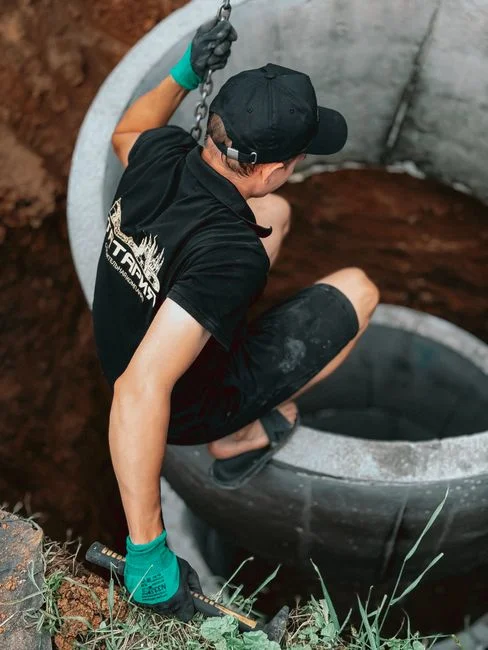
Installing treatment equipment does not establish a safely operated or legally commissioned system. The 2018 Kigali assessment used RS 110:2017 as its performance reference and found low sustainability in the technical, socioeconomic, legal, and institutional dimensions of the collective systems examined. The project owner must confirm the law, permit conditions, and authority requirements current in 2026 rather than treating that 2018 reference as the complete regulatory pathway.
Require dedicated, accessible influent and effluent sampling points for each treatment unit. The 2018 study reports that most evaluated plants lacked designed sampling points at treatment-unit inlets and outlets, which complicated unit-by-unit monitoring. A workable plan should also define sampling frequency, analytical parameters, laboratory arrangements, result review, and corrective-action ownership.
Observed failures in the 2018 study provide specific commissioning checks: insufficient aeration, low residence time in final settling tanks, high fecal coliform, high suspended solids, and irregular desludging. Procurement should therefore cover routine inspection, biological-process control, sludge removal, membrane cleaning where applicable, energy monitoring, and a named local operating responsibility.
Residuals are a lifecycle obligation. The 2018 study reports that only 2% of households emptied pit-latrine sludge, and that the small quantity emptied was not treated before open dumping. A residential project must identify the residual-generating rate, removal interval, transport method, receiving site, treatment or disposal evidence, and responsible operator. The plate-frame filter press reference is relevant only where a verified residual-dewatering requirement justifies that equipment scope.
For a buried WSZ installation, verify underground siting, maintenance access, groundwater conditions, and the consequences of leakage or power interruption with the supplier and local civil designer. These items belong in the site-specific design, not only in the equipment manual.
Use a Practical Procurement and Acceptance Framework
A defensible selection process converts site evidence into written requirements, compares lifecycle obligations, and withholds final acceptance until the installed system performs.
| Stage | Required buyer action | Decision output |
|---|---|---|
| 1. Site and effluent brief | Document flow, wastewater quality, land, receiving point, reuse objective, power reliability, operating skill, residual route, and approval pathway | Approved basis of design |
| 2. Market engagement | Request process calculations, equipment drawings, controls narrative, O&M plan, maintenance schedule, spare-parts list, installation requirements, and site-specific training scope | Comparable technical and commercial submissions |
| 3. Lifecycle comparison | Compare equipment, civil works, installation, power, chemicals if used, routine maintenance, sludge handling, monitoring, call-outs, and eventual replacement or refurbishment | Total-cost comparison with exclusions identified |
| 4. Installation and commissioning | Require installation and hydraulic testing, representative influent and effluent sampling, process-control verification, disinfection verification where applicable, and operator training | Conditional acceptance record |
| 5. Operations handover | Confirm the operating schedule, monitoring points, spares, local contacts, residual route, escalation process, and recordkeeping | Accepted operating and maintenance system |
Request guaranteed process performance and the calculation basis behind it. A broad product claim is not enough: the 2018 Kigali study demonstrates that technical, institutional, socioeconomic, and management failures can outweigh the presence of treatment equipment. The project should also define who can respond locally when the performance guarantee is at risk.
Acceptance should be conditional and documented. A supplier should not receive final acceptance merely because the unit starts. The commissioning record should show that it handles representative flow and influent, controls the biological process, removes solids, applies disinfection where required, provides usable sampling points, and can be operated by the assigned local team. The domestic sewage treatment buyer’s guide offers a useful structure for comparing technical submissions and acceptance evidence.
Frequently Asked Questions
Which treatment option is most suitable for a residential estate in Rwanda?
Select the option after documenting flow, wastewater quality, land, groundwater, receiving route, reuse objective, power reliability, and local operating capacity. A packaged A/O system suits clusters needing compact biological treatment; an MBR requires stronger justification because of its additional membrane, controls, maintenance, and solids-handling complexity.
How should a residential wastewater treatment plant be sized?
Start with occupancy, verified water use, a justified return-flow factor, and allowances for infiltration and relevant peak conditions. The 2010 Kigali water-consumption and return-flow values provide category-specific comparison points, not automatic design values. Sample the wastewater and confirm the required effluent quality before finalizing capacity.
What should buyers check about cost and budget?
No defensible project price can be given without the wastewater profile, treatment capacity, site works, discharge requirements, and residual-handling scope. Request a line-by-line total-cost comparison covering equipment, civil works, installation, power, chemicals where used, maintenance, monitoring, sludge handling, call-outs, and replacement or refurbishment. A low equipment quotation that omits these items is not a comparable offer.
How should a supplier be selected and the system accepted?
Request verified process data, site-specific calculations and drawings, performance guarantees, O&M documentation, local support, spare-parts arrangements, training, and measurable acceptance criteria. Do not rank suppliers from catalogue specifications alone. Final acceptance should depend on installed-system testing, representative sampling, control verification, disinfection verification where applicable, and operator training. Additional local and project-specific guidance is available through the Rwanda wastewater treatment project references.