What Changes When GlobalFoundries Acquires a Vietnamese Plant?
What wastewater requirements apply when GlobalFoundries acquires a plant in Vietnam? The answer depends on the site, acquiring entity, receiving sewer, and transferred process; no supplied source confirms a GlobalFoundries Vietnam transaction or Vietnam-specific numerical effluent limits. The buyer must verify permit ownership, characterize fluoride, metals, pH, suspended solids, oil and grease, and other contaminants, then align treatment with the authorized discharge route.
GlobalFoundries announced on November 17, 2025 that it was acquiring Advanced Micro Foundry, a silicon-photonics foundry in Singapore. That company announcement confirms Asian acquisition activity and a broader manufacturing footprint, but it does not identify a Vietnamese plant transaction, a Vietnamese wastewater permit, or any Vietnam-specific approval condition. The acquisition premise therefore remains a diligence scenario, not an established fact.
The legal path depends on transaction structure:
- Asset purchase: the buyer may acquire physical plant and contracts, but a permit does not move merely because equipment changes hands. The permit holder, land rights, contracts, and regulated-discharger identity must be checked separately.
- Share purchase: the legal entity may remain unchanged, but the operating entity, management, production plans, and compliance performance can still change.
- Merger: the surviving entity may need to address permit-holder identity and inherited obligations.
- Change of operating entity: this can alter who owns the discharge authorization, performs monitoring, and carries pre-closing violations.
Use a six-link acquisition chain: legal transfer or amendment; process and wastewater characterization; treatment adequacy; receiving-sewer or surface-water authorization; monitoring transfer; and contractual allocation of legacy violations. Each link needs an owner and documentary deliverable before closing.
Land and administrative records also require review. A 2023 Growing Science study of State-managed land in Vietnam explains that land is uniformly managed by the State, with users receiving allocation or leases, and that land acquisition can involve compensation, support, and resettlement. Those land procedures are not wastewater rules, but they are a prompt to reconcile the site’s land documents with the transaction and identify unresolved local issues. For a comparable acquisition structure, see the India plant-acquisition wastewater requirements.
Build the Permit and Liability Due-Diligence File
The permit file must establish whether authorization can be transferred, must be amended, or requires a new approval, because the permit holder may not match the proposed operator after closing.
For every site in scope, request current and historical wastewater permits, environmental approvals, industrial-zone sewer pretreatment approvals, stormwater plans, discharge-point maps, sampling plans, operating procedures, and enforcement correspondence. Obtain recent discharge-monitoring reports, laboratory data, chemical inventories, process-flow diagrams, flow records, sludge and hazardous-waste records, and government inspection reports. These are operating records, not just corporate filings: they show whether the permitted system matches actual production.
Cross-check the permit holder against land records, operating-company records, sewer agreements, land leases, equipment ownership, and the proposed purchase agreement. Flag every mismatch. Do not assume that an asset sale, a share sale, or a corporate reorganization automatically transfers environmental authorization.
The Mexico plant-acquisition wastewater requirements and the Arizona plant-acquisition wastewater requirements provide useful transaction comparisons, but their jurisdictional rules must not be imported into Vietnam. The Texas comparator likewise separates an ownership-only change from a process or flow change. Vietnam counsel must determine the applicable rule under the current legal instruments for the specific site.
Table: acquisition due-diligence decision file
| Diligence item | Evidence to obtain | Decision it supports |
|---|---|---|
| Legal identity and permit ownership | Permit, land documents, operating-company records, sewer agreement, transaction structure | Transfer, amendment, new approval, or continued operation by the existing holder |
| Actual wastewater profile | Monitoring reports, laboratory data, flow records, process-flow diagrams, chemical inventories | Treatment adequacy and capacity reserve |
| Receiving-route authorization | Sewer pretreatment rules, direct-discharge authorization, discharge maps, current correspondence | Applicable discharge limits, monitoring points, and approval path |
| Open compliance matters | Violations, consent orders, pending modifications, exceedances, inspections, third-party claims | Closing condition, indemnity, remediation, or escrow |
| Operational readiness | Equipment condition, chemical supply, control logic, operator competence, sludge route | Commissioning scope and post-closing capital plan |
Require disclosure of unresolved notices of violation, consent orders, pending permit modifications, legacy exceedances, and third-party claims. Known liabilities can be addressed through specific representations, indemnities, remediation obligations, or an environmental escrow. An escrow allocates financial risk; it does not authorize a discharge or cure a permit defect.
The supplied research contains no Vietnam-specific filing deadline or government form for a permit transfer. The integration calendar should not be built from the Texas comparator’s 30-day or 30–90-day review periods. Vietnamese counsel must identify the current instrument, authority, submission, and effective date applicable to the actual site.
Characterize Wastewater Before Choosing a Treatment Train

Semiconductor treatment must be selected from measured wastewater properties, because streams with similar flow rates can impose different treatment requirements.
Segregate at source: fluoride-bearing acid streams; alkaline and developer streams; metals-bearing process water; CMP slurry and colloidal wastewater; oil and solvent residues; equipment rinse; cooling and blowdown; and sanitary sewage. Characterize pH, fluoride, copper and other metals, suspended solids, oil and grease, chemical oxygen demand, and pollutants identified from process chemistry. The final analytical list must follow the current permit, sewer rules, reuse specification, and representative operating data.
Do not use the Texas comparator’s copper, lead, zinc, arsenic, and fluoride figures as Vietnam limits. They belong to another jurisdiction and only illustrate why industry labels cannot replace site-specific limits. For the acquisition analysis, request the current Vietnamese site and sector instruments from counsel and the competent authorities; do not insert unverified concentration values into a design basis.
Table: treatment selection by stream and evidence
| Wastewater or objective | Primary concern | Evaluation point | Relevant equipment evidence |
|---|---|---|---|
| Fluoride-bearing acid or oxide-etch waste | Fluoride and acidity | Measure loading, variability, precipitation chemistry, and residual disposal route | Site-specific chemical and separation design required |
| CMP slurry and colloidal waste | Colloidal solids, suspended solids, and associated metals | Test settling behavior, solids concentration, and chemical conditioning | DAF system for solids, oil and colloidal wastewater is offered in 4–300 m³/h across 13 standard models, according to the HydropureWater product catalog |
| Organic-bearing process water | Biological solids separation and polishing | Establish biodegradability, toxicity, hydraulic peaks, and required effluent quality | The HydropureWater integrated MBR wastewater treatment system is specified at 10–2,000 m³/day, with effluent below 1 μm filtration and a stated footprint 60% smaller than conventional systems |
| High-quality industrial reuse | Solids, dissolved salts, and application-specific water quality | Define the reuse application, feed chemistry, recovery target, pretreatment, and validation method | The HydropureWater industrial RO catalog states permeate recovery rates of up to 95% for semiconductor and other industrial applications |
DAF should be evaluated where suspended solids, oil and grease, or colloidal matter must be removed before downstream treatment. MBR should be evaluated for biological solids separation and polishing, but biological treatability must first be demonstrated. RO may support a defined high-quality reuse stream after appropriate solids, metals, and organics pretreatment; it is not a substitute for upstream contaminant removal.
Make the final equipment decision from representative influent testing, hydraulic peaks, chemical inventories, reuse targets, operator capability, sludge-disposal routes, and the applicable Vietnamese discharge authorization. Stream names alone are not a design basis. A broader technical reference is the Silicon Wafer Wastewater ZLD: 2026 Engineering Blueprint.
Match the Discharge Route to the Correct Approval
A treatment package cannot be approved until the receiving route and responsible authority are identified, because each route creates a different authorization and evidence set.
Create separate workstreams for direct surface-water discharge, indirect discharge to an industrial-zone sewer, internal reuse, and sanitary sewage treatment. One treatment train may serve several routes, but the monitoring, reporting, and contractual obligations remain distinct.
For indirect discharge, obtain the current industrial-user or sewer-pretreatment rules from the receiving authority. Request local discharge limits, prohibited uses, monitoring and reporting duties, sampling locations, analytical methods, inspection access, surcharge or cost provisions, and industry-specific technical requirements. Confirm whether the plant is classified as an industrial user and whether the transaction changes that status.
For direct discharge, confirm the applicable surface-water permit, effluent limits, monitoring points, receiving-water or ambient conditions, and whether the proposed ownership or process change requires amendment or a new permit. The Malaysia plant-acquisition wastewater requirements offer a transaction-oriented comparison, not Vietnamese legal authority.
For reuse, state the intended application—such as cooling, rinsing, process makeup, or another industrial use—and define the water-quality specification, treatment train, validation protocol, sampling frequency, and responsible operator. Internal reuse may still require documented approval; it is not exempt merely because no wastewater leaves the site.
Table: discharge-route evidence and approvals
The supplied research does not identify Vietnam’s current sector-specific effluent limits. Name the documents to request rather than state unverified concentrations or deadlines.
The 2023 Growing Science land study also supports an early administrative-risk review. In Bac Ninh, land-expropriation complaints represented 61.27% of complaints during 2016–2020, according to the study. That figure concerns land administration, not wastewater compliance, but it demonstrates the need to identify unresolved local administrative and community matters early. Such issues should be treated as transaction and stakeholder diligence, not converted into assumed wastewater liabilities.
Turn Permit Conditions into a Closing and Day-One Plan
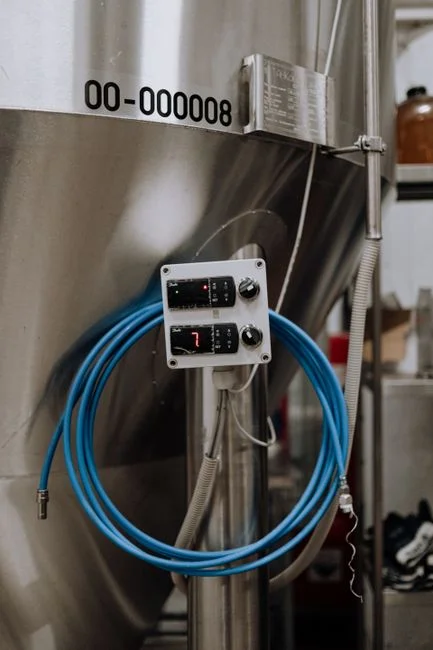
Closing should be governed by documented permit readiness, verified treatment performance, and an assigned compliance calendar rather than an assumed administrative transfer.
Assign named owners for permit transfer or amendment, wastewater characterization, pretreatment, reuse, monitoring, sludge and waste, stormwater, and equipment procurement. Require a pre-closing evidence package containing permit status, complete monitoring history, open compliance matters, process-change assumptions, and a signed list of transfer or amendment actions.
Where the existing treatment system is expected to continue operating, verify its condition and hydraulic reserve before closing. Confirm chemical supply, control logic, operator competence, sludge route, spare parts, calibration status, and compliance history. If treatment is being transferred, incomplete operating records should be treated as an unresolved condition rather than a price adjustment without technical review.
Table: acquisition and operating sequence
Commissioning should use representative batches and worst-case influent conditions. Acceptance criteria must come from the issued authorization and sewer agreement, not generic equipment claims. Transfer sampling points, chain-of-custody procedures, laboratory contracts, monitoring calendars, reporting templates, and regulator correspondence before any production change.
Do not reuse the Texas comparison’s 30-day or 30–90-day review periods as Vietnam milestones. Build the calendar only after Vietnamese counsel and the environmental consultant confirm the applicable procedure, authority, forms, effective date, and consequences of a missed action.
Frequently Asked Questions
Does a Vietnam wastewater permit transfer automatically when the plant is bought?
Not necessarily. The buyer must check the permit holder, land rights, operating entity, sewer agreement, and transaction structure. Vietnamese counsel should determine whether the applicable authorization is transferable, requires amendment, or needs a new approval.
What should be included in a preliminary wastewater equipment budget?
Request measured flow, contaminant loading, available footprint, treatment objectives, chemical consumption, sludge handling, monitoring requirements, and discharge or reuse constraints. The supplier should then price the treatment train and operating costs against those inputs; do not use a generic flow estimate as the budget basis.
How should a treatment supplier be selected and tested?
Require a proposal that demonstrates treatment of the site’s representative wastewater. Ask the supplier to define acceptance tests, guarantee conditions, operating limits, chemical consumption, maintenance, sludge handling, and local service support. Equipment specifications alone do not establish compliance performance.
What is the difference between MBR and RO in a semiconductor treatment train?
An MBR combines biological treatment with membrane-based solids separation and can provide clarification and polishing. RO is a final membrane separation step for producing low-solute permeate, but it requires suitable upstream pretreatment. RO should not replace removal of solids, metals, or organics.
Can an environmental escrow replace regulatory approval?
No. An escrow or specific indemnity can allocate known financial exposure, but it does not authorize a discharge, amend a permit, or remediate treatment equipment. The transaction still requires the correct regulatory pathway, documented technical compliance, and any necessary treatment upgrade.