Silicon wafer wastewater zero liquid discharge (ZLD) systems achieve 99.9% water recovery by combining pretreatment (DAF for TSS/FOG removal), reverse osmosis (RO) for 90–95% TDS reduction, and thermal evaporation/crystallization to eliminate liquid waste. For example, a 50 m³/h wafer fab ZLD system can recover 47.5 m³/h of ultrapure water while incinerating the remaining 2.5 m³/h of solid waste. CapEx ranges from $2.5M–$5M, with OPEX of $0.80–$1.50/m³ treated, depending on energy source and pretreatment needs (data from 2025 industry benchmarks).
Why Silicon Wafer Fabs Are Adopting ZLD: Regulatory, Cost, and Sustainability Drivers
China’s GB 8978-1996 standard enforces strict discharge limits for semiconductor facilities, specifically targeting hydrofluoric acid (HF) at concentrations below 10 mg/L, Total Dissolved Solids (TDS) under 1,000 mg/L, and heavy metals such as copper and nickel below 0.5 mg/L. These regulatory ceilings, combined with increasing environmental audits, leave wafer fabs with two choices: invest in high-efficiency treatment or face escalating daily fines and potential operational suspension. In regions like Singapore, where the Public Utilities Board (PUB) manages water as a strategic resource, the semiconductor sector accounts for approximately 20% of non-domestic water demand. While ZLD is not always a legal mandate in every jurisdiction, the adoption of regulatory compliance for silicon wafer wastewater often results in preferential permitting and significant tax incentives.
Economic drivers are equally compelling. A typical 200 mm wafer fab located in Suzhou recently transitioned to a ZLD model, resulting in a 40% reduction in raw water procurement costs and the avoidance of $1.2M in annual discharge fees. This transition is becoming a global necessity as water scarcity intensifies in semiconductor hubs. In Arizona and Taiwan, fabs are increasingly required to prove 90%+ water recycling rates to secure water rights for site expansions. For instance, recent industrial project cancellations in water-stressed regions highlight that securing a "social license to operate" is now tied directly to a facility's ability to eliminate liquid waste discharge.
The shift toward ZLD is also a response to the technical limitations of conventional treatment. As fabs strive for higher water recovery through standard recycling, the concentration of TDS in the reject stream naturally rises. When these concentrations exceed local sewer limits, a thermal ZLD step becomes the only viable path to maintaining production volume without violating environmental permits.
Silicon Wafer Wastewater ZLD Process Design: Step-by-Step Engineering Blueprint
Integrated ZLD systems for wafer fabrication require a four-stage process to manage the high silica and fluoride loads that typically foul standard industrial membranes. The design must balance mechanical robustness with energy efficiency to ensure the system handles the 24/7 load of a high-volume fab.
- Step 1: Pretreatment – High-efficiency DAF systems for silicon wafer wastewater pretreatment remove up to 95% of Total Suspended Solids (TSS) and residual Fats, Oils, and Grease (FOG). During this stage, chemical coagulation and flocculation are used to precipitate colloidal silica, which is the primary cause of downstream membrane scaling.
- Step 2: Primary Reverse Osmosis (RO) – Utilizing RO systems for TDS removal in ZLD processes, the system reduces the bulk TDS load by 90–95%. To prevent silica scaling at high recovery rates, the pH is typically adjusted to >10 or antiscalants are dosed precisely.
- Step 3: Evaporation – Mechanical Vapor Recompression (MVR) evaporators take the RO concentrate and reduce its volume by an additional 80%. These systems are highly efficient, consuming between 0.1 and 0.3 kWh per liter of water evaporated, significantly lower than traditional multi-effect evaporators.
- Step 4: Crystallization – The final brine is processed in a forced-circulation crystallizer. This stage converts the liquid into solid salts (primarily calcium sulfate and sodium chloride) with a residual moisture content of less than 5%, suitable for landfill or specialized incineration.
| Process Stage | Primary Equipment | Target Contaminants | Recovery/Removal Rate |
|---|---|---|---|
| Pretreatment | DAF | TSS, FOG, Colloidal Silica | 95% TSS Removal |
| Concentration | Industrial RO | TDS, Boron, Fluoride | 90-95% Water Recovery |
| Thermal Volume Reduction | MVR Evaporator | Concentrated Brine | 80% Volume Reduction |
| Solidification | Crystallizer | Residual Salts | 100% Liquid Elimination |
Contaminant-Specific Treatment: How to Remove HF, TDS, and Heavy Metals from Wafer Wastewater
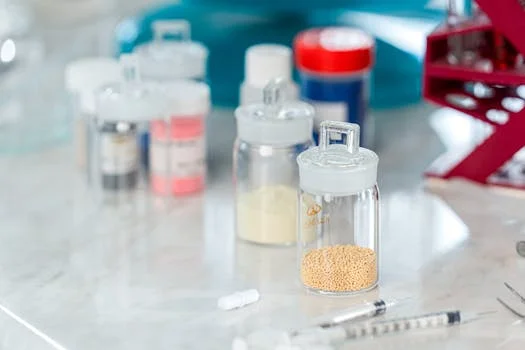
Hydrofluoric acid (HF) accounts for more than 40% of the hazardous liquid waste generated in silicon wafer etching and cleaning cycles. Effective ZLD design requires specialized chemical dosing for HF neutralization and silica control. By dosing calcium hydroxide (lime) or caustic soda to achieve a pH between 8.5 and 9.0, fluoride ions precipitate as calcium fluoride (CaF₂). This precipitate is then efficiently separated using DAF or high-rate sedimentation, achieving removal rates exceeding 99.9%.
Total Dissolved Solids (TDS) management in wafer fabs is complicated by the presence of boron and silica. While standard RO membranes are effective for monovalent ions, boron often requires specialized boron-selective resins or a double-pass RO configuration with pH elevation to ensure the permeate meets ultrapure water (UPW) feed standards. Heavy metals like Copper (Cu), Nickel (Ni), and Chromium (Cr) are typically handled via hydroxide precipitation. However, for fabs producing advanced nodes with complex chelating agents, electrocoagulation or sulfide precipitation may be required to reach the <0.5 mg/L limits required by GB 8978-1996.
| Contaminant | Treatment Mechanism | Removal Efficiency | Key Parameter |
|---|---|---|---|
| Fluoride (HF) | Calcium Precipitation | >99.9% | pH 8.5–9.0 |
| Silica (SiO₂) | Adsorption/Coagulation | 90–95% | Mg:Si Ratio 3:1 |
| Heavy Metals | Hydroxide Precipitation | 99% | Sulfide Dosing (if chelated) |
| TDS | RO + Evaporation | 99.9% (System Total) | Membrane Flux 12–15 GFD |
ZLD vs. MLD vs. Conventional Treatment: Cost, Recovery, and Compliance Comparison
Selecting between ZLD, Minimum Liquid Discharge (MLD), and conventional treatment involves a trade-off between a 5x increase in CapEx and the total elimination of environmental discharge liability. Conventional treatment, which involves pH neutralization and solids removal followed by sewer discharge, has the lowest CapEx ($500K–$1M for 50 m³/h) but offers zero water recovery and leaves the fab vulnerable to changing local discharge limits. MLD systems bridge the gap by recovering 90–95% of water through advanced RO and ultrafiltration, but they still produce a concentrated liquid brine that must be hauled away or incinerated at high cost.
ZLD systems represent the highest tier of ZLD system design for electronics wastewater, ensuring 99.9% recovery. While the CapEx is significantly higher ($2.5M–$5M), the long-term ROI is driven by the elimination of discharge permits and the reduction of raw water intake. ZLD is the preferred choice for greenfield sites in water-scarce regions like Arizona or Singapore, whereas MLD is often a strategic fit for brownfield expansions where existing discharge permits are already at their volumetric limit.
| Feature | Conventional | MLD (Min. Liquid Discharge) | ZLD (Zero Liquid Discharge) |
|---|---|---|---|
| Water Recovery | 0–50% | 90–95% | 99.9% |
| CapEx (50 m³/h) | $0.5M–$1M | $1M–$2M | $2.5M–$5M |
| OPEX ($/m³) | $0.10–$0.30 | $0.40–$0.80 | $0.80–$1.50 |
| Compliance Risk | High (Strict Limits) | Medium (Brine Disposal) | Zero (No Discharge) |
ZLD System Cost Breakdown: CapEx, OPEX, and ROI Calculator for Wafer Fabs
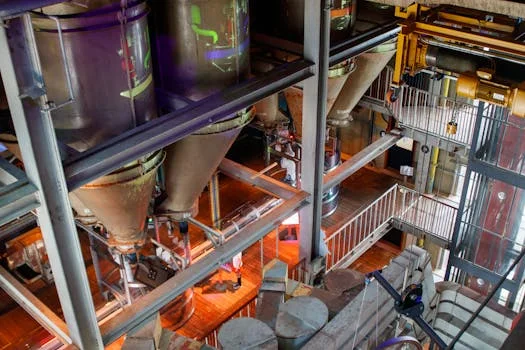
The total cost of ownership for a 50 m³/h silicon wafer ZLD system is dominated by thermal evaporation energy costs, which represent approximately 40-50% of the total annual OPEX. For a standard 50 m³/h installation, the CapEx breakdown includes approximately $1M–$2M for the MVR evaporator and crystallizer units, $500K–$1M for high-pressure RO systems, and $300K–$500K for the necessary automation and PLC integration. Pretreatment equipment, including DAF and chemical dosing skids, adds another $200K–$400K.
OPEX is calculated based on energy consumption, chemical reagents (antiscalants, lime, acid), labor, and maintenance. Current 2025 benchmarks suggest a total OPEX of $0.60–$1.50 per cubic meter of treated water. The ROI for such systems is typically achieved within 2.5 to 5 years. The formula for justification is: ROI (Years) = CapEx / (Annual Water Savings + Avoided Discharge Fees + Tax Incentives - Annual OPEX). For a fab in a high-cost water region, the annual savings from water recovery alone can exceed $1M, making the ZLD investment a sound financial decision.
| Cost Component | Estimated Cost (50 m³/h) | % of Total Investment |
|---|---|---|
| Thermal (Evaporator/Crystallizer) | $1.5M - $3.0M | 60% |
| Membrane Systems (RO/UF) | $0.5M - $1.0M | 20% |
| Pretreatment & Dosing | $0.2M - $0.5M | 10% |
| Automation & Installation | $0.3M - $0.5M | 10% |
Common ZLD Failures and How to Prevent Them: Troubleshooting Guide for Wafer Fabs
Membrane fouling and crystallizer scaling account for over 70% of unplanned downtime in semiconductor ZLD operations, often stemming from inadequate silica removal during pretreatment. When silica levels in the RO feed exceed 150 mg/L, rapid scaling occurs, leading to a drop in permeate flow and a sharp increase in differential pressure. To prevent this, operators must maintain a strict Clean-in-Place (CIP) schedule using citric acid or specialized alkaline cleaners. Understanding the RO process engineering for industrial wastewater is critical for diagnosing whether a flow drop is due to organic fouling or inorganic scaling.
Crystallizer scaling is another common failure point, usually manifesting as reduced heat transfer efficiency and increased steam or electricity consumption. This is typically caused by improper pH control or the accumulation of calcium sulfate on the heat exchanger tubes. Prevention requires automated acid washing (using HCl or H₂SO₄) every 500–1,000 operating hours. If TDS exceedances occur in the final permeate (e.g., >100 mg/L), it usually indicates membrane degradation or a "bypass" in the RO seal. Regular conductivity monitoring at each vessel stage allows operators to isolate and replace failing membranes before they impact the entire system's recovery rate.
"Proactive monitoring of the Magnesium-to-Silica ratio in the pretreatment stage is the single most effective way to extend the lifespan of ZLD evaporator heat exchangers." — HydropureWater Engineering Field Note, 2025.
Frequently Asked Questions
What is the difference between ZLD and MLD for silicon wafer wastewater?
ZLD (Zero Liquid Discharge) eliminates all liquid waste, achieving 99.9% water recovery through thermal evaporation. MLD (Minimum Liquid Discharge) recovers 90–95% of water using membranes but produces a concentrated brine that requires external disposal. ZLD is used when discharge permits are unavailable or limits like China GB 8978-1996 are too strict.
How much does a silicon wafer wastewater ZLD system cost?
For a 50 m³/h system, CapEx ranges from $2.5M to $5M. OPEX typically falls between $0.80 and $1.50 per cubic meter. The payback period is usually 2 to 5 years, depending on local water costs and discharge fees.
What are the key contaminants in silicon wafer wastewater, and how are they removed?
The primary contaminants are hydrofluoric acid (removed via lime precipitation), silica (managed through chemical dosing and DAF), and TDS (removed via RO and evaporation). Heavy metals like copper and nickel are precipitated as hydroxides.
Can ZLD systems handle high-silica wastewater from wafer fabs?
Yes, but they require specialized pretreatment. By dosing magnesium chloride or using specific antiscalants, silica can be reduced to levels that prevent fouling of the RO membranes and scaling in the MVR evaporators.
What are the regulatory standards for silicon wafer wastewater discharge in China?
The primary standard is GB 8978-1996, which limits HF to <10 mg/L, TDS to <1,000 mg/L, and heavy metals to <0.5 mg/L. ZLD systems ensure 100% compliance by removing the discharge point entirely.