Why GaN Wastewater Reclaim is a 2025 Priority for Semiconductor Fabs
Gallium nitride (GaN) wastewater reclaim systems in 2025 achieve 99.8% water recovery and 95%+ gallium extraction using hybrid zero liquid discharge (ZLD) designs. Leading fabs report $2.1M/year savings from reduced freshwater intake and gallium resale, with payback periods under 36 months for systems treating 50 m³/h. Key technologies include mechanochemical pretreatment (30% lower energy than hydrometallurgy), nanofiltration with Desferrioxamine B (92% gallium selectivity), and automated chemical dosing for pH control (6.5–7.2 range critical for membrane longevity).
The urgency for implementing advanced reclaim systems is driven by a convergence of resource scarcity and aggressive regulatory tightening. Global GaN production reached 520 tons in 2024, with approximately 70% of this volume channeled into power electronics and LED manufacturing (USGS 2025). As production scales, the environmental footprint of GaN fabrication has come under intense scrutiny. China’s GB 31573-2025 standards have reduced the gallium discharge limit to 0.5 mg/L, a 50% reduction from 2020 levels, while the US EPA has proposed a 0.3 mg/L limit for 2026. For a typical 100 mm wafer fab generating 12–18 m³/day of wastewater, gallium concentrations often range between 50 and 200 mg/L (per 2024 fab audit data). At current global discharge standards for GaN wastewater, simple neutralization and discharge are no longer economically or legally viable.
Beyond compliance, the volatility of the gallium market—with 2025 prices hovering near $1,200/kg—presents a significant recovery incentive. Industrial water reuse benchmarks for 2025 indicate that integrated reclaim systems can reduce freshwater intake by 85%. the resale of recovered gallium as high-purity sludge or refined metal can offset 20–30% of the total wastewater treatment OPEX. This transition from "waste treatment" to "resource recovery" is the cornerstone of 2025 semiconductor EHS strategy.
GaN Wastewater Composition: What’s in Your Effluent?
Effective system design begins with a granular understanding of gallium speciation and co-contaminant interference. GaN wastewater is characterized by its high acidity and complex metal profile. According to a 2023 HZDR study, gallium in semiconductor effluent typically exists in three primary states: 60% as free Ga³⁺ ions, 30% as Ga(OH)₄⁻ (depending on local pH fluctuations), and 10% as colloidal GaN particles resulting from grinding and polishing processes. This distribution is critical because Ga³⁺ binds effectively to peptide-based resins, whereas Ga(OH)₄⁻ requires specific pH adjustments to be captured by membrane filtration systems.
The presence of co-contaminants further complicates the recovery process. Acidic etching stages introduce 10–30 mg/L of fluoride and 5–15 mg/L of arsenic, particularly in fabs utilizing GaAs substrates alongside GaN. High salinity, often exceeding 800 mg/L TDS, can lead to osmotic pressure challenges in standard RO systems. Engineers must account for these variables when selecting pretreatment modules to prevent premature membrane scaling or poisoning of selective resins.
| Parameter | Typical Range (Raw Effluent) | Speciation/Form | Impact on Reclaim System |
|---|---|---|---|
| Gallium (Ga) | 50–200 mg/L | Ga³⁺, Ga(OH)₄⁻, colloidal GaN | Primary recovery target; high market value. |
| Ammonia (NH₃-N) | 10–50 mg/L | Dissolved gas/ions | Requires stripping or biological nitrification. |
| Total Dissolved Solids (TDS) | 200–800 mg/L | Sulfates, Chlorides | Determines RO recovery limits and ZLD energy. |
| Fluoride (F⁻) | 10–30 mg/L | Dissolved ions | Corrosive to glass/silica; requires precipitation. |
| pH | 2.0–4.0 | Acidic | Requires PLC-controlled dosing for GaN wastewater pH adjustment. |
4 Gallium Recovery Methods Compared: Efficiency, Cost, and Scalability
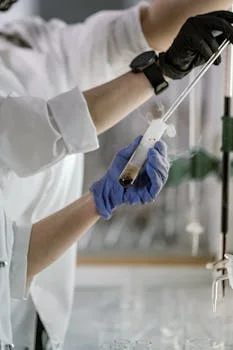
Selecting a recovery method requires balancing the required purity of the recovered gallium against the operational complexity of the system. In 2025, four primary technologies dominate the industrial landscape. Peptide-based biosorption has emerged as a high-selectivity option for lower flow rates (under 50 m³/h). Using "biological fishing rods" developed by HZDR, this method achieves 95% recovery with an OPEX of approximately $0.80/m³, though it requires a 24-hour contact time which may necessitate large buffer tanks.
For larger-scale operations, pressurized leaching using hydrochloric acid (HCl) remains the industry standard for efficiency. MDPI 2021 data suggests that while leaching achieves 98% recovery, the $1.20/m³ OPEX and the handling of concentrated acids increase safety and CAPEX requirements. A newer alternative is the mechanochemical approach, which utilizes mechanical activation to disrupt the GaN lattice at 30% lower energy than traditional hydrometallurgy (RSC 2025). Finally, nanofiltration (NF) assisted by Desferrioxamine B (DFOB) provides a membrane-based solution that combines 92% gallium selectivity with 99% water recovery, making it ideal for fabs prioritizing water reclaim over high-purity metal extraction.
| Recovery Method | Ga Recovery Rate | OPEX ($/m³) | Scalability (m³/h) | Key Advantage |
|---|---|---|---|---|
| Peptide Biosorption | 95% | $0.80 | <50 | Highest selectivity for low concentrations. |
| Pressurized Leaching | 98% | $1.20 | Up to 300 | Fastest kinetics for high-volume fabs. |
| Mechanochemical | 90% | $0.60 | 50–150 | Lowest energy consumption (RSC 2025). |
| NF with DFOB | 92% | $1.50 | 10–200 | Simultaneous water and metal recovery. |
CAPEX for these systems typically ranges from $500k to $2M for a 50 m³/h installation, depending on the degree of automation and the purity of the final gallium byproduct. Fabs often integrate PLC-controlled dosing for GaN wastewater pH adjustment to ensure the chemical environment remains optimal for these recovery reactions.
Hybrid ZLD System Design: Engineering Specs for 99.8% Recovery
A 2025-standard hybrid ZLD system for GaN wastewater utilizes a multi-stage approach to separate gallium from the water stream while maximizing the purity of both. The process begins with a mechanochemical reactor operating at 300 rpm with a 2-hour retention time. This stage is critical for reducing gallium particle size to below 10 μm, significantly increasing the surface area for subsequent chemical capture. Following activation, a DAF system for GaN wastewater pretreatment is employed to remove 95% of Total Suspended Solids (TSS) using 30–50 μm micro-bubbles, which float colloidal GaN to the surface for skimming.
The secondary treatment phase focuses on ionic recovery. Nanofiltration with DFOB-modified membranes (0.5–1.0 nm pores) provides 92% rejection of gallium ions while allowing monovalent salts to pass, preventing osmotic buildup. The permeate then enters an RO systems for GaN wastewater reclaim, which achieves 99% TDS reduction and a 75% water recovery rate per pass. To reach the 99.8% recovery threshold, the RO concentrate is processed through a mechanical vapor recompression (MVR) evaporator or a high-pressure RO stage.
Finally, the gallium-rich sludge from the DAF and NF stages is processed through a high-efficiency filter press for gallium-rich sludge. This dewaters the solids to 35% concentration, making the material ready for transport to a refinery. Precise pH control is the "linchpin" of this design: pretreatment must occur at pH 3.5 to keep gallium in solution, DAF at pH 6.8 for optimal flocculation, and NF at pH 7.2 to protect membrane integrity.
| System Component | Engineering Specification | Target Metric |
|---|---|---|
| Mechanochemical Reactor | 300 rpm / 120 min retention | Particle size <10 μm |
| DAF Unit | 30–50 μm bubble size | 95% TSS removal |
| Nanofiltration (NF) | 0.5–1.0 nm pore size (DFOB) | 92% Ga selectivity |
| Reverse Osmosis (RO) | High-rejection polyamide | 99.8% Water reclaim (with MVR) |
| Filter Press | Plate-and-frame (high pressure) | 35% Sludge solids content |
Cost Breakdown: CAPEX, OPEX, and ROI for GaN Wastewater Reclaim

For procurement teams, the justification for a hybrid ZLD system rests on its long-term ROI rather than initial CAPEX. A 50 m³/h system currently requires a CAPEX investment of $1.8M to $2.5M, inclusive of installation and commissioning. OPEX typically ranges from $0.90 to $1.40 per cubic meter of treated water. This operational cost is distributed across energy (40%), chemical reagents (30%), labor (20%), and routine maintenance (10%).
The financial return is driven by two primary streams: gallium resale and freshwater savings. With 2025 gallium market prices for 99.99% purity sludge ranging from $800 to $1,200/kg, a fab processing 100 m³/day at 100 mg/L Ga can recover approximately 10kg of gallium daily. This translates to over $3.6M in gross annual revenue from metal recovery alone. When combined with freshwater savings of $0.50–$1.20/m³, the payback period is significantly compressed. A 2024 case study of a 100 m³/h system in Taiwan demonstrated a 28-month payback period, well within the typical 36-month threshold for semiconductor capital equipment.
| Cost Category | Estimated Value (50 m³/h System) | Annual Impact (USD) |
|---|---|---|
| Total CAPEX | $1,800,000 – $2,500,000 | (Amortized over 10 years) |
| Annual OPEX | $1.15/m³ (Average) | $503,700 |
| Gallium Recovery Value | $1,000/kg @ 95% recovery | +$1,733,000 |
| Water Savings | $0.85/m³ @ 99.8% recovery | +$372,000 |
| Net Annual Benefit | -- | +$1,601,300 |
This model is highly sensitive to gallium concentration. Fabs with lower concentrations (<20 mg/L) may require more efficient high-salinity wastewater treatment for semiconductor fabs to concentrate the stream before recovery becomes profitable.
Compliance and Discharge Standards: China GB vs. US EPA vs. EU Limits
Regulatory compliance remains the primary "floor" for wastewater system performance. China’s GB 31573-2025 is currently the most stringent implemented standard, mandating gallium levels below 0.5 mg/L and fluoride below 10 mg/L. The US EPA is expected to follow in 2026 with a 0.3 mg/L gallium limit, while the EU Industrial Emissions Directive (IED) has already moved toward a 0.2 mg/L limit for the semiconductor sector in specific sensitive regions. Non-compliance in China can now result in fines up to $150k per incident under 2025 environmental laws.
Monitoring these levels requires advanced analytical techniques. Standard ICP-MS (Inductively Coupled Plasma Mass Spectrometry) is the preferred method for gallium detection at sub-mg/L levels, while ion chromatography is utilized for fluoride and arsenic monitoring. Hybrid ZLD systems are designed to exceed these standards, typically producing effluent with gallium concentrations below 0.05 mg/L, providing a significant safety margin for fabs. For facilities handling multiple metal streams, integrating copper recovery systems for semiconductor wastewater alongside GaN recovery can streamline compliance reporting and reduce the total number of discharge points.
| Standard | Gallium (Ga) Limit | Fluoride (F⁻) Limit | Arsenic (As) Limit |
|---|---|---|---|
| China GB 31573-2025 | 0.5 mg/L | 10 mg/L | 0.1 mg/L |
| US EPA (Proposed 2026) | 0.3 mg/L | 4.0 mg/L | 0.01 mg/L |
| EU IED (2025 Sectoral) | 0.2 mg/L | 5.0 mg/L | 0.05 mg/L |
Frequently Asked Questions
How does pH affect the selectivity of gallium recovery in membrane systems? Gallium is amphoteric, meaning its charge changes with pH. At pH <3, it exists as Ga³⁺, which is highly mobile. At pH 7–9, it forms Ga(OH)₄⁻. Most selective membranes or DFOB-assisted systems function best at pH 7.2, where the gallium complex is stable and has the highest rejection rate. If the pH drops below 6.5, membrane longevity is compromised due to acid erosion, and selectivity for gallium over other trivalent ions like Aluminum (Al³⁺) decreases by nearly 20%.
What is the typical purity of gallium recovered from a hybrid ZLD system? The "raw" recovered sludge from a high-efficiency filter press for gallium-rich sludge typically contains 30–40% gallium by dry weight, with the remainder being calcium sulfates or other flocculants. This sludge is usually sold to specialized refineries. To achieve 99.99% (4N) or 99.9999% (6N) purity suitable for direct reuse in MOCVD processes, the sludge must undergo secondary hydrometallurgical refining, which is typically done off-site to minimize fab-side chemical handling.
Can these systems handle high concentrations of fluoride from HF etching? Yes, but it requires a dedicated pretreatment stage. Fluoride is typically removed via calcium chloride (CaCl₂) precipitation prior to the gallium recovery stage. Failure to remove fluoride below 10 mg/L can lead to the formation of insoluble gallium fluoride (GaF₃) complexes, which are difficult to recover and can cause severe scaling in the RO membranes. Modern hybrid systems use automated dosing to ensure fluoride is precipitated as CaF₂ and removed via DAF before the water reaches the NF/RO stages.
What is the biggest operational risk for GaN reclaim systems? The primary risk is membrane fouling caused by colloidal GaN particles that escape pretreatment. If the mechanochemical reactor or DAF system is bypassed or underperforms, these sub-micron particles can lodge in the RO membrane spacers, leading to a 15–20% increase in feed pressure within weeks. Implementing real-time turbidity monitoring and PLC-controlled backwashing cycles is essential for maintaining the 99.8% recovery target over a 10-year system lifespan.