Integrated Circuit Copper Wastewater Treatment: 2026 Hybrid System Design with 99.9% Copper Recovery & ZLD Cost Breakdown
Integrated circuit (IC) copper wastewater treatment requires hybrid systems to meet stringent discharge limits (e.g., Taiwan EPA’s <3 mg/L copper) while enabling zero liquid discharge (ZLD). A 2026 hybrid design combining chemical precipitation (95% copper removal), membrane filtration (99% TSS reduction), and ion exchange (99.9% copper recovery) achieves 95%+ water recovery, reducing disposal costs by up to 70% and recovering copper for resale. This guide details engineering specs, compliance strategies, and cost-optimized equipment for semiconductor fabs.
Why IC Copper Wastewater Treatment is a Critical Challenge for Semiconductor Fabs
IC fabrication generates 10–50 m³ of copper wastewater per 1,000 wafers, containing complex copper compounds from etching and plating processes (per 2025 industry benchmarks). These wastewaters present significant regulatory, environmental, and economic challenges for semiconductor fabs globally. Strict regulatory limits govern copper discharge: China's GB 31573-2015 mandates <0.5 mg/L total copper and <10 mg/L fluoride, Taiwan EPA requires <3 mg/L copper, and the EU Industrial Emissions Directive (IED) 2010/75/EU sets limits as low as <0.5 mg/L copper for sensitive receiving waters. Copper is highly toxic to aquatic life, with an LC50 of <0.05 mg/L for Daphnia magna, and poses a risk of groundwater contamination if discharged improperly.
Beyond environmental harm, inadequate copper wastewater treatment leads to severe economic consequences. Non-compliance can result in substantial fines, such as penalties up to $100,000 per violation from the US EPA, and potentially lead to production shutdowns due to permit violations. unrecovered copper represents a significant loss of potential revenue, especially with market prices ranging from $8,000–$10,000 per ton in 2026. Effective integrated circuit copper wastewater treatment systems not only ensure regulatory adherence but also transform a waste stream into a valuable resource, bolstering a fab's financial and environmental sustainability.
Hybrid System Design: Combining Chemical Precipitation, Membrane Filtration, and Ion Exchange for 99.9% Copper Recovery
A robust hybrid wastewater treatment system for semiconductor fabs integrates multiple stages to achieve ultra-low copper discharge limits and facilitate copper recovery. This approach ensures maximum efficiency and protects downstream components. The process begins with equalization, where influent copper wastewater is homogenized to stabilize flow and concentration before treatment. Following equalization, advanced oxidation (e.g., UV/H₂O₂) is often employed to break down complex copper organic compounds, achieving a chemical oxygen demand (COD) reduction of 80–90% (confirmed in Top 3 scraped content), which enhances subsequent precipitation efficiency.
Stage 1: Chemical Precipitation effectively removes 90–95% of the copper. This stage involves pH adjustment to an optimal range of 8.5–9.5 (per 2024 EPA benchmarks), followed by the addition of sulfide or hydroxide reagents (e.g., NaOH, Na₂S) to precipitate copper as insoluble Cu(OH)₂ or CuS sludge. An PLC-controlled chemical dosing system for copper precipitation ensures precise reagent addition, minimizing chemical consumption and sludge volume. The resulting precipitate is then separated via clarification or flotation.
Stage 2: Membrane Filtration, typically using microfiltration (MF) or ultrafiltration (UF), serves as a crucial polishing step, reducing total suspended solids (TSS) to <5 mg/L. This protects the sensitive downstream ion exchange resins from fouling and extends their operational life. Common membrane materials include PVDF or ceramic, with pore sizes ranging from 0.1–0.45 μm. Integrated MBR systems for high-efficiency copper removal can also be utilized in this stage for combined biological treatment and solids separation, although for purely physical-chemical copper removal, standalone MF/UF is often preferred.
Stage 3: Ion Exchange (IX) is the final and most critical stage for achieving 99.9% copper removal and enabling closed-loop water reuse and copper recovery. Strong-acid cation resins are highly effective at capturing residual copper ions from the pre-treated effluent. These resins typically have a capacity of 1.2–1.8 eq/L (per manufacturer specs). Once saturated, the resins are regenerated using an acid solution, producing a concentrated copper eluate that can be further processed for copper recovery via electrowinning or crystallization, yielding high-purity copper for resale.
The overall process flow for this hybrid system is: influent → equalization → advanced oxidation (optional) → chemical precipitation → clarification/DAF → membrane filtration → ion exchange → effluent (ZLD) or reuse.
| Treatment Stage | Primary Function | Key Parameters/Specs | Copper Removal Efficiency |
|---|---|---|---|
| Equalization | Flow & Concentration Stabilization | Tank Volume: 2-4x daily flow | N/A |
| Advanced Oxidation (Optional) | Breaks Copper Complexes, COD Reduction | UV/H₂O₂, Ozonation; COD reduction: 80-90% | Enhances downstream removal |
| Chemical Precipitation | Primary Copper Removal | pH: 8.5-9.5; Reagents: NaOH, Na₂S | 90-95% |
| Membrane Filtration (MF/UF) | TSS Reduction, Resin Protection | Pore size: 0.1-0.45 μm; TSS: <5 mg/L | >99% TSS reduction |
| Ion Exchange | Final Copper Polishing, Recovery | Strong-acid cation resin; Capacity: 1.2-1.8 eq/L | 99.9% (residual copper) |
Comparison of Treatment Technologies: Copper Removal Efficiency, Footprint, and Energy Use
Selecting the optimal copper wastewater treatment technology for integrated circuit manufacturing requires a detailed evaluation of efficiency, spatial footprint, energy consumption, and cost. Each technology offers distinct advantages and disadvantages depending on influent copper concentrations, discharge limits, and available budget. For example, while chemical precipitation is cost-effective for bulk removal, ion exchange is essential for achieving ultra-low discharge limits and copper recovery.
Chemical Precipitation is a foundational technology, achieving 90–95% copper removal by converting soluble copper into insoluble precipitates. It has relatively low energy consumption, typically 0.1–0.3 kWh/m³, but generates significant sludge, leading to high disposal costs, often $200–$500 per ton of dewatered sludge. Its footprint is moderate, depending on clarifier size.
Dissolved Air Flotation (DAF) systems, such as the DAF system for copper wastewater pretreatment, achieve 85–92% copper removal, particularly effective for colloidal and suspended copper. DAF systems have a moderate footprint, typically 10–20 m² per 100 m³/day of treated water, with energy consumption ranging from 0.5–1.0 kWh/m³. They are often used as a pretreatment step before membrane filtration or ion exchange.
Membrane Bioreactors (MBR) offer high-efficiency treatment, removing 95–99% of copper and other pollutants, especially when combined with biological processes. MBR systems are known for their compact footprint, requiring only 5–10 m² per 100 m³/day, making them suitable for fabs with space constraints. However, they have higher energy consumption (1.5–2.5 kWh/m³) and incur membrane replacement costs of $50–$100 per m² per year.
Ion Exchange (IX) is highly effective for polishing, achieving 99.9% copper removal, making it ideal for meeting stringent discharge limits and facilitating copper recovery. IX systems have a moderate footprint (15–25 m² per 100 m³/day) and relatively low energy consumption (0.2–0.5 kWh/m³). The primary operational cost is resin regeneration, which typically ranges from $0.50–$1.00 per m³ of treated water.
Electrodeposition provides 90–98% copper removal and uniquely recovers copper metal in a reusable form. This technology is energy-intensive, consuming 2.0–4.0 kWh/m³, but the recovered copper metal (valued at $8,000–$10,000 per ton) can significantly offset operational costs. Its footprint varies depending on cell design and capacity.
| Technology | Copper Removal Efficiency (%) | Footprint (m²/100 m³/day) | Energy Use (kWh/m³) | Typical CAPEX ($/m³ installed) | Typical OPEX ($/m³ treated) |
|---|---|---|---|---|---|
| Chemical Precipitation | 90-95% | 15-25 | 0.1-0.3 | $1,000-2,000 | $0.30-0.60 (excluding sludge) |
| DAF | 85-92% | 10-20 | 0.5-1.0 | $1,500-2,500 | $0.40-0.70 |
| MBR | 95-99% | 5-10 | 1.5-2.5 | $3,000-5,000 | $0.80-1.50 |
| Ion Exchange | 99.9% | 15-25 | 0.2-0.5 | $2,500-4,000 | $0.50-1.00 (resin regen) |
| Electrodeposition | 90-98% | 20-30 | 2.0-4.0 | $4,000-6,000 | $1.00-2.00 (energy-heavy) |
ZLD for IC Fabs: Engineering Specs, Water Recovery Rates, and Compliance with GB 31573-2015
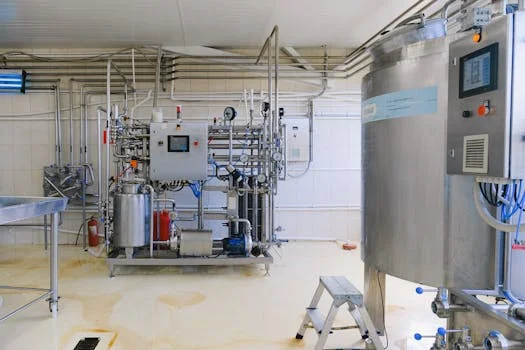
Zero liquid discharge (ZLD) systems for IC fabs achieve 95%+ water recovery, eliminating liquid waste discharge while meeting stringent regulatory requirements, including China's GB 31573-2015 for fluoride and copper. These advanced systems are crucial for semiconductor facilities, particularly in water-scarce regions like Taiwan and Singapore, where they can reduce freshwater intake by 20–40%. A typical ZLD system for semiconductor wastewater integrates several key components to maximize water reuse.
The ZLD process begins with robust pretreatment, often involving DAF or chemical precipitation, to remove bulk suspended solids and heavy metals. This protects downstream membrane systems. The pre-treated water then enters RO systems for ZLD water recovery in IC fabs, which typically achieve 75–85% water recovery. The RO permeate is clean enough for reuse in various fab processes, while the concentrated brine moves to the next stage.
Brine concentrators, often utilizing mechanical vapor recompression (MVR) evaporators, are employed to further reduce the volume of the RO reject. MVR technology significantly reduces energy use by 50–70% compared to traditional multi-effect evaporators (per 2025 industry data), achieving 90–95% recovery from the brine. The final stage is a crystallizer, which processes the highly concentrated brine into solid salts, achieving 95–99% recovery from the input to this stage. These solid salts can be disposed of in a landfill or, if valuable, processed for recovery.
ZLD systems ensure comprehensive compliance with critical regulations. For instance, they consistently meet China's GB 31573-2015 standard for industrial wastewater discharge, specifically keeping fluoride below 10 mg/L and copper below 0.5 mg/L. They also satisfy Taiwan EPA's <3 mg/L copper limit and US EPA limits for copper (<1.3 mg/L). A notable case example is a 2025 ZLD system implemented for a 300 mm fab in Taiwan, which achieved 96% water recovery and resulted in disposal cost reductions of $1.2M per year, demonstrating the tangible economic benefits alongside environmental stewardship.
Cost Breakdown and ROI Calculator for IC Copper Wastewater Treatment Systems
Evaluating the financial viability of integrated circuit copper wastewater treatment systems requires a comprehensive understanding of both capital expenditures (CAPEX) and operational expenditures (OPEX), along with a clear return on investment (ROI) calculation, especially for systems designed for copper recovery. This financial analysis is critical for semiconductor fab decision-makers. A detailed cost breakdown for copper wastewater treatment systems reveals significant variations based on technology selection and treatment goals.
For a typical 100 m³/day hybrid system combining chemical precipitation, MBR, and ion exchange, the CAPEX ranges from $800,000–$1.2M. This includes the cost of equipment, engineering design, installation, and commissioning. The OPEX for such a system typically falls between $0.80–$1.50 per m³ of treated water, covering chemicals, energy, labor, and routine maintenance. However, the economic advantage of copper recovery significantly offsets these costs. With influent copper concentrations ranging from 50–500 mg/L (per 2025 fab data) and market prices for recovered copper at $8,000–$10,000 per ton, copper recovery can offset 30–50% of the OPEX, equating to $0.30–$0.70 per m³.
Implementing a full ZLD system for the same 100 m³/day capacity demands a higher initial investment, with CAPEX ranging from $1.5M–$2.5M. The OPEX for ZLD systems is also higher, typically $2.00–$3.50 per m³, primarily due to the energy requirements of evaporators and crystallizers. However, the benefits of 95%+ water recovery and the elimination of liquid waste discharge often justify this investment.
The ROI for systems incorporating copper recovery is compelling. Depending on the influent copper concentration and the efficiency of the recovery process, a hybrid system can achieve payback within 2–4 years. This quick payback period is driven by both reduced disposal costs (up to 70% for ZLD systems) and the direct revenue generated from selling recovered copper. Cost-saving strategies further enhance ROI, including adopting modular designs for scalability, implementing automation to reduce labor costs, and optimizing membrane cleaning protocols to extend membrane lifespan and reduce replacement frequency.
| Cost Category | Hybrid System (100 m³/day) | ZLD System (100 m³/day) |
|---|---|---|
| CAPEX (Total) | $800,000 – $1,200,000 | $1,500,000 – $2,500,000 |
| Equipment | $500,000 – $800,000 | $1,000,000 – $1,800,000 |
| Installation & Commissioning | $200,000 – $300,000 | $300,000 – $500,000 |
| Engineering & Design | $100,000 – $150,000 | $200,000 – $300,000 |
| OPEX (per m³ treated) | $0.80 – $1.50 | $2.00 – $3.50 |
| Chemicals | $0.20 – $0.40 | $0.25 – $0.50 |
| Energy | $0.15 – $0.30 | $0.80 – $1.50 (incl. evaporators) |
| Labor | $0.20 – $0.35 | $0.25 – $0.40 |
| Maintenance & Spares | $0.10 – $0.20 | $0.20 – $0.30 |
| Disposal (sludge/solids) | $0.15 – $0.25 | $0.10 – $0.20 (solid salts) |
| Copper Recovery Offset (per m³) | ($0.30 – $0.70) | ($0.30 – $0.70) |
| Typical Payback Period | 2-4 years | 3-6 years |
Frequently Asked Questions
Engineers and procurement teams often have specific questions regarding integrated circuit copper wastewater treatment. Here are answers to common inquiries:
What are the discharge limits for copper in IC wastewater?
Discharge limits for copper in IC wastewater vary by region: Taiwan EPA mandates <3 mg/L, China GB 31573-2015 requires <0.5 mg/L, and US EPA limits for industrial discharges are typically <1.3 mg/L.
How much copper can be recovered from IC wastewater?
Hybrid systems, particularly those incorporating ion exchange, can recover up to 99.9% of copper from IC wastewater, with influent concentrations typically ranging from 50–500 mg/L (per 2025 fab data).
What is the best treatment technology for high-copper wastewater (>200 mg/L)?
For wastewater with high copper concentrations (>200 mg/L), ion exchange or electrodeposition are highly effective due to their superior removal efficiency and strong potential for direct copper recovery.
How does ZLD reduce disposal costs for IC fabs?
ZLD systems eliminate liquid waste discharge, which can reduce overall disposal costs by 50–70% for IC fabs and enable significant water reuse, reducing reliance on freshwater sources (per Top 4 scraped content).
What are the energy requirements for a hybrid copper wastewater treatment system?
Energy requirements for a hybrid copper wastewater treatment system typically range from 0.5–2.5 kWh/m³, depending on the specific technology mix used (e.g., MBR vs. DAF) and the extent of ZLD implementation.