Why Semiconductor Fabs Struggle with Slurry Effluent
CMP slurry wastewater treatment systems must handle silica or alumina nanoparticles (<150 nm), copper at 50–500 mg/L, and 1–5% v/v hydrogen peroxide. Hybrid DAF-MBR-RO trains reach 99.9% TSS removal and >95% copper recovery at 50–120 LMH on 0.1 μm PVDF membranes. Closed-loop fabs report water-reuse savings near $100M/year in Pall Corporation’s 2024 benchmarks.
The effluent forms a stable colloidal suspension that resists gravity settling. Untreated, it scales process tools, abrades pumps, and fouls downstream membranes within weeks. Freshwater demand then rises 30–50% per wafer at large fabs, adding an estimated $2–$5M per year in utility and discharge fees.
Earlier plant design notes often cited copper <1.3 mg/L daily maximum and TSS <30 mg/L as EPA 40 CFR Part 469 targets. According to the current eCFR text of 40 CFR Part 469 Subpart A (Semiconductor), federal categorical limits cover total toxic organics (TTO) at 1.37 mg/L maximum for any 1 day, fluoride at 32.0 mg/L daily maximum and 17.4 mg/L as a 30-day average under BAT, and pH within 6.0–9.0—not copper or TSS. Where metal-finishing operations trigger 40 CFR Part 433, copper limits are 3.38 mg/L daily maximum and 2.07 mg/L monthly average (eCFR). Local NPDES or POTW permits still frequently write copper and TSS numbers near the older <1.3 / <30 mg/L design targets, and non-compliance can trigger fines up to $50,000 per day per violation under the enforcement figures cited in 2024 EPA guidance summaries.
One Silicon Valley fab failed a surprise audit when effluent copper reached 200 mg/L after chemical-precipitation breakthrough. The $1.2M remediation and downtime showed why single-stage treatment fails on sub-7 nm node CMP waste. Engineers now specify multi-stage separation and resource recovery aligned with heavy metal wastewater treatment specs for semiconductor effluents.
CMP Slurry Wastewater Treatment Process Flow: Hybrid DAF-MBR-RO
A hybrid DAF-MBR-RO process flow breaks colloidal stability with pressurized flotation, then polishes with ultrafiltration and reverse osmosis. Nanoparticles are captured before they reach high-pressure RO elements.
Stage 1: Dissolved Air Flotation (DAF). Treatment starts on a DAF system for slurry pretreatment. Microbubbles (40–60 μm) at 4–6 bar remove 80–90% of TSS. Typical coagulant doses are 10–30 mg/L PAC plus 1–3 mg/L anionic polymer to float silica flocs.
Stage 2: Membrane Bioreactor (MBR). Clarified water feeds an MBR Membrane Bioreactor Wastewater Treatment System. Submerged PVDF membranes at 0.1 μm pore size run 50–120 LMH. Air scouring at 0.3–0.5 m³/m²·h keeps transmembrane pressure stable against abrasive fines.
Stage 3: Reverse Osmosis (RO). Final polishing uses RO polishing for zero-discharge wastewater reuse. Two-stage RO recovers 90–95% of feed. Permeate COD is typically <10 mg/L at steady state, suitable for cooling-tower makeup or UPW pretreatment.
Copper recovery loop. Selective ion exchange at 10–20 BV/h recovers >95% of dissolved copper as copper sulfate or metal for resale. Most plants we size for mid-volume copper CMP slurry lines place the IX loop after MBR, where solids no longer blind the resin.
| Process Stage | Key Equipment | Key Parameter | Removal Efficiency (TSS) |
|---|---|---|---|
| Pretreatment | DAF | 4–6 bar pressure | 80–90% |
| Filtration | MBR (DF Series) | 0.1 μm PVDF / 50–120 LMH | 99.9% |
| Polishing | RO System | 15–25 bar / 95% Recovery | 99.9%+ |
| Recovery | Ion Exchange | 10–20 BV/h flow rate | N/A (Copper focus) |
DAF vs. MBR vs. RO: Performance Comparison for Slurry Treatment
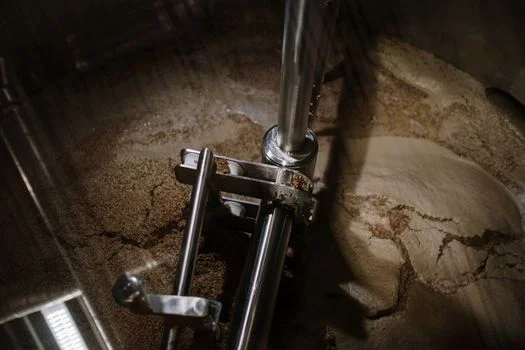
Technology choice balances TSS removal, copper rejection, energy, and reuse quality. DAF alone cannot deliver the nanoparticle clarity needed for closed-loop reclaim without a membrane barrier downstream.
DAF units cost about $5K–$10K per m³/h of capacity and tolerate influent TSS up to 2,000 mg/L. They remove only 30–50% of dissolved copper. MBR barriers stop abrasive silica that would destroy RO within weeks, reaching 99.9% TSS removal at 0.8–1.2 kWh/m³.
RO sits at the top of the train for fabs pursuing EU compliance strategies for semiconductor wastewater. Energy use of 1.5–2.5 kWh/m³ buys ≥95% copper rejection and near-complete ion removal. Hybrid trains extend MBR life 30–40% via DAF pretreatment and feed RO with low-SDI permeate.
| Technology | TSS Removal (%) | Copper Removal (%) | Energy Use (kWh/m³) | CAPEX ($/m³/h) |
|---|---|---|---|---|
| DAF | 80–90% | 30–50% | 4–6 | $5K–$10K |
| MBR | 99.9% | 70–85% | 0.8–1.2 | $15K–$25K |
| RO | 99%+ | 95%+ | 1.5–2.5 | $20K–$30K |
| Hybrid | 99.99% | 98%+ | 2.5–4.5 (Total) | $40K–$65K |
What Limits Semiconductor ZLD Reclaim Recovery?
Semiconductor zero-liquid-discharge reclaim recovery is limited by osmotic pressure, silica scaling, and copper fouling on RO elements once recovery exceeds about 90–95% of MBR permeate. At 15–25 bar operating pressure, two-stage RO still leaves a brine rich in salts and residual peroxide that must be evaporated, crystallized, or hauled.
Influent from a typical 300 mm wafer fab shows TSS of 500–2,000 mg/L and copper of 50–500 mg/L, with pH swinging from 2 to 10 between acidic and alkaline polish steps. DAF hydraulic loading is held near 4–6 m/h with automated neutralization. PVDF at 0.1 μm resists oxidants better than PES when peroxide residuals remain after reduction.
Design targets for discharge or reuse often keep copper <1.3 mg/L and TSS <10 mg/L at the plant boundary, even though Part 469 Subpart A itself does not list those metals. For ZLD, RO permeate COD <10 mg/L and low conductivity are the practical gates for cooling-tower or UPW feed.
| Parameter | Influent | DAF Effluent | MBR Effluent | RO Permeate |
|---|---|---|---|---|
| TSS (mg/L) | 500–2,000 | 50–150 | <1.0 | <0.1 |
| Copper (mg/L) | 50–500 | 25–250 | 5–15 | <1.0 |
| COD (mg/L) | 200–800 | 150–600 | <50 | <10 |
| pH | 2–10 | 6.5–8.5 | 7.0–8.0 | 6.5–7.5 |
| Recovery Rate (%) | N/A | 95% | 98% | 90–95% |
What Scaling Challenges Hit Semiconductor ZLD Systems?
Semiconductor ZLD scaling challenges concentrate around silica, calcium, and copper precipitates that form when RO recovery pushes brine TDS upward at 90–95% water reclaim. Pad-clean slug loads also spike peroxide and solids, driving rapid TMP rise on MBR if equalization is undersized.
Lifecycle cost for a 100 m³/h hybrid train typically lands at $0.80–$1.20 per m³ including energy, chemicals, and membrane replacement. Equipment CAPEX for full DAF-MBR-RO often runs $800,000–$1,500,000 before civil and automation adders, or about $1.1M–$2.1M all-in on the hybrid column below.
CAPEX splits roughly as equipment 60%, civil works 15%, automation 15%, and commissioning 10%. Continuous pH, copper, and TSS sensors prevent silent permit breaches. OPEX is dominated by energy (~40%) and chemicals (~25%), with membranes near 15% of the annual budget. ROI of 2–3 years comes from $2–$5/m³ water and surcharge savings plus 10–20 kg/day copper recovery.
| Cost Component | DAF ($) | MBR ($) | RO ($) | Hybrid System ($) |
|---|---|---|---|---|
| Equipment | 200K–400K | 300K–600K | 300K–500K | 800K–1.5M |
| Civil Works | 50K–100K | 80K–150K | 40K–80K | 170K–330K |
| Automation | 30K–60K | 50K–100K | 50K–100K | 130K–260K |
| Total CAPEX | 280K–560K | 430K–850K | 390K–680K | 1.1M–2.1M |
Compliance Checklist: EPA 40 CFR Part 469, Local Permits, and EU Benchmarks
Federal semiconductor categorical rules under 40 CFR Part 469 Subpart A require TTO ≤1.37 mg/L as a daily maximum and, for BAT/NSPS, fluoride ≤32.0 mg/L daily and ≤17.4 mg/L as a 30-day average, with pH 6.0–9.0 (eCFR). Copper and TSS columns in older checklists often reflected local permit or design targets of copper <1.3 mg/L and TSS <30 mg/L rather than Part 469 text itself. When Part 433 metal-finishing limits apply, copper is 3.38 mg/L daily maximum and 2.07 mg/L monthly average (eCFR).
EU Industrial Emissions Directive (2010/75/EU) benchmarks used by many fabs still target copper <0.5 mg/L and COD <125 mg/L. Continuous logging for pH, TSS, and copper, plus automatic diversion to equalization on limit excursions, is standard for permit defense. Engineering packages—flux, dose rates, recovery—usually go to regulators at least 90 days before commissioning. ZLD projects must also document brine and sludge disposal routes.
| Parameter | EPA 40 CFR 469 | EU 2010/75/EU | Zero-Discharge Target | Monitoring Method |
|---|---|---|---|---|
| Copper (Cu) | <1.3 mg/L | <0.5 mg/L | <0.1 mg/L | Online ICP-OES / Ion Sensor |
| TSS | <30 mg/L | <35 mg/L | <5.0 mg/L | Continuous Turbidity |
| COD | N/A | <125 mg/L | <10 mg/L | UV-Vis Absorption |
| pH | 6.5–8.5 | 6.0–9.0 | 7.0–8.0 | Dual-junction pH probe |
How to Select a Treatment Vendor: Five Checks
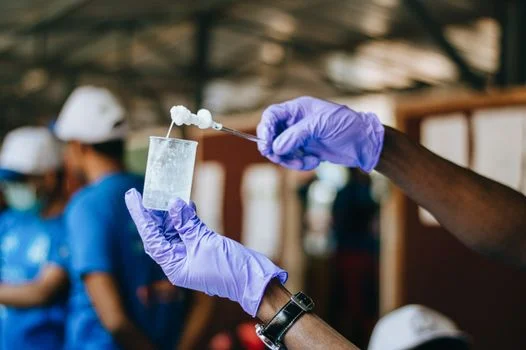
Vendor selection should rest on pilot data for nanoparticle removal and fouling resistance, not brochure claims. Material choices for abrasive slurry matter as much as process flowsheets.
- Documented TSS and copper removal on real slurry? Target 99.9% TSS and >95% copper with third-party or fab field data.
- Process flow with flux and dose ratios? Prefer hybrid DAF plus an MBR Membrane Bioreactor Wastewater Treatment System ahead of RO. Single-stage precipitation rarely meets nanoparticle standards used in current node fabs.
- CAPEX and OPEX for your flow? Benchmark near $8K–$15K/m³/h CAPEX and $0.80–$1.20/m³ OPEX; probe membrane replacement frequency in the fine print.
- Copper recovery and water reuse guarantees? Ask for >95% copper recovery and ≥90% water reuse, with a pilot if chemistry is proprietary.
- Compliance reporting and SCADA hooks? Require permit-ready logs, sensor calibration records, and automatic diversion on copper or TSS spikes.
Vendor evaluation matrix: Strong answers name PVDF membranes, automatic air scouring, and chelating resins for complexed copper. Weak answers lean on settling tanks alone or manual batch dosing.
Who this is for: Fab EHS managers, process engineers, and EPC teams sizing 10–100+ m³/h copper or oxide slurry trains for discharge permits or ZLD reclaim.
Who should look elsewhere: Sites with only organic solvent waste and no particulate slurry, or municipal plants without semiconductor metals loading.
Next step: Share influent TSS, copper, peroxide, and target reuse quality so a hybrid train can be scoped against your permit—request a technical review via request a CMP wastewater treatment quote.
Frequently Asked Questions
What MBR flux is typical for slurry wastewater?
Submerged PVDF membranes in slurry service typically run 50–120 LMH when air scouring is held at 0.3–0.5 m³/m²·h. That scour range limits irreversible cake from <150 nm silica. Plants that drop below the lower air rate often see rapid TMP climb within days of a pad-clean slug. Keep peroxide neutralized before the cassette to protect polymer integrity.
How is copper recovered from CMP wastewater?
Copper recovery uses selective ion exchange after MBR clarification, at 10–20 bed volumes per hour. Chelating resin loads dissolved copper, then regenerates to a concentrated copper sulfate stream for sale or reuse. Placing IX after solids removal protects resin capacity. Recovery above 95% is common when influent copper sits in the 50–500 mg/L band.
Can DAF alone meet EPA discharge limits for slurry?
Rarely. A DAF system removes 80–90% of TSS at 4–6 bar but leaves sub-100 nm solids and most dissolved copper. Part 469 Subpart A focuses on TTO and fluoride, while local permits often still demand copper near <1.3 mg/L. Use DAF as pretreatment ahead of MBR and RO, not as a stand-alone compliance unit.
What ROI should a zero-discharge slurry plant expect?
ROI typically falls in 24–36 months when city water and surcharge savings of $2–$5/m³ combine with copper credit near $10–$20/kg. A 100 m³/h hybrid system can exceed $1M per year in combined savings at those unit rates. Actual payback shortens when discharge fees escalate or UPW makeup water is scarce. Pilot data on recovery and membrane life should anchor the financial model.
How does hydrogen peroxide affect treatment?
Hydrogen peroxide at 1–5% v/v oxidizes many membrane polymers and can disrupt flocculation chemistry in the DAF stage. Reduce it with sodium bisulfite or catalytic decomposition before MBR or RO. Residual oxidant left unchecked shortens PVDF life and inflates replacement OPEX. Most plants we commission meter ORP after the reduction step as a hard interlock.