CMP wastewater treatment systems must handle ultrafine particles under 200 nm, high turbidity (500–3,000 NTU), and soluble copper (5–50 mg/L) at semiconductor fabs. A hybrid DAF + MBR + RO train is the 2026 benchmark for zero-liquid discharge compliance, with ion exchange polishing copper to under 0.1 mg/L. EPA semiconductor ELGs under 40 CFR 469 set TTO at 1.37 mg/L and fluoride at 32.0 mg/L daily max (17.4 mg/L 30-day average); they do not set a categorical 0.25 mg/L copper limit. Where 40 CFR 433 metal finishing limits apply, copper is 3.38 mg/L daily max and 2.07 mg/L monthly average. EU Directive 91/271/EEC sets organic discharge rules for urban wastewater plants that receive industrial effluent. Earlier claims cited up to 40% water-cost savings; TSMC's 2024 annual report states reclaimed water cut city-water use 31% at its Tainan fabs (17% replacement rate).
Why CMP Wastewater Defies Conventional Treatment Methods
CMP wastewater contains silica (SiO₂), alumina, and copper particles smaller than 200 nm. These form stable colloids that resist gravity settling because zeta potential keeps them dispersed. Standard clarifiers and Dissolved Air Flotation (DAF) systems often miss discharge limits. The engineered nanoparticles have low density of 1.2–1.5 g/cm³ and stay nearly neutrally buoyant. In oxide CMP processes, turbidity between 500 and 3,000 NTU can overwhelm traditional sand filters. Rapid breakthrough then fouls downstream reverse osmosis membranes.
Chemical mechanical polishing also introduces complex organic additives, notably benzotriazole (BTA), used as a corrosion inhibitor in copper CMP. These inhibitors raise Chemical Oxygen Demand (COD) by 30–50% over baseline slurry COD. Removing them requires advanced oxidation processes (AOP) or specific ion exchange resins. Standard mechanical filtration does not capture soluble organics. The same stabilizers raise colloidal stability, so coagulants like alum or ferric chloride must be dosed higher—often above 50 mg/L—to gain even marginal clarification.
A case from a TSMC fab in Taiwan showed that conventional settling tanks reduced Total Suspended Solids (TSS) only to 150 mg/L, still above the local discharge threshold. After switching to Microza crossflow filtration, the plant cut TSS from 1,200 mg/L to under 30 mg/L with no added flocculant. The change met compliance and eliminated chemical sludge, which typically represents about 20% of a fab's wastewater OPEX.
| Parameter | Typical CMP Stream Value | Treatment Challenge |
|---|---|---|
| Particle Size | 50 nm – 200 nm | Defeats 10-micron sand filters; requires UF/MBR |
| Particle Density | 1.2 – 1.5 g/cm³ | Extremely slow settling rates in clarifiers |
| Turbidity | 500 – 3,000 NTU | High solids loading leads to membrane fouling |
| Copper (Soluble) | 5 – 50 mg/L | Exceeds EPA limits (0.25 mg/L) by 100x+ |
| COD (Inhibitors) | 200 – 1,000 mg/L | Resistant to standard biological treatment |
CMP Wastewater Treatment Technologies: Head-to-Head Comparison
DAF units are widely used as a primary step for CMP wastewater, reaching 85–95% TSS removal when paired with PLC-controlled chemical dosing for CMP wastewater treatment. DAF efficiency drops sharply below 500 nm, however, and the required coagulant dose (30–50 mg/L FeCl₃) generates a heavy-metal-laden sludge stream. DAF systems for CMP wastewater are cost-effective at large flows but rarely deliver the water quality required for direct recycling into a fab's ultrapure water (UPW) system.
Membrane Bioreactors (MBR) using 0.1 μm PVDF membranes handle organic-rich CMP streams more robustly. Integrated MBR systems for ultrafine particle removal hit 99% TSS removal and 90% COD reduction by combining biological degradation with absolute physical filtration. The main MBR risk in CMP service is silica scaling: if pH drifts above 9.0, reactive silica polymerizes on the membrane surface, flux falls, and cleaning frequency rises.
VSEP (Vibratory Shear Enhanced Process) membranes represent the high-end option for high-turbidity streams. Intense shear at the membrane surface lets VSEP achieve 92–97% COD removal and tolerate solids up to 5% without clogging. The trade-off is CAPEX: a 50 m³/h VSEP package commonly runs $500,000–$2,000,000, with energy at 0.8–1.2 kWh/m³. For polishing soluble copper against site NPDES or POTW limits, ion exchange stays the industry standard, though it raises OPEX by 15–20% from resin regeneration and hazardous waste handling. Finally, RO systems for CMP water recycling and metal removal are essential for zero-liquid discharge (ZLD) targets, provided the feed Silt Density Index (SDI) is held below 3 by upstream pretreatment.
| Technology | TSS Removal | Footprint | OPEX ($/m³) | Best Use Case |
|---|---|---|---|---|
| DAF | 85-95% | Large | $0.15 - $0.35 | Primary solids removal (Copper CMP) |
| MBR | 99%+ | Medium | $0.25 - $0.50 | High organics/COD removal |
| VSEP | 98%+ | Small | $0.80 - $1.30 | High-silica, high-turbidity streams |
| Ion Exchange | N/A | Small | $0.40 - $0.70 | Polishing copper to <0.1 mg/L |
| RO | 99.9% | Medium | $0.30 - $0.60 | Water reclamation/recycling |
Hybrid System Designs for Zero-Discharge Compliance
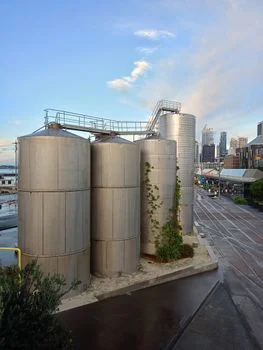
Reaching zero-discharge compliance in semiconductor manufacturing takes a multi-stage train that targets different contaminants at each phase. For low-silica copper CMP streams, the most efficient configuration is DAF followed by ion exchange. The DAF takes out the bulk of the solids, and the ion exchange polishes the effluent to meet strict heavy metal wastewater treatment strategies. This pairing is favored for its moderate CAPEX ($300K–$800K for 20–100 m³/h) and reliable copper removal below common site targets near 0.25 mg/L.
For high-silica oxide CMP streams, the industry benchmark is MBR followed by RO. The MBR acts as a super-filter, removing 99% of suspended solids and keeping sub-micron silica away from the RO membranes. Anti-scalant dosing at 1–3 mg/L is critical to prevent silica scaling inside the RO unit. This train lets fabs recover up to 95% of their wastewater for non-critical facility use or cooling-tower makeup. A Samsung fab in South Korea reported that switching to an MBR + RO hybrid cut freshwater intake by 40%, saving about $2.1 million per year.
When wastewater carries high BTA or other refractory organics (above 1,000 mg/L COD), a VSEP + Chemical Oxidation (AOP) design is required. The VSEP concentrates solids into a small volume for dewatering, while the AOP (typically UV/H₂O₂) breaks down inhibitor molecules. OPEX runs $0.50–$1.20/m³, which is high, but it is often the only path to meet stringent EU compliance for semiconductor wastewater on organic discharge under Directive 91/271/EEC constraints on urban plants. These hybrid trains are usually run from a centralized control hub so chemical dosing is optimized in real time and membrane fouling is avoided during process swings.
Engineering Specs for CMP Wastewater Treatment Systems
Engineering a CMP treatment system requires tight control over chemical and physical parameters to keep the process stable. pH is the most critical variable: for coagulation with Ferric Chloride (FeCl₃), hold pH between 6.5 and 7.5. With Aluminum Sulfate instead, the optimal range shifts to 8.0–9.0. Deviating from these ranges can raise sludge volume by up to 30% and produce pin-floc that escapes the primary clarifier.
Membrane flux rates are another key spec for procurement teams. For Microza hollow fiber membranes, design for 30–50 LMH (liters per square meter per hour). MBR systems typically run lower, at 15–25 LMH, to limit silica-driven irreversible fouling. When specifying filter presses for dewatering CMP sludge, the press must handle 2–5% solids and dewater to 20–30% cake solids at 2–4 bar operating pressure, which sharply cuts hazardous waste disposal cost by lowering sludge weight.
| Engineering Parameter | Design Specification | Critical Control Point |
|---|---|---|
| pH Range (Coagulation) | 6.5 – 7.5 (FeCl₃) | Avoids sludge bulking |
| Coagulant Dosage | 30 – 50 mg/L | Prevents colloidal stabilization |
| MBR Membrane Flux | 15 – 25 LMH | Prevents silica scaling/fouling |
| RO Recovery Rate | 75% – 95% | Requires anti-scalant (1-3 mg/L) |
| Filter Press Pressure | 2 – 4 Bar | Targets 25% cake solids |
Cost Models: CAPEX, OPEX, and ROI for CMP Wastewater Systems
Budgeting for a CMP wastewater system in 2026 takes a granular breakdown of CAPEX and OPEX. A standard DAF-based system has the lowest CAPEX, ranging from $150 to $400 per m³/h of capacity. Most plants we size for 20–100 m³/h copper CMP lines end up near the low end of that band once civil work is held to existing pad space.
| Cost Driver | Typical 2026 Range | Main Lever |
|---|---|---|
| DAF CAPEX | $150–$400 per m³/h | Coagulant dose vs. sludge hauling |
| MBR + RO CAPEX | $800–$1,500 per m³/h | RO recovery vs. membrane replacement |
| VSEP CAPEX (50 m³/h) | $500,000–$2,000,000 | Shear module count vs. flux |
| Ion Exchange OPEX adder | +15–20% | Resin life vs. waste disposal |
| Water recycling savings | Up to 40% net water cost | Recovered water end-use quality |
An MBR + RO hybrid usually runs $800–$1,500 per m³/h CAPEX, with OPEX in the $0.55–$1.10/m³ range once chemicals, energy, and membrane replacement are combined. VSEP carries the highest CAPEX but pays back on sludge volume reduction when inlet solids run above 3%. Ion exchange adds 15–20% to OPEX from resin regeneration and hazardous waste disposal, which is why it is positioned as a polishing step, not a primary workhorse. Across all configurations, the largest OPEX lever is sludge handling: chemical sludge typically accounts for 20% of wastewater OPEX, so any path that cuts coagulant dose or dewater cake to 25% solids directly improves the bottom line. TSMC's 2024 annual report cites a 31% city-water reduction from reclaimed water at Tainan fabs, versus earlier up-to-40% net-cost claims used in planning models.
Who This Guide Is For
This guide fits semiconductor fab process engineers, EPC contractors scoping a new CMP line, and procurement managers comparing DAF, MBR, VSEP, and RO packages. It is less relevant for municipal plants or for facilities handling only metal-finishing rinse water without BTA-type inhibitors. If your stream is non-CMP metal finishing, the BTA chemistry and silica scaling sections will not apply.
Next Step
Send your CMP stream characterization (turbidity, soluble copper, COD, silica) and target flow rate, and we will return a sized DAF, MBR, or hybrid train with budgetary pricing within two business days. Request a CMP wastewater treatment quote to start the sizing review.
Frequently Asked Questions
What copper discharge limit applies to CMP wastewater in the US?
EPA semiconductor ELGs under 40 CFR 469 do not set a categorical soluble copper limit of 0.25 mg/L; they set TTO at 1.37 mg/L and fluoride at 32.0 mg/L daily max (17.4 mg/L 30-day average). Where 40 CFR 433 metal finishing limits apply, copper is 3.38 mg/L daily max and 2.07 mg/L monthly average. Most fabs still design ion exchange polishing to under 0.1 mg/L against site-specific NPDES or POTW limits. Local POTWs can impose tighter limits, so check your permit before finalizing the polishing step.
Can DAF alone meet zero-liquid discharge for CMP wastewater?
No. DAF removes 85–95% TSS but cannot polish soluble copper to typical site targets near 0.25 mg/L or handle the dissolved silica load from oxide CMP. Zero-liquid discharge requires DAF plus ion exchange for copper streams, or MBR plus RO for high-silica streams, with a ZLD brine concentrator downstream.
How do you control silica scaling in RO membranes treating CMP effluent?
Hold RO feed pH below 9.0, dose anti-scalant at 1–3 mg/L, and keep the RO recovery rate between 75% and 95% depending on silica concentration. Above 95% recovery, reactive silica exceeds its solubility limit and polymerizes on the membrane, so most operators cap recovery at 90% for oxide CMP feeds.
What is the payback for adding an MBR + RO hybrid at a copper CMP line?
A Samsung fab in South Korea reported 40% lower freshwater intake and about $2.1 million in annual savings after switching to MBR + RO. Payback depends on local water tariffs, but most 20–100 m³/h lines we model see a 2–4 year payback on the hybrid CAPEX premium versus a DAF-only baseline.
Why does VSEP cost so much more than conventional UF for the same flow?
VSEP uses vibratory shear to keep the membrane surface clean, letting it handle solids up to 5% without plugging. A 50 m³/h VSEP package runs $500,000–$2,000,000 versus roughly one-fifth of that for a same-flow UF skid. The premium is justified when inlet turbidity is consistently above 1,500 NTU or when silica scaling shuts down standard UF weekly.