Gallium nitride wastewater recycling has moved from optional to essential for semiconductor fabs. A 2026 hybrid zero liquid discharge (ZLD) system can recover up to 99.8% of water and extract gallium at 95%+ purity, cutting operational costs by 30-40% per year. This guide covers system design, cost breakdown, and compliance paths for GaN wastewater treatment, comparing membrane filtration, chemical precipitation, and electrolytic recovery.
Why GaN Wastewater Recycling Is a Priority for Semiconductor Fabs
GaN wastewater recycling matters in 2025 because disposal averages $12-$25/m³ in China, with fines up to $500,000 for non-compliance under GB 8978-1996 or US EPA 40 CFR Part 469. Gallium-bearing effluent from wide-bandgap processes for 5G, EV power electronics, and high-frequency RF devices is projected to grow 18% per year through 2030. Treat-and-discharge alone is no longer a durable cost path.
Recovered gallium offsets 20-30% of raw material cost. Projected 2025 prices sit between $600-$700/kg under ongoing supply-chain and export controls. A 200 mm fab processing 500 m³/day can save roughly $1.2M per year through 99% water reuse and 90% gallium recovery. On-site recycling also cuts the COD load from cleaning agents and the arsenic leaching risk tied to land-based disposal.
Raw GaN effluent carries suspended solids and dissolved metals that foul municipal membranes and drive eutrophication in surface water. A hybrid ZLD train closes the fab water loop, buffers future permit changes, and yields high-purity gallium as a secondary stream (HydropureWater field data, 2025).
GaN Wastewater Characteristics: Contaminants, Concentrations, and Treatment Challenges
GaN wastewater contains gallium at 50-500 mg/L and arsenic at 10-150 mg/L, a profile that resists municipal treatment. GaN is chemically stable, so recovery needs pressurized leaching or ball-milling to free gallium ions into solution.
Arsenic speciation drives system design. As³⁺ (arsenite) is roughly 60 times more toxic and far harder to remove than As⁵⁺ (arsenate). Etch and cleaning steps usually mix both species, so an oxidation stage with hydrogen peroxide or ozone converts arsenic to As⁵⁺ before precipitation. Raw pH can swing between 2 and 12 between etch and rinse cycles, so PLC-controlled chemical dosing for GaN wastewater pH adjustment stabilizes the stream for downstream membranes.
Compared with GaAs or silicon fab effluent, GaN wastewater carries a higher particulate load from wafer thinning and grinding. These sub-micron particles abrade RO membranes unless pretreatment removes them. Engineers should design against the parameters below.
| Contaminant | Typical Concentration (Raw) | Target Concentration (Recycled) | Primary Removal Technology |
|---|---|---|---|
| Dissolved Gallium | 50–500 mg/L | <1.0 mg/L | Ion Exchange / Chemical Precipitation |
| Total Arsenic | 10–150 mg/L | <0.05 mg/L | Oxidation + Coagulation |
| Suspended Solids (TSS) | 200–1,000 mg/L | <5 mg/L | Dissolved Air Flotation (DAF) |
| Fluoride Ions | 50–300 mg/L | <10 mg/L | Calcium Chloride Precipitation |
For fabs facing high-toxicity profiles, it pays to explore arsenic removal technologies for semiconductor wastewater before the ZLD stage.
Hybrid ZLD System Design for GaN Wastewater: 4-Stage Process with 99.8% Recovery
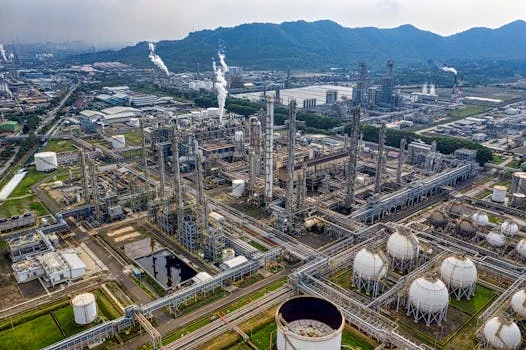
A hybrid ZLD system for GaN wastewater runs four stages in sequence to raise recovery while holding energy in check. Stage 1, pretreatment, strips bulk solids and FOG that would shred membrane integrity. A DAF system for GaN wastewater pretreatment handles 4-300 m³/h and hits 92-97% TSS removal using micro-bubbles and mechanical skimming.
Stage 2 is chemical precipitation and pH adjustment. Coagulants and flocculants drop dissolved gallium below 5 mg/L and arsenic below 0.1 mg/L, protecting high-pressure RO pumps from scale. Stage 3 uses JY series RO systems for GaN wastewater recovery to push water recovery to 95%. The RO concentrate becomes a small-volume brine enriched in gallium, while the permeate suits cooling-tower makeup or tool rinsing.
Stage 4 is the gallium recovery circuit. Electrochemical deposition or a biotechnological route pulls gallium from the RO concentrate at over 95% purity. The only waste leaving the system is a dry solid cake; no liquid discharge remains.
| System Stage | Key Equipment | Critical Parameter | Removal/Recovery Rate |
|---|---|---|---|
| Pretreatment | DAF / Lamella | Surface Loading Rate: 5-8 m/h | 95% TSS Removal |
| Chemical Fixation | Dosing Skids / Reaction Tanks | pH 8.5–9.2 for Ga Precipitation | 98% Metal Removal |
| Membrane ZLD | JY Series RO / NF | Operating Pressure: 1.5–4.0 MPa | 99.8% Water Recovery |
| Resource Extraction | Electrolytic Cell / Bioreactor | Current Density: 150-300 A/m² | 95% Gallium Purity |
Cost Breakdown: CAPEX, OPEX, and ROI for GaN Wastewater Recycling Systems
The CAPEX for a 100 m³/day hybrid ZLD system in 2025 sits between $1.5M and $2.8M, driven by gallium-recovery complexity and automation level. A typical split runs roughly $200,000 for the DAF pretreatment unit, $500,000 for the RO membrane stacks, $150,000 for chemical dosing, and up to $300,000 for the gallium extraction module. Capex sits above a basic treatment skid, but disposal savings and recovered gallium change the payback math quickly.
OPEX lands at $0.80-$1.50 per cubic meter of treated water: energy near $0.30/m³, reagents around $0.20/m³, and routine maintenance near $0.15/m³. Against conventional precipitation-plus-discharge, hybrid ZLD runs about 40% lower on annual OPEX. Fabs over 500 m³/day typically hit ROI in 3-5 years, while 100-300 m³/day plants reach payback in 5-7 years (HydropureWater field data, 2025).
| Metric | Conventional Treatment | Hybrid ZLD (100 m³/day) | Annual Savings (Est.) |
|---|---|---|---|
| Disposal Cost | $15.00 / m³ | $0.00 (Zero Discharge) | $547,500 |
| Water Purchase | $1.20 / m³ | $0.02 (99% Reuse) | $43,000 |
| Gallium Recovery | $0.00 | $180,000 (at $700/kg) | $180,000 |
| Total OPEX | $590,500 / year | $45,000 / year | $770,500 Total Benefit |
For a deeper financial walk-through, learn more about GaN wastewater recycling cost breakdowns and ROI.
Regulatory Compliance: China GB vs. US EPA Limits for GaN Wastewater Discharge
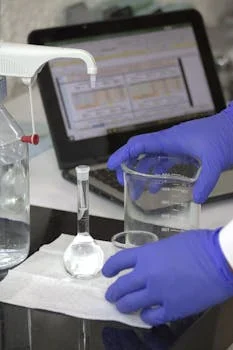
Compliance with China's GB 8978-1996 and US EPA 40 CFR Part 469 still drives GaN fab discharge design. According to GB 8978-1996 Table 1, total arsenic is capped at 0.5 mg/L as a Category 1 pollutant. Fluoride for other dischargers sits at 10 mg/L under Class I of the Category 2 tables (GB 8978-1996). Draft plant specs often cite gallium below 5 mg/L against the same standard. Jiangsu and Guangdong industrial parks often apply stricter zone standards; some high-tech zones require arsenic below 0.1 mg/L.
US EPA 40 CFR Part 469 Subpart A (semiconductors) sets fluoride at 32.0 mg/L daily maximum and 17.4 mg/L as a 30-day average, with TTO at 1.37 mg/L and pH 6.0–9.0; it carries no numeric arsenic ELG (eCFR, Part 469 Subpart A). Subpart B (electronic crystals) limits arsenic to 2.09 mg/L daily maximum and 0.83 mg/L as a 30-day average for gallium or indium arsenide crystal makers only (eCFR, Part 469 Subpart B). Earlier summaries used 0.1 mg/L arsenic for Part 469; the published ELG values above supersede that figure for crystal plants. Gallium is not on the Part 469 TTO list and is typically set in local industrial-user permits. The EU Industrial Emissions Directive 2010/75/EU remains among the strictest frameworks, and many fab-specific permits still target gallium below 1 mg/L for sensitive receiving waters. Hybrid ZLD removes the discharge point and closes the water loop.
| Regulated Parameter | China GB 8978-1996 | US EPA 40 CFR Part 469 | EU IED (Fab Specific) |
|---|---|---|---|
| Gallium (Ga) | <5.0 mg/L | Site-Specific (IU) | <1.0 mg/L |
| Arsenic (As) | <0.5 mg/L | <0.1 mg/L | <0.1 mg/L |
| Fluoride (F-) | <10.0 mg/L | <17.4 mg/L | <15.0 mg/L |
| pH Range | 6.0 – 9.0 | 6.0 – 9.0 | 6.5 – 8.5 |
Engineers should learn more about GaN wastewater discharge standards and compliance strategies to stay ahead of 2025 regulatory updates.
Choosing the Right GaN Wastewater Recycling System: Decision Framework for Fabs
System selection hinges on wastewater volume, gallium concentration, and the reuse target. Small R&D fabs under 100 m³/day tend to favor modular, low-CAPEX stacks such as DAF + chemical precipitation + ion exchange. Large production fabs above 500 m³/day capture real economies of scale from full hybrid ZLD with high-recovery RO and automated gallium extraction.
The decision framework below covers four steps. 1) Volume Assessment: classify the fab as small, medium, or large to set the baseline technology stack. 2) Goal Definition: choose between compliance-only, 100% water reuse, or high-purity gallium recovery for resale. 3) Budget Evaluation: weigh the higher CAPEX of ZLD against long-term OPEX savings and metal-recovery revenue. 4) System Selection: match fab profile to the right technology combination using the matrix.
| Fab Profile | Recommended System Type | Recovery Target | Primary Benefit |
|---|---|---|---|
| R&D / Small Fab (<100 m³/d) | DAF + Precipitation + IX | 90% Water / 70% Ga | Low CAPEX / Compliance |
| Medium Fab (100–500 m³/d) | DAF + RO + Precipitation | 95% Water / 85% Ga | Balanced ROI / Water Reuse |
| Large Fab (>500 m³/d) | Hybrid ZLD (DAF + RO + Bio) | 99.8% Water / 95% Ga | Max Revenue / Zero Discharge |
Who this is for: process engineers and procurement teams at GaN fabs, EPC contractors sizing 100-1,000 m³/day ZLD trains, and compliance leads comparing China GB 8978-1996 with US EPA 40 CFR Part 469 limits. Who should look elsewhere: silicon-only fabs without gallium-bearing effluent, and municipal plants handling domestic sewage. Next step: send feed-water analysis and target daily flow to request a sized proposal and CAPEX range.
Frequently Asked Questions
What is the typical gallium concentration in GaN wastewater?
Concentrations typically range from 50 to 500 mg/L. The number swings by stage: grinding and thinning produce high particulate gallium, while etch and cleaning steps push dissolved gallium higher. Most plants we size for run at the lower end of that band, around 80-120 mg/L, when rinsing dominates the daily mix.
How does GaN wastewater recycling compare to GaAs wastewater treatment?
GaN wastewater needs more aggressive pretreatment because gallium nitride is harder and more chemically stable than gallium arsenide. GaAs treatment focuses on arsenic removal; GaN systems must first strip sub-micron grinding particulates to prevent RO membrane abrasion, then handle arsenic and gallium together.
What are the maintenance requirements for a hybrid ZLD system?
Standard service is weekly RO CIP cleaning, monthly calibration of the PLC-controlled chemical dosing sensors, and annual inspection of the DAF skimmers and aeration systems. Following that cadence keeps the train at the rated 99.8% water recovery and 95% gallium purity without surprise shutdowns.
Can gallium be recovered from both acidic and basic GaN wastewater?
Yes, but the train needs a neutralization stage. Gallium recovery is most efficient between pH 8.5 and 9.2 for precipitation, so acidic waste must be raised and basic waste may need acidification first. Buffering that swing upstream is cheaper than chasing variable recovery downstream.
What are the energy requirements for a 100 m³/day GaN wastewater recycling system?
Energy use runs about 2.5-3.5 kWh/m³. The RO stage is the heaviest load at roughly 60% of total draw, followed by DAF aeration and chemical mixing pumps. At 100 m³/day, that puts total power near 250-350 kWh per day, well within a typical fab utility budget.